Sign In
Upcoming Event
 Free Newsletter

Virginia budget clears way for $100B Berry Hill data center campus
State government sparring over data center tax exemption had threatened project
Beth JoJack //July 1, 2026//

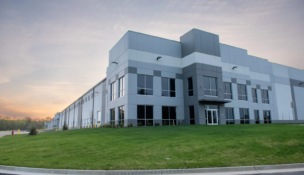
Southern Virginia Megasite at Berry Hill in Pittsylvania County. Photo courtesy Southern Virginia Megasite at Berry Hill
Southern Virginia Megasite at Berry Hill in Pittsylvania County. Photo courtesy Southern Virginia Megasite at Berry Hill
Virginia budget clears way for $100B Berry Hill data center campus
State government sparring over data center tax exemption had threatened project
Beth JoJack //July 1, 2026//



SUMMARY:
- After Virginia budget finalized, Stack Infrastructure announced it will move forward with planning for proposed data center campus at Southern Virginia Megasite at Berry Hill
- Debate about ending the state’s tax exemption for data centers early had put the deal in jeopardy
- As a compromise, state lawmakers added an energy consumption tax for data centers.
After the Virginia General Assembly finalized the state budget Monday, Denver-based data center developer and operator Stack Infrastructure announced it will move forward with planning for a proposed data center campus at the Southern Virginia Megasite at Berry Hill in Pittsylvania County.
“With the signing of the budget agreement reached by the governor and the General Assembly, Stack Infrastructure can confirm that our project at the Berry Hill Megasite in Southern Virginia will continue to advance through our competitive site selection process,” Kevin Hughes, chief external affairs officer for Stack, said in a Tuesday statement.
Much had been riding on the budget.
Under a performance agreement with the Danville-Pittsylvania Regional Industrial Facility Authority, Stack will invest at least $73.5 billion at the site and create at least 2,050 jobs at an $80,500 average annual wage.
However, the company’s planned investment is actually about $100 billion over three decades, with 2,500 jobs expected over 20 years.
Matt Rowe, Pittsylvania County’s economic development director, has called the deal with Stack “one of the largest single-site investments ever announced in the U.S.”
The idea of a data center tax assessment arose earlier in June as a potential compromise between the Virginia State Senate, which advocated for a repeal of the sales and use tax exemption for data centers that now costs the state more than $1 billion annually in tax revenue, and Spanberger and the House of Delegates, who did not want to repeal the incentive without a study to discuss impact on the state’s business interests.
The deal had been up in the air due to sparring between the Virginia Senate, which advocated for a repeal of the sales and use tax exemption for data centers that now costs the state more than $1 billion annually in tax revenue, and Spanberger and the House of Delegates, who did not want to repeal the incentive without a study to discuss impact on the state’s business interests.
Sen. L. Louise Lucas, the Virginia Senate’s president pro tempore and chair of the Senate Finance and Appropriations Committee, and other Democratic senators had initially sought to end the data center tax exemption by Jan. 1, 2027, eight years earlier than the scheduled expiration.
Ultimately, they compromised by including an electricity consumption tax on data centers in the budget.
That tax is expected to bring in $1.2 billion in revenue over the next two years. It taxes $0.011 per kilowatt-hour of power used by each data center per month, up to $600 million per fiscal year; any tax revenue beyond $600 million will be returned to data center operators.
Major deal or no, Rowe didn’t lose much sleep about whether the state’s lawmakers would end the exemption early. “I just know personally, in my heart, that that’s just not something Virginia would do,” he said.
“Politicians are always going to play the gamesmanship card,” he added. “To Sen. Lucas’ credit, she got some additional concessions.”
If the state’s lawmakers had ended the tax exemption earlier than planned, other states, Rowe maintained, would have launched marketing campaigns about how the commonwealth doesn’t keep its word with business owners.
“We all know that it would have been really, truly disastrous, beyond this data center discussion, if Virginia had truly done away with the sales and use tax exemption,” he said.
The energy consumption tax isn’t the only hit data center developers took during this year’s General Assembly session.
House Bill 153, which Spanberger signed in April, establishes a new permit process for “high energy use facilities” that consume 100 megawatts or more. Developers seeking rezoning for those projects must prepare site assessments that consider the noise impacts on residences and schools within a 500-foot radius. Localities can also require analysis of other impacts, such as groundwater resources.
House Bill 496, which Spanberger also signed in April, requires water utilities to report monthly on the total volume of water provided to data centers.
For Stack, those requirements apparently weren’t dealbreakers.
“We look forward to continued collaboration with state and local leaders to move this transformational project forward and to ensure the commonwealth remains a competitive destination for large-scale investment,” Hughes said in his statement Tuesday.
If Stack completes its planned purchase of all 2,990 acres at Berry Hill, the megasite will be fully occupied. The Danville-Pittsylvania RIFA voted in March to sell the property to the company for about $737.8 million.
Currently, officials in Pittsylvania County and Danville are working with Stack to complete a community benefits plan, according to Rowe. Often, to lure a manufacturer to a region, localities have to provide incentives or tax exemptions.
“You’re having to … do everything you can to entice them to come to your community,” Rowe said. “With this situation here, we’ve been able to kind of put that on its head.”
Looking forward
The data center retail sales and use tax exemption is set to expire in 2035, with exceptions.
For developers who meet certain qualifications, including investing $35 billion or more in a Virginia project and creating 1,000 direct jobs, the exemption will not expire until 2040. With the metrics set in the performance agreement, Stack would qualify for that extension.
Projects involving at least $100 billion in investment and 2,500 direct jobs have an expiration of 2050.
But then, the General Assembly, amid growing anti-data center sentiment among voters, could change the legislation in next year’s session.
In the coming months, the Virginia Joint Subcommittee on Tax Policy will study the state’s data center sales and use tax exemption and is charged with making recommendations to the General Assembly by Dec. 15.
a