Sign In
Upcoming Event
 Free Newsletter

Fairwinds Landing — Dominion energy Marine Coordination Center
Norfolk
Virginia Business //June 30, 2026//
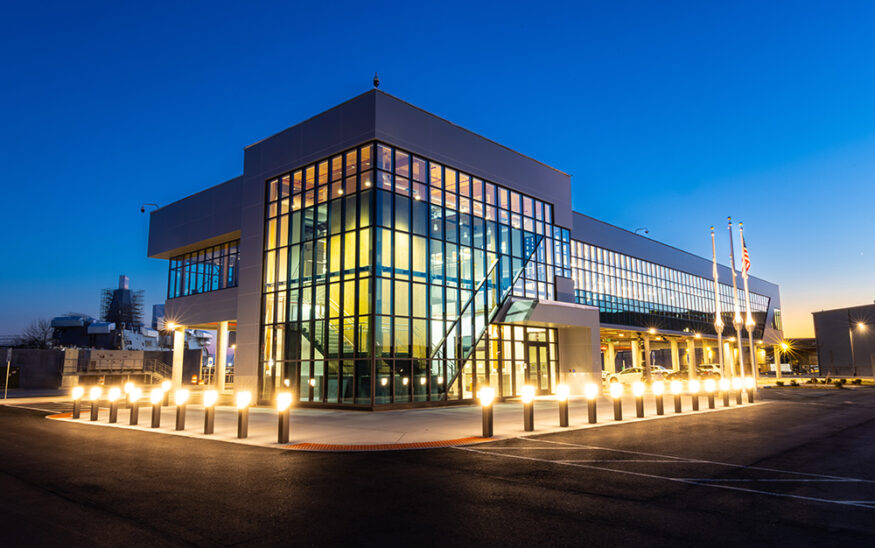
Fairwinds Landing — Dominion energy Marine Coordination Center
Norfolk
Virginia Business //June 30, 2026//



Address: 500 Orapax St., Norfolk
Project Type: Private
Project Size: 31,000 square feet (MCC); 17,000 square feet (warehouse)
Project Cost: $70 million
Owner: Fairwinds Landing LLC
Contractor: Balicore Construction
Architect: MCA Architecture
Engineer: Timmons Group (civil)
Subcontractor: Timberlab
From a 31,000-square-foot operations building on the Norfolk waterfront, Dominion Energy‘s teams plan to track the real-time performance of 176 wind turbines sitting 27 miles offshore in the Atlantic. The Marine Coordination Center at Fairwinds Landing is the nerve center of Dominion’s $11.4 billion Coastal Virginia Offshore Wind project, which is currently being constructed off the coast of Virginia Beach. When completed next year, the wind farm is expected to be the largest offshore wind project in the United States.
Building the Marine Coordination Center required solving a sequencing problem with no margin for error. The sophisticated industrial control systems and control rooms at the heart of the facility — through which turbine operations are monitored and coordinated — had to be delivered and commissioned well before the building envelope and permanent mechanical, electrical and plumbing systems were complete. The timeline was fixed by the commissioning of the first turbine offshore; the building could not wait. Balicore Construction responded with an early occupancy safety plan that integrated temporary life-safety systems, strict access controls and daily coordination between commissioning crews and active construction teams working simultaneously in the same space.
The facility, completed in December 2025, supports more than 45 shore-based personnel and up to 60 vessel-based staff at any given time. Adjacent to the Marine Control Center, a 17,000-square-foot warehouse stores critical spare parts and equipment, while 750 linear feet of pier improvements — including a new 280-linear-foot floating dock and gangway — allow service vessels to stage, dock and deploy directly from Fairwinds Landing, creating a fully functional offshore wind home port.
The building itself makes an architectural statement uncommon in industrial operations facilities. The structure features a podium slab with mass timber beams, columns and roof deck, with exposed timber ceilings and columns throughout the interior — work executed by mass timber subcontractor Timberlab. The facility is LEED Silver-certified and incorporates a rooftop solar array, EV charging stations and redundant power sources — fitting for a building designed to advance clean energy at scale.
g