Sign In
Upcoming Event
 Free Newsletter

Virginia Tech receives $20M gift for architecture school
Professor emeritus and wife make record-setting bequest
Beth JoJack //July 23, 2026//

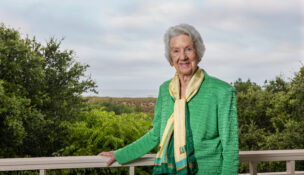
Virginia Tech Professor Emeritus Salahuddin Choudhury. Photo courtesy Virginia Tech
Virginia Tech Professor Emeritus Salahuddin Choudhury. Photo courtesy Virginia Tech
Virginia Tech receives $20M gift for architecture school
Professor emeritus and wife make record-setting bequest
Beth JoJack //July 23, 2026//



SUMMARY:
- Virginia Tech received an unprecedented $20M gift from Professor Emeritus Salahuddin Choudhury and his wife, May, for the architecture school
- The gift will endow resources for the college dean and school director to strengthen the program
- Choudhury helped build the university’s nationally recognized architecture program
Virginia Tech Professor Emeritus Salahuddin Choudhury and his wife, May, have made a $20 million gift, the largest bequest ever committed to the Blacksburg university’s architecture school.
The money will provide endowed resources for the college dean and school director to keep “Virginia Tech at the forefront of architecture education,” according to a Thursday news release.
“The Choudhurys’ incredibly generous gift extends their 50-year legacy of distinguished professional service to the university into the future by providing philanthropic support that will spark new discoveries and empower students for generations to come,” Virginia Tech President Tim Sands said in a statement. “We are deeply honored by their commitment to Virginia Tech and proud to be part of their family’s ongoing engagement in higher education.”
When the first dean of what is now the College of Architecture, Arts and Design wooed Choudhury to join Virginia Tech in 1974, he couldn’t dangle a large budget or prestigious office as bait. Instead, he presented Choudhury with the opportunity to grow a program to national prominence.
“In the early years, we had scant resources, but no one complained,” Choudhury said in the news release. “We begged, borrowed, and — no, we didn’t steal — to make do with whatever we had. And yes, our spouses brought pizza at 3 in the morning to Cowgill Hall as we worked on international competitions. Lacking furniture, the faculty chipped in to buy a rug for the students to sit on.”
For decades, Choudhury taught in Blacksburg and at study-abroad programs, stressing the Vitruvian ideal of the education of an architect across his many decades of teaching. Vitruvius, the Roman author, architect and engineer who lived during the first century B.C., believed architects and engineers should have both theoretical and practical knowledge based on a deep understanding of all the sciences, arts and nature. He inspired Leonardo da Vinci’s “Vitruvian Man” drawing.
Jim Bassett, associate professor of architecture and director of the school, described Choudhury in the news release as a colleague who “modeled a love of wisdom, a commitment to the education of the architect, and a champion of the idea that every great work of art, including architecture, is at heart an unanswered question.”
Over the years, Virginia Tech’s architecture program rose to prominence.
In 1980, Virginia Tech opened the Washington-Alexandria Architecture Center, which serves as an urban extension of the Virginia Tech School of Architecture. Located in Alexandria, the center sits less than eight miles from Washington, D.C., and accepts master’s and doctoral students, in addition to undergraduate students in their fourth or fifth years of study.
In the 1980s, Virginia Tech architecture students would travel to Switzerland during summers to study European architecture. In 1991, the Virginia Tech Foundation purchased a 19,259-square-foot villa in Switzerland for $1.85 million. Today, students at the Steger Center for International Scholarship in Switzerland can study architecture and other programs there.
By 2007, DesignIntelligence had ranked Virginia Tech’s bachelor of architecture program No. 1 among National Architectural Accrediting Board-accredited programs, based on a survey of leading firms. Virginia Tech architecture was also listed among the nation’s top programs in DesignIntelligence’s last rankings, issued in 2019.
Family legacy
For the Choudhurys, their gift is a natural extension of a family tradition of prioritizing education.
“My grandfather was a scholar of Rumi and was a respected wise man in our ancestral village,” Choudhury said in the news release. “The high school of that village is named after him. My offering is a tribute to him and my father and all my students and colleagues of the last 47 years. I learned from all.”
Choudhury’s road to architecture began when his father traveled from Bengal, a region divided between India and Bangladesh, to Harvard to study international taxation law.
“He found out about the discipline of architecture at Harvard,” Choudhury recalled. “He elaborated upon this new discipline that not too many people around me knew a lot about. By happenstance, the year I graduated from high school, [the United States Agency for International Development] decided to add the Department of Architecture in the local engineering university. Obviously, I followed my father’s advice and enrolled there.”
After earning a degree in architecture from East Pakistan University, Choudhury completed his master’s in architecture at the University of Minnesota.
Upon completing his degree, he returned to Bengal to work in industry.
“Unfortunately, a civil war broke out, and my father wanted me to go back to the safety of the United States,” Choudhury said in the news release. “I went to Washington, D.C. I was humbled by such a welcoming America and generous Americans.”
When Choudhury moved to Blacksburg in the 1970s, Olivio C. Ferrari, the late alumni distinguished professor emeritus at Virginia Tech, served as his mentor. Choudhury followed his advice to read The Wall Street Journal.
“Other than the news in text, I found out that it was full of thousands of small numbers preceded by symbols that fluctuated every day,” Choudhury said. “As a young man I pored over those small numbers on the kitchen table after dinner as May read Agatha Christie one after the other. We were both engaged in the same activity. We were both sleuthing detectives.”
Choudhury’s investing allowed him and his wife to make their gift to the architecture program.
Lu Liu, dean of the College of Architecture, Arts and Design, described the Choudhurys’ gift as “transformative.”
“The early faculty of Virginia Tech architecture built an incredibly strong foundation for the success of generations of architecture students,” Liu said in the news release. “They taught the students not just how to design and how to learn, but also how to think creatively and critically and how to ask fundamental questions about the buildings and their broader context. Sal is an architect and a philosopher. His teaching was profound and critical to the strength of our foundation.”
Bassett said in the news release that Choudhurys’ gift challenges Virginia Tech to ask: “What can this make possible?”
“While the answer will emerge in the future, we know the [Choudhurys’] generosity will fuel top priorities like student experiences, faculty empowerment and thoughtful adjustments in the education of tomorrow’s architects,” Bassett added.