Sign In
Upcoming Event
 Free Newsletter

Virginia Tech President Tim Sands to step down
Sands plans to serve in role until successor is in place
Beth JoJack //April 9, 2026//
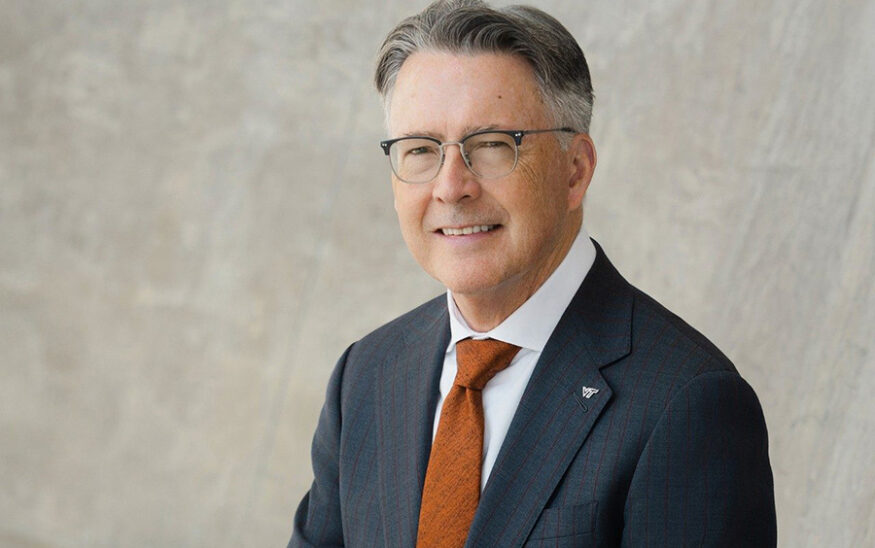
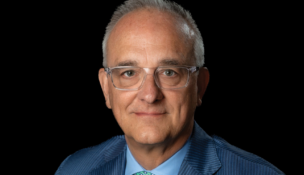
Virginia Tech President Tim Sands. Photo by Kristina Rose, courtesy Virginia Tech
Virginia Tech President Tim Sands. Photo by Kristina Rose, courtesy Virginia Tech
Virginia Tech President Tim Sands to step down
Sands plans to serve in role until successor is in place
Beth JoJack //April 9, 2026//



SUMMARY:
- Tim Sands, Virginia Tech‘s president since 2014, announced his resignation in a letter.
- Among his accomplishments were major undergraduate enrollment growth, opening of Alexandria satellite campus, expansion of Blacksburg campus.
- State senator says he is “eager” to learn more about Sands’ decision to step down.
See latest story regarding Sands’ resignation.
After a dozen years leading Virginia Tech, President Tim Sands announced Thursday in a letter addressed “to Hokies everywhere” that he intends to step down in the coming months.
“There is no better role in higher education,” Sands said. “Stewarding Virginia Tech as president … has been the most fulfilling experience of my career.”
Sands plans to stay in the role until his successor is in place to ensure a smooth transition, according to a news release.
Since taking office in 2014, Sands has overseen a period of significant growth and transformation at the university. Undergraduate enrollment has increased by 30%, while applications have surged by 200%. Extramural research expenditures have risen 70%, and the university’s endowment has grown from $800 million to more than $2 billion, according to Virginia Tech.
“His drive to expand Virginia Tech’s impact through collaborative engagement with our communities and partners, and his steadfast commitment to public higher education have positioned us well for the future ahead,” Virginia Tech Rector John Rocovich said in a statement. “President Sands’ leadership in establishing the Virginia Tech Carilion Academic Health Center and the Innovation Campus will yield huge dividends to Virginia Tech for 100 years.”
A hallmark of Sands’ tenure has been the Virginia Tech’s physical expansion.
In Alexandria, Virginia Tech opened the university’s Academic Building One, which held a grand opening celebration Feb. 28, 2025. The facility houses the Institute for Advanced Computing and is designed to help develop technology talent in a region anchored by Amazon’s HQ2.
That building is one of 15 major construction efforts launched during Sands’ presidency.
For students in Blacksburg, the transformation of the North Academic District has reshaped a significant portion of campus. The nearly 500,000 square feet development includes the Data and Decision Sciences Building, which opened in 2023, Hitt Hall and the Perry Place dining facility, which opened in 2024, and the New Business Building, which is expected to open in 2027.
Sands’ impact has also been felt in Roanoke, where Virginia Tech has expanded its health sciences and research offerings.
The Virginia Tech Carilion School of Medicine, which welcomed its first class in 2010 as an independent institution, became the university’s newest college in 2018.
In 2021, the Fralin Biomedical Research Institute at VTC completed a major expansion, adding 139,000 square feet of research space. The institute now supports more than 40 faculty-led research teams.
That growth has contributed to a sharp increase in the university’s economic impact in the Roanoke region, which rose from $214 million in 2017 to $475 million in 2025.
Sands also oversaw growth in the Hokies athletics program.
On Sept. 30, 2025, the Virginia Tech Board of Visitors approved an additional $229 million planned investment in athletics over four years.
“Virginia Tech is at a historic juncture in the history of Hokie Athletics,” Sands said in a statement about the investment. “The tumblers at the institution, conference and national levels are all aligned. Today’s action unlocks the door to future success.”
As president, Sands not only led the university community through the COVID-19 pandemic, he leveraged the expertise of Virginia Tech scientists, researchers and labs to support health care needs across the commonwealth.
More recently, he has navigated challenges tied to federal policy, including a proposed cap on indirect cost reimbursements for National Institutes of Health research.
In a February 2025 letter to the university community, Sands warned the change could result in a $13 million loss to Virginia Tech’s research funding.
“I don’t comment too often on things that could be regarded as political,” Sands said in an interview with Virginia Business. “But the reality is this one had a direct impact on the institution.”
However, at this year’s State of the University address in February, a student asked Sands why he has elected to “bend the knee” to the Trump administration, according to The Roanoke Times.
“We have to stay our course and stay down the middle and do what we can to accomplish our goals,” Sands was quoted as answering.
On Friday, Democratic state Sen. Aaron Rouse, a Virginia Tech alum and chair of the Senate Privileges and Elections Committee, which votes on gubernatorial appointments to Virginia universities’ boards of visitors, issued a statement about Sands’ departure.
“I’m grateful for President Tim Sands’ years of service to Virginia Tech and for his friendship, and I was shocked to see his departure during a continued period of tremendous growth for the university. I am eager to learn more about the reasons for this decision,” Rouse said. “As chair of the Senate Privileges and Elections Committee, we will continue to support and strengthen Virginia higher education and take all necessary action to protect the independence of our institutions. Boards of visitors play a critical role in governing our public colleges and universities, setting policy, overseeing leadership, and safeguarding academic independence, and we must ensure the next president has the tools and support necessary to lead Virginia Tech forward.”
U.S. Sen. Mark Warner praised Sands for his “dedication to Virginia Tech and the commonwealth,” and added, “As the university looks ahead, it is essential that Virginia Tech takes the time to conduct a thoughtful and thorough search for its next leader — one that reflects the institution’s stature and ensures it secures a world-class president to build on this strong foundation.”
Prior to joining Virginia Tech in 2014, Sands was executive vice president for academic affairs and provost of Purdue University in Indiana. He served as acting president of that university in 2012.
Sands earned a bachelor’s degree with highest honors in engineering physics and a master’s degree and a doctorate in materials science from the University of California, Berkeley.
After retiring, Sands and his wife, Laura P. Sands, plan to remain in the area.
“Laura and I will always be Hokies,” he wrote in his letter. “We plan to stay rooted in Blacksburg as this is most definitely home.”
a