Sign In
Upcoming Event
 Free Newsletter

Roanoke opens $26M biotech incubator
Collaborative effort made RoVa Labs a reality
Beth JoJack //May 7, 2026//
Roanoke and state leaders celebrated the opening of RoVa Labs Wednesday. Photo courtesy Carilion Clinic
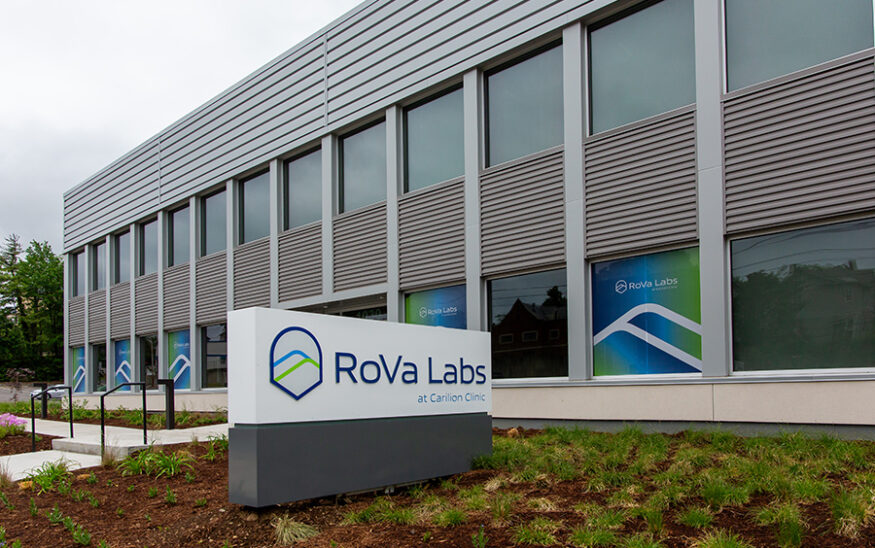
Roanoke and state leaders celebrated the opening of RoVa Labs Wednesday. Photo courtesy Carilion Clinic
Roanoke opens $26M biotech incubator
Collaborative effort made RoVa Labs a reality
Beth JoJack //May 7, 2026//



SUMMARY:
- RoVa Labs opened as a $26M biotech incubator in Roanoke
- 40,000-square-foot facility is expected to create 250 jobs
- Incubator is located near Carilion Roanoke Memorial Hospital and Virginia Tech Carilion School of Medicine
Roanoke regional and state leaders gathered Wednesday to celebrate the opening of RoVa Labs at Carilion Clinic, a $26 million biotechnology incubator.
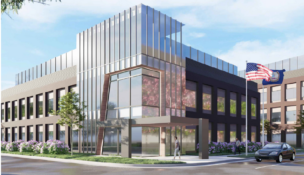
The 40,000-square-foot building features private and open wet lab space, shared equipment, offices and huddling spaces.
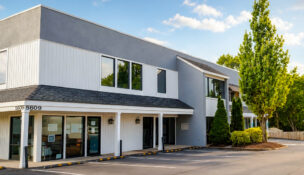
Located at 1030 S. Jefferson St. in a building that previously housed Carilion’s sleep lab and diabetes nutrition program, RoVa Labs is expected to create 250 jobs within five years.
The facility is one piece of a broader strategy to strengthen the region as a hub for biotech and life sciences.
“RoVa Labs is more than lab space,” Roanoke Mayor Joe Cobb said Wednesday. “It’s a place that will attract biotechnology innovators, who, in turn, will develop ideas into real solutions that make a real difference in people’s lives. It’s a place that will support the growth of startup companies as they work to commercialize groundbreaking research.”
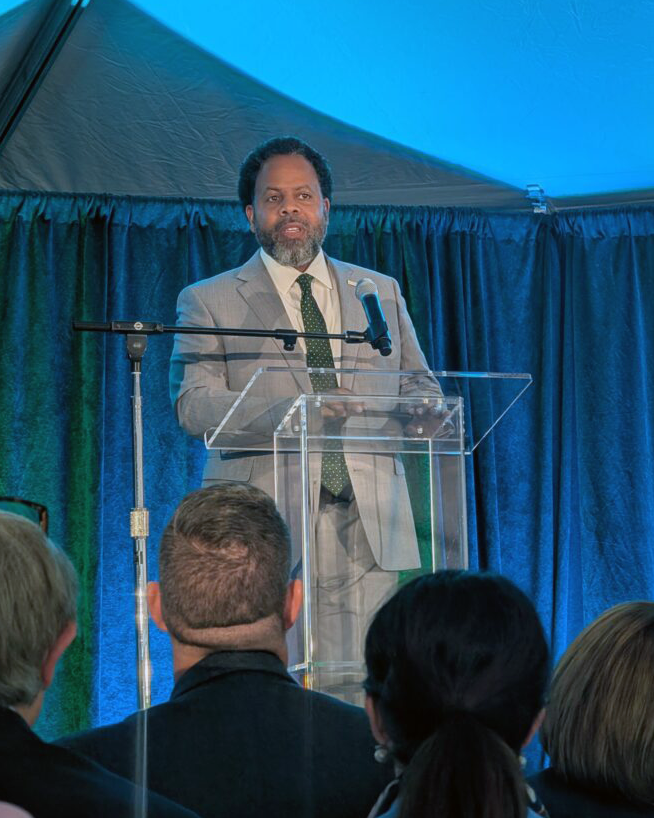
John Newby, CEO of Virginia Bio, the statewide nonprofit trade association for the life sciences industry, called the opening of RoVa Labs a defining moment in the state’s biotechnology history.
In the early 1990s, Newby told attendees, state leaders gathered to discuss the economy.
“In 1992, biotech wasn’t front and center,” he said. “It was Big Tech. No one was thinking about biotech except for our friends up in Massachusetts and a few folks out in California. But those gentlemen got together and said, ‘You know what? Virginia needs to be part of this biotech evolution. We need to position ourselves properly right now.’”
That year, leaders founded Virginia Bio. In 1995, the Virginia Bio+Tech Park, a commercial life sciences hub in Richmond, opened.
Again and again, Newby said, outsiders asked those leaders working to grow biotech in the state: “Why Virginia?”
“And all those individuals said, ‘Why not?’ And stuck with the vision solely over the course of two decades,” he said.
In the 2000s, according to Newby, state leaders identified a missing component.
“We had the realization that if we’re going to grow this ecosystem, we need lab space desperately,” he said.
About five years ago, leaders in Roanoke realized the region specifically needed wet labs, which are designed to test liquid substances like chemicals and biological materials. These facilities require water and specialized equipment such as chemical fume hoods and refrigeration.
For many years, according to a Roanoke Regional Partnership news release distributed Wednesday, early-stage biotech companies relocated to cities such as San Francisco and Boston, because the wet lab infrastructure and commercialization support did not exist locally.
Now, that kind of facility can be found in Roanoke, just blocks away from the Virginia Tech Carilion School of Medicine, the Fralin Biomedical Research Center at VTC, Carilion Roanoke Memorial Hospital and the under-construction Carilion Taubman Cancer Center.
During tours Wednesday, organizers showed private and open wet lab suites with benches, sinks and emergency systems. The facility has equipment for scientists to share, including biological safety cabinets, refrigerated centrifuges and carbon dioxide incubators.
Carilion Innovation, which develops and invests in ideas for inventions created by the health system’s employees, had already moved into RoVa Labs as of Wednesday. The Tiny Cargo Co., a Roanoke company that specializes in milk exosome manufacturing, is also expected to establish a private lab in the building, according to Marc Nelson, Roanoke’s economic development director.
In April, the City of Roanoke and Carilion announced they’d approved a memorandum of understanding establishing the biotechnology incubator as a collaborative effort with the Roanoke Blacksburg Innovation Alliance (RBIA), Virginia Western Community College and Virginia Tech.
The $26 million price tag of the project includes the value of the building, which was provided by Carilion Clinic, and in-kind time from partners, Nelson said.
The city received $15.7 million from the Virginia Department of Housing and Community Development in 2023 to fund the project. Regional investors matched that investment with more than $10 million, according to the Roanoke Regional Partnership.
The City of Roanoke managed the project and contributed a $1.9 million match through American Rescue Plan Act funds. Nelson declined to specify other investments.
“The focus yesterday was on celebrating the opening,” he said in an email. “We’ll have additional details in the coming weeks.”
RoVa Labs will be operated by Maryland-based Scheer Partners, a commercial real estate firm that specializes in life sciences incubators and research environments.
Transforming an idea into reality
Regional leaders saw the need to bring a facility like RoVa Labs to the Star City around 2021.
“We saw a surge of faculty, clinicians and graduate students ready to turn great ideas into companies,” said Don Halliwill, executive vice president and chief financial officer at Carilion Clinic. “A coalition was born.”
While Carilion is currently the largest private employer west of Richmond, Halliwill said, the health system would be happy to lose that title to a life sciences company that takes root in Roanoke.
“We want more companies to locate here,” he said. “We want them to do well.”
On multiple occasions, Wednesday’s speakers credited the opening of RoVa Labs with regional cooperation and, in particular, work by Nelson and Erin Burcham, RBIA president and executive director of the Roanoke Blacksburg Technology Council.
“I can tell you, from the state perspective, there is no more collaborative team to get something done across the state than those two individuals, and that’s why I’m always happy to be here in Roanoke to support what they’re doing,” Newby said.
Efforts by Burcham and Nelson, along with other Virginia leaders in the life sciences, have bolstered the state’s growing life sciences economy.
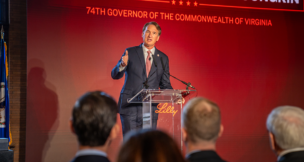
In recent years, Virginia has enjoyed a number of economic development wins in biotech and life sciences. A big one: In October 2025, then-Gov. Glenn Youngkin announced pharmaceutical giants AstraZeneca, Eli Lilly & Co. and Merck & Co. had committed a cumulative $120 million to develop a workforce training center for advanced pharmaceutical manufacturing in Central Virginia.
“I got to tell you without disclosing anything, others who are looking at Virginia, look at the totality of the ecosystem, not just what’s on the ground now, but what the ecosystem is developing itself … to be ready for in the future,” Newby said.
-