Sign In
Upcoming Event
 Free Newsletter

Virginia Democrats ask Supreme Court to revive their US House voting map
Last week, Virginia Supreme Court overturned referendum vote
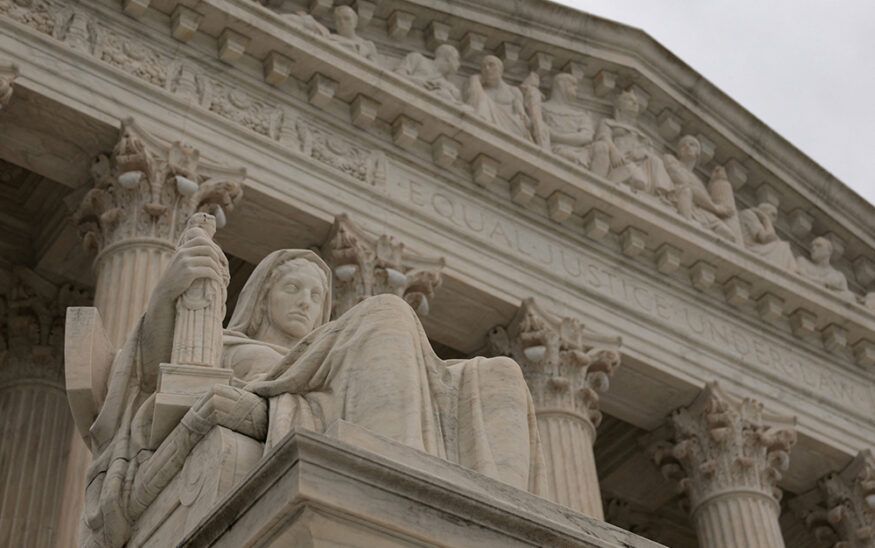
The U.S. Supreme Court building in Washington, D.C., U.S., May 11, 2026. REUTERS/Jonathan Ernst
The U.S. Supreme Court building in Washington, D.C., U.S., May 11, 2026. REUTERS/Jonathan Ernst
Virginia Democrats ask Supreme Court to revive their US House voting map
Last week, Virginia Supreme Court overturned referendum vote



Summary:
- Virginia Supreme Court struck down Democratic-backed congressional map
- Democrats seek to revive map to flip four Republican-held seats
- Court ruled map approval process did not follow proper procedure
WASHINGTON, May 11 (Reuters) – Virginia Democrats asked the U.S. Supreme Court on Monday to revive a congressional map designed to boost their party’s chances in November’s midterm elections, turning to the court as Republicans — including allies of President Donald Trump — seek to preserve narrow control of Congress.
Virginia House Speaker Don Scott, state Senate Majority Leader Scott Surovell and state Sen. Louise Lucas, the senate’s president pro tem, filed an emergency application for a stay of the Supreme Court of Virginia’s Friday ruling to toss out a constitutional amendment passed by Virginia voters in April.
The case thrusts Virginia into an unusual, mid‑decade redistricting showdown, as courts weigh whether lawmakers can remake House districts outside the normal post‑census cycle — with control of a narrowly divided Congress potentially hanging in the balance.
Virginia’s top court on May 8 threw out a new electoral map that had been crafted to flip four Republican-held U.S. congressional seats to Democrats, dealing a setback to Democratic hopes of retaking the U.S. House. Republicans also hold a majority in the U.S. Senate.
In a 4-3 decision, the Virginia Supreme Court rejected a Democratic-backed ballot measure approved by voters in April that reconfigured the state’s U.S. House map for partisan advantage.
Ruling in favor of a Republican challenge, the court’s majority found that Democratic lawmakers had not followed proper procedure last year when they rushed to approve the referendum in time to reach the ballot ahead of the November vote.
In a process called redistricting, the boundaries of legislative districts across the United States are reconfigured to reflect population changes as measured by the national U.S. Census every 10 years. Redistricting traditionally has been carried out by state legislatures at the start of each new decade.
In the unusual mid-decade redistricting fight, Republicans now hold a clear advantage. The tit-for-tat battle began last year when Trump pushed Texas Republicans to rip up their electoral map and draw new district lines that aim to flip up to five Democratic-held seats to Republicans.
Democrats suffered a major blow when the U.S. Supreme Court’s conservative 6-3 majority gutted a key provision of the 1965 Voting Rights Act, opening the door for Republican-led Southern states to dismantle Democratic-held majority-Black and majority-Latino districts. Black and Latino voters tend to support Democratic candidates.
(Reporting by John Kruzel; Editing by Howard Goller)
i