Sign In
Upcoming Event
 Free Newsletter

Virginia Tech board names new rector following upheaval
Board unanimously picks Leesburg tech CEO
Beth JoJack //June 2, 2026//
Board of Visitors member Jim Miller was elected to a one-year term as the board's rector at the June 2 meeting. Photo by Clark DeHart. Courtesy Virginia Tech
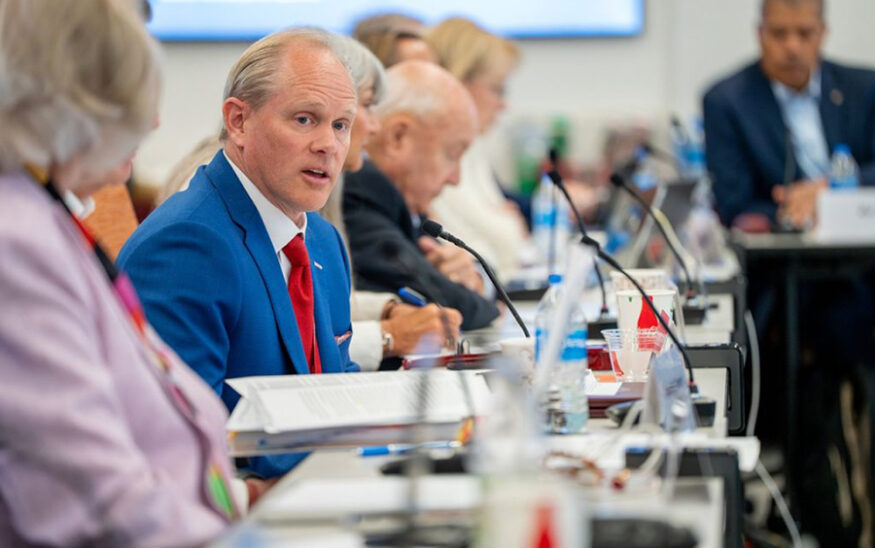
Board of Visitors member Jim Miller was elected to a one-year term as the board's rector at the June 2 meeting. Photo by Clark DeHart. Courtesy Virginia Tech
Virginia Tech board names new rector following upheaval
Board unanimously picks Leesburg tech CEO
Beth JoJack //June 2, 2026//



SUMMARY:
- The Virginia Tech Board of Visitors elected Jim Miller as rector effective July 1
- The vote came less than a week after Gov. Abigail Spanberger removed Rector John Rocovich
- Also Tuesday, the presidential search committee discussed possible timelines
The Virginia Tech Board of Visitors picked a new rector Tuesday, days after Gov. Abigail Spanberger took the unusual step of removing the former rector from the university board.
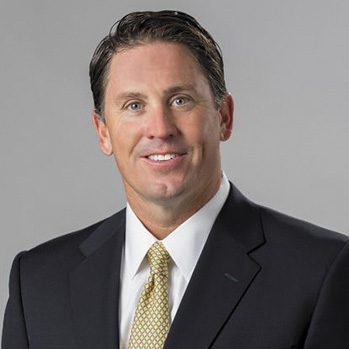
Appointed to the board by former Gov. Glenn Youngkin in 2024, Jim Miller is the founder and CEO of Leesburg-based Quantum Leap, a provider of cybersecurity and intelligence solutions for U.S. government customers. The board unanimously elected Miller, a 1997 alumnus, as the next rector, starting July 1. Dr. Nancy Dye, a retired surgeon appointed by Youngkin, was unanimously picked as vice rector.
Spanberger removed then-Rector John Rocovich, a Roanoke County attorney, from the board in a letter May 27. He was set to serve another year on the board through June 30, 2027.
However, the governor wrote that Rocovich’s conduct had “violated the Code of Conduct for Commonwealth Appointees to Boards, Authorities, & Commissions, the Virginia Tech Board of Visitors’ Code of Ethics and the governing statutes requiring board members to act in accordance with the best interests of Virginia Tech.”
The governor did not specify what Rocovich had allegedly done to violate state standards, but U.S. Sen. Tim Kaine voiced concern in April that Virginia Tech President Tim Sands may have been forced to step down so that a new president could be selected before Spanberger was due to fill four seats on the university’s board July 1. Dominion Energy Virginia President Ed Baine, whose term was set to end June 30, was appointed to complete Rocovich’s term.
Rocovich said Saturday when reached at home that he did not plan to attend this week’s quarterly BOV meetings, although in a May 28 letter to Candi Mundon King, the state’s secretary of the commonwealth, he declined to resign as rector. “I was appointed to serve a term, I have served that term faithfully, and I intend to fulfill my obligations to the students, faculty and people of Virginia.”
Before Rocovich’s removal, the board considered scrapping term limits for rectors and other leadership positions, but on Monday its governance committee voted 4-1 to keep a limit of two one-year terms as rector. Rocovich, however, served three terms total as rector after the board waived its bylaw limiting terms.
When Sands spoke to the board Tuesday, he didn’t ignore the elephant in the room.
“After a period of, I think, highly unusual stability, we’re entering a period of rapid change in positions of leadership, both on the board and in the administration,” he said.
The university’s president since 2014, Sands acknowledged that it’s natural for change to cause nervousness. “But what we have built together is not dependent on any one individual or even a few individuals,” he said. “The next president will inherit a highly functional leadership team that is capable of running the show through anything.”
Board faculty representative Justin Lemkul, an assistant professor of biochemistry, said he feels hopeful about Virginia Tech’s future, “but hope alone is not enough. We must all recommit ourselves to our traditions, our system of shared governance and collaborative decision-making.”
Meanwhile, Virginia Tech’s Presidential Search Committee, which includes the full board, met in open session Tuesday and discussed timelines for interviewing candidates and finalizing hiring. The committee decided to aim for a candidate to accept a job offer by December instead of September, a faster option.
Isaacson Miller, a Boston executive search firm, is helping lead the search. Jim Miller said that the committee can remain flexible during the search, “with the understanding that we’ll speed up or slow down based on what we’re seeing.”
Dye acknowledged the controversy the presidential search has generated.
“I would be remiss if I did not address the environment we find ourselves in with leadership changes throughout the university,” she said. “However, this is not unusual, and in fact, many such changes were going on when … we conducted our search in 2013.”