Welcome to the New Year! 2023 is a new one indeed. Business as usual isn’t so usual anymore. Tech companies are downsizing faster than local daily newspapers. Starbucks baristas are the new trend in organized labor. Amazon’s growth is slowing. Global consumption and supply chains can no longer be taken for granted. Twitter is, well, whatever. Travel, hotels and restaurants — the things we do in person — seem to be making a comeback. And yes, the kids are back in school, although colds and flu have been going around.
After a few tough few years, it’s worthwhile to rethink past assumptions. Many of our best guesses about the future have been dislodged or disproven by unforeseen events and circumstances.
When I first started working, getting hired by a large corporation was the gold standard. IBM was “Big Blue.” Does anyone remember mainframe computers now? In the ’80s and ’90s, McKinsey and Goldman Sachs were prime destinations for Wall Street’s wannabe rich and famous — that’s less the case today. Back then, all MBA schools waltzed to Milton Friedman’s mantra that the “social responsibility of business is to increase its profits.”
Looking back, I can’t help but think of an old Bonnie Raitt lyric: “I’ve had bad dreams too many times to think that they don’t mean much anymore.” The dream of a business world that was both fair and money-centric just hasn’t held up. I remember a well-respected boss who said, “I’ve tried fair, but life isn’t fair, and being fair just doesn’t work.” There may be some element of truth in that statement, but is that really a dream of how the world should be?
Among political and economic systems, capitalism is far and away the most successful driver of wealth creation. At the same time, in its purest form, capitalism derives significant motivational power from scarcity and inequality — it’s a world of winners and losers. As powerful as this is in its simplicity, a zero-sum game vastly understates the collective social problems faced by the world as we know it today. Think about pollution, energy, food scarcity, affordable housing or access to health care. In the long run, such social problems create significant new costs that are ultimately borne by the business world. Capitalism might do well to be a little less self-centered.
Today’s business environment is considerably different from past decades. Business is no longer just about profit. There is a growing recognition of the importance of a double or triple bottom line. Employees, customers and the community are gaining greater recognition for their indispensable value as inputs to financial success. Environmental, social and corporate governance (ESG) efforts are shaping investment decisions at a level not seen in the past.
Fortunately, capitalism has evolved to be more nuanced, more customer- and employee-centric. The best leaders realize that better results come when great people do good things in the best interest of customers and the community. This is a less self-interested and vastly more sustainable approach.
Reimagining the corporation means thinking differently about people. Companies are more complex than just an amalgam of labor and capital. Organizational structures are more complex than just divisions between management and employees. Today’s most successful companies think in terms of teams, teambuilding and placemaking. There is a much greater recognition that we are all in this together.
Most problems cannot be solved by a profit-only mindset. Going into the New Year, let’s strive to make work fun, respectful and profitable. Isn’t that a better approach?
On Dec. 8, 2022, Arko Corp., a Fortune 500 holding company for Henrico County-based convenience store chain GPM Investments LLC, closed on its acquisition of Pride Convenience Holdings LLC, which operates 30 Pride convenience stores in Massachusetts and one in Connecticut. The $230 million acquisition (plus the value of inventory) brings Arko to its 34th state. A day earlier, Arko announced it agreed to acquire the retail, wholesale and fleet fueling assets of Texas-based WTG Fuels Holdings LLC, the owner of Uncle’s Convenience Stores and Gascard fleet fueling operations. The $140.4 million acquisition (plus the value of inventory) marked Arko’s entry into Texas. (VirginiaBusiness.com)
Lynchburg-based BWX Technologies Inc. has begun producing the nuclear fuel that will power the first microreactor built and operated in the United States, the company announced Dec. 7, 2022. BWXT will manufacture a nuclear core for Project Pele under a $37 million award from the Idaho National Laboratory, as well as tristructural isotropic particle fuel, known as TRISO, for additional reactors and coated particle fuel for NASA. BWXT subsidiary BWXT Advanced Technologies LLC received a $300 million contract in June from the Department of Defense to build the microreactor, set to be delivered in 2024. (VirginiaBusiness.com)
A merger between Richmond-based CarLotz and California-based Shift Technologies Inc. closed Dec. 9, 2022. The deal was a stock-for-stock merger with the new company headquartered in San Francisco, and trading as SFT. CarLotz, which sells used vehicles on consignment and splits the profits with owners, started in 2011 with its first store in Chesterfield County. It reached 22 hubs across several states but it closed a majority of its locations and significantly reduced staff, closing 11 dealerships by June 2022. The company announced in August 2022 that it would close seven more locations in the third and fourth quarter of 2022, including a 60% reduction in the company’s workforce. (Richmond Times-Dispatch)
Metzger Bar & Butchery in Richmond canceled a Nov. 30, 2022, reservation for The Family Foundation, a Christian conservative political organization opposed to same-sex marriage and abortion. In a statement posted online Dec. 1, Metzger said the decision was made to protect its staff, many of whom are women and/or part of the LGBTQ community. Family Foundation President Victoria Cobb decried the restaurant’s action, comparing it to “the 1950s and early ’60s, when people were denied food service due to their race.” Metzger posted a photo of a drink Dec. 2 to its Instagram account, announcing it would donate proceeds of its sales that day to LGBTQ advocacy group Equality Virginia. (VirginiaBusiness.com)
Mondelez International Inc. opened its new 450,000-square-foot fulfillment and distribution center at 953 Airport Drive in Sandston. The company is the maker of popular snacks like Oreo cookies, Ritz crackers and Chips Ahoy! and the new building is part of $122.5 million Mondelez is investing in its Henrico County operations. The new center brings 80 new jobs and will help reinforce the company’s bakery located off Laburnum Avenue. That plant will also get a 68,000-square-foot expansion to house a high-speed production line. The site was chosen for its centralized location along the coast for faster shipping to clients and other centers within a day’s drive. (Richmond Times-Dispatch)
Soerensen
PEOPLE
Kim Soerensen, executive director of the nonprofit Riverviews Artspace in Lynchburg, announced her resignation Nov. 17, 2022, to become the next CEO of United Way of Central Virginia. Soerensen served in her role at Riverviews for more than six years and stepped down at the end of 2022. The board of directors at Riverviews has created a search committee to find a replacement. (The News & Advance)
EASTERN VIRGINIA
Rivers Casino Portsmouth plans to open to the public Jan. 15. The $340 million venue, part of a planned entertainment district along Victory Boulevard off Interstate 264, will feature 1,448 slot machines, 57 table games and 24 poker tables as well as 10 bars and restaurants and an event space. It also includes a Topgolf Swing Suite that will overlook a BetRivers Sportsbook. News of the opening came just days after the Virginia Lottery Board unanimously approved the casino’s operator’s license in November 2022. Rivers Casino obtained the second casino license issued in the state. (VirginiaBusiness.com)
Stihl Inc., the German chainsaw and power tool manufacturer, plans to spend $49 million to expand its Virginia Beach operations and add 15 jobs. The Virginia Beach Development Authority approved a $500,000 incentive grant to help facilitate the expansion in November 2022. The project will grow the company’s chainsaw guide bar manufacturing facility at 825 London Bridge Road from 60,000 to 86,000 square feet. The additional space will allow the company to install a third guide bar production line, increasing the facility’s production capacity by a third. (The Virginian-Pilot)
Two employees of the Chesapeake Walmart where six employees were shot and killed in November 2022 have sued the company, each seeking $50 million in damages. Donya Prioleau, who filed the first lawsuit on Nov. 29, 2022, worked as an overnight stocker and trainer. She alleges the company ignored her complaints about Andre Bing’s troubling behavior in the months prior to the deadly shooting. James Kelly, an overnight stocker clerk, filed a lawsuit Dec. 1, 2022, alleging Walmart failed to act after he complained the shooter harassed and threatened him. Both lawsuits note the shooter had a “longstanding pattern of disturbing and threatening behavior” and that his continued employment at the store allowed him to have access to the break room and other employee areas. (The Virginian-Pilot)
PEOPLE
Ed Aldridge, president of CMA CGM America and American President Lines LLC, retired Dec. 6, 2022, and Peter Levesque, who was previously Ports America Group’s president, will take over those roles, the French container ship company announced in mid-November 2022. Aldridge took over as president of CMA CGM America in 2020 and has been responsible for U.S. operations, including 22,000 employees. (VirginiaBusiness.com)
After nearly 30 years, Children’s Hospital of The King’s Daughters President and CEO James Dahling announced his retirement from the Hampton Roads-based health system Dec. 2, 2022.Amy Sampson, CHKD’s senior vice president and chief engagement and innovation officer, will succeed Dahling, who will retire in 2023, but a transition date has not been set. The leadership structure of the health system will also change. Dr. Christopher Foley, vice president and chief of medicine, is being promoted to chief clinical operations officer, a new position that will replace the chief operating officer. Dahling, Sampson
and Foley will work together over the next several months toward the transition. (VirginiaBusiness.com)
TowneBank President and Chief Operating Officer Brad E. Schwartz retired Dec. 31, 2022, the Suffolk-based bank announced. Schwartz will also step down as a director when his current term expires at the 2023 annual shareholder meeting. He will serve as a senior adviser through 2025 to assist with the transition. William I. “Billy” Foster III will succeed Schwartz as president in addition to succeeding J. Morgan Davis as CEO. (VirginiaBusiness.com)
NORTHERN VIRGINIA
Reston-based Bechtel Corp. has been selected to design and build the first phase of Intel Corp.’s $20 billion semiconductor manufacturing facility near Columbus, Ohio, a project that will include as much steel as eight Eiffel Towers. The work will include a total
2.5 million square feet, 600,000 square feet
of which will be cleanrooms, according to a Nov. 28, 2022, announcement. Intel announced in September that it would invest $20 billion to construct two chip factories in Ohio, passing over a site in Chesterfield County. Bechtel will partner with the North America’s Building Trades Unions for the work, which is expected to create 7,000 construction jobs. (VirginiaBusiness.com)
Arlington-based Boeing Co. announced leadership changes and a consolidation of its eight divisions within the Boeing Defense, Space and Security unit into four on Nov. 17, 2022. The changes are aimed at operational discipline, quality and performance and streamlining senior leadership roles and responsibilities. The four new divisions are: Vertical Lift; Mobility, Surveillance and Bombers; Air Dominance; and Space, Intelligence and Weapon Systems. In December, United Airlines agreed to purchase 100 787 Dreamliners from Boeing, with an option to purchase 100 more, as well as 100 737 Max jets. The deal comes after federal regulators allowed Boeing to resume deliveries of the aircraft in August following manufacturing and regulatory issues.(VirginiaBusiness.com, The Wall Street Journal)
Arlington-based defense contractor Leonardo DRS Inc. began trading on the Nasdaq composite Nov. 29, 2022, following the completion a day earlier of its all-stock merger with Israel-based radar company Rada Electronic Industries Ltd. Rada shareholders will retain 19.5% ownership of the company, with Leonardo DRS’ parent company, Italian defense contractor Leonardo SpA, owning the other 80.5%. Rada is now a wholly-owned subsidiary of Leonardo DRS and is one of eight lines of business under the company. Leonardo DRS Chairman and CEO William J. Lynn III said going public will give DRS “more operational independence, financial flexibility [and] more strategic bandwidth.” (VirginiaBusiness.com)
Reston-based Octo is being acquired from Arlington Capital Partners by IBM. The federal contractor, founded in 2006 by CEO Mehul Sanghani, has 1,500 employees who were slated to become part of IBM Consulting’s U.S. public and federal market arm when the deal was expected to close by the end of 2022. Terms of the deal were not disclosed. Octo has been recognized as one of the fastest growing U.S. federal contractors, and in May 2022, it opened oLabs, a $10 million research and development lab focused on artificial intelligence and other projects. (VirginiaBusiness.com)
Virginia Tech is piloting a new project-based curriculum for local engineering students ahead of the 2024 full opening of its $1 billion Innovation Campus. Four companies are presenting small groups of master’s of engineering students with real-world problems to tackle and solve with the help of faculty members now based at the university’s center in Falls Church. In addition to Arlington-based Boeing and Falls Church-based Northrop Grumman Corp., the university is partnering with Deloitte, which has a presence in Arlington, and Charlotte, North Carolina-based Collins Aerospace, a subsidiary of Arlington’s Raytheon Technologies Corp. (Washington Business Journal)
After more than two decades of planning, Alexandria’s Potomac Yard Metro station has a finalized opening date — May 2023 — according to the Washington Metropolitan Area Transit Authority. The new station will open in Alexandria between the Braddock Road and Reagan National Airport stations on Metro’s Yellow and Blue lines, with an entrance located near Virginia Tech’s future Innovation Campus. In July 2021, the station’s opening was pushed back from April 2022 to September 2022 and was again delayed at that time. (Washington Business Journal)
ROANOKE/NEW RIVER VALLEY
Former Carilion Clinic CEO Tom Robertson and his wife, Sue, have given $250,000 to establish a fellowship training program at Carilion in honor of Dr. Charles L. Crockett. For more than three decades Crockett served as director of medical education at Carilion Roanoke Memorial Hospital, overseeing the development of fully accredited residencies in a half-dozen specialties with 100 residents each year. Crockett, a hematologist, came to Roanoke Memorial in 1967 from the University of Virginia, where he was assistant dean for continuing education and associate professor of internal medicine. He died in 2001. (Cardinal News)
Roanoke Gas Co. in early December 2022 requested an increase in its base rate which, if approved by state regulators, would amount to a $5 bump in the monthly bill of an average residential customer. The utility cited inflation in the costs of labor and benefits, bad debt and the rising expense of various operating and maintenance activities in its application to the State Corporation Commission. As ratepayers are asked to pay more for the basic operations of a utility that serves about 63,000 customers in the region, they are also shouldering the rising cost of natural gas. (The Roanoke Times)
The Virginia Tech board of visitors approved adding a 5,000-bed student housing complex to the university’s master plan in mid-November 2022. The Student Life Village could become a priority in coming years to help ease a Blacksburg housing crunch caused by Virginia Tech’s large enrollment increases the past five years. The resolution does not mean that project is a done deal, however, because future plans and capital spending would have to go through several layers of university review and oversight, which would include additional approvals from the board. The project would be built in three phases at a cost of $935 million. (Cardinal News)
Virginia Tech‘s real estate program in November 2022 earned approval from the State Council of Higher Education for Virginia to become the Blackwood Department of Real Estate. Becoming a department housed under the Pamplin School of Business will offer the program more resources, enhance its academic and experiential learning offerings and boost its ability to recruit top faculty talent and advance research programming. The intention is to grow from 400 real estate majors to 500, and limit real estate minors to about 150 or 200 students. (VirginiaBusiness.com)
PEOPLE
Lee Enterprises Inc. in mid-November 2022 named a new president and director of sales for The Roanoke Times and newspapers in Lynchburg, Martinsville and Danville. David Cuddihy will move into the role after most recently serving as regional market president for Lee Enterprises newspapers in Washington and Oregon. Cuddihy will replace Kelly Mirt, president and publisher of The News & Advance, Martinsville Bulletin and Danville Register & Bee, and Sam Worthington, who has been named vice president of digital sales for Lee Enterprises in western Virginia. Cuddihy has served as president, publisher and director of sales for The Roanoke Times since early 2021. Worthington will remain in Roanoke and continue as a lead for business development and community engagement for The Roanoke Times. (The Roanoke Times)
Danielle Poe became Roanoke County‘s assistant director of economic development on Nov. 28, 2022. Poe comes from the Roanoke Regional Airport Commission, where she was business manager for nearly three years, managing day-to-day operations within the organization and overseeing risk management strategies. She has more than 15 years of experience, including serving as economic development specialist for Downtown Roanoke Inc. (News release)
SHENANDOAH VALLEY
Shockey Properties hosted a public meeting in Strasburg on Nov. 29, 2022, about its rezoning request for the Glendale Property, which consists of 98.8 acres on Oranda Road in Shenandoah County. The property’s owner, Glendale Properties LLC, has long sought to have the site rezoned from agricultural uses to general industrial zoning. Shockey officials said they won’t know what will be developed at the property unless it is rezoned, but Gray Farland, its chief operating officer, said potential industrial uses include food preparation and storage, cold storage, dairy preparation and storage, technology services and automotive parts distribution. (The Northern Virginia Daily)
U.S. Rep. Ben Cline, R-Botetourt, and Rachel Reibach, regional director for Democratic U.S. Sen. Tim Kaine’s northwestern Virginia office, attended the Top of Virginia Regional Chamber‘s federal legislative forum held at the Winchester Country Club on Dec. 5, 2022. Cline said he believes slowing clean-energy initiatives while supporting fossil fuel production could lower prices for Americans and ease inflation. Kaine voted for the Inflation Reduction Act, intended to curb inflation, lower prescription drug prices and promote clean energy. Cline, who voted against the act, said he is “concerned that the amount of government spending may have artificially kept some industries afloat.” (The Northern Virginia Daily)
Valley Health announced in November 2022 it had opened a new Urgent Care Express at 5301 Main St. in Mount Jackson. Valley Health operates two Valley Health Urgent Care Express locations, in Front Royal and Strasburg, and six full-service Valley Health Urgent Care locations across the region. The new location is in a building that housed a clinic through CareTeam, which partnered with Holtzman Oil Corp. to provide health services to its employees. The Urgent Care Express will now be the main provider of employee health services for Holtzman Oil. (Daily News-Record)
In November 2022, Winchester City Manager Dan Hoffman established a Department of Community Development in Rouss City Hall that was expected to bolster the number of homes in the city that could be rented at prices working-class individuals and families could comfortably afford. The new department is tasked with working with developers, state and federal agencies and local residents to find solutions for bolstering the city’s supply of affordable housing. Starting Jan. 1, the department will administer the Housing Choice Voucher Program that the Winchester Department of Social Services previously administered. (The Winchester Star)
Eighteen months after Winchester officials declared a pair of residential properties on South Loudoun Street derelict and blighted, and 12 months after suing the property owners, Wayne and Laura Gavis, to force them to make repairs, the Winchester Board of Architectural Review issued a certificate of appropriateness on Dec. 1, 2022, to demolish the rear portion of a single-family home at 411 S. Loudoun St. One month prior, the BAR had issued a similar certificate authorizing the total demolition of town houses at 514 to 520 S. Loudoun St. (The Winchester Star)
PEOPLE
Tuttle and Shepard
Harrisonburg-based organic poultry producer Farmer Focus announced leadership changes on Dec. 6, 2022. Stephen J. Shepard is the company’s new president and chief operating officer, a promotion from executive vice president of operations, a position he had held since April 2022. Kathryn Tuttle was promoted from chief marketing officer, the position she’d held since 2020, to the newly created position of chief commercial officer. Farmer Focus added 750 retail locations in the fourth quarter of 2022, making its chicken available in more than 3,100 stores throughout the East Coast and Midwest. (VirginiaBusiness.com)
SOUTHWEST VIRGINIA
Appalachian Community Capital, a Christiansburg-based community development financial institution that provides capital for small businesses across the Appalachian region, including 25 counties in Southern and Southwest Virginia, will receive $10 million from the Ford Foundation, the nonprofit announced in December 2022. ACC raises capital for 32 member CDFIs and other lenders, which manage more than $1 billion in assets. The Ford Foundation invested $3 million in ACC in 2015. (VirginiaBusiness.com)
Bristol, Virginia, City Council narrowly approved giving the Birthplace of Country Music Museum $100,000 in a 3-2 vote on Nov. 22, 2022. The payment was the last installment of a $500,000, five-year pledge made by a previous council that began in fiscal 2011-12. Bristol, Tennessee, made a similar commitment and has paid all of its $500,000. The 2017 Bristol, Virginia, City Council removed the $100,000 balance from its budget, saying the city needed the money for other things. The balance was never reinstated. (Bristol Herald Courier)
Officials broke ground at the Hard Rock Hotel & Casino Bristol‘s permanent home at the former Bristol Mall, located at 500 Gate City Highway, on Dec. 7, 2022. The $400 million permanent casino, set to open in July 2024, will replace a 30,000-square-foot temporary venue that opened in the former Belk store at the Bristol Mall in July. The permanent casino will include a 3,200-seat performance venue and a 20,000-person capacity outdoor entertainment venue. The casino will be open 24/7 and is expected to generate about 1,200 to 1,500 jobs. (VirginiaBusiness.com)
Jennifer and Greg Bailey, owners of Wise County’s first brewery, Sugar Hill Brewing Co. in St. Paul, and Norton’s first cidery, Sugar Hill Cidery, closed both operations on Dec. 4, 2022. The brewpub had been open for six years, and the cidery for three, and 36 people worked at the two operations. In an email, Jennifer Bailey attributed rising inflation and gas prices making it difficult for people to eat out and discouraging customers who drove from Kentucky and the Tri-Cities.
(The Coalfield Progress)
PEOPLE
Jim Florence joined the Appalachian College of Pharmacy as a professor and the first dean of the new ACP Department of Public Health, the college announced in early December 2022. Previously a professor in Liberty University’s master of public health degree program, he served as the lead faculty member on the accreditation committee, helping secure the Council on Education in Public Health accreditation of Liberty’s master’s in public health degree program in 2019. Before that, Florence chaired the Department of Community and Behavioral Health in East Tennessee State University’s College of Public Health.
(Cardinal News)
The United Way of Southwest Virginia named Mary Anne Holbrook, who has been with the nonprofit since 2016, to the newly created position of vice president of community impact on Nov. 1, 2022. In her new role, she provides strategic leadership for UWSWVA’s programs and community initiatives. She previously served as vice president of development and outreach, a role the regional nonprofit is now seeking to fill. Holbrook holds a master’s degree in English with concentrations in Appalachian studies and business and technical writing from Radford University. (VirginiaBusiness.com)
SOUTHERN VIRGINIA
A new solar facility in Climax — set to power local homes served by Mecklenburg Electric Cooperative — was nearing the finish line at the end of 2022. Known as Monroe Solar, the 2.8-megawatt facility will be able to supply about 2,100 meters serviced by the cooperative’s substation in Climax. The facility has more than 7,400 panels that slowly move throughout the day to track the sun. Even on a day when clouds loom large, the panels can still work since the design focuses on reflected light. (Danville Register & Bee)
A judge on Dec. 5, 2022, declined to dismiss a lawsuit claiming Virginia’s ban on slotslike skill machines violates free speech and indicated a state senator’s involvement in the case means it won’t go to trial until after the 2023 General Assembly session is over. At a hearing in Greensville County Circuit Court, Judge Louis Lerner also rejected a claim the General Assembly violated the Virginia Constitution by quietly adding legislation to the most recent state budget that sought to reinforce the purported illegality of the machines that have proliferated in Virginia convenience stores, truck stops and sports bars. (Virginia Mercury)
No decision was made at a Dec. 5, 2022, hearing on Martinsville‘s desire to revert from an independent city to a town within Henry County, but the judges presiding offered plenty of comments during the proceeding, and none of them appeared to be in support of Martinsville. Martinsville v. Henry County was heard virtually by a special court. Martinsville claims a memorandum of understanding between the localities is still binding, but judges noted that even though Martinsville City Council approved a cooperative agreement on reversion last year, the Henry County Board of Supervisors rejected it. (Martinsville Bulletin)
Skip Barber Racing School will relocate from Connecticut to Halifax County, building an $8.9 million performance driving school at Virginia International Raceway (VIR) that’s expected to create 24 jobs, Gov. Glenn Youngkin announced in late November 2022. VIR will build a 25,000-square-foot facility to be leased to Skip Barber Racing School at VIR’s onsite Motorsport Technology Park. The school was founded in 1975 in California by retired racer John “Skip” Barber III. Barber, 86, no longer owns his namesake racing school, but more than 400,000 students have completed the program since 1975, some of whom have competed in NASCAR and Formula 1 racing. (VirginiaBusiness.com)
PEOPLE
Averett University reached a historic milestone when Annie Wimbish was named chair of Averett’s board of trustees, becoming the first woman of color to serve in that position. A 1981 graduate of Averett, she has been an educational leader for nearly four decades. Her roles span from teacher assistant to superintendent across four states. Serving as a trustee on the Averett University board of directors since 2015, she started her new role in July 2022, and in November 2022 led the 30-member board in her first meeting as chair. (Danville Register & Bee)
Virginia Commonwealth University Health Community Memorial Hospital in Mecklenburg County announced Nov. 10, 2022, that Sheldon Barr would be its next president, effective Dec. 11, 2022. Barr will be the first woman to lead the South Hill hospital in its 68-year history. Barr was most recently CEO of HCA Florida South Shore Hospital. Prior to that, she served as chief operating officer at HCA Virginia’s Chippenham Hospital in Chesterfield County. HCA Healthcare named Barr its HCA Executive Development Program 2021 Mentor of Year. She is also a recipient of the Frist Humanitarian Award, named
for HCA co-founder Dr. Thomas F. Frist Sr. (VirginiaBusiness.com)
It’s named for Buena Vista philanthropist Joe Wilson, who purchased the 8,750-square-foot former car dealership at 2019 Forest Ave. for $370,000 and sold it to the foundation for $270,000.
The center will offer trainings in a variety of trades, says MGCC President John Rainone, initially including heating, ventilation and air conditioning; electrical and plumbing; diesel mechanic; machine tool; welding; building trades; and commercial driving classes.
“The whole area — Rockbridge and the Shenandoah Valley — has a lot of manufacturing,” Rainone says. “We want to be able to train not only the unemployed, but also the underemployed. Once they start working, this could be a customized training center where local businesses could send their employees to get upskilled.”
Renovating the building is expected to cost more than $5.3 million, and more than $4.5 million in federal, state and private dollars had been raised by early November 2022, Rainone says. The U.S. Economic Development Administration awarded the foundation a $3 million grant in September 2022.
Several local businesses wrote letters to the EDA supporting the workforce center grant, including heating and air conditioning manufacturer Modine Manufacturing Co., signmaker Everbrite LLC and truck stop Lee Hi Travel Plaza, now Lee Hi Travel Centers of America. Modine is expanding, Everbrite needs electricians, and Lee Hi “desperately” needs diesel mechanics, says Rainone.
Tom Roberts, Buena Vista’s director of community and economic development, says the center not only will provide training for existing businesses, but also for those at the Virginia Innovation Accelerator, a local business incubator. It will also help with ongoing downtown revitalization.
Mountain Gateway’s real estate foundation estimates the Wilson Workforce Development Center will help create or retain 110 jobs and generate $2 million in private investment.
Construction and renovation of the building is expected to take 10 months. Rainone says he hopes that classes can begin in spring 2024.
“We’ll start out slow and then be able to ramp up,” he says. “We’ll be able to serve, at any given time, probably 150 students. We’re hopeful that we’ll have 400 to 500 on an annual basis.”
757 Angels, a Hampton Roads angelinvestment group that matches venture capitalists with local entrepreneurs, is partnering with VentureSouth, one of the largest angel investment networks in the United States.
Effective in June, the partnership will provide more access to capital and investors to 757 Angels‘ 140 members.
Established in 2015 and based in Greenville, South Carolina, VentureSouth has about 450 members and has invested more than $70 million in nearly 100 early-stage companies. It has markets in 19 cities across seven states, reaching from Virginia to Mississippi.
757 Angels also launched in 2015 and has invested more than $100 million in 49 companies, according to 757 Angels Executive Director Monique Adams. About 90% of 757 Angels’ member investors hail from Hampton Roads, and all the companies 757 Angels invests in are either Virginia-based or have significant operations in Virginia, Adams says.
“This is an evolution where our community is really going to get more,” Adams says, adding that 757 Angels will retain its brand and local board and continue to have a local market director. “We’re using this as a vehicle to grow and we can provide enhanced benefits to entrepreneurs and to investors.”
For entrepreneurs, that means providing broader access to capital and helping early-stage companies raise money faster. Entrepreneurs will present to VentureSouth’s network of 20 chapters across the Southeast. On the investor side, the partnership brings benefits such as diversification and diligence, increased deal flow and access to investments through VentureSouth’s funds. All will benefit from a larger professional staff — nine or 10 people instead of two — and more capacity and capability, Adams says.
“From a values alignment standpoint, I think we think about our role in the ecosystem similarly and that we are really focused on trying to bring capital to early-stage companies,” Matt Dunbar, managing director of VentureSouth, says. “Entrepreneurs historically have had a fairly hard time raising capital in this part of the world.”
Adams will assist with the transition and plans to step down from her role as 757 Angels’ executive director during the summer. A new director will be named at a later date.
“I think this reflects on the great organization we built,” Adams says, adding that “we’ve grown into something that’s exciting and offers incredible benefits to all the stakeholders in the ecosystem.”
Vienna-based Attune‘s indoor air quality sensor is the first North American-made indoor air quality sensor to receive environmental claim validation UL 2905, the company announced Dec. 6, 2022. The validation, from UL Solutions, evaluates sensors for accuracy by measuring multiple air quality parameters, including common pollutants such as total volatile organic compounds, formaldehyde, carbon dioxide and particulate matter. Attune, formerly Senseware, is a sensor-based tech platform that measures air quality, risk of water leaks, critical equipment status and energy consumption. The company was founded in 2014 by CEO Serene Almomen and Chief Technology Officer Julien Stamatakis, and currently has 45 patents. (News release)
Manassas-based Capra Biosciences, a renewable chemicals tech company, won first place, and $10,000, in a business pitch competition at George Mason University‘s annual Accelerate Investor Conference, held Nov. 2 and 3, 2022. Thirty-five companies were invited to pitch in the main competition and 22 student teams from several universities pitched in a separate competition. Fifty-four investors from 10 states also attended. Absurd Snacks, a trail-mix manufacturer from the University of Richmond, won first place and $5,000 in the student competition. Tow Ninja, a vehicle towing startup from James Madison University, won third place and $1,000. (News release)
Blacksburg-based CytoRecovery, a biotech startup that invented and patented less invasive cell sorting, will be able to bring its cell research platform to market after a $250,000 investment from Danville-based entrepreneur development organization The Launch Place. Announced Dec. 1, 2022, the investment comes after CytoRecovery’s inaugural sale of its Cyto R1 platform to University of California, Irvine researchers in September. CytoRecovery CEO Stephen Turner said the company is reviewing establishing a branch office in Danville as well as a life science internship program with Danville Community College.
(Cardinal News)
Virginia has been approved for $230.4 million in federal funds to accelerate startups, the U.S. Department of Treasury announced Dec. 6, 2022. The money comes from Treasury’s State Small Business Credit Initiative. About $57 million will go to the Virginia Small Business Financing Authority to expand credit support and technical assistance to small businesses through the SSBCI program. The remaining $173 million will be allocated to the Virginia Innovation Partnership Corp., which will use the money to expand its current seed and early-stage direct coinvestment program for Virginia-based technology startups. (VirginiaBusiness.com)
Shift5 Inc., a cybersecurity company that focuses on protecting transportation and military systems from cyberattacks, is nearly doubling its space in Arlington. The company’s headcount grew 54% last year to 85 employees. The expansion comes as Shift5 has seen revenue more than double year-over-year and as the company is planning continued hiring. The new office space increased from 11,883 square feet to 19,840 square feet at 1100 Wilson Blvd. in Rosslyn. The office has desks for 80 workers; the company operates a flexible, hybrid team. (Washington Business Journal)
Five winners of the Southwest Virginia Regional Bristol Casino Pitch Contest, named Dec. 8, 2022, will each receive $10,000 and will also have the chance to become vendors at the Hard Rock Hotel and Casino in Bristol. The winners are: Anne Vaughan Designs (Floyd County); Beagle Ridge Herb Farm (Wythe County); The Orange Bandana (Montgomery County); The Pakalachian food truck (Washington County); and Virginia Mountain Vineyards (Botetourt County). The casino hosted a ceremony during which judges and community partners watched 3-minute pitch videos from applicants. The contest received 17 applications from 11 counties, and more than 1,300 members of the public weighed in during a one-week online voting period. Prizes were awarded with collaboration from the Virginia Small Business Administration, the Friends of Southwest Virginia, the Virginia Tourism Corp., the Virginia Highlands Small Business Incubator and the SWVA Small Business Development Center. (News release)
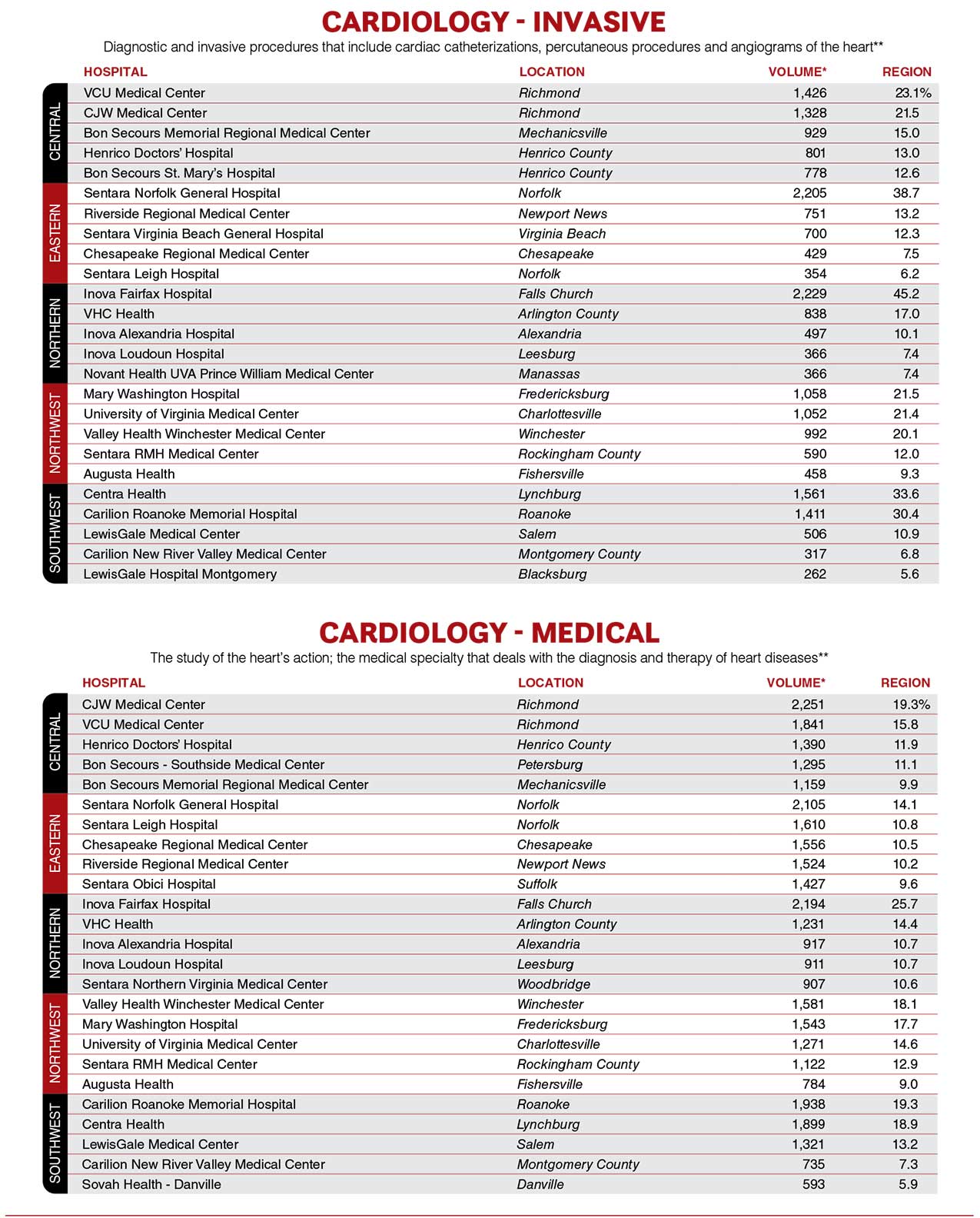
The focal point of a New York Times exposé last year, Bon Secours’ Richmond Community Hospital was one of four hospitals in Virginia to receive top marks from patients in an annual nationwide survey.
The Virginia results of the latest survey, which was conducted in 2021, are shown below. Overall, Virginia patient satisfaction was 70%, two percentage points below the national average.
Four of 81 Virginia acute-care hospitals received patients’ top ratings: Richmond Community; Inova Loudoun Hospital; Sentara Martha Jefferson Hospital in Charlottesville; and Valley Health‘s Page Memorial Hospital in Luray. Unlike the other three, Richmond Community’s ranking was based on fewer than 50 completed surveys.
In September 2022, the Times reported that Cincinnati-based Bon Secours Mercy Health was making as much as $100 million a year from Richmond Community, largely due to the federal 340B program, which allows hospitals in poor areas to purchase medications for a large discount, while charging insurers full price and keeping the profits. Unlike the nonprofit health system‘s suburban hospitals, the Times reported, Richmond Community lacked an intensive care unit, a maternity ward and a reliably working magnetic resonance imaging (MRI) machine. In December 2022, the Richmond Times-Dispatch reported that $27.5 million was sent from Richmond Community to Bon Secours’ Ohio headquarters in 2019.
The patient satisfaction scores come from the annual Hospital Consumer Assessment of Healthcare Providers and Systems conducted by the Centers for Medicare and Medicaid Services (CMS). Results are provided by Virginia Health Information, a Richmond-based nonprofit offering an array of data on hospitals, nursing facilities, physicians and health insurers in the commonwealth. In addition to the patient satisfaction survey, VHI annually provides Virginia Business with service line reports showing patient discharge volume by region for a wide variety of hospital procedures.
The national satisfaction survey asks patients two questions: How do they rate hospitals overall? And would they recommend the hospital to friends and family? The highest ratings in answer to the first question are 9 or 10 on a 10-point scale. The highest recommendation in response to the second question is: “Yes, definitely.”
In answering both questions in 2021, 80% or more of respondents gave top ratings to the four hospitals. Additionally, another six hospitals scored 80% or better on one of the two questions in the 2021 survey: Inova Fair Oaks Hospital in Fairfax; Inova Fairfax Hospital in Falls Church; Riverside Shore Memorial Hospital in Onancock; Smyth County Community Hospital in Marion; University of Virginia Medical Center in Charlottesville; and Novant Health UVA Haymarket Medical Center in Prince William County.
The Virginia average percentages for top ratings in the 2021 survey were 70% for the first question and 69% for the second question (up 1% for the first question and unchanged for the second question from the 2020 survey). The national averages for the latest survey were 72% for the first question and 70% percent for the second, with the first question unchanged and the second question a percentage point lower than the previous year.
In the 2021 survey, data was unavailable from seven hospitals, including Children’s Hospital of The King’s Daughters and Virginia Commonwealth University Medical Center.
The service line reports in the charts below show consumers which hospitals are the market leaders in their regions in terms of patient discharges for a variety of procedures. VHI suggests that patients seek additional information about their options and needs from health care providers. Not all hospitals provide the same types of care.
VHI also publishes regional and statewide costs for dozens of services to help consumers compare expected costs. These and other details about Virginia hospitals and other health providers are available at vhi.org.
In early October, Gov. Glenn Youngkin announced his goal of developing a small modular nuclear reactor (SMR) in Southwest Virginia within 10 years, part of a plan to make the region an epicenter of energy innovation.
Not long after, Youngkin said he planned to allocate $10 million to create the Virginia Power Innovation Fund, with $5 million going toward development of the proposed SMR.
An emerging technology, SMRs are being designed to generate up to 300 megawatts per unit, about one-third of the capacity of conventional nuclear reactors. Supporters see SMRs as a solution to the climate crisis because they don’t emit greenhouse gases. Unlike wind or solar energy, nuclear reactors aren’t dependent on the elements and don’t require battery storage, but critics have safety concerns.
Doug Lawrence, vice president of nuclear operations and fleet performance for Dominion Energy Inc., describes SMR as a “clean, reliable source of energy that is always on and not dependent on weather conditions.”
There are more than 70 commercial SMRs in development worldwide, but only one in Russia is operational. The U.S. Nuclear Regulatory Commission approved an SMR design from Oregon-based NuScale Power Corp. in summer 2022.
In a 2022 update to Dominion‘s integrated resource plan, the utility said it could add an SMR to its fleet by 2032, with the potential to build one 285-megawatt SMR each year after that.
Critics of the technology claim SMRs are not cost effective and express concern about radioactive waste that could be generated by SMRs, as well as the danger of nuclear accidents. A 2022 study published in the Proceedings of the National Academy of Sciences found that SMRs would likely create more nuclear waste, by a factor of up to 30, than conventional reactors.
Nevertheless, this isn’t a case of Richmond lawmakers trying to dump dangerous but needed technology in a rural part of the state, says Will Payne, director of economic development initiative InvestSWVA. “There are … other regions that want to have SMRs throughout Virginia,” Payne says. “It’s highly competitive.”
It’s too early to know how many jobs an SMR could create or the economic impact a small reactor could have on Southwest Virginia, says Duane Miller, executive director of the LENOWISCO Planning District Commission.
By spring, Miller hopes to have a needs assessment explaining what SMR developers seek in a site location. The next step, he says, would be to identify sites in the region that meet those criteria
Since its approval by Danville voters in November 2020, plans for a casino in the city have shifted.
In August 2022, Caesars Entertainment Inc. announced a partnership with the Eastern Band of Cherokee Indians (EBCI). Together, they upped the size and scope of Caesars Virginia, increasing their investment from $400 million to $650 million.
They’re also planning to open a temporary casino at the former Dan River Inc. Schoolfield mill site this summer, according to a third-quarter earnings call by Caesars President and Chief Operating Officer Anthony Carano. Company officials declined to share details, but Danville City Manager Ken Larking confirmed plans.
“Based on conversations that I’ve had with the Caesars team … they’re planning … a temporary casino, but they are waiting for the lottery to give approval for the license,” Larking says, adding that it could open in July. Caesars broke ground in August 2022 on the permanent casino, which is slated for a 2024 opening adjacent to the temporary casino site.
Cory Blankenship, EBCI’s secretary of the treasury, says all necessary materials for the temporary casino have been submitted to the Virginia Lottery Board. As of November 2022, the board had not scheduled action.
As for the permanent resort casino, Caesars appears bullish on its success, now building 500 hotel rooms, up from its originally proposed 300 rooms. The hotel will also feature a spa, a pool, bars, a 2,500-person entertainment venue and 40,000 square feet of meeting and convention space. The casino will have at least 1,300 slots, 85 live game tables, 24 electronic table games, a poker room and sportsbook.
Part of the increased $250 million investment is due to cost escalation of construction materials, Blankenship says, but he adds that investors also increased the project’s scale because of the strength of the market.
“Following COVID-19 pandemic closures, we found that regional gaming markets across the country recovered more quickly than anticipated,” Blankenship explains. “We are confident that market conditions — regional population, consumer demographics, proximity to other gaming markets and other variables — are favorable to support an expanded scope to the Danville project.”
Ordinarily, Blankenship says, the EBCI wouldn’t have supported opening a temporary casino. With this project, though, he believes it’s the right move. “The temporary facility is really going to help us buy down some of that cost escalation,” he says.
In the late 1990s, Jennifer E. Clift was working as a secretary when her supervisor encouraged her to continue her education. She began taking business classes at the University of Mary Washington in Fredericksburg.
“I wasn’t in a settled place,” she says. “I was not a traditional student. I was working full time, plus pretty much going to school full time. I was a young mother. For a while, I was arriving at 8 a.m. for classes, then I went to work, then I went back to school in the evening.”
UMW’s professors, she says, were very understanding of her needs and “so encouraging and supporting. They were not going to let me give up.”
These days, Clift, who graduated from UMW in 2000 with a business administration degree, is senior scientific technical manager and chief technology officer for the Naval Surface Warfare Center Dahlgren Division in King George County. She holds a master’s degree in engineering systems from the Naval Postgraduate School and is pursuing a doctorate in engineering at George Washington University.
Nehemia Abel, who earned a degree in marketing from UMW’s College of Business in 2020, is pursuing a career at the U.S. Agency for International Development, or USAID. Photo courtesy University of Mary Washington
In the years since Clift graduated, the university’s business education program has advanced as well. Though Mary Washington has been offering business studies for the last 100 years, its College of Business was not established until 2010.
“It’s a startup and a growth story in and of itself,” says Brian Baker, executive director of the business college’s Center for Economic Development (CED), which focuses on topics such as entrepreneurship, small business development and innovation and competitiveness.
UMW’s College of Business, he says, grew out of “a vision for discovering how the university could better engage with the broader community.”
Founded in 1908 as a normal school, or an institution for training teachers, the University of Mary Washington has a long history of teaching business and related subjects.
In 1919, at the direction of a state education board, the Fredericksburg campus began specializing in teaching “commercial” subjects. It graduated its first business teacher in 1924, the same year that commercial courses were offered in the evening to “interested townspeople.”
Over the next century, business education at the university evolved to meet the changing needs of both students and the community, school officials say.
Provost Tim O’Donnell says one reason the College of Business was established “was because our alums told us we weren’t doing enough to prepare them. Work is different now, more competitive.”
Students “need to learn to talk in the language of employers. They need to be real-world problem solvers,” says O’Donnell, who became UMW’s permanent provost in June 2022.
He praises the strong relationships that the College of Business has built with the local business community through the CED and the college’s Center for Business Research (CBR), which researches topics including issues impacting the Fredericksburg region’s economy.
“Faculty often are doing research projects in cooperation with Fredericksburg Regional Alliance,” O’Donnell says. For example, a CBR project for the alliance and the Fredericksburg Chamber of Commerce assessed the growth and decline of jobs across industry sectors in the region over a 10-year period.
The CBR, which is headed up by David Henderson, an associate professor of accounting, also has conducted a study on the demographics of commuters living in the Fredericksburg region and an analysis of the costs imposed on commuters by area traffic congestion on Interstate 95.
Entrepreneurial perspective
UMW’s College of Business is “a startup and a growth story in and of itself,” says Brian Baker, executive director of the college’s Center for Economic Development. Photo by Caroline Martin
CED programs include the EagleWorks Business Incubation Center and StartUpUMW, an entrepreneurial education program.
“Everything we have added has made sense from an entrepreneurial perspective,” says Baker, the CED’s executive director.
EagleWorks offers business development services to local startups and early-stage companies. Entrepreneurs have access to professional networks, office facilities, consulting services, peer engagement opportunities and other business resources.
StartUpUMW is designed to teach students how to start and run a business. Students have access to research databases, business consultants and office space to grow their own business ideas. They’re given tools to write their business plan and guidance from the CED team. Students can receive an experiential learning credit or internship experience for participating.
UMW’s College of Business has helped place 776 interns into the community workforce over the last five years, with 223 of those interns coming directly from the CED through initiatives like StartUpUMW.
“Those interns are doing some pretty heavy lifting in the areas of accounting, marketing, sports management, strategic planning and business analytics,” Bakersays. For example, several years ago, Baker and a team of students partnered with the Stafford Regional Airport to produce a written strategic marketing plan. The process included hands-on work with the Stafford Regional Airport Authority.
Taking part in StartUpUMW, “students will understand the process of preparing an idea to go to market. They will be able to do it forever. It’s like riding a bike, but it’s a tough bike to ride,” Baker says.
The CED also sponsors Eagle Innovation, a business pitch competition open to all UMW and Germanna Community College students. Three winning teams receive seed capital for their company or startup, Baker says. The grand prize is $2,000.
Through the various College of Business programs, “students benefit, faculty, businesses, the community — everybody benefits in some way. They synthesize together well,” Baker says.
The CED is also home to the U.S. Small Administration’s regional Small Business Development Center (SBDC), which serves the greater Fredericksburg area, the Northern Neck and the Middle Peninsula. This SBDC served 2,436 business clients over the past five years and “4,587 jobs have been created and retained” by those clients, says Baker, who started at UMW in 2002 as executive director of the SBDC’s forerunner. The center has also provided management education to 2,467 entrepreneurs in the region.
Recognizing that a large part of the business conducted in the Fredericksburg area is driven by federal contracting, the SBDC hosts one-on-one personalized government contracting assistance consultations with advisers from the Virginia Department of Business Assistance and the Central Virginia Procurement Technical Assistance Center.
The university has a strong partnership with one of the biggest employers in the area, the Naval Surface Warfare Center, notes O’Donnell. “We were tasked about a dozen years ago to build an education center for on-base individuals,” he says. Today, UMW’s Dahlgren Campus delivers science- and engineering-focused postgraduate courses taught locally and via distance learning from Virginia’s state universities. The campus hosts a broad spectrum of training events for the Navy, local government and private industry.
Success stories
Nehemia Abel, who graduated from UMW’s College of Business in 2020 with a bachelor’s degree in marketing, says students benefit from the college’s emphasis on internships and hands-on projects. During his senior year, Abel collaborated with a team of classmates to assist an environmental and education research center with communications, marketing, business development and operations services.
Now, Abel is a U.S. Agency for International Development Payne International Development Fellow and is pursuing a master’s degree at Georgetown University’s Walsh School of Foreign Service. Also a policy and advocacy fellow for the International Rescue Committee, Abel plans to work at USAID when he graduates from Georgetown in May.
Abel says he continues to benefit from lessons he learned about critical thinking and project management from UMW’s College of Business. He’s especially glad that the business college placed an emphasis on writing, noting that it’s a skill that comes in handy for the many policy memos, reports and case studies he produces.
As a UMW undergraduate, Abel, a Burundian refugee born in Tanzania, was involved with UMW’s James Farmer Multicultural Center, which promotes awareness and knowledge of diversity issues. He also co-founded an organization to assist Burundian refugees in the Fredericksburg region pursuing higher education and preparing for the workplace. The university honored him with its 2019-20 Citizenship Award for Diversity Leadership. Since graduation, he has remained involved in promoting diversity and mentoring students at UMW. “When I go back,” he says, “I try to make sure those students are taken care of and have a voice.”
UMW’s business teachings also made a difference in Jennifer Clift’s career at the Naval Surface Warfare Center, she says.
“I work in a science and engineering organization, where there’s a lot of technical work. I’m unique at Dahlgren. A lot of scientists and engineers don’t have a business background,” she says. “I got a strong foundation with the business lessons at Mary Washington. The path that I took has been very beneficial. It’s allowed me to look at things differently.”
In particular, Clift recalls her senior capstone program. Students were tasked with profiling a business, and she chose Southwest Airlines Co.“I interviewed the businessmen and women there about what made their business successful. It was very hands-on,” she recalls. “Getting students out of the classroom is extremely beneficial. … I remember a lot of the things I learned 20 years ago.”
Last October, Clift was inducted into the UMW College of Business Hall of Fame. “An innovator and technology expert,” the college said in recognizing Clift, “she drives advancement of [Naval Surface Warfare Center Dahlgren Division’s] technical capabilities through investments, partnerships and education, including academic partnering.”
In helping the Naval Surface Warfare Center Dahlgren Division forge partnerships with UMW, Clift, not surprisingly, says, “I started at the College of Business,” but she’s also helped established partnerships with UMW’s College of Education and College of Arts and Sciences. Last October, the NSWCDD sponsored its second robotics competition for high school students, in partnership with the university.
“It’s a well-integrated university,” says Clift, who also stays involved with UMW through efforts such as sharing her career experiences with women business students. “It’s not a stovepiped organization. We bring in everybody’s perspective.”
University of Mary Washington At a Glance
Founded
Established by the state government in 1908 as an all-women’s school to train teachers, Mary Washington, which was named after the mother of the nation’s first president, is a public liberal arts university. From 1944 to 1972, it functioned as the women’s college of the University of Virginia, becoming co-ed in the early 1970s and reorganizing as an independent college, later becoming a university in 2004. UMW’s College of Business was founded in 2010.
Campuses
UMW’s 176-acre Fredericksburg flagship campus is set in a mostly residential, historic part of the city that was the site of the 1862 Civil War Battle of Fredericksburg. The self-contained, brick-lined campus is within walking distance of downtown Fredericksburg and the Rappahannock River. In recent years, the university has expanded to campuses in Stafford County, which includes graduate-level and adult degree programs, and Dahlgren, which offers continuing education and professional development courses for the region’s engineers, scientists and administrative professionals.
Enrollment1
Undergraduate: 3,493
Graduate: 264
Virginia residents: 90%
International students: 2.4%
Racially or ethnically diverse students: 29%
Employees
UMW has nearly 850 workers, including approximately 650 full-time faculty and academic professionals.
Election years are not the time to make waves in Virginia’s legislature, says Greg Habeeb, a former Roanoke delegate who now advises clients pursuing legislation in the General Assembly.
Big changes — the kind the state saw during the Democrats’ two years of full legislative control in 2020 and 2021 — are expected to be extremely unlikely amid the split, election-year legislature of 2023. “It’ll cause some people to be excessively bold,” but that’s not the natural state of things, says Habeeb, who leads Gentry Locke Attorneys’ government and regulatory affairs team in Richmond. “It’s hard to legislate on the off-off year.”
Odd-year sessions are automatically shorter than even-year sessions, when the state must pass budgets. The Virginia Constitution requires a session of 30 days, traditionally extended to 45 days in odd years, so there’s less opportunity to pass as many bills as with the 60-day session required in even years.Also, this fall, all 140 seats in the House of Delegates and the Virginia State Senate are up for election, and redrawn districts mean 61 incumbents suddenly found themselves sharing districts with other incumbents, setting up a crowded primary field for this spring. (See related story.)
Undoubtedly, lawmakers in Richmond this session will pass some legislation — likely in the areas of renewable energy, education, public safety, workforce development and industrial site development. But “you [can] take the social issues off the table,” including gun control and abortion, Habeeb says. “There’s little to no room for compromise on those.”
That said, Virginia Gov. Glenn Youngkin‘s administration is supporting a bill to seek out public school library books with graphic sexual content so that parents can prohibit their children from having access to those materials. Other social-issue legislation being introduced in the House this session includes a measure to make vaccinations optional for public school students. And though it’s almost certain to not make it to the state Senate floor, House Bill 1395 from Del. Marie March seeks to ban all abortions in the wake of last year’s U.S. Supreme Court’s ruling repealing Roe v. Wade.
At least some bills this session are likely to gain traction and some bipartisan support, however.
For instance, there may be some movement toward filling two vacancies in the Virginia State Corporation Commission, the three-judge panel that governs utilities, state-chartered financial institutions, securities, insurance, retail franchising and the Virginia Health Benefit Exchange. In recent years, confirmations have been tied up in partisan strife, and with Judge Judith Williams Jagdmann’s resignation at the end of 2022, only Judge Jehmal T. Hudson remains on the bench.
“With two seats [open], there’s an obvious compromise,” Habeeb says. “The House fills one; the Senate fills one,” although there’s no guarantee that legislators will do that, he adds.
Other areas ripe for compromise include some Youngkin initiatives, such as measures to increase affordable, workforce-priced housing as well as a new agency focused on creating a “one-stop shop” for workforce development efforts.
A perennial subject
Extra money for site development will depend on the budget surplus, says Del. Luke Torian, D-Prince William. Courtesy photo
The Youngkin administration has proposed creating a state Department of Workforce Development and Advancement to take over 13 programs from eight state agencies, representing most of Virginia’s $485 million workforce efforts. His reorganization plan would move some responsibilities away from the Virginia Employment Commission and the Virginia Community College System.
According to the governor, the state’s workforce development initiatives are spread across 12 agencies, 20 other organizations and 800 programs. Meanwhile, Youngkin says, there are about 300,000 jobs unfilled statewide, and the state’s labor force participation rate was at 63.6% in October 2022, down from 66.4% before the COVID-19 pandemic.
During a December 2022 panel discussion sponsored by the Virginia Chamber of Commerce, Virginia Labor Secretary Bryan Slater called the current state of workforce development in the commonwealth “fragmented [and] siloed.” Virginia needs a “centralized hub … to drive policy, programs data and grants,” he added, and also a stronger focus on how many jobs are being filled through programs and how long people stay in those jobs.
It’s hardly a new idea. James W. “Jim” Dyke Jr., senior advisor for McGuireWoods Consulting LLC and former state secretary of education under Gov. L. Douglas Wilder, recalls that when he was tasked with consolidating the state’s workforce training functions in the early 1990s, “I had a full head of hair and Barry DuVal was the young mayor of Newport News.”
Del. Chris Head, R-Roanoke, is particularly excited about the proposed department. “We’ve spent an awful lot of money on workforce development,” he says, but Virginians often are not aware of training programs, due to a lack of marketing and poor interagency communication. Del. Terry Kilgore, the House majority leader, says Virginia’s workforce infrastructure is “duct-taped together,” compared with other states’ more cohesive approaches.
Also, notes University of Mary Washington political science professor Stephen Farnsworth, “one of the areas in which Virginia has not done well is unemployment assistance.” Kilgore says that if the VEC doesn’t have to worry about workforce training, it will be able to focus on more efficiently handling unemployment claims.
In April 2022, the VEC settled a federal lawsuit filed by three legal aid groups that represented Virginia residents who had struggled to obtain benefits during the height of the pandemic shutdown. The Joint Legislative Audit and Review Commission reported in November 2021 that the VEC had made more than $1.2 billion in incorrect payments during the pandemic.
Dyke hopes the new department could be created “in one fell swoop,” adding that he’s spoken to legislators on both sides of the aisle who support the new department. But Farnsworth says that turf battles could trip up the plan — especially if the community college system loses some authority and resources from the proposal.
While Head says there’s “still a significant amount of discord between Democrats and Republicans in the House of Delegates,” he’s hopeful they will find common ground on the workforce proposal.
Not safe bets
It’s less clear whether Youngkin will find support for some of his other proposals, such as increasing the state’s current budget allocation for helping localities prep industrial sites for megaprojects from $150 million to $500 million, or adding $1 billion in personal and business tax cuts.
“I think every single legislator will agree we need to focus on developing megasites,” Habeeb says, but the governor’s proposed spending increase for site development may face some pushback.
“I’m not sure it’s going to be possible this year,” says Democratic Del. Luke Torian, a member and former chair of the powerful House Appropriations committee, adding it will depend on the amount of budget surplus.
Also, notes Farnsworth, “One of the tensions in Richmond is the governor spending a lot of time on the road. There is always a fear in the legislature that the governor from the other party will be able to launch a national campaign on the backs of [statewide] successes.”
In short, Democrats have political motivation to prevent too many compromises that would make Youngkin appealing to a national audience. In 2022, the governor campaigned for GOP gubernatorial candidates across the nation — trips he said were in exchange for the Republican Governors Association’s support during his campaign. Many political observers, however, say that Youngkin is testing the waters for a potential 2024 presidential campaign.
“Glenn Youngkin’s aggressive national outreach has made compromise less likely in Richmond,” Farnsworth says. “He hasn’t done all that much to encourage compromise.”
Del. Terry Kilgore, R-Scott County, supports building a small nuclear modular reactor in Southwest Virginia. Photo by Earl Neikirk
Youngkin also has also proposed a $10 million investment to create the Virginia Power Innovation Fund, including $5 million to develop a small modular nuclear reactor (SMR) in Southwest Virginia. (See related story.)
Nuclear energy is one way to help the state fulfill the Virginia Clean Economy Act (VCEA), which calls for all energy in the state to be generated from carbon-free sources by 2050. The VCEA was passed in 2020 by the Democratic-controlled legislature.
Although Democrats intended for this goal to be met primarily through innovations in solar and wind energy, including battery storage, Habeeb says other kinds of energy production — including nuclear — are currently needed to meet the 2050 deadline.
Kilgore is bullish about building a reactor in coal country, where it could easily find a home at an abandoned mine site. “A lot of European countries are relying on nuclear energy,” Kilgore says. “I’m all for clean energy — solar and wind — but we’re going to have to invest in gas, coal and SMRs.”
However, some environmental groups and Democratic Del. Richard C. “Rip” Sullivan Jr., the House’s chief patron of the VCEA, have voiced doubt about the viability of a small reactor in Southwest Virginia, which would take at least 10 years to be productive, the governor has acknowledged.
In an op-ed in the Richmond Times-Dispatch last year, Sullivan wrote: “It is ironic that [Youngkin] would call renewables risky and expensive while trumpeting small modular nuclear reactors (SMRs). Solar and wind projects abound, while commercialized SMRs don’t exist anywhere in the world, because we don’t know how to build or operate them in cost-effective, safe and reliable ways.” [Editor’s note: While there are no SMRs in the United States, a Russian floating nuclear power plant uses two SMRs, and a land-based SMR is under construction in China.]
Casinos and cannabis
Meanwhile, state politicos say it’s a safe bet that Democratic Sen. Joe Morrissey will be doing everything in his power to gain approval this session for bringing a casino to Petersburg.
In October 2022, Petersburg City Council voted in favor of Maryland-based The Cordish Cos. developing a casino there if the General Assembly would allow it. In December 2022, Cordish Cos. officials said the project would include $1.4 billion in total commercial development.
Three years ago, the Assembly passed legislation allowing casinos to be built in five economically challenged Virginia cities — Bristol, Chesapeake, Danville, Norfolk and Richmond. Voters in the first four localities have approved casinos, which are under development, but Richmond voters narrowly defeated a referendum in November 2021, blocking a proposed $565 million casino resort. The next day, Morrissey, whose district includes Petersburg, began working on getting Petersburg a shot at a casino instead of Richmond. His 2022 bill failed, but he’s refiled it for the 2023 session.
Morrissey, who was elected to the state Senate in 2019, says in an interview with Virginia Business (see related January 2023 Q&A with Morrissey) that the region’s previous state legislators were “asleep at the wheel” when negotiations were held in 2018 to determine which Virginia cities could hold casino referendums — and that he would have fought “tooth and nail” for Petersburg.
The casino bid may receive some bipartisan support because Republican Del. Kim Taylor, who represents Petersburg and part of Chesterfield County, is carrying the House version of Morrissey’s casino bill.
Richmond casino proponents are still actively pursuing a second referendum, even if Petersburg also wins the right to build a casino. But two casinos in the region would mean fewer jobs and less revenue for each locality than just one casino, according to the findings of a JLARC report released late last year. And Cordish Cos. officials have said they are not interested in pursuing a Petersburg casino if one is approved in Richmond.
Another adult recreational issue that may come up during this session is regulating commercial sales of cannabis. Following the legislature’s 2020 decriminalization of marijuana, plans for creating a legal retail market are still up in the air, and loopholes for products like delta-8 gummies may also be addressed this year.
Head doesn’t expect an overall resolution on retail marijuana sales this session, although there could be some new medical marijuana legislation. Some Republicans, himself included, consider it “crazy” that marijuana possession was legalized in the first place, Head says, and are not likely to approve further legislation. Morrissey, however, is hopeful for some regulatory measures, calling them “a fiduciary duty,” while Kilgore expects the state Cannabis Control Authority to make recommendations for the 2024 session.
The list of bills that probably won’t be passed this year is long. Limits on abortion and LGBTQ rights — including restrictions on K-12 transgender students participating in school sports — are bound to hit Senate Democrats’ brick wall.
A bill as seemingly anodyne as adjusting state dentist licensing lost its prospective chief co-sponsor’s support “because it’s an election year,” says Republican Del. Phil Scott.
And even in the wake of high-profile mass shootings in recent months at the University of Virginia and a Chesapeake Walmart store, gun-control measures like Morrissey’s proposed ban on assault weapons are unlikely to pass through the GOP-controlled House.
Dyke says that higher education leaders in Virginia may seek more leverage in barring firearms from their campuses, but Habeeb says even that powerful constituency is unlikely to budge Republicans.
U.Va. and Virginia Tech — two schools strongly impacted by gun violence this century — are “so intertwined with their communities, and you can’t put a fence around the universities,” Habeeb says, adding that even if guns are banned from campuses, students and employees could store weapons off-grounds.
Nevertheless, there is a chance, he adds, that the legislature will find common ground this year “in investing in more law enforcement or more funding for mental health.” Both ideas have the support of Youngkin, who has proposed $230 million to expand the state’s behavioral health system.
Redrawn districts become incumbent battlegrounds BY KATE ANDREWS
We use cookies on our website to give you the most relevant experience by remembering your preferences and repeat visits. By clicking “Accept All”, you consent to the use of ALL the cookies. However, you may visit "Cookie Settings" to provide a controlled consent.
This website uses cookies to improve your experience while you navigate through the website. Out of these, the cookies that are categorized as necessary are stored on your browser as they are essential for the working of basic functionalities of the website. We also use third-party cookies that help us analyze and understand how you use this website. These cookies will be stored in your browser only with your consent. You also have the option to opt-out of these cookies. But opting out of some of these cookies may affect your browsing experience.
Necessary cookies are absolutely essential for the website to function properly. These cookies ensure basic functionalities and security features of the website, anonymously.
Cookie
Duration
Description
cookielawinfo-checkbox-analytics
11 months
This cookie is set by GDPR Cookie Consent plugin. The cookie is used to store the user consent for the cookies in the category "Analytics".
cookielawinfo-checkbox-functional
11 months
The cookie is set by GDPR cookie consent to record the user consent for the cookies in the category "Functional".
cookielawinfo-checkbox-necessary
11 months
This cookie is set by GDPR Cookie Consent plugin. The cookies is used to store the user consent for the cookies in the category "Necessary".
cookielawinfo-checkbox-others
11 months
This cookie is set by GDPR Cookie Consent plugin. The cookie is used to store the user consent for the cookies in the category "Other.
cookielawinfo-checkbox-performance
11 months
This cookie is set by GDPR Cookie Consent plugin. The cookie is used to store the user consent for the cookies in the category "Performance".
viewed_cookie_policy
11 months
The cookie is set by the GDPR Cookie Consent plugin and is used to store whether or not user has consented to the use of cookies. It does not store any personal data.
viewed_cookie_policy
11 months
The cookie is set by the GDPR Cookie Consent plugin and is used to store whether or not user has consented to the use of cookies. It does not store any personal data.
Functional cookies help to perform certain functionalities like sharing the content of the website on social media platforms, collect feedbacks, and other third-party features.
Performance cookies are used to understand and analyze the key performance indexes of the website which helps in delivering a better user experience for the visitors.
Analytical cookies are used to understand how visitors interact with the website. These cookies help provide information on metrics the number of visitors, bounce rate, traffic source, etc.
Advertisement cookies are used to provide visitors with relevant ads and marketing campaigns. These cookies track visitors across websites and collect information to provide customized ads.

 Sign In
 Free Newsletter