Sign In
Upcoming Event
 Free Newsletter

Trade tensions disrupt Virginia cargo flows
Port officials optimistic 2026 will show improvement
Mark Newton April 29, 2026//
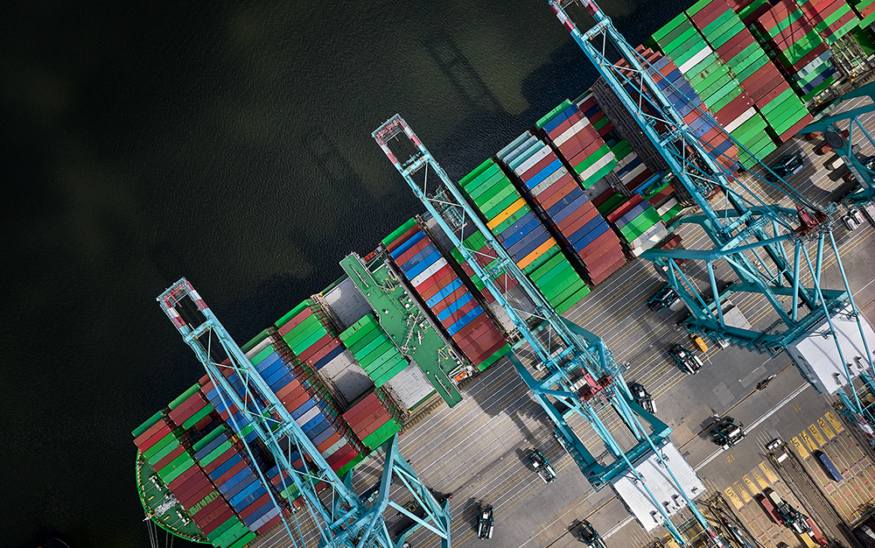
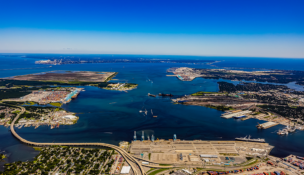
In 2025, the Port of Virginia saw a decrease in cargo due to international tariffs. Photo courtesy Port of Virginia
In 2025, the Port of Virginia saw a decrease in cargo due to international tariffs. Photo courtesy Port of Virginia
Trade tensions disrupt Virginia cargo flows
Port officials optimistic 2026 will show improvement
Mark Newton// April 29, 2026//



Summary:
- Port of Virginia cargo declined by 2 million tons in 2025
- Chinese goods represent 19% of Port of Virginia cargo
- Port hopeful about 2026 due to conclusion of dredging project, other expansions
The Port of Virginia is hoping for smooth sailing ahead after a tumultuous 2025 driven by President Donald Trump’s tariffs.
Spanning marine terminals in Hampton Roads and inland hubs in Front Royal and Richmond, the port has had to navigate rapid shifts in trade policy that made the cost of goods increasingly difficult to predict.
“It was a challenging year,” spokesperson Joe Harris says. “There’s really no way for us to adjust for a changing tariff environment. We can only service the cargo that’s coming to us.”
Chinese exports were hit with a 10% tariff in February 2025, kicking off a series of escalating trade measures between the United States and China. That changed in February, when the Supreme Court ruled that the president could not use the International Emergency Economic Powers Act to freely enact tariffs. The president immediately issued a 10% global tariff under the 1974 Trade Act that expires on July 24.
The tariffs have also been felt beyond the terminals. At Norfolk-based logistics firm CV International, tariffs created extra work for customers and staff. Rachel Shames, the company’s vice president of pricing and procurement, says there’s been less cargo moving over the last year.
“We’ve been dealing with a lot of the fallout around managing the tariffs, managing the regulations, keeping up with the changes that are happening in the industry,” Shames says. “Nothing about U.S. Customs brokerage is really made to be able to digest and operate with as many changes as we’ve had over the last year.”
One consolation for the Port of Virginia is that Chinese goods make up just 19% of its cargo, as opposed to 62% in Long Beach, California. For Old Dominion University economics professor Vinod Agarwal, the flat tariff imposed after the Supreme Court ruling at least provides some predictability. But, he says, “2025 was not a good year for the Port of Virginia or for most other ports in the U.S.”
Cargo crunch
Since the COVID-19 pandemic, cargo flowing through the Port of Virginia’s network of terminals — spanning Hampton Roads, Richmond and the Virginia Inland Port in Front Royal — has hit all-time highs, with 26.7 million tons recorded in 2024. The following year, however, saw a 2 million-ton decline that Agarwal and other researchers at the Dragas Center for Economic Analysis and Policy attribute almost entirely to tariffs, as well as a temporary cargo boost due to the 2024 collapse of Baltimore’s Francis Scott Key Bridge, which led to ships being redirected south.
“We found the dollar value of imports declined at almost every port in the U.S. except for some ports on the West Coast in the first quarter of last year,” Agarwal says.
At its worst, the Port of Virginia’s imports fell by 12.1% between May 2024 and May 2025. Soybean exports fell by 32.2% in July 2025 compared to a year earlier. But barring a new wave of ever-changing tariffs, Agarwal doesn’t foresee a decline in cargo continuing. “How much of a pickup it will be, I do not know,” he adds.
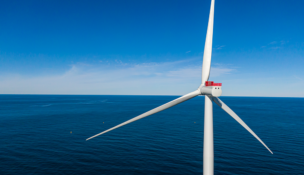
Amid this turmoil, the Port of Virginia has invested in its future. The port struck a deal last year to set a price for the port to buy the Virginia International Gateway terminal in Portsmouth from its eponymous private owner at the end of its lease in 2065. The past year also saw the port reach several milestones in its $1.4 billion Gateway Investment Program, which includes dredging, terminal upgrades and support for Dominion Energy‘s Coastal Virginia Offshore Wind project. In late February, the port completed its $450 million project to dredge Virginia’s commercial shipping channels and Norfolk Harbor, making Virginia home to the East Coast’s deepest and widest port.
“When you’re in one of these capital campaigns, you can’t stop processing cargo and handling ships,” Harris says.
“There’s always this shell game that you play on your terminals, and we didn’t have to play it as intensely this year because we didn’t have as much cargo, and that allowed us the room to work without disruption to cargo operations.”
Harris, however, measures the port’s success beyond the amount of cargo that flows through it, connecting international trade to economic development wins within the commonwealth, such as Lego Group‘s production facility in Chesterfield County and the Port 460 Logistics Center in Suffolk, which he said reflect continued business interest in the region.
Still, Shames says the shipping industry has faced constant disruption since COVID-19, with the past six years disrupting “one thing after another” for supply chains.
“The new normal is no normal,” Shames says. “Everyone is talking about the need to be constantly prepared for the next disruption, [but] you’re not going to avoid the next supply chain disruption. There are too many factors.”