Sign In
Upcoming Event
 Free Newsletter

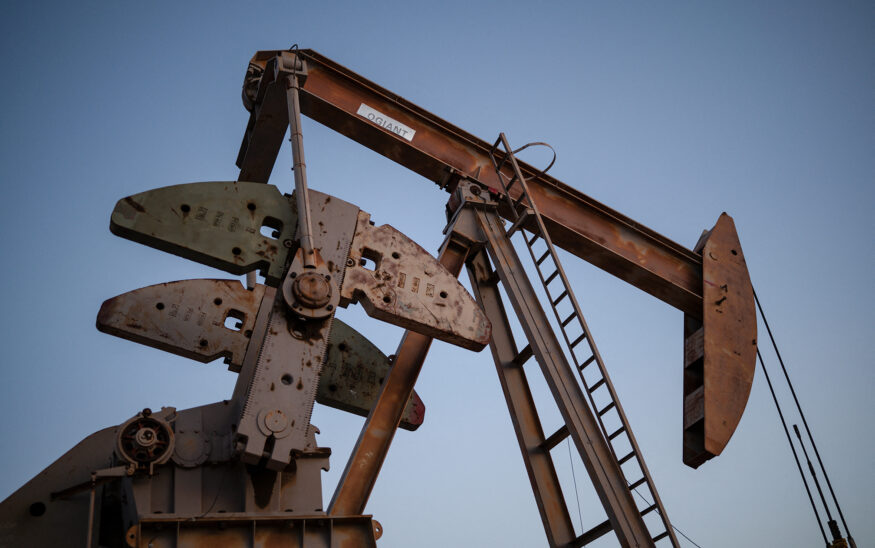
A pump jack operates outside of Midland, Texas, U.S. June 11, 2025. REUTERS/Eli Hartman
A pump jack operates outside of Midland, Texas, U.S. June 11, 2025. REUTERS/Eli Hartman
Oil tumbles below $100 after Trump announces two-week ceasefire



Summary:
- Oil drops below $100 a barrel after ceasefire announcement
- Trump agrees to two-week ceasefire with iran
- Iran to coordinate safe transit through strait of hormuz
LONDON, April 8 (Reuters) – Oil tumbled below $100 a barrel on Wednesday after U.S. President Donald Trump said he had agreed to a two-week ceasefire with Iran, subject to an immediate and safe reopening of the Strait of Hormuz.
Brent crude futures were down $18.27, or 16.72%, at $91.00 a barrel by 1320 GMT. WTI futures slid by $20.48, or 18.13%, to $92.47.
Benchmark European diesel prices also fell, shedding $310.75, or 20.34%, to $1,217 a metric ton.
Brent pared some losses after a report that Saudi Arabia’s crucial East-West pipeline was targeted in an attack, but fell again to hit a fresh low of $90.40 per barrel for the session.
Investors are likely focussing on de-escalation and are selling oil as a result, UBS analyst Giovanni Staunovo said.
Trump’s turnaround came shortly before his deadline for Iran to open the Strait of Hormuz or face widespread attacks on its civilian infrastructure. About 20% of the world’s daily oil supply passes through the narrow waterway.
“This will be a double sided CEASEFIRE!” Trump wrote on social media after posting earlier on Tuesday that “a whole civilization will die tonight” if his demands were not met.
Iran said it would halt its attacks if strikes against it stopped and that safe transit through the Strait of Hormuz would be possible for two weeks in coordination with Iranian armed forces, according to a statement by Foreign Minister Abbas Araqchi.
Iran could open the strait in a limited and controlled way on Thursday or Friday ahead of a meeting between U.S. and Iranian officials in Pakistan, a senior Iranian official involved in the talks told Reuters on Wednesday.
In theory, the 10–13 million barrels per day of crude oil and product supply stranded behind the Strait of Hormuz should now be released gradually, said Tamas Varga, analyst at brokerage PVM Oil.
“Whether the pre-March status quo will be re-established depends entirely on whether the truce can be turned into a permanent peace during the negotiations in Pakistan,” he added.
Shippers were still seeking clarity on the logistics, while refiners inquired about new crude loadings on Wednesday, in response to the ceasefire deal.
Several Gulf states identified missile launches and drone attacks or issued warnings to civilians to take shelter.
“There is still scope for a significant geopolitical premium being entrenched for the foreseeable future based on the details of the comprehensive agreement,” Commonwealth Bank analyst Vivek Dhar said in a note.
Trump said that the U.S. had received a 10-point proposal from Iran, which he called a workable basis to negotiate, and that the parties were a long way towards reaching a definitive agreement for long-term peace.
He said on Wednesday that the United States will work closely with Iran and will be talking about tariff and sanctions relief with Tehran.
(Reporting by Ahmad Ghaddar and Robert Harvey in LondonAdditional reporting by Helen Clark in Perth and Jeslyn Lerh in SingaporeEditing by Kevin Liffey, David Goodman and Janane Venkatraman)
P