Sign In
Upcoming Event
 Free Newsletter

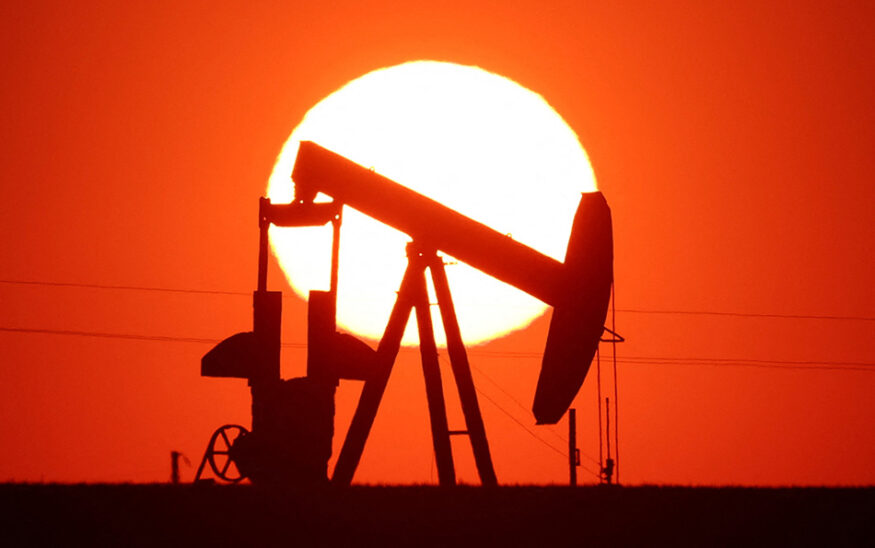
The sun sets behind an oil pump outside Vaudoy-en-Brie, near Paris, France, March 18, 2026. REUTERS/Christian Hartmann
The sun sets behind an oil pump outside Vaudoy-en-Brie, near Paris, France, March 18, 2026. REUTERS/Christian Hartmann
Oil volatile as supply worries offset hopes for Iran-US talks



LONDON, April 24 (Reuters) – Oil prices were volatile on Friday as traders weighed supply disruptions against peace talks between the U.S. and Iran potentially resuming.
Prices rose 2% earlier in the day on fears of renewed military escalation in the region after Iran released footage of commandos boarding a cargo ship in the Strait of Hormuz, and as progress stalled on re-opening the key waterway.
They then pulled back after three Pakistani sources told Reuters that Iranian Foreign Minister Abbas Araqchi was expected to arrive in Islamabad late on Friday with a small team. Pakistan has been hosting peace talks.
“The (Strait of Hormuz) disruption has created a complex logistical challenge that will take time to resolve …. Clearing this backlog will take weeks, as vessels are sequenced through ports that are themselves operating under constrained conditions,” said Saxo Bank analyst Ole Hansen in a note.
At 1321 GMT, Brent crude futures were down 29 cents, or around 0.3%, at $104.78, and U.S. West Texas Intermediate futures were down $1, or around 1.1%, to $94.83.
“Whilst the fundamental backdrop remains supportive, traders are liquidating length ahead of an unusually unpredictable weekend and will readjust their positions Sunday night based on Iranian developments,” said Tamas Varga of oil broker PVM.
For the week, Brent is up about 16% and WTI 14%, the second-largest weekly gains since the war began.
Navigation through the Strait of Hormuz, which before the war carried about a fifth of global oil output, remains effectively blocked. Iran’s capture of two cargo ships highlighted Washington’s difficulties in trying to control the passage.
On Thursday, U.S. President Donald Trump said Iran may have loaded up its weaponry “a little bit” during a two-week ceasefire, but added that the U.S. military could eliminate it in a single day. On Wednesday, he said he would indefinitely extend the ceasefire to allow for further peace talks.
Haitong Futures said in a report that if peace talks fail to make progress by the end of April and fighting resumes, oil prices could climb to new highs for the year.
“There’s set to be fresh financial pain ahead as key shipments from the region remain blocked,” said Susannah Streeter, chief investment strategist at UK investment service Wealth Club. “That is set to keep costs elevated for a vast array of commodities.”
(Additional reporting by Sam Li and Helen Clark. Editing by Louise Heavens and Mark Potter)
n