Sign In
Upcoming Event
 Free Newsletter

Language, immigration restrictions hit truckers
Virginia Trucking Association backs Trump policy
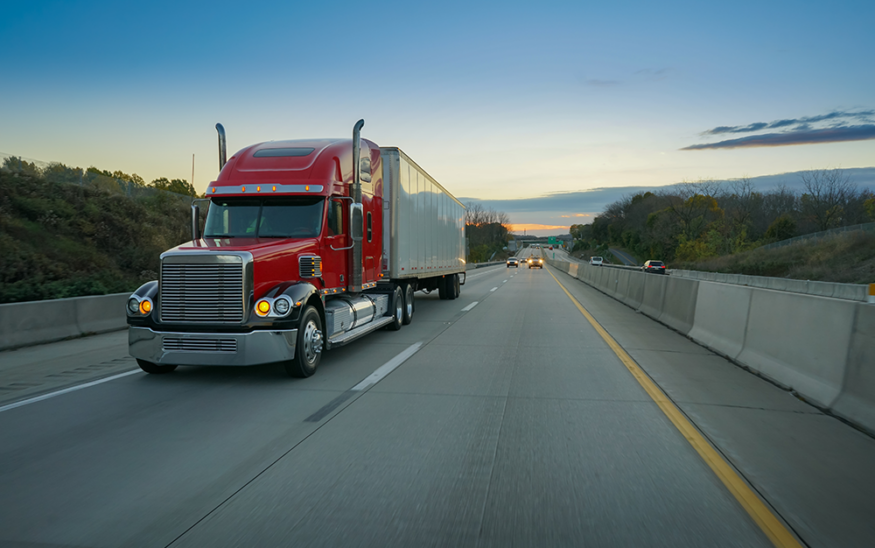
Under new federal policy, fewer U.S. immigrants will be able to earn commercial driver’s licenses. Photo by AdobeStock
Under new federal policy, fewer U.S. immigrants will be able to earn commercial driver’s licenses. Photo by AdobeStock
Language, immigration restrictions hit truckers
Virginia Trucking Association backs Trump policy



Summary:
- Virginia Trucking Association president P. Dale Bennett supports federal English proficiency policy
- More than 6,000 truckers nationwide removed for English rule violations in 2025
- Virginia DMV stopped issuing non-domiciled commercial licenses in 2025
The Trump administration issued a requirement in February that all prospective commercial drivers must take their license exam in English, on top of an earlier policy requiring proficiency in the English language adopted last June.
For the Virginia Trucking Association’s president and CEO, P. Dale Bennett, the administration’s rules enhance safety.
“We support the policy,” Bennett says. “Being able to distinguish road signs by different shapes and colors seems simple enough, but it goes beyond that.”
According to U.S. Transportation Secretary Sean P. Duffy, the policy ensures that truck drivers can communicate in English with law enforcement officials and understand all the kinds of signs on today’s roads and highways.
Bennett adds that drivers “need to be able to read and understand messages related to directions, detours, restrictions on weight and height. There are message signs telling you if a crash has occurred or if you are entering a work zone. … It’s about safety.”
However, the June 2025 English proficiency rule led to more than 6,000 truckers being removed from the road for violations in just over three months last year, The Washington Post reported in October 2025. In February, the federal Department of Transportation recommended that more than 550 commercial driving schools in the United States should close due to safety and testing issues.
What’s more, rules that went into effect in mid-March restricting immigrants with temporary legal status in the United States from earning commercial licenses and permits will potentially affect up to 200,000 truck drivers, the DOT estimates. There is a lawsuit currently making its way through the court system to block the rule’s enforcement, but in Congress, variations of what is known as “Dalilah’s Law,” would extend into law some of these new regulatory changes.
In his State of the Union address, President Donald Trump called on the Republican-controlled Congress to pass the law, named for a 7-year-old California girl who was severely injured in a 2025 crash that authorities say was caused by a truck driver in the country illegally.
Meanwhile, the industry is understaffed, even without the potential loss of immigrant drivers.
The American Trucking Associations (ATA) has estimated a possible shortage of 160,000 drivers by 2030, although the group backs the White House’s policy changes.
In 2025, ATA Chief Economist and Senior Vice President Robert Costello said, “What we have in the United States is a quality problem around drivers, much more so than an absolute number. It’s the quality of the labor.”
The Virginia Trucking Association says it doesn’t plan to hold English classes for drivers.
“Our members have not asked us to do that. They can do [it] on their own,” Bennett says. According to VTA, heavy and tractor- trailer truck drivers held 43,380 jobs in Virginia in 2022.
The Federal Motor Carrier Safety Administration (FMCSA) did not immediately provide information about the timing and next steps for changing the rules for CDL test administration. Road tests are already conducted only in English, Bennett notes.
As for Dalilah’s Law, Bennett says its impact will be limited in Virginia, as the state’s Department of Motor Vehicles had already stopped issuing commercial driver’s licenses and permits to non-domiciled applicants in October 2025.
“We have received no complaints from any of our members about negative impact of DMV not issuing/renewing non-domiciled CDLs,” Bennett says. “This may be because, according to DMV, there are less than 2,000 non-domiciled Virginia-issued [commercial licenses and permits], which represents less than 1% of in total CDLs issued yearly in Virginia.”
e