Sign In
Upcoming Event
 Free Newsletter

Southwest Virginia continues push for inland port
Port study says region lacks available workforce
Paul Bibeau //April 29, 2026//
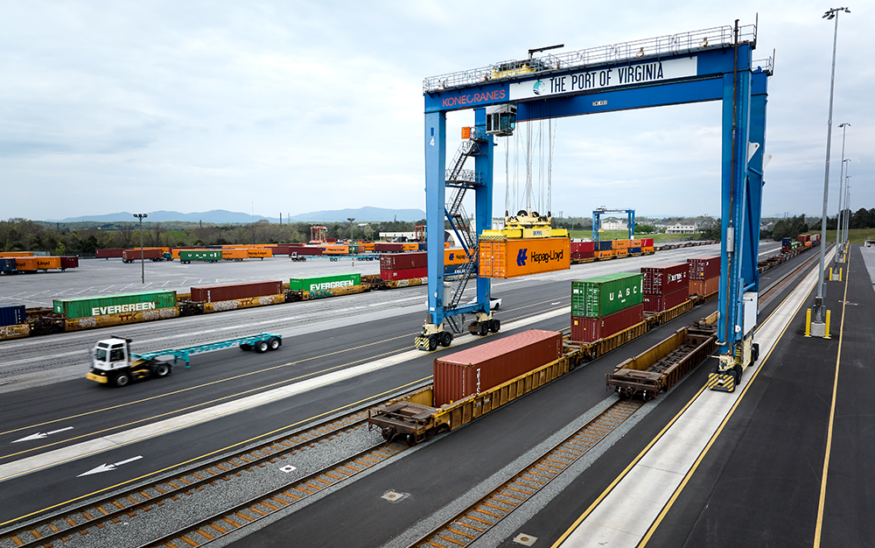
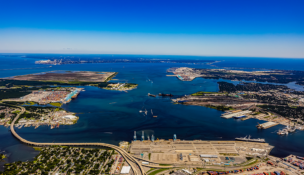
The Virginia Inland Port in Front Royal now has a RailGreen line to the Port of Virginia’s Hampton Roads terminals. Photo courtesy Port of Virginia
The Virginia Inland Port in Front Royal now has a RailGreen line to the Port of Virginia’s Hampton Roads terminals. Photo courtesy Port of Virginia
Southwest Virginia continues push for inland port
Port study says region lacks available workforce
Paul Bibeau //April 29, 2026//



Summary:
- Southwest Virginia officials continue lobbying for inland port
- However, Virginia Port Authority cites limited workforce numbers in region
- State likely to provide funding for southwest port, but number is up in the air
It’s one of the few things Virginia’s new governor and her predecessor agree on: the need for a second inland port located in Washington County.
Front Royal’s Virginia Inland Port, part of the Port of Virginia system, opened in 1989 and has directly and indirectly created more than 8,500 jobs and brought almost $1 billion to the northern Shenandoah Valley over the years, according to the Virginia Port Authority.
In December 2025, outgoing Gov. Glenn Youngkin included $35 million in his final budget for a Washington County inland port to be built, calling it “a really important investment in the future of Southwest Virginia but also the commonwealth.” While campaigning for governor last year, Abigail Spanberger said the new port “could be absolutely transformational.”
Local lawmakers in Southwest Virginia have for several years touted the project, which they say could bring jobs and investment to their corner of the state, which has lost many coal mining jobs in recent decades and has seen a population drain.
State Sen. Todd Pillion predicted in 2024 that it would connect the region, “opening up new pathways to the Port of Virginia.” And in a 2026 interview, Del. Terry Kilgore said the port would draw investment. “We believe that if we have the port and access to the port, then folks are going to look to locate here.”
However, a recent Virginia Port Authority study determined that the region is not ready for the project, even though legislators and economic developers in Southwest Virginia still back the plan.
Port of Virginia spokesman Joe Harris says the state’s coal country “is not mature enough in terms of a cargo market. At this juncture a more prudent regional approach would be to focus on foundational investments in site readiness, infrastructure and targeted industry recruitment that could support cargo in the area.”
The port authority’s report found that the potential manufacturing and distribution workforce within a 60-minute commute of this project would be about 58,000 people, far lower than that of Front Royal, where about 140,000 people work in the industry.
As a result, Southwest Virginia may have difficulty staffing “large, labor-intensive projects or new business sectors,” the report says.
However, according to Jonathan Belcher, executive director and general counsel of the Virginia Coalfield Economic Development Authority, the Southwest inland port will take long enough to develop that the area will have enough time to prepare. And, he adds, it answers a need Southwest Virginia has for infrastructure that will bring further business investment.
“Until those infrastructure investments are made,” he says, “then the region’s always going to struggle economically. So, it’s really just a question of how long does the state and the federal government want to continue to have to subsidize Southwest Virginia in other ways?”
As state lawmakers prepared for a special budget session in April, there was general agreement between the Senate and the House that the state should allocate money toward the project.
Meanwhile, the Virginia Inland Port marked the first year of its RailGreen corridor, a rail line between Front Royal and the Port of Virginia’s Hampton Roads hub. The program’s aim is to reduce greenhouse gas emissions in the shipping process.
RailGreen customers can purchase carbon credits from Norfolk Southern, which uses low-carbon biofuel on the line. This year, according to Josh Raglin, Norfolk Southern’s chief sustainability officer, the company will add two new biofuel suppliers to meet growing corporate demand.
“A company’s supply chain emissions are the hardest to track and tackle,” Raglin says. “By participating in RailGreen, a business is moving its product with low-carbon fuel, while third-party validation verifies carbon-reducing activities against international standards.”
e