Sign In
Upcoming Event
 Free Newsletter

Maritime and logistics can lift the commonwealth
Virginia Maritime Association's executive director on state's maritime industry
David White April 29, 2026//
White
White
Maritime and logistics can lift the commonwealth
Virginia Maritime Association's executive director on state's maritime industry
David White April 29, 2026//



Virginia is entering a moment of uncommon alignment: Federal and allied initiatives are accelerating the rebuild of America’s defense and maritime industrial base, while recent investments are strengthening global trade through the Port of Virginia.
Treating logistics and international trade as core economic development priorities is a statewide strategy to create jobs, expand supplier networks and improve competitiveness across every region. That means connecting rural and urban communities to the same growth engine by improving how Virginia makes, moves and ships goods.
This is not a niche sector. Virginia’s maritime industry already accounts for about 14% of gross state product, reflecting the statewide impact of port activity, shipbuilding and repair, logistics and related supply chains.
Federal efforts to expand defense production and restore shipbuilding and ship repair capacity are creating opportunities. Virginia is well positioned: Hampton Roads anchors the nation’s maritime and naval center of gravity and is aligning growth through the Defense, Energy, Aeronautics and Logistics (DEAL) strategy of the Hampton Roads Alliance. Northern Virginia hosts leading defense contractors and integrators, and supply-chain firms operate statewide.
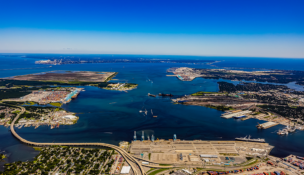
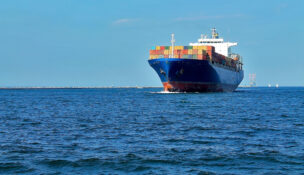
The Port of Virginia’s $1.4 billion Gateway Investment Program is strengthening trade capacity. The 55-foot deepening project was recently completed, delivering the deepest channels on the East Coast, along with new berths for ultra-large container vessels and additional ship-to-shore cranes. In a challenging trade environment marked by uncertainty and shifting costs, these upgrades improve supply chain efficiency and reliability for importers and exporters and reinforce Virginia’s long-term trade outlook. They also help Virginia compete for new services and cargo, reduce the risk of delays and support the on-time delivery that manufacturers, retailers and agricultural exporters depend on.
Dual Class I railroads and an expanding interstate network link the port to national markets, supported by inland nodes such as the Virginia Inland Port near Winchester and the Port of Richmond. These connections lower total landed cost, expand market reach for Virginia-made products and give companies more options when disruptions occur.
In Hampton Roads, the Hampton Roads Marine Training System and Old Dominion University’s School of Supply Chain, Logistics, and Maritime Operations strengthen the talent pipeline for ship repair, logistics, and maritime operations. Elsewhere, the Virginia Tech Transportation Institute in Blacksburg is driving innovation in freight transportation, and the Institute for Advanced Learning and Research in Danville is training shipbuilders on modern processes.
But assets alone do not guarantee wins. Competing states are aligning agencies, regions and industry to attract shipyard expansion, suppliers and workforce investments. Virginia needs a focused statewide defense and maritime industrial base strategy to align priorities such as capacity growth, supply-chain strength, site readiness and credential-to-career pipelines.
The Virginia Maritime Association advances this work through regional chapters that enable local connections and collaboration that can guide and support state strategies. Those chapters help translate statewide goals into practical partnerships, from sharing procurement needs to aligning training, permitting and infrastructure priorities.
The payoff is broad-based. Keeping goods moving protects affordability and strengthens business resilience. Rebuilding the nation’s defense and maritime industrial base can attract private investment and create good-paying jobs on the waterfront and across the statewide supply chain. With coordinated action, Virginia can secure its place in a new industrial era, grow the middle class and ensure every region shares in the growth.
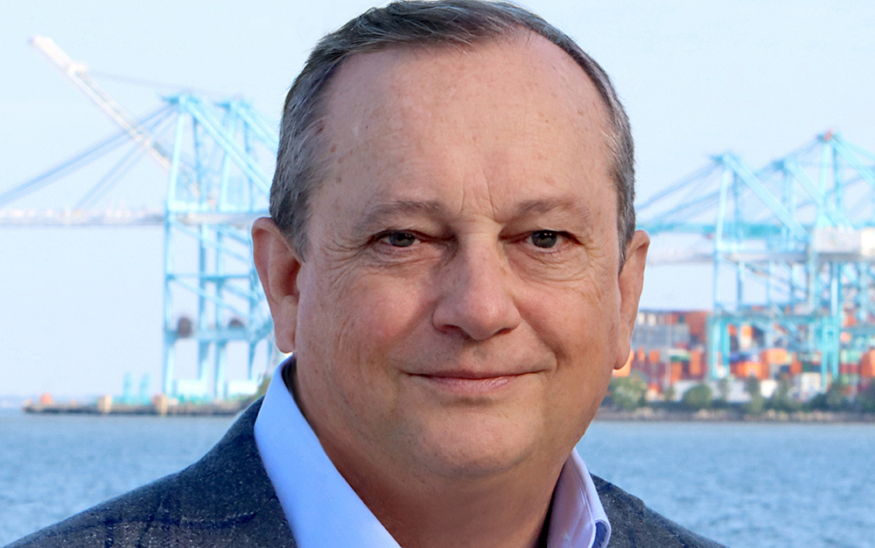
David White is the executive director of the Virginia Maritime Association, which connects, informs and represents the state’s maritime-related businesses.
s