Sign In
Upcoming Event
 Free Newsletter


Josh Eberly is a third-generation farmer at his Rockingham County poultry farm and a member of the Virginia Poultry Growers Cooperative. Photo by Norm Shafer
Josh Eberly is a third-generation farmer at his Rockingham County poultry farm and a member of the Virginia Poultry Growers Cooperative. Photo by Norm Shafer
Talking turkey: Shenandoah poultry industry takes off
Jenny Boone August 2, 2026//



Summary:
- Virginia Poultry Growers Cooperative invests $113.9 million in new feed mill
- Expansion adds 146 jobs to existing 565 employees
- Cooperative to process 11 million turkeys annually after expansion
Three turkey houses, two flocks and about 35,200 birds a year: That’s what is on Josh Eberly’s land in Rockingham County.
Raising turkeys is in Eberly’s lifeblood. He grew up on his family’s farm, and now he’s running it, after he built the farm’s third turkey house. He’s following in the path of his father and grandfather, who had one turkey house in the 1970s.
A member of the expanding Virginia Poultry Growers Cooperative, Eberly is one of many faces of the Shenandoah Valley‘s modern poultry industry.
Rockingham County leads Virginia in production of chickens and turkeys, as well as dairy. The state ranks sixth nationally in turkey production, growing more than 15 million birds across 433 farms, according to the Virginia Poultry Federation.
As one of three core industry sectors, agriculture drives the Shenandoah Valley’s economy. The industry contributed more than $640 million to the valley’s gross regional product in 2024, and it employs 13,000 people, according to the Shenandoah Valley Partnership.
But not all agricultural businesses in the valley are thriving.
This summer, 80 Acres Farms, an indoor vertical farming company that grows leafy greens, microgreens and herbs, closed its Harrisonburg facility, the former Soli Organic plant.
In August 2025, Ohio-based 80 Acres purchased Soli Organic, originally known as Shenandoah Growers, founded in 1989.
The July shutdown eliminated 80 jobs, including 37 packer positions.
Jed Portman, spokesman for 80 Acres, says in a statement that the facility’s closing is the result of “working to integrate the two businesses to position the combined company for long-term success,” as well as shifting operations to other locations in the country.
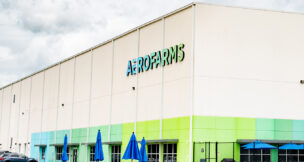
This decision and others like it nationally underscore challenges and raise questions about the future of the indoor farming industry, which has hit a rough patch in recent years, including Plenty’s 2025 bankruptcy, which it has emerged from, and AeroFarms’ narrow escape from being forced to close its Pittsylvania County aeroponic indoor farm.
In April, the facility was purchased by Palm Ventures, a family investment office, sparing more than 100 jobs.

Turkey call
Turkey production, meanwhile, appears to be thriving.
America’s traditional Thanksgiving food continues to spread its wings in the Shenandoah Valley, where poultry is a longtime industry.
One of the valley’s largest economic development announcements this year came from the Virginia Poultry Growers Cooperative, a farmer-owned group of about 165 turkey growers.
The cooperative plans to build a new feed mill at its Hinton location, which it says will be one of the largest on the East Coast. The company is investing $113.9 million and adding 146 jobs, in addition to the 565 people it already employs. With the expansion, the cooperative will process 4.5 million more turkeys, for a total of 11 million annually.
It also plans to buy an additional 2.4 million bushels of corn and wheat from Virginia farms over the next three years.
The cooperative began in 2004 out of necessity when Pilgrim’s Pride closed its turkey production facility in Hinton.
John King, the cooperative’s president, notes that the investment in replacing the mill, which was built in the 1940s, is needed. “Not only is capacity an issue, it has reached its useful life.”
He expects the new mill to open by the first quarter of 2028. Meanwhile, expansion has already begun.
“We have already started the process of increasing our production volume for turkey meat,” King says. “We have already started adding jobs. We think we will be adding jobs over the next three years.”
The expansion is good news for the cooperative’s member farms, which receive 100% of the company’s profits.
“We will have more growers and more product that will move through the plant,” says Eberly, whose father and grandfather were two of the cooperative’s original farmers.
Still, the expansion won’t change Eberly’s turkey production capacity. He also produces beef, but he says poultry is the more consistent income driver.
Currently, the cooperative’s member growers are located in Virginia, West Virginia, Pennsylvania, Maryland and North Carolina. King says he hopes to add more growers, but he doesn’t want to stray too far from Virginia and its neighboring states, keeping the turkeys local.
Virginia turkey production is about 75% of the business, King notes, helping customers “feel like they are buying right from the farm.”
Sheldon Waldron, a Rockingham County farmer and another member of the cooperative, says he appreciates the small footprint of the business and the ability to communicate directly with the cooperative’s management. “You have more communication and more say in where we want the company to head and be a part of the solution.”
Waldron raises about 52,500 turkeys a year, which is equal to 600 to 800 pounds of live bird.
“Think of how much food I can put on the American table,” he says. The number of businesses that order turkey through the cooperative also is a plus, especially as demand grows, Waldron says.
“We’re very fortunate that they are seeing the benefits of what we’re growing,” he says. “They are coming to us and want to do business with us. Our goal is to meet that demand. Personally, I don’t want to fall into a situation where we’re basically driven by one larger buyer who can dictate prices. That’s not a sustainable business model.”
Agricultural economy
Virginia’s poultry industry largely has been shielded from the impact of the avian influenza on bird flocks, and that’s a major reason for its ability to thrive, says Hobey Bauhan, president of the Virginia Poultry Federation. Since 2022, Virginia has reported only three cases of avian flu, despite widespread virus in other states from 2022 to 2023, he notes.
After a large outbreak in 2002 that impacted 197 farms statewide and cost about $130 million in industry losses, the federation formed a task force with the Virginia Department of Agriculture and Consumer Services and the U.S. Department of Agriculture to create prevention and rapid response plans. The group continues to meet quarterly. Work surrounding biosecurity planning also has helped to prevent infection, Bauhan says.
“I have been in this role since 1998, and I’ve seen the evolution of the poultry industry in Virginia,” he says. “For the most part, we have seen continued investment in new plants and expansion of plants. Overall it’s been a mixture of investment, expansion and construction of new poultry houses.”
That includes the growth of the Virginia Poultry Growers Cooperative and a new Tyson Foods facility that opened in Danville several years ago.
Similarly, agriculture “underpins the economy of the Shenandoah Valley,” says Jay Langston, executive director of the Shenandoah Valley Partnership.
Other businesses in the valley depend on agriculture and, in some cases, choose to come to the area because of that.
One example is Kerry Group, an Irish global food and beverage company that manufactures stocks and bone broths at a Harrisonburg facility, where about 50% of all poultry used comes from within 3 miles away.
“A prime reason they are here is they have access to all of the poultry,” says Brian Shull, director of economic development for Harrisonburg. “All of the supply chain impacts are huge.”
The significance of the agriculture industry in the valley goes beyond farmers, says Waldron.
“We are buying trucks from local dealerships, we are buying trailers, we are hiring mechanics,” he says. “You think about how much support one company like ours gives the entire area, outside of just the farmer. It’s funny how much stuff gets driven by a little turkey.”
Indoor farming’s future
The future of indoor, climate-controlled agriculture business is uncertain in the Shenandoah Valley, in other parts of Virginia and even nationally.
The closure of the Harrisonburg 80 Acres Farms facility was driven by the company’s decision to consolidate production at its facilities in Atlanta and Indianapolis, which are closer to its distribution centers, the company has said. A few days before the 2025 merger, Soli cut 128 jobs in Georgia.
Still, nationally, the indoor farming industry has taken some hits, due to lack of venture capital funding and low profits. Mike Zelkind, 80 Acres’ CEO, told The New York Times this year that his farms were successful, but the company itself was not profitable, after accounting for administration and centralized costs.
In the article, he called the industry a form of advancement manufacturing, adding that the concept of indoor farming has failed.
Portman didn’t respond specifically to questions about Zelkind’s comments but repeated that the closure in Harrisonburg is connected to the company’s consolidation of facilities.
Langston says that indoor farms require infrastructure that is similar to that of a manufacturer, though they are considered an agricultural business by some localities’ standards. According to new Rockingham County rules, agricultural businesses no longer must pay machinery taxes, says Joshua Gooden, the county’s economic development and tourism coordinator. There are approximately 1,700 farms in the county that benefit.
“It’s not a great return for the localities,” Langston says.
Also, investment in the technology necessary for indoor farming has put some businesses in over their heads.
“We are hearing it is the downfall with a lot of these companies,” Langston says. “They have put so much money into the technology, and it’s not that simple to do. We really started distancing ourselves from pursuing the sector because of these problems.”
Shenandoah Valley at a glance
The Shenandoah Valley lies between the Blue Ridge and Allegheny mountains, bisected by Interstate 81. The region includes Augusta, Bath, Highland, Rockbridge, Rockingham, Shenandoah, Page and Frederick counties, as well as the cities of Harrisonburg, Staunton, Lexington, Waynesboro and Winchester. Agriculture remains a key industry for the region, once known as the breadbasket of the South. Advanced manufacturing is growing, and the valley has numerous logistics and food and beverage industries. It’s also a hub for higher education, including James Madison University, Mary Baldwin University, Shenandoah University, Virginia Military Institute and Washington and Lee University.
Population
550,000-600,000 (2026)
Top employers
- Augusta Health
- Cargill
- James Madison University
- Merck
- Pilgrim’s Pride
- Sentara RMH Medical Center
- Marshalls Distribution Center
- Tenneco Automotive
Boutique/luxury hotels
- The Blackburn Inn and Conference Center (Staunton) 8,400 square feet of event space, 49 rooms
- The Mimslyn Inn (Luray) Nearly 5,000 square feet of event space, 45 rooms
- The Georges (Lexington) 1,700 square feet of event space, 33 rooms
Major attractions
First inhabited by Colonial settlers in the early 1700s, the Shenandoah Valley is known for its historical and cultural attractions, including the Virginia Museum of the Civil War, the Museum of the Shenandoah Valley and the American Shakespeare Center’s Blackfriars Playhouse. The region also is home to such natural attractions as Shenandoah National Park, the George Washington and Jefferson national forests, Natural Bridge and Luray Caverns.
Top convention hotels
- The Omni Homestead Resort (Hot Springs) 72,000 square feet of event space, 483 rooms
- Hotel Madison (Harrisonburg) 21,000 square feet of event space, 230 rooms
- Hotel 24 South (Staunton) 8,500 square feet of event space, 124 rooms
- Best Western Plus Waynesboro Inn & Suites Conference Center (Waynesboro) 5,500 square feet of event space, 75 rooms
Notable restaurants
- The Catamount Lounge (Front Royal) Cocktails
- Local Chop & Grill House (Harrisonburg) American
- The Palms (Lexington) Classic American
- The Shack (Staunton) New American
- Zynodoa (Staunton) Southern