Sign In
Upcoming Event
 Free Newsletter

Spanberger vetoes legislation for creating marijuana retail market
Governor had concerns about implementation
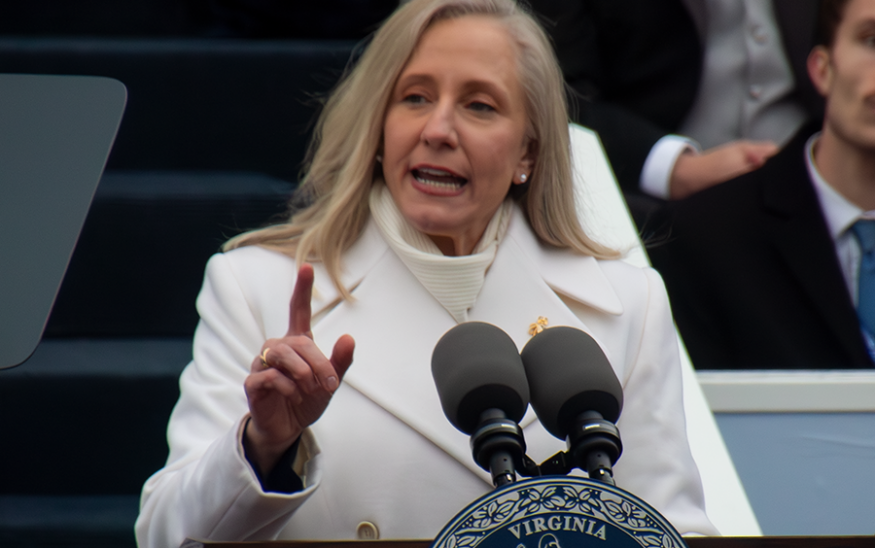
Virginia Gov. Abigail Spanberger was sworn in as Virginia’s 75th governor, the first woman to hold the office, on Jan. 17, 2026. Photo by Kira Jenkins/Virginia Business
Virginia Gov. Abigail Spanberger was sworn in as Virginia’s 75th governor, the first woman to hold the office, on Jan. 17, 2026. Photo by Kira Jenkins/Virginia Business
Spanberger vetoes legislation for creating marijuana retail market
Governor had concerns about implementation



SUMMARY:
- Gov. Abigail Spanberger is vetoing legislation that would have created a retail marijuana market in Virginia.
- Proponents of the legislation say the decision gives the illegal market more time to flourish.
- Spanberger stressed in a statement that lawmakers can try again.
Gov. Abigail Spanberger is vetoing legislation that would have created a retail marijuana market in Virginia, according to a Tuesday announcement.
“I share the General Assembly‘s goal of establishing a safe, legal and well-regulated cannabis retail marketplace in the commonwealth,” she said in a statement. “Virginians deserve a system that replaces the illicit cannabis market with one that prioritizes our children’s health and safety, public safety, product integrity and accountability.”
State Sen. Lashrecse Aird, D-Henrico County, sponsored Senate Bill 542, and Del. Paul Krizek, D-Fairfax County, sponsored the corresponding House bill, HB 642. The pair said in a statement that the governor’s decision “ignores the reality that cannabis is already being sold every day across Virginia.”
“Once again, Virginia’s efforts to establish a safe, regulated and equitable adult-use cannabis marketplace has been halted despite years of work, public input and broad recognition that the status quo is failing Virginians,” Aird said in a news release.
On April 14, Spanberger issued several amendments to state legislation that would have established a retail market for marijuana in Virginia. The most buzzworthy of several changes was proposing a six-month pause in legalizing recreational marijuana sales, moving from Jan. 1, 2027, to July 1, 2027.
“These changes reduce the number of available licenses, delay the launch of retail sales and impose high barriers to entry, resulting in revenue losses, delayed economic opportunity for market participants and the elimination of investment to small businesses,” Krizek said in a statement at the time.
On April 22, the General Assembly sent the legislation back to Spanberger minus the amendments she added, leaving her to provide her signature or veto.
She did the latter.
“As Virginia pursues a legal retail market, it is critical that we incorporate lessons learned by other states and ensure that our regulatory framework is fully prepared to provide strong oversight from day one,” Spanberger said in her statement Tuesday. “That includes clear enforcement authority and sufficient resources for compliance, testing and inspections and robust tools to crack down on bad actors who continue to profit from the illicit market. “
Virginia’s first medical marijuana dispensary opened in 2020. The next year, under a Democratic-majority state legislature, the commonwealth became the first state in the South to legalize marijuana. However, Gov. Glenn Youngkin, a Republican, vetoed previous legislation that would have established the retail market, while Spanberger, a Democrat, indicated she would sign such legislation during her 2025 gubernatorial campaign.
Gentry Locke Consulting President Greg Habeeb, a former Virginia delegate who now lobbies for the Virginia Cannabis Association, said the association is “very frustrated” after years of working on retail cannabis legislation. He argued the proposal had been refined over time and has drawn bipartisan support.
“I think some of the frustration that I’m hearing from some people is that the administration maybe didn’t feel like it was quite as engaged early in the process, and so some of these concerns I think they have probably could have been addressed during session and incorporated into the bill when there was still time to do so,” he said.
Still, Habeeb acknowledged the governor has a key role to play in the legislative process, and said any new administration is going to want to “have their voice heard.”
He said Virginia already has a multibillion-dollar retail cannabis market — it’s just an illegal, black market.
“So the question has always been,” he said, “should we have an illegal black market where drug dealers and unregulated businesses sell untested, untaxed products, or should we have a regulated market where products are tested, they’re kept out of the hands of kids, they’re taxed — all of those things that come with the creation of a retail market.”
Habeeb noted that the governor has expressed agreement for that broader goal but appeared to have disagreements with specific provisions of the bill.
Tanner Johnson, CEO of Pure Shenandoah, an Elkton-based, family-run CBD and hemp products business had hoped to launch Pure Virginia, the company’s marijuana entity in 2027.
“Turns out third time isn’t the charm,” said Johnson. He noted this is the third consecutive year legislation for retail marijuana passed the state House and Senate only for the governor to veto it.
“We are used to the rollercoaster at this point,” he said. “Pure is sad to see another year of potential clean safe products for consumers go by but will continue to make the best hemp products in the state while lining up legislation for next year.”
Richmond-based nonprofit Marijuana Justice lamented what they called a missed opportunity in a statement Tuesday.
“These bills would have created a pathway for Virginia farmers, small businesses and local entrepreneurs, especially those most harmed by prohibition, to participate in a new legal economy and generate much needed tax revenue for schools, healthcare and community investment,” the nonprofit said in the statement. “Instead, Virginia is once again choosing to sit on the sidelines while other states and countries move forward, build thriving legal cannabis industries and reinvest those dollars back into their communities.”
JM Pedini, executive director of pro-marijuana lobbying group Virginia NORML, also sharply criticized the decision.
“It is outrageous that five years after Virginia lawmakers first approved legalization, there still exists no regulated cannabis sales system outside of the state-licensed medical program,” they said in a statement. “Governor Spanberger’s veto is a profound disappointment to the many Virginia voters who believed her when she said on the campaign trail that she supported establishing a regulated adult-use cannabis market. It is also a slap in the face to the years of serious work undertaken by lawmakers, policy experts, advocates, public health stakeholders and regulators who spent more than half a decade researching, debating and carefully crafting this legislation.”
Moving forward
In her statement Tuesday, Spanberger stresses that the state’s lawmakers can try again.
“I greatly appreciate the patrons’ time crafting this important piece of legislation as well as our continued dialogue and collaboration to strengthen this framework ahead of the next legislative session,” Spanberger said. “I remain committed to working with members of the General Assembly, stakeholders and law enforcement to get this right.”
As far as Krizek is concerned, there’s been plenty of talk over the five years since the General Assembly legalized marijuana and not enough action.
“This legislation was the product of years of policy development, stakeholder engagement and extensive deliberation through the Joint Commission to Oversee the Transition of the Commonwealth into a Cannabis Retail Market, reflecting a balanced and thoughtful approach shaped by the very people who will be impacted by and responsible for implementing it,” he said in a statement.
Despite the veto, Habeeb said there may still be paths forward this year, noting that lawmakers remain in special session and that budget negotiations could provide an alternative vehicle for action. Whether or not that will be practical is up to the legislators and the administration, he said.
In a joint statement, Krizek and Aird remained critical of the veto: “The General Assembly provided Virginia with an opportunity to lead on this issue, but instead this veto prolongs uncertainty and provides comfort to those profiting from the illicit market. This veto and its consequences belong to the governor and governor alone.”
r