Richmond-based dry-cleaning business Puritan Cleaners has acquired HandCraft Cleaners, another Richmond-based, family-owned dry-cleaning company, the businesses announced Thursday.
Terms of the transaction were not disclosed.
“We are extremely pleased to welcome HandCraft Cleaners’ customers to the Puritan Cleaners family and are honored to have the opportunity to continue to provide them with convenient, superior service and expertise,” Puritan Cleaners President Gary Glover said in a statement. “Our companies share the same values and commitment to the Richmond community.”
Founded in 1970, HandCraft Cleaners operates two locations in the Richmond area as well as a home and office pickup and delivery service. The transaction will combine HandCraft Cleaners’ operations with Puritan Cleaners’ 13 Richmond locations and allow HandCraft Cleaners to “focus on its rapidly expanding health care/medical linen services business,” according to a statement from the companies.
Under the acquisition, Puritan Cleaners will operate the HandCraft Cleaners location at 5705 Patterson Ave. and pickup and delivery service. Customers who use the Bon Air location at 2733 McRae Road will be able to visit nearby Puritan Cleaners locations for service.
“We are proud to have provided the best possible service to the Richmond community for the past 50 years,” HandCraft Cleaners President Jay Nichols said in a statement. “This transaction allows us to focus our time and resources on our healthcare and medical linen business that has expanded throughout the mid-Atlantic/Southeast while ensuring our dry-cleaning customers are well taken care of.”
Founded in 1937, Puritan Cleaners is also involved with community programs including coat drive Coats for Kids (which it has operated since 1988) and Feed More’s food drive 100K Meals.
While Virginia saw a slight decrease in the number of initial jobless claims last week, the Virginia Employment Commission reported Thursday that the total number of initial claims filed since the beginning of the pandemic is greater than the combined totals filed during the 2007-09 Great Recession and the economic recession in 2001.
For the week ending Aug. 29, 10,305 Virginians filed initial claims for unemployment, a decrease of 1,131 from the previous week. However, 233,467 people in Virginia remained unemployed last week. This is a 6.5% decrease from the previous week, but 215,203 higher than the 18,264 continued claims from the same period last year. People receiving unemployment benefits through the VEC must file weekly unemployment claims in order to continue receiving benefits.
“The continued claims total is mainly comprised of those recent initial claimants who continued to file for unemployment insurance benefits during the COVID-19 pandemic,” VEC Senior Economist Timothy Aylor said in a statement.
Since the pandemic began, more than 1.1 million Virginians have filed initial claims for unemployment.
The regions of the state that have been most impacted continue to be Northern Virginia, Richmond and Hampton Roads.
Below are the top 10 localities, listed by number of initial unemployment claims, for the week ending Aug. 29:
Nationwide, the advance figure for seasonally adjusted initial claims for last week was 881,000, a decrease of 130,000 from the previous week’s revised level, according to the U.S. Department of Labor. There were 179,516 initial claims during the same week last year.
Columbia, Maryland-based HVAC equipment manufacturer’s representative Havtech announced Thursday it will acquire Richmond-based companies Air Conditioning Equipment Sales Inc. (ACES) and Mechanical Systems Testing & Balancing Inc. (MSTB).
Terms of the transactions were not disclosed.
Founded in 1971, ACES is an HVAC manufacturer’s representative for the Central Virginia, Tidewater and Roanoke markets, while MSTB performs certified testing, adjusting and balancing of HVAC air and hydronic systems and also performs building systems commissioning.
“In additional to the similar lines of business, Havtech, ACES and MSTB share similar core company values,” Havtech President Joe Roetering said in a statement. “This strategic alliance will further improve each company’s ability to deliver exceptional service for all customers through our commitment to expertise and innovative solutions.”
Havtech plans to keep both ACES and MSTB separate and allow them to maintain their own identities and organizations, according to a company statement. Current management teams of both entities will remain but will work together to share best practices.
Established in 1983, Havtech represents a number of HVAC manufactuers, including Japanese air conditioning company Daikin Industries Ltd., and provides services to commercial and industrial markets in the greater Baltimore and Washington, D.C., areas. During fiscal year 2019, Daikin reported nearly $2.5 trillion in net sales.
“We’ve been proud to team with ACES since 1971, and we’re confident this new relationship with Havtech will make ACES an even more formidable contender in their region,” Daikin Applied Americas’ CEO Mike Schwartz said in a statement.
Michael Milken, who was pardoned by President Donald Trump in February over felony charges for securities fraud, has joined the Charlottesville-based Focused UltrasoundFoundation‘s board, the organization announced Thursday.
Milken (often referred to as the “junk bond king”) is credited with being part of the development of high-yield bonds and was indicted in 1989 for racketeering and securities fraud as part of an insider trading investigation. After spending 22 months in a minimum security federal prison and paying out $600 million in fines, he has turned his focus to medical research philanthropy, founding the Milken Institute. The Santa Monica, California-based nonprofit think tank focuses on research related to economics, health, aging, human capital, philanthropy and capital markets. He is also the co-founder of the Milken Family Foundation, which focuses on education reform and teacher recognition.
In a White House statement issued about the pardon, the Trump administration said, “Since his release, Mr. Milken has dedicated his life to philanthropy, continuing charitable work that he began before his indictment. Over the years, Mr. Milken—either personally or through foundations he created—has provided hundreds of millions of dollars in critical funding to medical research, education, and disadvantaged children.”
The statement also noted that “Mr. Milken’s work also democratized corporate finance by providing women and minorities access to capital that would have been unavailable to them otherwise.”
Fortune magazine has called Milken “The Man Who Changed Medicine.” In 2008, he was listed as one of the 75 most influential people of the 21st century by Forbes magazine for his role in founding FasterCures, a Washington, D.C.-based think tank focused on accelerating medical research. The Forbes list also included high-profile leaders such as Mark Zuckerberg, Bill and Melinda Gates, and Bill and Hillary Clinton.
“Focused ultrasound is an exciting development that’s pushing out the frontiers of medical science,” Milken said in a statement. “I’ve never been more hopeful about continued progress.” One of the Milken Institute’s 10 centers FasterCures works with the Focused Ultrasound Foundation on medical research.
Milken earned his bachelor’s degree from the University of California, Berkeley, and earned his master’s degree in business administration from the Wharton School of the University of Pennsylvania.
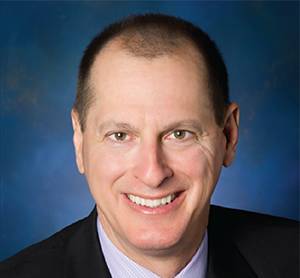
Shapiro. Photo courtesy Focused Ultrasound Foundation
The Focused Ultrasound Foundation also announced Thursday that Gary Shapiro has joined the board. Shapiro, the president and CEO of the Consumer Technology Association (CTA), lobbies for innovation and technology in Washington, D.C.
“Focused ultrasound is an innovative treatment that works, and we need to adopt it globally,” Shapiro said in a statement. “As humans, we can always do better. Focused ultrasound can improve millions of lives.”
A New York Times bestselling author, Shapiro wrote “Ninja Future: Secrets to Success in the New World of Innovation,” “Ninja Innovation: The Ten Killer Strategies of the World’s Most Successful Businesses” and “The Comeback: How Innovation will Restore the American Dream.” He earned his bachelor’s degree in economics and psychology from Binghamton University and his law degree from the Georgetown University Law Center.
“The addition of Michael and Gary – two of the most highly acclaimed thought leaders and influencers – will amplify the Foundation’s ability to achieve its vision of improving the lives of millions of patients globally with life-threatening and disabling conditions by accelerating the development and adoption of focused ultrasound,” Foundation Chairman Dr. Neal F. Kassell said in a statement.
The Focused Ultrasound Foundation was founded in 2006 and works to accelerate development of focused ultrasound, a noninvasive therapeutic technology that is being explored as a treatment for numerous medical conditions, including neurological disorders. Other board members include bestselling novelist John Grisham.
Portsmouth‘s casino development partner, Rush Street Gaming, announced Thursday that it will offer 5% or $5 million ownership (whichever is greater) of the proposed $300 million Rivers Casino Portsmouth to a local minority-owned business or private investor who is a person of color.
“Rush Street has a track record of including minority participation in their developments,” Portsmouth Economic Development Authority (EDA) Chairman Ray A. Smith Sr. said in a statement. “In both the development agreement with the Portsmouth EDA and the Lottery Board pre-certification proposal, minority participation in ownership, contracting and employment was included in their plan. Rush Street Gaming is moving forward with the process in an open and transparent manner, ensuring the public trust, and I applaud them for that.”
Rush Street Gaming will work with Virginia Lottery regulators and the Portsmouth EDA on the minority ownership process. Public-sector employees, elected officials and their spouses, dependents and immediate family members will not be able to participate as investors or owners in order to avoid conflicts of interest.
“Creating opportunity for qualified, private-sector minority investors is paramount to building the community collaboration that’s been successful at other Rush Street casinos,” Jacob Oberman, Rush Street Gaming senior vice president of development, said in a statement. “This is another way we give meaning to our Portsmouth First policy — hiring, purchasing and owning.”
The casino, like others proposed in Danville, Bristol and Norfolk, will face local voters in a referendum on November’s ballots, after the General Assembly passed legislation allowing one commercial casino apiece in five cities, which also includes Richmond.
Rush Street Gaming received pre-certification from the Virginia Lottery Board to operate the proposed Portsmouth casino, and the Portsmouth City Council approved its bid. The 400,000-square-foot casino is set to include slot machines, table games and poker, as well as several restaurants, a hotel and conference space. There will also be a parking garage and surface parking available.
Hard Rock and Caesars Entertainment are planning resorts in Bristol and Danville respectively, and the Pamunkey Indian Tribe has received city approval for its casino in Norfolk and is bidding for a casino project in Richmond. Investors must put in at least $300 million into each project, according to state law. The casinos are anticipated to bring in more than $1 billion in annual total revenues.
The Portsmouth casino is planned for land along Interstate 264, and Rush Street Gaming will pay an additional $10 million to Portsmouth for acreage located on Victory Boulevard in Portsmouth. The Rush Street Project alone is anticipated to generate $16.3 million in annual tax revenue for Portsmouth and $260 million in annual regional GDP, according to city planners. The Portsmouth EDA anticipates that the casino will create 1,400 construction jobs, 2,000 permanent jobs and $62 million annually in wages, salaries and tips.
More information on the minority ownership of the Portsmouth casino will be available later. Interested parties can email [email protected].
Virginia hotel revenues continued to improve last week, according to data released Wednesday by STR Inc., a CoStar Group division that provides weekly market data on the U.S. hospitality industry.
For the week of Aug. 23 through Aug. 29, hotel revenues decreased by 38% and rooms sold declined by 27% compared to the same week last year — an improvement over the previous week, which saw a 42% decline in revenue and 31% decrease in rooms sold. Compared to last year, the average daily rate (ADR) paid for hotel rooms dropped 15% to $93.99, while revenue per available room (RevPAR) fell to $45.26, a 37% decline.
Hotel revenues and rooms sold declined in most markets in Virginia, compared with the same time frame last year. Compared to the same week in 2019, revenues fell 52% in Northern Virginia, 46% in Charlottesville and 25% in Hampton Roads. During the week of Aug. 16 through Aug. 22, revenues fell 60% in Northern Virginia, 51% in Charlottesville and 34% in Hampton Roads.
The number of rooms sold in Northern Virginia is down by 42%, while the Charlottesville market held on at 33% and the Hampton Roads market declined by 12%.
However, Hampton Roads continues to fare well when compared nationally. It continues to hold on to the highest occupancy rates among the nation’s top 25 markets, with 60.6% occupancy last week and 64.2% occupancy since the week of June 21. Its RevPAR level held on at third place in the nation last week at $65.93, behind San Diego and Los Angeles.
“Performance of the hotels in Hampton Roads during the current week was in general better than last week,” Professor Vinod Agarwal of Old Dominion University’s Dragas Center for Economic Analysis and Policy said in a statement. “It appears that [the] Virginia Beach hotel market has nearly recovered from COVID-19. Revenues for the city are down by only 8.5% and rooms sold actually increased for the first time since the week of March 1-7.”
The economy of the Fifth District of the Federal Reserve (which includes Virginia, North Carolina, South Carolina, West Virginia and Maryland)has continued to improve in recent weeks, but activity has remained below pre-pandemic levels in most industries, according to the latest edition of the Federal Reserve’s Beige Book, released Wednesday.
The Beige Book is published eight times per year based on anecdotal information gathered from the 12 Federal Reserve Banks about economic conditions in its district.
The Fifth District saw auto sales, existing home sales and trucking shipments perform well, and employment continued to increase. The hiring pace slowed however, and price growth remained modest, according to reports offered by Federal Reserve Bank of Richmond.
Some employers in the Fifth District reported to the Federal Reserve Bank of Richmond that the barriers to finding workers include skill mismatches and availability of generous unemployment insurance benefits, which sources said discouraged workers from applying for available jobs.
“Also, multiple contacts said that some former employees were recalled but did not report back to work,” according to the report. “Many firms said they were trying to figure out how to provide flexibility to workers with children schooling at home. On balance, wages were unchanged.”
The manufacturing industry saw a moderate increase in new orders and shipments, but demand was unreliable and varied across different goods, according to the Federal Reserve Bank of Richmond. While the ports in the district saw a modest rise in exports and imports, volumes remained low.
Residential home sales significantly increased as more potential buyers entered the market, and in turn, financial institutions reported strong demand for home purchase loans and mortgage refinancing.
And while travel and tourism activity improved slightly, retail sales remained low — especially brick-and-mortar.
The Beige Book is compiled from reports by bank and branch directors and interviews with business contacts, economists, market experts and other sources. The next report will be released on Oct. 21.
The Virginia Alcoholic Beverage Control Authority (ABC) broke its gross revenue record again during fiscal year 2020, reporting $1.2 billion in gross revenue, the ABC announced Wednesday.
Last year, the state agency surpassed $1 billion in revenue for the first time. ABC’s profits of $545.3 million (an increase of $45.8 million over last year) will go to the state’s General Fund.
“In the months leading up to the pandemic, our sales performance was strong, with a 7% increase over the prior year,” ABC CEO Travis Hill said in a statement. “This growth is a testament to our efforts to improve customer experience by providing an assortment of products geared to consumer preferences and opening new store locations where population growth dictates.”
ABC’s profits for fiscal year 2020 reflect $212.1 million in profits from retail sales, $251.4 million in retail taxes and $81.8 million in wine and beer taxes. In the past year, ABC has added 12 new stores, generating $18.3 million in sales.
The increase in online sales and curbside pickup associated with the pandemic also added to the agency’s revenue. Online orders grew from an average of 23 orders per day to 419 orders per day by July — and curbside pickup was added at 370 stores. Sunday sales also increased by 18% this year, to $93.8 million.
“While we saw even greater growth as the pandemic took hold, we also had to meet the challenges of keeping our customers and employees safe,” Hill said in a statement.
And although revenue increased this year, sales to restaurants and hospitality businesses suffered in response to the pandemic. But the ABC eventually allowed for delivery and takeout of mixed beverages. Licensee sales still decreased by 19%, however.
“The pandemic has greatly affected our licensed establishments and Virginia’s distilled spirits industry,” Hill said in a statement. “We will continue to work with them to understand their challenges and adjust our processes to ease some of their pandemic-related pressures whenever possible.
“In this crisis, numbers only really tell part of the story. On the individual level, people are either looking for new employment or working under the challenges of the pandemic. ABC is no different than any other business in that our success this year would not have been possible without the commitment and sacrifice of our employees.”
Chesterfield and Arlington counties (along with three California localities) tied for the top spot on the Center for Digital Government (CDG) and the National Association of Counties (NACo)’s 18th annual Digital Counties Survey, which was released Tuesday.
The survey identifies the best technology practices among U.S. county governments by evaluating initiatives that streamline delivery of government services, encourage open data, collaboration and shared services as well as enhance cybersecurity and contribute to disaster response and recovery efforts.
“Chesterfield leadership recognizes the value of technology and has invested at the enterprise level to equip all county departments to improve service delivery to the residents of the county,” Chesterfield County Chief Information Officer Barry Condrey said in a statement. “Our IST department, working in partnership with customer departments, has implemented systems and technologies to rival any in the private sector, all to raise the level of service to our residents.”
CDG and NACo recognized Chesterfield County for its StratIS (Strategic Information Sharing) data program and the county’s chatbot, ChesterBot, which allowed the county to manage a surge in call volume related to the pandemic. The county has also worked to adapt to telework by doubling its VPN capacity and implementing Microsoft Teams across all county departments.
Arlington was recognized for its digital equity program, through which it provides digital connections for disadvantaged populations. The county offers education, training and programming for residents and county facilities offer outdoor, drive-up digital hot spots.
“Technology plays an important role in nearly everything we do at the local level, especially now with the challenges of the pandemic,” Arlington County Manager Mark Schwartz said in a statement. “It’s an honor to be recognized for our efforts this past year to provide the digital solutions and critical connections using technology that will benefit our community the most.”
Several other Virginia counties placed in the top 10 for their population sizes, which includes:
1,000,000 or More Population Category: No. 10, Fairfax County
250,000 – 499,999 Population Category: No. 8, Loudoun County
Up to 150,000 Population Category: No. 2, Albemarle County; No. 4, Montgomery County; No. 7, county of York; and No. 9, Franklin County
Conducted annually in the spring, the Digital Counties Survey is open to all U.S. counties.
Claiming that Virginia electors for Kanye West — hip-hop superstar, presidential hopeful and husband of Kim Kardashian — were obtained fraudulently, Attorney General Mark Herring requested an emergency hearing in Richmond Circuit Court on Wednesday to stop West’s name from appearing on the state’s ballots.
The hearing has been set for 2:30 p.m. Thursday in Judge Joi Taylor’s courtroom, according to Herring’s spokeswoman.
The state is under pressure, as some ballots have already been printed with West’s name, and the rest are due to be printed by Sept. 4 so they can be mailed to absentee voters, including those overseas or on military missions, by Sept. 19.
West’s application as a presidential candidate on Virginia’s ballot was turned in Aug. 21 to the Virginia Board of Elections. All qualified candidates must have notarized papers with the names of 13 electors who swear an oath that they “will, if elected, cast [their] ballot for the candidates for president and vice president named in the petition,” according to state law. Candidates also must file petitions containing 5,000 signatures of registered voters, 200 from each congressional district. As an independent candidate, West also was required to turn in a notarized “oath” for independent and third-party candidates. His running mate is Michelle Tidball, a spiritual coach who lives in Cody, Wyoming, where West also owns a ranch.
Plaintiffs Matthan Wilson and Bryan Wright, both of Suffolk, filed suit Tuesday, saying that they signed electors’ oaths under false pretenses — and that neither support West’s candidacy. In the suit, Wilson said he was riding his bike when he was approached by a representative of the West campaign, who asked him to sign “to be an ‘elector for the state'” but never mentioned that he was committing to vote for West in the Electoral College.
“Kanye West’s name was never mentioned,” Wilson said, according to the motion. He only learned what the document was after he was contacted by a news reporter. Similarly, Wright, who calls himself a “committed Republican,” said he did not know he had agreed to be an elector for the West-Tidball ticket.
In total, 11 of the 13 electors could be disqualified because of irregularities with notarization or alleged false pretenses, according to the suit brought by Wilson and Wright, and the attorney general says there may be “deficiencies” in all 13.
“The commonwealth of Virginia, including the state elections officials and entities named as defendants, does not tolerate any type of election fraud,” Herring said in a statement.
This website uses cookies, web beacons, pixels, tags, software development kits, and related tracking technologies, as described in our Privacy Policy and Cookie Policy, for purposes that may include website operation, analytics, analyzing site usage, enhancing site navigation optimizing a user's experience, and third-party advertising or marketing purposes. Through these technologies, we and certain third parties may automatically collect information about your interactions with our website, such as your browsing behavior and page views. We also may share this information about your activity on our website with our social media, advertising, analytics, and other business partners. By clicking “Accept All”, you consent to the use of these technologies and that we can share information about your activity on our website with third parties in accordance with our Privacy Policy and Cookie Policy. If you do not agree with our use of non-essential tracking technologies, please click “Reject All.” You may opt out of certain non-essential technologies by clicking “Cookie Settings.”
Functional
Always active
The technical storage or access is strictly necessary for the legitimate purpose of enabling the use of a specific service explicitly requested by the subscriber or user, or for the sole purpose of carrying out the transmission of a communication over an electronic communications network.
Preferences
The technical storage or access is necessary for the legitimate purpose of storing preferences that are not requested by the subscriber or user.
Statistics
The technical storage or access that is used exclusively for statistical purposes.The technical storage or access that is used exclusively for anonymous statistical purposes. Without a subpoena, voluntary compliance on the part of your Internet Service Provider, or additional records from a third party, information stored or retrieved for this purpose alone cannot usually be used to identify you.
Advertisement
The technical storage or access is required to create user profiles to send advertising, or to track the user on a website or across several websites for similar marketing purposes.

 Sign In
 Free Newsletter