Sign In
Upcoming Event
 Free Newsletter

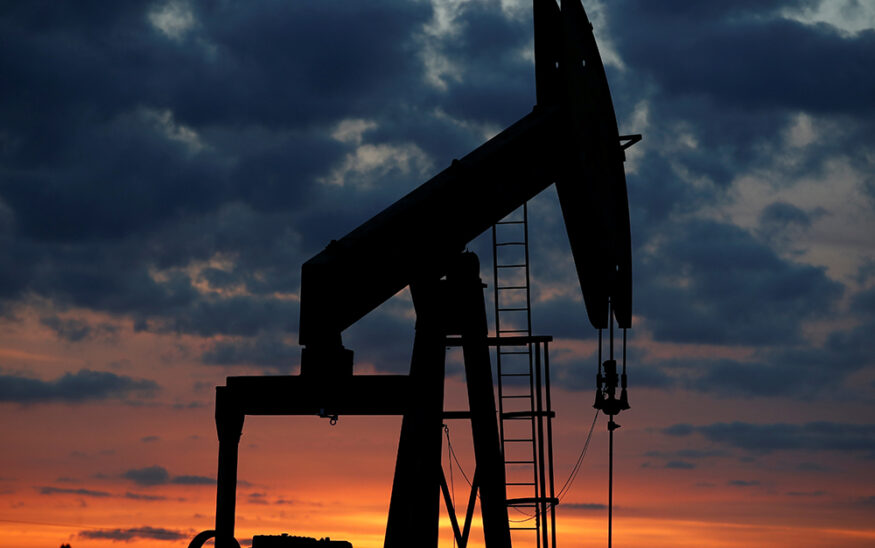
An oil pump is seen at sunset outside Vaudoy-en-Brie, near Paris, France April 23, 2018. REUTERS/Christian Hartmann
An oil pump is seen at sunset outside Vaudoy-en-Brie, near Paris, France April 23, 2018. REUTERS/Christian Hartmann
Oil prices jump on latest US-Iran peace process impasse



Summary:
- Brent crude up 3.21% to $107.55 a barrel
- U.S. and Iran reject ceasefire proposals
- Saudi Aramco warns export disruptions could last until 2027
LONDON, May 12 (Reuters) – Oil prices rose by more than 3% on Tuesday as stark differences between the U.S. and Iran over a proposal to end the war in the Middle East pushed supply concerns back into the spotlight.
Brent crude futures gained $3.34, or 3.21%, to $107.55 a barrel by 1314 GMT, and U.S. West Texas Intermediate was up $3.18, or 3.24%, at $101.25. Both benchmarks climbed nearly 3% on Monday.
“After both sides rejected each other’s negotiation proposals, tensions between Iran and the U.S. are escalating once more,” said Commerzbank analyst Carsten Fritsch.
U.S. President Donald Trump said on Monday that the ceasefire was on “life support”, pointing to disagreements over Iran’s demands of a cessation of hostilities on all fronts, the removal of a U.S. naval blockade, the resumption of Iranian oil sales and compensation for war damage.
Iran also emphasised its sovereignty over the Strait of Hormuz, through which about a fifth of global oil and liquefied natural gas normally flows.
Disruptions linked to the near-closure of the strait have prompted producers to curtail exports, with a Reuters survey on Monday showing OPEC oil output in April fell to its lowest level in more than two decades.
“A genuine breakthrough towards a peace deal could trigger a sharp $8 to $12 correction, while any escalation or renewed blockade threats would quickly push Brent back toward $115-plus,” said KCM Trade analyst Tim Waterer.
Saudi Aramco CEO Amin Nasser had warned on Monday that disruptions to oil exports through the strait could delay a return to market stability until 2027, with the loss of about 100 million barrels of oil per week.
Meanwhile, some independent Chinese refiners are curtailing fuel output on weakening profit margins as they battle weak domestic demand and excess product, trade and refining sources said.
Elsewhere on the supply front, U.S. crude stocks were estimated to have dropped by about 1.7 million barrels last week, a Reuters poll of analysts showed. [EIA/S]
Walt Chancellor, energy strategist at Macquarie Group, said that strong waterborne export flows of crude and products are likely for the next several weeks.
Market participants were also keeping a close eye on President Trump’s planned meeting with Chinese President Xi Jinping on Thursday and Friday after Washington imposed sanctions on three individuals and nine companies for facilitating Iranian oil shipments to China.
Tariffs imposed during the U.S.-China trade war have halted most Chinese imports of U.S. oil and LNG, which were worth $8.4 billion in 2024, the year before Trump began his second term.
(Reporting by Ahmad GhaddarAdditional reporting by Anmol Choubey in Bengaluru and Trixie Yap in SingaporeEditing by David Goodman and Joe Bavier)
e