Sign In
Upcoming Event
 Free Newsletter

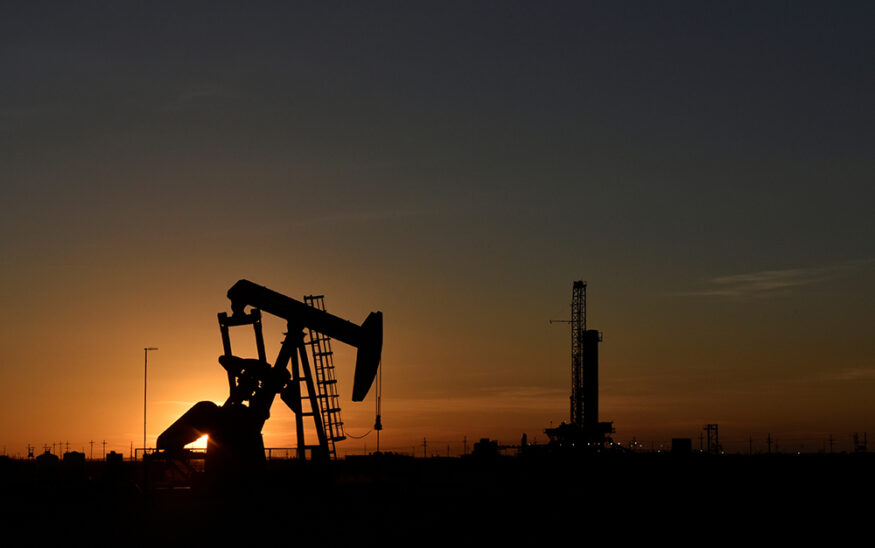
A pump jack operates in front of a drilling rig at sunset in an oil field in Midland, Texas U.S. August 22, 2018. Picture taken August 22, 2018. REUTERS/Nick Oxford/File Photo
A pump jack operates in front of a drilling rig at sunset in an oil field in Midland, Texas U.S. August 22, 2018. Picture taken August 22, 2018. REUTERS/Nick Oxford/File Photo
Oil prices jump 7% as US-Iran truce buckles under fresh hostilities



Summary:
- Brent crude rises 8% to $80.09 a barrel
- Trump declares memorandum of understanding with Iran over
- At least four tankers turn back from strait of Hormuz
July 8 (Reuters) – Crude oil prices rose more than 7% on Wednesday after U.S. President Donald Trump threatened fresh strikes against Iran, which Iranian Press TV said would lead to a closure of the Strait of Hormuz.
Brent crude futures gained $5.93, or 8%, to $80.09 a barrel, the highest since June 22. U.S. West Texas Intermediate crude futures rose by $5.25, or 7.5%, to $75.69 a barrel, also the highest in over two weeks.
Trump said on Wednesday that the memorandum of understanding signed with Iran to end the war was “over,” and threatened fresh strikes against Iranian targets as soon as Wednesday.
The flare-up in hostilities has revived concerns about tanker traffic through the Strait of Hormuz, especially as some vessels were hit around the waterway earlier in the week. A fifth of global oil supply passed through the Strait before the Iran war broke out, and its blockade in the ensuing conflict pushed oil prices north of $100 at the peak of the disruptions.
“Fundamentally, oil should trade higher,” SEB Research’s Ole Hvalbye said.
Trump on Wednesday also rehashed threats that U.S. forces could seize Iran’s Kharg Island, from which 90% of Iran’s crude oil exports are loaded.
Still, Trump has not explicitly said that the United States would return to full-fledged war. Trump also said he would let negotiators keep talking “if they want,” even though he finds it a “waste of time” to deal with Iran.
“Fundamentally, the events of the last few days significantly weaken any confidence that the current 60-day truce can still evolve into a permanent peace agreement,” said Jorge Leon, head of geopolitical analysis at Rystad.
SUPPLY FEARS RESURFACE
“Trump’s assertion that the MOU is over raises the prospect of a re-closing of the Strait as an escalatory cycle begins again,” said Saul Kavonic, head of research at MST Marquee.
At least four oil and gas tankers have turned back from attempting to transit the strait, ship-tracking data showed, as renewed attacks on vessels heightened safety concerns.
After the United States and Iran signed their truce last month, oil prices tumbled to pre-war levels and traders amassed large short positions in oil futures, betting prices would fall further.
Since the start of the conflict in February, nations have drawn down their inventories to make up for the supply shortfall.
HSBC lowered its Brent crude oil price forecast for 2026 to $80 per barrel from $95, as it assumes a return to normal Gulf oil exports by the end of September.
Meanwhile, China has lifted refined fuel export restrictions for the rest of July and allowed a private refiner to resume shipments after a four-month halt, trade sources said on Wednesday.
(Reporting by Shariq Khan, Anushree Mukherjee, Yuka Obayashi, and Jeslyn Lerh;Additional reporting by Seher Dareen and Florence Tan;Editing by Joe Bavier, Aidan Lewis, Mark Potter, Will Dunham and Nick Zieminski)