Sign In
Upcoming Event
 Free Newsletter

Google to use air-cooling tech for first Botetourt data center, reducing water use
Agreement had anticipated 8M gallons used per day eventually
Beth JoJack //July 24, 2026//
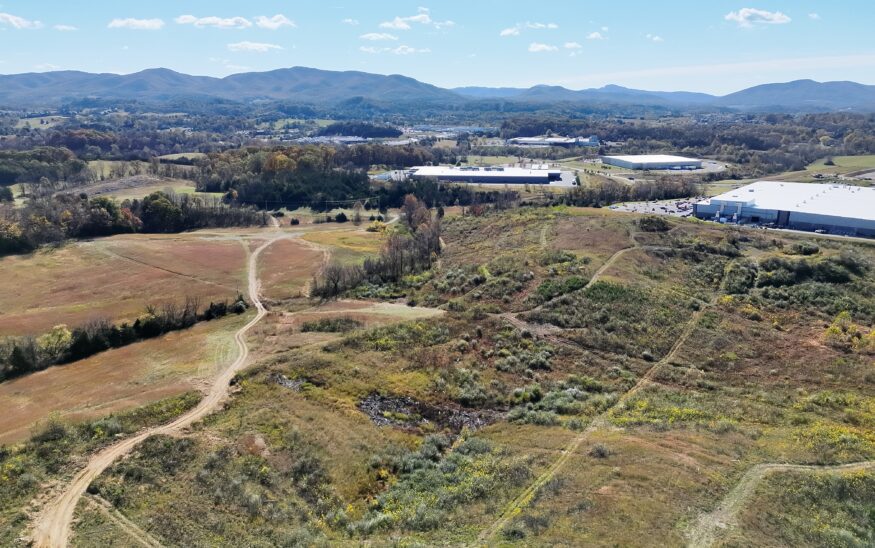
An aerial view of the Botetourt Center at Greenfield. Photo courtesy Botetourt County
An aerial view of the Botetourt Center at Greenfield. Photo courtesy Botetourt County
Google to use air-cooling tech for first Botetourt data center, reducing water use
Agreement had anticipated 8M gallons used per day eventually
Beth JoJack //July 24, 2026//



SUMMARY:
- Google confirmed Friday its first Botetourt County data center building will use air-cooling technology
- Cooling plans for the project’s other two buildings are still being evaluated
- Opponents note that the technology may require less water than 8 million gallons per day anticipated but could increase the amount of energy the facility will use
Google confirmed Friday that the first building of its proposed $3 billion data center campus in Botetourt County will use air-cooling technology instead of water to keep equipment cool.
The announcement comes after a community outcry about the possibility Google’s data centers at the Botetourt Center at Greenfield could use up to 8 million gallons of water per day at full buildout, according to the tech giant’s utility services funding agreement with the Western Virginia Water Authority signed in October 2025. The document, released in February as part of a Freedom of Information Act request, stated Google will initially require no more than 2 million gallons of water per day at the data center campus.
“Google regularly evaluates cooling technologies throughout the design process to determine the best approach for a specific facility,” a Google spokesperson said in a statement Friday to Virginia Business. “For the first building in Botetourt County, we determined that air cooling was the appropriate solution based on the facility’s needs and our focus on operating efficiently and responsibly.”
An update posted on the website botetourtcountydatacenter.com announced Google’s plans to use air-cooling technology and noted that “this design decision is driven by business demand and infrastructure requirements for the project.”
The website’s update also noted that the cooling technology used for the two other buildings planned for the campus “remains under active evaluation.”
Neither a spokesperson for Google nor Botetourt County responded to a request asking who produces this website.
The Southwest Virginia Data Center Transparency Alliance, a nonpartisan group created as a response to the Botetourt project, issued a statement Wednesday pointing out that although the air-cooling technology may reduce Google’s need for water to run the facility in Botetourt County, it will require the company to use more energy.
“Now all of a sudden, they’re going to this air cooling, and it’s like, ‘What does that mean?’” Julie Bivins, co-founder of the alliance, told Virginia Business on Friday. “How much power now is this going to use if they go with this, and what kind of power is it going to be? Is it going to be more fossil fuel? Is it going to be natural gas or nuclear?… It just brings up a lot of questions.”
Drought conditions in Virginia
The announcement comes as public opposition to Google’s plans in Botetourt County continues to escalate.
On July 15, Gov. Abigail Spanberger announced that while most of Virginia remains in either a drought warning or watch status, the Roanoke Drought Evaluation Region, which includes the counties of Bedford, Campbell, Charlotte, Franklin, Halifax, Henry, Mecklenburg, Patrick, Pittsylvania and Roanoke and the cities of Danville, Martinsville, Roanoke and Salem, has reached emergency status.
“As a result, local and regional leaders are working together to determine next steps if the situation does not immediately improve,” a July 15 press release from the governor’s office stated.
Also last week, the Botetourt County Planning Commission had planned to discuss water supply planning at its July 13 meeting. However, on July 3, Botetourt County issued a press release stating the planning commission “does not have the legal authority to independently convene or direct public hearings.”
Tensions were high at that July 13 meeting, according to reporting by The Roanoke Times.
“Somebody tells me that I should be considering getting body armor. Body armor? What the hell,” Commissioner Mark Tyson, who proposed discussing the water supply, was quoted as saying in the newspaper. “You know, there’s a lot of money at play here, and apparently, people are not really happy, OK, with what I’ve done.”
Ultimately, the planning commission voted to recommend that the Board of Supervisors direct the commission to organize a meeting to discuss topics related to the water supply.
C