Sign In
Upcoming Event
 Free Newsletter

Virginia officials oppose new congressional redistricting maps
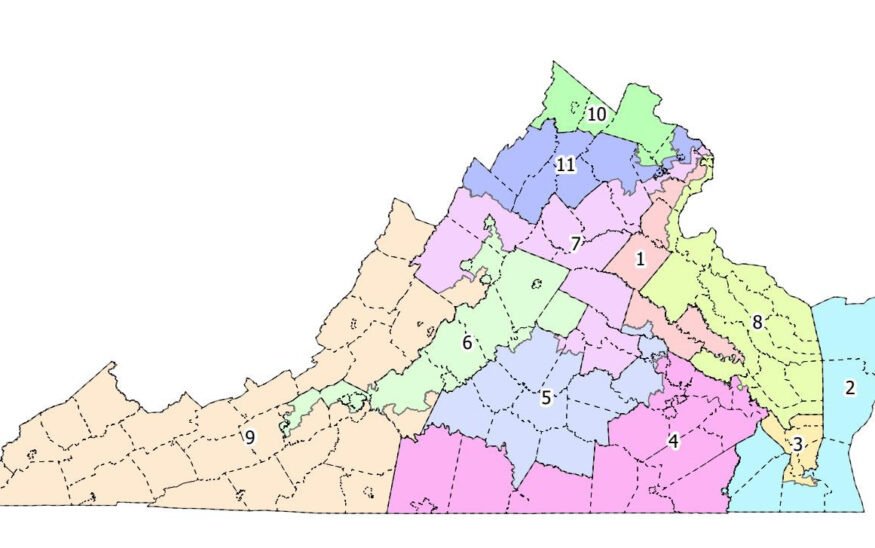
The proposed Congressional redistricting map should Virginia voters approved the Virginia Constitutional amendment.
The proposed Congressional redistricting map should Virginia voters approved the Virginia Constitutional amendment.
Virginia officials oppose new congressional redistricting maps



Summary:
- Virginia delegates Chris Runion, Tony Wilt, and Justin Pence oppose the April 21 congressional redistricting amendment.
- Augusta County Senators Mark Obenshain and Chris Head have vocally opposed the amendment on social media.
- The amendment is criticized for creating hyper-gerrymandered districts, particularly splitting Augusta County among three districts.
Where do Staunton, Augusta County and Waynesboro’s Virginia-level elected officials stand on the upcoming April 21 special election on Congressional redistricting?
Chris Runion, delegate for Virginia’s 35th District, answered that question for himself during a virtual town hall he and two other delegates hosted on Monday, March 2. Runion was joined by 34th District Delegate Tony Wilt and 33rd District Delegate Justin Pence. The trio of state-level delegates were each critical of the amendment, encouraging voters to vote no.
Though not present at the virtual town hall, both Augusta County Senators Mark Obenshain and Chris Head have also been vocally opposed to the amendment on social media.
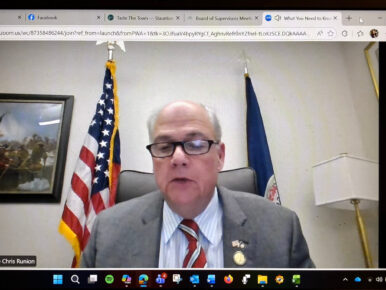
The full video can be found on Wilt’s YouTube channel.
Delegate Chris Runion opposes the constitutional amendment
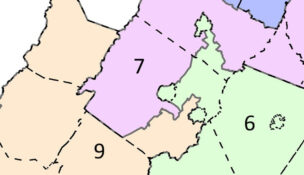
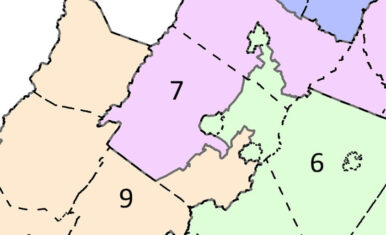
Runion felt the amendment process was “rushed” and “one-sided.” The maps, he argued, are “hyper-gerrymandered,” even describing the proposed Seventh Congressional District as a “scorpion.” He pointed out that five congressional districts begin in the northern tip of the state, around Fairfax.
“There is nothing compact about those districts,” Runion said. “Compare them to the previous maps – which represented communities of interest, and were contiguous, and were fairly normal shaped. They represented west of the Blue Ridge, up and down the 81 corridor … we didn’t have these long tentacles that started in northern Virginia and proceeded down through.”
Runion pointed to the way Augusta County is split among three Congressional districts. He described the maps as putting “urban progressive” politics against “rural conservative, rural agriculture and rural moderates,” adding that policy positions introduced by delegates from the Fairfax region are “not representative values of our community.”
Runion’s comments also echoed arguments presented in the resolution passed by the Augusta County Board of Supervisors opposing the redistricting amendment and the lawsuit brought by Sixth District Rep. Ben Cline and national Republicans in Tazewell County. He argued the new map, referred to as the 10-1 map due to its creation of 10 districts projected to project Democratic representatives, was not “fair” as is described in the ballot information.
“When I came down here seven years ago, I was part of the committee that voted to move forward under the nonpartisan redistricting program and was really pleased that we were able to do that from a Republican and a Democrat point of view,” Runion said. “I thought we finally moved into the sunshine world, the brightness of the citizens getting to drive what goes on in our government. I’m so disappointed that we’re stepping back away from that. We’ve worked for generations to get away from that, and here in one quick swoop, that’s going to be grabbed out of our hands.”
What do Democrats out of Virginia have to say?
Virginia Democrats, when asked about “fairness” by Cardinal News, explained fairness referred to the federal government, not in Virginia. The 2026 redistricting election does not affect state-side districts in the Virginia Legislature, no matter if it passes or fails. The new maps would only change the district maps for those seeking to represent Virginia in the United States House of Representatives.
Virginia Democrats hope that sending 10 Democrats to the U.S. Congress will rein in President Donald Trump. The additional votes in the House of Representatives could allow federal Democrats to restrict Trump’s ability to pass bills like the One Big Beautiful Bill Act. It would also mean more support for Senator Tim Kaine as he attempts to block Trump from unilaterally enacting regime change in Iran and in Venezuela.
“Donald Trump’s decision to prioritize redrawing voting maps across the country instead of focusing on lowering costs for families has created extraordinary circumstances for states like Virginia,” said Kaine and Senator Mark Warner in a joint press release from both offices. “There is now a temporary proposal aimed at preserving a fair playing field and protecting Virginia voters. While some states are moving ahead through partisan deals behind closed doors, Virginia is following its constitutional process and allowing voters to render the final judgment. We strongly support this effort and Virginia’s commitment to public transparency throughout the process.”
Staunton’s Democrats have also outlined their support for the amendment. Chair Christopher Benjamin wrote Trump initially asked other states to gerrymander their districts for Republicans to keep control of the House of Representatives despite “the MAGA agenda and its horrific actions” being “so unpopular.”
What happened to the 2020 redistricting amendment?
Wilt explained to attendees that both parties, Democrats and Republicans, have previously gerrymandered the federal congressional districts in the past. The News Leader published multiple guest columns on gerrymandering before the Virginia voters approved a redistricting amendment in 2020.
What was the question in the 2020 election?
“Should the Constitution of Virginia be amended to establish a redistricting commission, consisting of eight members of the General Assembly and eight citizens of the Commonwealth, that is responsible for drawing the congressional and state legislative districts that will be subsequently voted on, but not changed by, the General Assembly and enacted without the Governor’s involvement and to give the responsibility of drawing districts to the Supreme Court of Virginia if the redistricting commission fails to draw districts or the General Assembly fails to enact districts by certain deadlines?”
The 2020 amendment passed in a nearly two-to-one vote.
All three Republicans presenting the town hall felt the redistricting process should remain as is to preserve the work of the commission. They expressed concern that Virginia would keep districts favoring Democrats after the next typical census in 2030. The language of the 2026 constitutional amendment does not change the section of the Constitution of Virginia established by the 2020 amendment.
“Should the Constitution of Virginia be amended to allow the General Assembly to temporarily adopt new congressional districts to restore fairness in the upcoming elections, while ensuring Virginia’s standard redistricting process resumes for all future redistricting after the 2030 census?” reads the question up to voters in the April 21 election.
Early voting begins Friday, March 6.
Lyra Bordelon (she/her) is the public transparency and justice reporter at The News Leader. Do you have a story tip or feedback? It’s welcome through email to [email protected]. Subscribe to us at newsleader.com.
This article originally appeared on Staunton News Leader: Virginia officials oppose new congressional redistricting maps
Reporting by Lyra Bordelon, Staunton News Leader / Staunton News Leader
USA TODAY Network via Reuters Connect
i