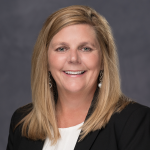
This year, Lonnie D. “Chip” Nunley III celebrated both his 40th year of practicing law at Hunton Andrews Kurth as well as becoming president-elect of the Virginia Bar Association, the state’s largest and oldest statewide voluntary bar organization, dating back to 1888.
A Washington and Lee University graduate who earned his law degree from the University of Virginia, Nunley represents civil litigation clients in state and federal courts and handles regulatory matters before the Virginia State Corporation Commission.
In 1994, Nunley was part of a team representing Philip Morris Cos. in a multibillion-dollar defamation case after ABC reported that the tobacco industry had added extra nicotine to its products. Ultimately, ABC settled and ran a retraction during “Monday Night Football.”
A native of Bristol, Virginia, Nunley is a long-standing member of the firm’s pro bono committee and is the partner in charge of Hunton’s Church Hill pro bono office.
Chris Smythe became executive director of Kaufman & Canoles in March, overseeing day-to-day operations of the Norfolk-headquartered law firm.
He began his career as an attorney before transitioning to the business side. He previously held roles as vice president of content at TotalVid.com and director of new ventures for Landmark Communications. The opportunity to combine his legal and business skill sets at Kaufman & Canoles was an opportunity he “couldn’t pass up.”
Smythe is focused on positioning the 215-person firm to be at the forefront of Virginia’s legal market and guiding it through rapid changes in technology — especially leveraging emerging tools like artificial intelligence responsibly.
“AI is changing everything, and it’ll change the practice of law as well, and figuring out how to do that correctly is a big part of my job,” he says.
Tarley
SUSAN BRADFORD TARLEY
PARTNER, TARLEY ROBINSON,WILLIAMSBURG
In March, Susan Bradford Tarley became the Virginia State Bar‘s 2025-26 president-elect. Established in 1938 by the General Assembly, the State Bar regulates the legal profession in the commonwealth.
Tarley, who earned her law degree from George Mason University, has practiced law for 37 years. A partner at Williamsburg’s Tarley Robinson, she works with her husband, John Tarley Jr., and Neal J. Robinson. Her practice focuses on community associations, financing and development, commercial and residential real estate transactions, business matters and creditors’ rights.
A Pennsylvania native, Tarley also has served for 18 years as a substitute judge for the 9th Judicial Circuit and is an adjunct professor at William & Mary Law School.
In January, Tarley was one of 26 lawyers inducted into the Virginia Law Foundation’s Fellows Class of 2025, recognizing attorneys with a “steadfast commitment to strengthening their communities across the commonwealth and to upholding the rule of law.”
Before Jim Schmidt joined James Madison University in July as its seventh president, he went looking for something he believes is in short supply today — civility.
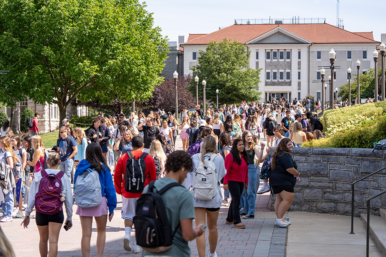
“It’s a tradition that Dukes look around and hold the door for others. It doesn’t matter who you are — at that moment, that act of kindness shows respect for the individual,” says Schmidt, who previously was chancellor of the University of Wisconsin-Eau Claire.
On a visit to Harrisonburg in January, well before he was named the university’s next president, Schmidt tried what he calls a “secret shopper trick” to test whether the tradition still held.
“Without fail, a student opened the door,” he reports. When Schmidt opened doors in return, “students said, ‘Thank you so much, sir.’”
Now that Schmidt is recognizable to JMU at large, he is working to build the university’s tradition of neighborliness, as well as focusing on other goals, including training more nurses and making sure graduates are prepared for the workforce.
In August, as students returned to campus, Schmidt said in a speech that he and other JMU officials are working on the university’s next strategic plan. Instead of being a “laundry list of everything we do,” he said, “the JMU plan will focus on three or four bold ideas that will truly take us into the future.”
In an interview with Virginia Business in October, Schmidt said that the plan is expected to be ready for release in April 2026 and that he has been conducting a series of listening sessions to determine particular points of focus for the university’s future. But one thing is for sure: Health care education will be a high priority.
To address the labor shortage, JMU aims to increase the number of nursing graduates it produces. Photo courtesy James Madison University
Addressing health care shortages
As a public university, JMU takes seriously its responsibility to the commonwealth and public good, especially improving health care accessibility in rural Shenandoah Valley, Schmidt says.
In his August speech, he asked, “What if we made rural health a priority and assembled the expertise and passion across disciplines to create a program — or even a medical school?”
JMU is a top producer of nurses in the state, having graduated more than 270 nurses in 2024. However, its bachelor’s program for nursing has been able to accept only 68% of qualified applicants due to faculty shortages, competition for clinical placements and on-campus space constraints.
The state currently has a need for 20,254 registered nurses, a number that is expected to double in the next decade, according to the state, and the problem is worse in rural regions, where hospitals often lack funding to recruit nurses with higher salaries, according to the state’s Office of Rural Health.
Although it can’t fix the compensation challenge, the state recommends increasing access to health care education in rural areas, since nursing students are more likely to remain in their hometowns once they’re certified.
JMU has requested $1 million in ongoing funding from the state to produce 30 more undergraduate nursing majors per year through a nontraditional model that would allow students to complete core nursing coursework in one calendar year instead of two academic years. Classes, which would be held on campus and online in a hybrid model, and clinical placements would take place on evenings and weekends.
The state gave JMU $1 million this year in one-time funding that will go toward building more lab space and hiring additional faculty, and the university expects its first cohort of 30 students in the summer of 2026.
Schmidt says that he aims to forge more partnerships between JMU and community health systems and other local organizations to address challenges specific to rural health care, taking a page from his playbook at UW-Eau Claire, where he was a founding partner of Wisconsin’s Rural Health Innovation Alliance.
Schmidt also initiated a research agreement between his previous university and the Mayo Clinic, which brought faculty and students together with physicians and researchers. Begun in 2017, the relationship has resulted in more than 165 joint research projects.
In Virginia, Schmidt says, “We’re looking for organizations that have a long view. Those partners will bring expertise to the table that students wouldn’t be able to get if they just worked with the university.”
JMU will host seminars in 2026 examining the nation’s founding principles and civic engagement. Photo courtesy James Madison University
Ready for work
Since the start of the academic year, Schmidt has conducted a series of listening sessions and forums with JMU’s community. While he is still taking input, the new strategic plan will be based on a few general tenets: Prioritizing the student experience, building on university partnerships, marketing JMU’s strengths, accelerating innovation and pursuing national prominence.
One of Schmidt’s priorities is to make sure that graduates have the skills they need for the workforce, and that alumni who are struggling to find full-time employment receive support.
Schmidt expects the strategic plan to build on the Madison promise that “we stand behind our graduates.” In particular, he wants to be sure the university fulfills its promise to students and employers regarding workforce training and job placements.
“What if a student doesn’t have a job after six months?” Schmidt asks. “We’ll assign a coach and provide up to 12 credits of additional undergraduate coursework — at our expense. We would work out a strategy.”
Or, for example, what if an employer finds that while a new JMU graduate has the accounting skills for the job, the person lacks the writing skills needed to go with it?
“We’ll take the graduate back. We’ll provide a coach. It’s a very tangible thing,” he says.
Many today are questioning the value of a college education, Schmidt notes. “They’re asking: Is it a good investment? I believe this strategic plan will go directly at that,” he says, and prove that “we are good stewards.”
Although two of JMU’s neighbors, the University of Virginia and George Mason University, have contended with significant federal pressure to prove they’re eliminating all traces of diversity, equity and inclusion programs on campus, Madison has not received the same level of attention.
In April, JMU’s board of visitors passed a resolution to end the university’s Division of Diversity, Equity and Inclusion, following President Donald Trump‘s executive order demanding the closure of DEI programs at institutions that receive federal funding. Money saved by the department’s closing is being reallocated to support Pell-eligible student scholarships.
Schmidt says that the DEI division’s closure hasn’t resulted in substantial change, because JMU “did not build up a lot of those special programs based on color of skin or other identifiers. Our mission has not changed. For 120 years, JMU has been committed to all students. The Madison promise is that we can help remove barriers for them to achieve their own goals. We are proud of our outcomes.”
That brings Schmidt back to the idea of civility, which helps foster a culture of respect, he says.
“I think we’re ready for more of that,” he says. “Isn’t that a great thing? Wouldn’t a business want that as part of their company?”
A survey by the Society for Human Resource Management finds that 40% of U.S. workers say they have experienced or witnessed incivility at work. The consequences are strained relationships, decreased productivity and increased turnover, according to SHRM, which puts the daily cost of incivility in the U.S. at over $2 billion.
JMU’s answer to this problem is Better Conversations Together, instituted last year. The goal of the program, says Kara Dillard, executive director of the James Madison Center for Civic Engagement, is to help students understand what ethical and responsible free speech is and how to engage in it.
It starts pre-freshman year, as incoming students participate in an e-learning program that explores how brains process information and how people form values and beliefs.
“It introduces the idea that a student comes in with their own foundation that shapes how they listen to others. The goal is to have students learn about themselves and about how they process information — before they meet their roommate who may have a different political flag on the wall,” notes Dillard.
Once students are on campus, they discuss important topics in small groups, like whether the minimum wage should be increased, how AI is impacting students, and whether JMU should require SAT and ACT exam scores, which are currently optional.
“It’s not just pro and con. Students have to reason together,” Dillard says. “It ends up being a rich conversation.”
Madison Center democracy fellows are trained to help set ground rules and keep conversations on track.
“It helps de-escalate,” Dillard notes. “We’ve never had screaming, yelling like you see on social media. We really encourage storytelling about a student’s lived experience with the issues at hand, but we frame it as ‘tell the story you’re comfortable with telling.’ We never encourage students to share parts of their biography that they don’t want to.”
Upperclassmen and graduate students, as well as faculty, are participating in different sessions, and senior administrators are meeting with students, sometimes over a meal.
Dillard hopes the training will result in “a wellspring of trust” as people learn how to have difficult conversations.
Beyond the Better Conversations program, the Madison Center offers programs open to community members that focus on immigration issues, Virginia legislation and civil rights.
In October, the center received more than $2.1 million from the U.S. Department of Education to expand civics education in public schools, an award connected to the United States’ upcoming 250th anniversary celebrations in 2026.
Dillard says that JMU will host a series of seminars about the nation’s founding principles, the Constitution and civil discourse in collaboration with local school districts and community partners.
All this training helps make students better citizens and better employees, Schmidt says. “They’re able to bring issues forward in a thoughtful manner. It builds good civic engagement.”
At a glance JMU
Founded
A public research university in Harrisonburg, James Madison University was founded in 1908 as the State Normal and Industrial School for Women. It was renamed Madison College in 1938 in honor of President James Madison and became James Madison University in 1977. JMU’s 728-acre campus is known for its distinctive bluestone buildings, as well as Newman Lake and the university’s 125-acre Edith J. Carrier Arboretum, which has numerous gardens and wooded areas with oak and hickory trees over 100 years old. Harrisonburg, which has a population of 51,000-plus
residents, is located in Virginia’s Shenandoah Valley, about 120 miles from Washington, D.C., and Richmond.
Enrollment*
Undergraduate: 21,358
Graduate students: 1,799
Student profile**
Male | female: 43% | 56.7%
(in full-time undergraduate programs)
International students: 1.1%
Students of color: Hispanic or Latino (9.7%), Asian (5.2%), and two or more races (5.8%), Black or African American (5%).
Academic degrees*
JMU offers 55 undergraduate degrees and 30 master’s degrees, one educational specialist degree, and nine doctoral degrees. Fields range from accounting and computer science to international business, psychology and nursing.
Faculty*
Full-time: 1,085
Part-time: 380
Tuition, fees, housing and dining***
$28,512 is the approximate annual in-state undergraduate residential cost, including tuition, mandatory fees, housing and meal plan.
*Fall 2025 | **Fall 2024 | ***2025-26 academic year
When wealth advisers and clients meet these days, it’s likely an AI tool will join in some capacity. As seems true of every industry right now, artificial intelligence is transforming wealth management and, by virtue, the adviser-client relationship.
It might be tempting to predict — as some analysts have — that AI could put advisers out of work. But the reality is that advisers and clients both are already relying on these tools, and doomsday predictions have yet to come true.
Rather, most Americans say they continue to trust human advisers to manage their money over AI tools alone, according to a recent survey by Northwestern Mutual. And AI may actually improve the advising experience, as these tools could help advisers offer more holistic advice or democratize access to financial advice to a broader swath of the population, according to a report by the World Economic Forum.
Virginia financial advisers agree that AI tools are more likely to benefit the industry than pose a threat. Both Trovato and Smith readily recall meetings with current or prospective clients who mentioned they’d first consulted AI for specific financial questions.
“I think that’s wonderful,” Trovato says, adding that some prospective clients may feel more confident about hiring a human adviser if they feel they have an objective baseline to compare recommendations.
Though the tools are relatively new, AI is the natural next step for clients who came to meetings in the past asking questions about something they read online. “AI has taken that to a completely different level,” Smith says.
Acknowledging that AI is a resource that clients are likely to consult for research creates a “great opportunity” for advisers to shine by offering their own expertise on specific investments, Smith says. “If you don’t understand what you have and why you have it and how it’s going to respond in different markets, then all you’re left with is emotions.”
In turn, advisers also are embracing AI in their offices, finding it can free them up from rote tasks like note-taking during client meetings so they can be fully engaged and focus on providing more personalized and higher-value advice. And everyone benefits if advisers can deepen their relationships with clients.
Since Merrill launched its AI-enabled data analytics tool Client Insights in 2020, for example, its financial advisers have identified 40 million-plus different insights spanning tax efficiency, retirement planning and banking needs that they’ve been able to proactively share with clients, according to data provided by the firm.
AI can help advisers accomplish tasks that would be onerous if done manually or create efficiencies. Bernert has found one of the most useful applications of ChatGPT is making sense of the trove of research distributed by the major Wall Street firms by identifying common trends and outliers that may be useful for identifying potential investment opportunities. Using anonymous client information, these tools can also be used to automate the math required to rebalance portfolios, he adds.
“If you prompt well, you can get some pretty cool stuff out of it.”
Incorporating AI into their day-to-day work now is akin to the early days of adopting personal computers or the internet, Montgomery says, which is why advisers are wise to embrace this technology. For example, there are practical applications for AI in advising family offices with multiple portfolios as these tools will be able to more efficiently identify how various portfolios intersect, he adds.
“I view it as a positive leverage of time, and I always think that’s a good thing,” Montgomery says.
Because they see firsthand how AI can augment their services, these advisers say it’s crucial for the industry to evolve and keep pace with technological advancements.
And there’s really no reason to fear that bots are coming to replace them, so long as advisers stay focused on what they do best: understanding the needs of their clients and comforting them when financial markets or life circumstances cause angst.
“That emotional element, from my perspective, will never be replaced,” Smith says. Adds Trovato: “AI is definitely not a replacement for good financial advice.”
Looking back on 2025, the best symbol of the past year’s upheaval might be the White House, if not its most famous occupant.
Since moving back into 1600 Pennsylvania Ave. in January, our real estate mogul president has launched into a series of home renovations worthy of its own HGTV series. The most prominent changes include gilding the Oval Office in gold accents reminiscent of Versailles, paving over the Rose Garden lawn, and tearing down the 123-year-old East Wing to make way for a gargantuan $300 million ballroom.
Similarly, in his second term, President Donald Trump has taken a wrecking ball approach to the federal government.
By the end of the year, the administration expects to shed some 300,000 federal jobs, the most since the end of World War II, according to The New York Times.
While there was undoubtedly some fat that could have been shed from among the federal government workforce, which numbered 2.4 million before Trump took office, critics have blasted the haphazard nature and severity of the workforce cuts, as well as the administration’s clawback of previously allocated government funding.
These actions have had a particularly disproportionate impact on Virginia, home to four of the world’s five largest defense contractors, nearly 150,000 federal workers and 150,000 federal contracting employees.
More than 30,000 Virginia federal workers could be out of work by the end of this year. And we’re also seeing downsizing in government contracting, with McLean-based Booz Allen Hamilton, for example, laying off about 10% of its workforce so far this year in response to federal cuts.
Partly because of this, economists at the University of Virginia’s Weldon Cooper Center for Public Service are forecasting an economic slowdown here, “with Virginia experiencing its most modest economic growth since 2021” and statewide unemployment reaching 4.8% in 2026, the highest since 2021 and the pandemic.
The Trump administration’s federal cuts and volatile tariffs were primary reasons cited by CNBC this year in dropping Virginia from No. 1 to No. 4 on its annual Top States for Business rankings.
These were also likely contributing factors in November’s elections, with Virginians selecting a Democratic slate led by Gov.-elect Abigail Spanberger, who will be Virginia’s first woman governor and will lead a Democratic-majority state legislature.
But those are far from the only forces powering change going into 2026.
Wealth imbalance continues to grow while consumer inflation lingers, and housing prices and mortgage rates remain elevated, prompting Trump to propose 50-year home mortgages.
The stock market, which began the year with the S&P 500 near record highs, has remained resilient, recovering from an April global stock market crash in response to Trump’s aggressive tariffs policy.
Some of that recovery, though, is thanks no doubt to artificial intelligence, with tech companies this year announcing $375 billion in planned AI infrastructure investments. The AI boom has raised tech company market values by nearly $19 trillion since 2022, according to some estimates, which is also leading to fears of a coming AI bubble, not to mention predictions of widespread white collar job losses.
Here in Virginia, in our new AI era, there seems to be no end to data center development, which is generating lots of local tax dollars and construction jobs. However, the electricity-hungry centers are also causing a fast-evolving power crisis, straining the grid’s ability to keep up and move to renewable energy sources.
While we’re balancing those challenges and opportunities, Virginia is also blessed to be nurturing a fast-growing pharma and biotech industry, with pharmaceutical giants AstraZeneca, Eli Lilly & Co., and Merck & Co. this year announcing nearly $13 billion in total investments to build new manufacturing operations here.
As we enter another new year, we’d be wise to remember that old saw: The only constant in life is change.
On behalf of Virginia Business, I wish all of you a happy holiday season and much success in 2026.
One of the great ironies of investing is that even as the stock market notches record highs as it has this year, investors know the good times inevitably cannot last.
If 2025 overpromised on uncertainty stemming from a new presidential administration, it also underdelivered on volatility. Aside from a steep — albeit short-lived — stock selloff early in the year, investors who stayed disciplined have been rewarded for their patience.
Heading into 2026, some shifting dynamics await investors. Federal Reserve policymakers cut its key interest rate for a second straight meeting in October, while cautioning that future rate cuts aren’t guaranteed. Meanwhile, tech industry spending on artificial intelligence has boosted the economy and stock market, while stoking concerns of a bubble that could burst. Finally, investors can take advantage of a more favorable tax landscape and a wider array of investment opportunities.
While the issues du jour may feel unique — and, to a degree, they are — navigating the current investing landscape doesn’t require an equally unique approach, says Joe Montgomery, managing director of investments at The Optimal Service Group of Wells Fargo Advisors in Williamsburg. Rather, you should make decisions based only on changes to the fundamentals core to your wealth management strategy.
“There’s no magic to it,” says Montgomery, whom Forbes ranks as the state’s top wealth adviser. “It’s a discipline that is hard to do because greed and fear will undermine your future more than any market correction will.”
While some clients are “really concerned” about a market pullback, others worry they’re missing out on opportunities for higher returns given the exuberance surrounding AI stocks, notes Donte Smith, vice president and financial adviser with Merrill Lynch Wealth Management in Richmond. A balanced approach to investing is always important, however, especially when market dynamics create temptations to deviate from your strategy.
“I always tell my clients, ‘My biggest job is to make sure you stay invested,’” Smith says, adding that’s why it’s important to build an investment portfolio that offers peace of mind, no matter what’s happening.
What type of investment strategy is prudent, given shifting dynamics in financial markets? Four Virginia-based wealth management professionals weigh in.
‘Huge’ change in fixed income
One big difference for investors now versus a year ago is in the fixed income market and the outlook for interest rates, says Lawrence “Larry” Bernert III, senior managing director at Clearstead Advisory Solutions in Norfolk. “That’s a huge change.”
The federal funds rate, which topped 5% as recently as September 2024, is projected to fall to 3.6% by 2026, according to the median of year-end forecasts from central bankers.
That’s a bit higher than the same estimate one year ago, but warrants thinking more strategically about the duration of your fixed income assets, including U.S. Treasury bonds and certificates of deposit (CDs). It’s important to lock in relatively higher interest rates now if you haven’t already, experts say, given the likelihood of lower rates to come.
Bernert has been focusing on intermediate- term fixed income assets with maturities ranging from six to eight years. “That’s long enough,” he says. “But the big question is: Is it short enough?”
Because Fed policymakers have signaled interest rates could stay higher for longer and there will be a more gradual rate-cutting cycle, you may want to consider even shorter-duration assets, advises Nirali Raval Trovato, senior vice president of Towne Wealth Management and a financial adviser at Raymond James Financial Services in Virginia Beach. She’s been favoring high-quality bonds with durations ranging from two to seven years.
“That’s still the best place to be,” Trovato says. “You’re getting compensated for taking the duration risk, but you’re not tied up for 30 years.”
Potential AI bubble
The dominance of AI stocks has been so pronounced this year that many people are seeing comparisons to the dot-com bubble that burst in 2000, leading to the second worst bear market in modern history. While Montgomery and Bernert see some bubblelike aspects today, Trovato doesn’t think market dynamics are as “dramatic” as they were in that era.
However, these Virginia advisers emphasize it’s important to avoid a herd mentality of piling onto the market’s outperformers. The lesson to be learned from history, they say, is the value of staying the course and finding opportunities that align with your investment strategy.
In fact, the temptation to chase market winners could mean you miss out on stocks that could lead the next stage of the rally, Smith says. Corporate earnings have illustrated that, by and large, companies continue to see strong profit cycles that could be further buoyed by AI-driven efficiencies and more accommodating financial conditions, he adds.
“Lots of other companies are going to benefit, so there will be broader market participation,” Smith says. If there’s a big rotation within the U.S. stock market, as he anticipates, then investors who are well diversified will benefit from gains in sectors like utilities, industrials and financials.
There’s no reason to make drastic changes to your portfolio, as large-cap stocks are likely to remain resilient, Trovato notes. But investing in smaller companies has become more attractive, thanks to lower interest rates. “We’re in a better place for mid- and small-caps than a year ago.”
Finally, investors should consider valuations, which is why Bernert favors an overweight allocation to non-U.S. equities, including emerging markets, which are relatively inexpensive. This type of strategy will benefit investors if there’s a pullback or correction in the U.S. stock market, he says. “It’s more important than ever to be diversified.”
Revisiting tax strategies
In July, investors received some welcome certainty on the tax front, as many provisions of the 2017 tax cuts were made permanent with the One Big Beautiful Bill Act. Since then, Montgomery and his team have been looking at various tax considerations that benefit specific clients.
These tax provisions can be significant, though they vary widely based on your circumstances. American taxpayers across the board will see reduced individual income tax rates, while high net-worth individuals stand to benefit from higher estate tax exemptions, bigger state and local tax (SALT) deductions, and changes in the tax landscape that may make family offices more attractive.
By extending investor-friendly tax provisions set to expire this year, the bill essentially allowed many investors to “hit the snooze button” on major changes to their tax strategy, Bernert says. But there are new opportunities investors should be aware of, Trovato adds.
For instance, tax cuts could make Roth conversions —transferring a traditional IRA to a Roth IRA — more attractive, while the eligible expenses for 529 plans have been expanded and could make investing money in these accounts more appealing, Trovato says. “As with any new legislation, it creates current or future planning opportunities.”
Finally, private investments will transform the investing landscape in 2026 and beyond after President Donald Trump signed an executive order in August allowing these assets to be added to retirement plans.
“It’s as significant as anything I’ve ever seen,” says Montgomery, who has nearly
50 years of experience as a wealth adviser. “The tool kit we have available today is extraordinary.”
Democratizing access to an asset class once off-limits for most investors will be an important theme to watch, Bernert says, though it also makes him a bit nervous: “Investors should be really sure they have access to really good funds.”
Without the guidance of an adviser to understand how private assets will add benefits — and risks — to your investment strategy, investors should consider putting money into private investments with some caution, Smith says.
“All of these things are just like the meals that you eat,” he notes. “Dessert is great, but it’s dessert in moderation.”
These real estate and development executives are building the future through bricks and mortar in communities across the commonwealth.
Ahmed
BISMAH AHMED
VICE PRESIDENT OF VIRGINIA GOVERNMENT AFFAIRS, APARTMENT AND OFFICE BUILDING ASSOCIATION OF METROPOLITAN WASHINGTON, TYSONS
As host of the 2025 TEDxFoggyBottom, a showcase of speakers organized by George Washington University, Bismah Ahmed spoke about interviewing for her first lobbying job. The interviewers wanted to know if she played golf. She didn’t. The job went to someone who did.
“Now I’m so grateful for that, because I play in [golf] tournaments,” Ahmed said. “I learned from that.”
That hiccup didn’t keep her from a career in lobbying. Since 2015, Ahmed has worked in government affairs for the Apartment and Office Building Association of Metropolitan Washington (AOBA), which represents the commercial real estate industry. In 2021, she was promoted to a vice president role at the member organization.
Additionally, Ahmed is chair-elect of the Arlington Chamber of Commerce. She was also the first South Asian, Muslim and Pakistani woman to be named Miss District of Columbia for America in 2022.
Audain
ROLSTON AUDAIN
VICE PRESIDENT OF AGENT SERVICES AND DIRECTOR OF THE LUXURY COLLECTION DIVISION, BERKSHIRE HATHAWAY HOMESERVICES RW TOWNE REALTY,CHESAPEAKE
In the ninth grade, Rolston Audain moved from St. Thomas in the U.S. Virgin Islands to Virginia Beach, where he attended First Colonial High School. “It was quite an adjustment,” he recalls.
Audain found his footing, though. One of his teachers, who had a real estate agent for a spouse, saw Audain’s potential and helped him get his first part-time job in the industry.
After graduating high school, Audain went to work at Virginia Beach’s John Savino Group as team manager. He stayed with the firm for 14 years. In 2013, Barbara Wolcott, CEO of what was then Prudential Towne Realty, hired Audain as director of marketing and the firm’s luxury collection.
In March, Audain was promoted to vice president of agent services at the firm, which, following a couple of mergers, is now Berkshire Hathaway HomeServices RW Towne Realty. In his new role, Audain ensures agents have the resources they need.
A father of two, Audain unwinds by playing flight simulator video games.
This October, Joe Hines was named to the Southern Economic Development Hall of Fame, recognized as one of the “People Who Built the South” by Southern Business & Development. At the civil engineering, technology and surveying firm, he leads the site selection practice, which helps identify and prepare sites and infrastructure for investment.
He’s working with regional, local government and private clients to identify next-generation economic development sites, including energy-ready sites “that will play a critical role in solving the energy crisis,” he says. In 2026, Hines’ focus will be on identifying developable sites that will create a “significant” number of jobs and investment, while continuing to evolve technologies like the Timmons Group’s analytical, data-driven site-selection tool.
Hines is a board member of the Virginia Economic Developers Association and a member of the International Economic Development Council and Southern Economic Development Council. He received an Impact Award this year from Lead Virginia, recognizing him for leadership and innovation.
Hourigan
MARK HOURIGAN JR.
DIRECTOR OF OPERATIONS, CENTRAL VIRGINIA | PARTNER, HOURIGAN,RICHMOND
You could say construction is in Mark Hourigan Jr.’s blood.
Growing up in the industry, he went on to double major in construction and real estate at Virginia Tech and managed large-scale logistics and manufacturing projects for a Salt Lake City construction firm for three years before returning in 2019 to Richmond and his family’s eponymous construction business. Now he’s overseeing some of the largest build projects in the region, including the $1 billion Lego manufacturing facility in Chesterfield County and the $253 million CoStar Center for Arts and Innovation at Virginia Commonwealth University. Under his leadership, the firm has delivered more than 2 million square feet of industrial space, with another 2.5 million square feet planned.
In his spare time, Hourigan mentors emerging entrepreneurs for Startup Virginia and serves on nonprofit First Tee’s leadership advisory board and Collegiate School’s construction committee.
KARP
BRENDA E. KARP
VICE PRESIDENT OF BUSINESS DEVELOPMENT, THE BREEDEN CO.,RICHMOND
In October, Brenda E. Karp was named one of the Top Multifamily Influencers of 2025 by commercial real estate news outlet GlobeSt. With more than 25 years of industry experience, Karp develops strategic commercial real estate and multifamily business partnerships, working closely with Breeden President and CEO Tim Faulkner to set a long-term vision for the company.
She was also the first woman at The Breeden Co. to achieve a senior leadership role, having joined the company in 2008 to handle leasing for a 42-acre development called Towne Center West — one of the first mixed-use developments in Henrico County’s Short Pump area. Karp was one of Virginia Business’ 2022 Women in Leadership Awards recipients.
Karp has served on the board for Commercial Real Estate Women (CREW) Coastal Virginia and as membership chair of the Urban Land Institute Virginia. She’s also active in Virginia Commonwealth University’s Real Estate Circle of Excellence and Greater Norfolk Corp.’s mentorship program.
Scott Martin aims to dispel the notion that Fort Monroe is a static relic of the past, instead reframing the National Historic Landmark as an opportunity for future redevelopment.
As CEO of the Fort Monroe Authority, he’s leading an effort to create a plan that shapes the future of the 565-acre Hampton site, balancing residential, commercial and public uses while honoring its pivotal role in American history. Once known as Old Point Comfort, it’s where the first enslaved Africans were brought to English North America in 1619, as well as the site of a U.S. Army fort that was a Civil War haven for thousands of people who escaped enslavement.
Martin’s goal is to guide the authority’s vision toward specific redevelopment projects while forging new partnerships with developers and businesses to execute them.
Marwaha
GAGAN MARWAHA
PRINCIPAL AND OWNER, MARWAHA INVESTMENTS,HENRICO COUNTY
Gagan Marwaha is on an office-buying spree in the Richmond area. In October, his company, Marwaha Investments, spent $13 million to acquire its 11th office building in the region, the 206,000-square-foot Holland Tower in Henrico County, which it renamed Marwaha Tower III.
Marwaha founded his 19-employee firm in 2016 and bills himself as the biggest landlord in Petersburg. Marwaha Investments owns and manages about 600 multifamily units across Richmond, Williamsburg and Petersburg and close to 1.8 million square feet in commercial real estate. In nine years, he’s grown the firm’s assets from the townhouse he lived in to nearly $300 million in assets.
Going forward, Marwaha wants to acquire “as much as I can put my hands on.” A value-added, opportunist investor, Marwaha says the firm wants to continue to find investments that provide stabile, long-term gains.
Mason
NATALIE MASON
EXECUTIVE VICE PRESIDENT AND CO-HEAD OF DEVELOPMENT, CAPITAL SQUARE,GLEN ALLEN
Considered a national authority on opportunity zones, Natalie Mason oversees development projects across multiple markets nationwide for Capital Square, a busy and fast-growing real estate investment company that manages over $6.3 billion in assets across more than 175 multifamily properties. Mason was one of this year’s winners of Connect CRE’s mid-Atlantic 2025 Women in
Real Estate Awards. Her leadership has helped Capital Square become one of the industry’s major players, according to the commercial real estate news outlet.
She’s spoken on national panels, organized multifamily and opportunity-zone development investor summits, and worked with government officials and business leaders across multiple cities. She’s led Capital Square’s partnership with FTI Consulting to quantify job creation, GDP growth, and tax revenue generated from opportunity zone projects.
She earned her bachelor’s degree from Princeton University and her MBA from the Wharton School at the University of Pennsylvania and was named to the Real Estate Circle of Excellence at Virginia Commonwealth University’s School of Business.
McCahan
DANIEL McCAHAN
PRESIDENT, PETERSON COS.,FAIRFAX
Peterson Cos. held several celebrations for its 60th anniversary this year. The events gave Daniel McCahan, who joined the real estate development firm as president in 2024, an opportunity to talk at length with current and former employees.
“It’s great to see the community that’s built up around the company over that extended period of time,” he says.
McCahan points to James Vecchiarelli, who retired from Peterson Cos. in May after 48 years. “I work with so many people who have been here for decades,” he says. “It’s a testament to the culture of this place and the strong bonds that people forge.”
Since McCahan joined Peterson Cos., the firm has been on what he describes as “a historical round of acquisitions.” That included buying The Batley, a 432-unit apartment building that marks the firm’s first entry into Washington, D.C.’s multifamily market.
Price
MEL PRICE
CEO AND PRINCIPAL, WORK PROGRAM ARCHITECTS,NORFOLK
Believing that architecture could be a tool for civic good, Mel Price co-founded Work Program Architects, a Norfolk-based architecture and design firm, in 2010 with Thom White. In the years since, WPA has become known for projects that advance resilience, inclusion and community engagement. Under Price’s leadership, the firm designed the Elizabeth River Project’s $8 million Ryan Resilience Lab, a flood-resilient environmental education center, and the 24,000-square-foot expansion of the Perry Glass Studio at Chrysler Museum, which opened earlier this year.
Before launching WPA, Price helped lead grassroots initiative Re:Vision Norfolk, which invited residents to imagine better futures for underused public spaces. She is also active in numerous Hampton Roads-based boards, including vice chair of the Elizabeth River Trail Foundation, vice president of the Greater Norfolk Corp. and chair of the Downtown Norfolk Council. In 2025, WPA was included on the Inc. 5000 list of fastest-growing private U.S. companies.
Reichstetter
CURT REICHSTETTER
CO-OWNER AND ASSOCIATE BROKER, TWO DOG REALTY GROUP,RICHMOND
On Dec. 1, Curt Reichstetter succeeded Berkshire Hathaway HomeServices PenFed Realty’s Lorraine Arora to become president of Virginia Realtors, the state’s largest trade association. Co-owner and associate broker with Two Dog Realty Group in Richmond, he brings more than 30 years of real estate experience to his role. He’s helped more than a thousand clients in both residential and commercial markets and has served in numerous leadership roles, including as Virginia Realtors’ vice president in 2024 and president of the Richmond Association of Realtors in 2019.
As Virginia Realtors’ president, he plans to tackle Virginia’s housing shortage, regulatory barriers and expanding homeownership opportunities. Outside of work, he serves on the boards of REACHcycles and Friends of Richmond K9, helping support children with disabilities and retired police dogs in Richmond.
Sargent
KIM SARGENT
DIRECTOR OF MARKETING, BRANCH GROUP,ROANOKE
In 2022, Kim Sargent, marketing director for Roanoke construction firm the Branch Group, was put in charge of creating an event for young people that would showcase opportunities in construction for women.
Given about six weeks’ lead time, she and her team put together the company’s inaugural G.I.R.L. (Girls in Real Life) Construction Experience, attracting around 125 kids to participate in hands-on activities like building paper bridges or riding in a boom lift.
“This is just to give them a safe, nice place to explore these concepts and see other women doing these careers,” Sargent says of the now-annual event that has continued to grow in popularity.
This year’s G.I.R.L. event drew about 500 participants, including Sargent’s two daughters, 9 and 7. “They both love it,” she says.
We use cookies on our website to give you the most relevant experience by remembering your preferences and repeat visits. By clicking “Accept All”, you consent to the use of ALL the cookies. However, you may visit "Cookie Settings" to provide a controlled consent.
This website uses cookies to improve your experience while you navigate through the website. Out of these, the cookies that are categorized as necessary are stored on your browser as they are essential for the working of basic functionalities of the website. We also use third-party cookies that help us analyze and understand how you use this website. These cookies will be stored in your browser only with your consent. You also have the option to opt-out of these cookies. But opting out of some of these cookies may affect your browsing experience.
Necessary cookies are absolutely essential for the website to function properly. These cookies ensure basic functionalities and security features of the website, anonymously.
Cookie
Duration
Description
cookielawinfo-checkbox-analytics
11 months
This cookie is set by GDPR Cookie Consent plugin. The cookie is used to store the user consent for the cookies in the category "Analytics".
cookielawinfo-checkbox-functional
11 months
The cookie is set by GDPR cookie consent to record the user consent for the cookies in the category "Functional".
cookielawinfo-checkbox-necessary
11 months
This cookie is set by GDPR Cookie Consent plugin. The cookies is used to store the user consent for the cookies in the category "Necessary".
cookielawinfo-checkbox-others
11 months
This cookie is set by GDPR Cookie Consent plugin. The cookie is used to store the user consent for the cookies in the category "Other.
cookielawinfo-checkbox-performance
11 months
This cookie is set by GDPR Cookie Consent plugin. The cookie is used to store the user consent for the cookies in the category "Performance".
viewed_cookie_policy
11 months
The cookie is set by the GDPR Cookie Consent plugin and is used to store whether or not user has consented to the use of cookies. It does not store any personal data.
viewed_cookie_policy
11 months
The cookie is set by the GDPR Cookie Consent plugin and is used to store whether or not user has consented to the use of cookies. It does not store any personal data.
Functional cookies help to perform certain functionalities like sharing the content of the website on social media platforms, collect feedbacks, and other third-party features.
Performance cookies are used to understand and analyze the key performance indexes of the website which helps in delivering a better user experience for the visitors.
Analytical cookies are used to understand how visitors interact with the website. These cookies help provide information on metrics the number of visitors, bounce rate, traffic source, etc.
Advertisement cookies are used to provide visitors with relevant ads and marketing campaigns. These cookies track visitors across websites and collect information to provide customized ads.

 Sign In
 Free Newsletter

 LONNIE D. ‘CHIP’ NUNLEY III




 JOE HINES