What if they held a recession and no one showed up?
Last summer, economic experts began ringing warning bells of an impending downturn, as evidenced by an inverted yield curve of short-term Treasury bills vs. long-term Treasury notes. And when one combined the inverted yield rate, said to be perhaps the most accurate predictor of recessions, with the Trump administration’s ongoing U.S.-China trade war, it was enough for many financial writers to begin drafting obits for the current bull market.
And then a funny thing happened.
Or, rather, didn’t.
“Those factors that would ordinarily cause one to be concerned about a recession have dissipated,” observes Christine Chmura, CEO and chief economist for Richmond-based Chmura Economics & Analytics. “The yield curve is no longer inverted because the Federal Reserve reduced short-term interest rates. [And] the China concerns seem to be resolving.”
In fact, we’re now more than 10-and-a-half years into the longest economic expansion in U.S. history.
Yet, at virtually the same time in mid-January that President Trump signed the first phase of a new trade deal aimed at dialing back tensions with China, Forbes and other financial publications were once again warning readers about a potential 2020 recession. Factors this time included a recent Deloitte survey in which 97% of the nation’s chief financial officers predicted a recession this year.
However, the Virginia economic experts with whom I’ve been talking say that’s bull. (Pun intended.)
“I don’t see anything in the economic data that says we better buckle our seat belts,” says Bruce Yandle, a distinguished adjunct fellow at George Mason University’s Mercatus Center.
Lisa Sturtevant, chief economist for the Virginia Realtors association, says that, despite hearing “little rumblings of concern” in the media, “I’m pretty optimistic for the state’s outlook in 2020.”
She and Yandle are joined by Virginia Tech Professor of Investment Management Raman Kumar in saying there won’t be a recession this year. “If you had talked to me in March or April 2019, I would have been a lot more pessimistic,” Kumar allows.
And Chmura? She thinks the economy is solid for at least another two years.
Here are some of the points they mentioned:
Consumer confidence looks good
The U.S. consumer confidence index has remained high and that’s critical, Chmura says, “because consumers are 70% of the economy. Whenever they get nervous, that might be a sign that something is going to take a turn.”
It’s true that Target and some other traditional retailers posted disappointing holiday earnings, but financial analysts say that has more to do with competition from online shopping and services than any real dip in consumer spending or confidence.
The economy is held back by politics
The Trump administration predicted 3% growth in annual real GDP growth for 2019, but politically driven factors hampered that goal, keeping the economy closer to 2% for the year, Yandle says. The early 2019 federal government shutdown, the longest in U.S. history, had a negative impact, he says, as have trade wars with China and other nations, which harmed U.S. exports and manufacturing. Trump immigration policies have also tightened the labor pool, Yandle adds.
Unemployment is down;
wages are up
Growth has slowed a little bit, experts say, and we can probably expect that 2020’s growth will be a little less than 2019’s, but that’s mostly due to the fact that unemployment is so low, driving wages up and making workers harder to find.
Virginia has a buffer
Even in the unlikely event of a 2020 recession, Virginia’s in a strong position to weather a crisis. Not only have we seen recent significant economic development announcements from companies like Amazon and Microsoft, but our strong federal contracting community “tends to insulate us from economic recession,” Sturtevant says. “When the nation goes into a recession, Virginia tends to benefit [because] the federal government ramps up spending.”
Nothing’s guaranteed … or inevitable
While we can’t predict events such as wars or terrorist attacks that could have an adverse impact on the economy, there also isn’t an expiration date on good times, Chmura and Sturtevant say. The 2001 and 2008 recessions were caused by factors such as the dotcom and housing bubbles that are absent now.
“The truth of the matter is you need to have something to precipitate an economic downturn,” Sturtevant adds. “Australia hasn’t had a recession in 29 years, so it doesn’t have to happen.”
Charlottesville is experiencing a building boom that will expand its premium commercial office space by 500,000 square feet in the next two years.
“That’s a ‘wow,’” says Chris Engel, Charlottesville’s economic development director. “That’s a big number. We’ve never experienced that before.”
It also gives Charlottesville the chance to attract businesses seeking newly built office space.
“We’re delighted to see this influx of commercial space,” says Engel. “It provides the opportunity for more business and job creation.”
He points to four buildings in particular that already are creating buzz.
Building CODE
The Center of Developing Entrepreneurs (CODE) building will serve as an architectural gateway to the west end of Charlottesville’s Downtown Mall. Companies already have claimed five of the building’s nine floors, and the remaining slots are filling up fast.
“The CODE building is pretty unique,” Engel says. “It’s being funded by an individual who wants to build space for companies they invest in.”
The CODE building’s owner is Jaffray Woodriff, co-founder and CEO of Quantitative Investment Management, a $3 billion hedge fund. He and his wife, Merrill, who are University of Virginia alums, donated $120 million to U.Va. in January 2019 to create the university’s School of Data Science.
Woodriff also is a notable angel investor. “Over the last 10 years, Woodriff has made early-stage investments in more than 40 local startups and another 20 startups nationwide,” says Susan Payne of the Blue Ridge Group, a Charlottesville-based marketing, advertising and PR firm. “Woodriff strongly believes in the Charlottesville community and its many unique attributes that make it well-suited to all kinds of commercial and social enterprise.”
Developed by CSH Development Inc. and constructed by Hourigan Development, the CODE building “is a unique and innovative development promoting commercial, social and environmental well-being, featuring flexible space alternatives for local businesses and nonprofit organizations,” says Payne. Construction is already underway, with completion expected in summer 2021.
On nearby Garrett Street, the 3Twenty3 building, which is under construction, will offer 100,000 square feet of office space on nine floors in the heart of downtown. In early January, a crane collapsed on 3Twenty3, injuring a construction worker and damaging the building’s skeleton. Federal and state officials are investigating the cause while work is stopped. The building developer is Insite Properties LLC, and the builder is Batson-Cook Construction Co.
Not far from 3Twenty3, the new Apex Clean Energy building will bring together under one roof the rapidly growing business’s 200 employees, who currently work in several smaller buildings in the downtown area. The Charlottesville-based company helps corporations meet their clean energy goals. Riverbend Development Inc. is the building’s project developer, and Hourigan Development is the builder.
The Apex building demonstrates another trend in the construction boom, Engel says: “Most of the companies that are going to be moving to the new space are already in the area, so they will be freeing up secondary space that will then be available to others. So, the construction enhances Charlottesville’s overall inventory of commercial space.”
Cornering the market
Anchored by a Starr Hill Brewery, the Dairy Market food hall is opening this spring in the former Monticello Dairy building. Courtesy Dairy Market
In addition to new construction, the city is also seeing some significant mixed-use renovation projects.
The Dairy Market, a new food hall opening this spring, is a redevelopment of Charlottesville’s historic Monticello Dairy building. Anchored by a Starr Hill Brewery location, the project will include 30,000 square feet of retail and restaurant space, 50,000 square feet of office space and about 180 apartments. At full buildout, the complex will hold 300,000 square feet of office, retail and residential space. The development is being spearheaded by Stony Point Design/Build, a Charlottesville-based management and acquisition firm, and constructed by Hourigan.
The food hall takes its inspiration from the popular food truck movement, gathering up to 18 different food venders in one location with ample space for customers.
The Dairy Market has paid particular attention to the building’s history and location on the corner of Preston and Grady avenues, a historically African American neighborhood, says Will Dozier, marketing coordinator for Charlottesville Albemarle Convention & Visitors Bureau.
“They’re doing a great job of working with longtime [neighboring] residents to be sure the new development doesn’t negatively impact their neighborhood or cause rents to spike,” he says.
Starr Hill Brewery, a sandwich shop and a coffee shop are set to open in the Dairy Market this spring, with more restaurants expected to arrive this summer.
Knitting a new Woolen Mills
The city is not the sole locality in the region seeing development.
WillowTree Inc., a web and app developer, is moving its corporate campus to Albemarle County’s historic Woolen Mills area. Rendering courtesy WillowTree Inc.
Perhaps the most eye-catching project in neighboring Albemarle County is the $25 million relocation of Charlottesville-based tech firm WillowTree Inc. to the historic Woolen Mills area. “WillowTree is a computer software company committed to helping clients realize the potential of rapidly evolving mobile technologies, from developing a mobile strategy to launching mobile products,” says Roger Johnson, Albemarle County’s economic development director. The company serves medium and large businesses as well as Fortune 500 corporations.
Woolen Mills, located on the Rivanna River, is one of the oldest neighborhoods in the Charlottesville area. It takes its name from the mill that operated from the mid-1850s until its closure in the 1960s.
Albemarle kicked in $1 million to support river access, a pedestrian bridge and transit services connecting the site with downtown Charlottesville, says Albemarle County spokeswoman Emily Kilroy.
“Albemarle recognizes the value of the significant private investment, job creation, and other direct and indirect benefits associated with WillowTree’s relocation and expansion,” says Johnson, adding that the project will retain 200 existing jobs and create 200 jobs with an average salary of $80,000 — “far above” the county average.
When complete, the campus will encompass 100,000 square feet in three buildings, including the WillowTree corporate campus and The Wool Factory — a restaurant, microbrewery and event space, says Kilroy. Construction is scheduled to be completed this spring.
“Albemarle County has been a consistent partner in the overall development of Woolen Mills,” says project developer Brian Roy. The county “has always worked to find solutions to challenges instead of answering with a hard ‘no.‘”
A sunny outlook
As it prepares to welcome a flood of businesses attracted by the added office space, the area also is working to train its residents to step into local job openings.
The city government’s GO Programs — short for Growing Opportunities — aim to help low-income, historically disadvantaged workers sharpen technical and soft skills and equip them to find employment in various industries.
“We work with the employer first, and then we design a training program that addresses the needs of the employer,” says Hollie Lee, the city’s chief of workforce development strategies. “After we do that, we recruit individuals from the Charlottesville community. They go through the program, which is five to six weeks in length, and, after they graduate, the idea is that they will be qualified for the original job that we started with.”
Recently, the solar industry made inroads in the Charlottesville area, partly through the efforts of local company Sun Tribe Solar, which installs solar panels in school systems. “They got all these contracts and didn’t have installers,” Lee says.
So, the city stepped in, creating GO Solar, a nearly six-week program training unemployed or underemployed residents in the skills needed for working in the solar industry. “It’s a pretty labor-intensive job,” Lee says. “You’re talking about getting up on the roof, being out in extreme weather and carrying 80-pound equipment. This is a good example of an industry with a growing need and us stepping in and training people to fill that need.”
Not only does GO Solar train workers for mechanics of the solar industry, but it also fosters soft-skills development. “Often the reason people don’t get a job, or get fired, is because they don’t show up or don’t call in,” Lee says. “These soft- skills issues people have are prohibiting them from getting a job or maintaining it.” The GO Programs address these issues head-on.
“When they graduate, they have all these certifications and trainings, and they’re also a more well-rounded individual with various concerns addressed,” Lee says, adding that companies have offered jobs to a majority of the programs’ graduates. After graduating from GO Solar, for example, six of the seven trainees accepted positions with Sun Tribe Solar.
The city’s flagship GO Program, GO Driver, is a partnership with Charlottesville Area Transit (CAT) to train people to become bus drivers.
“We started that program five years ago because CAT told us they were having trouble finding reliable bus drivers,” Lee says. “They needed people not just with commercial driving licenses but also with customer service skills. We developed this training program and have run it 11 times, training 75 people.”
Graduates emerge from GO Driver with a commercial driver’s license learner’s permit, as well as a handful of industry certifications, including safety and security on a bus, dealing with passengers with disabilities, and CPR and first aid.
About 40% of GO Driver’s graduates now work for CAT, and the rest have taken jobs with the University of Virginia’s Transit System and JAUNT, a local transportation company. Others have gone on to obtain their Class A commercial driver’s license and become truck drivers.
Another program, GO Cook, fits in Charlottesville’s foodie scene. Trainees work with Chef Antwon Brinson to learn culinary arts and workplace readiness. After weeks of training, GO Cook’s participants shadow real chefs on the job. By the time they graduate, Lee says, they’re snapped up by restaurants and luxury hotels.
“The food industry here is so competitive,” Lee says. “Employers are fighting for workforce, and this is particularly the case in the food industry. Our six participants are still doing their job shadowing, but all have received offers already.”
In all, the city has run almost 30 GO Programs, training more than 200 people.
The GO Cook program highlights a reality in the Charlottesville area: Low unemployment leaves employers struggling to find people to hire.
The average Charlottesville unemployment rate is about 2.9%. A region has hit “full employment” when its unemployment rate is 4% or less, says Lee. “What that means for us is that there aren’t any people to fill jobs,” she says. “Everyone who is actively engaged in the workforce … [has] a job.”
Charlottesville’s skilled trades industry took a hit after the recession a decade ago, Lee says, because most development stopped. “Now that it’s on the upswing, we have a lot of skilled labor companies that are desperate to find people,” she says.
“For employers, it’s tough because they’re all struggling to find people to work,” Lee says. “But if you’re looking for a job — or a better job — this is definitely the market to be in.”
“A year or two ago, we had an influx of hotel space,” says Chris Engel, Charlottesville’s economic development director. “Now we’re moving out of the hotel phase to a more focused commercial space phase.”
“St. Paul was a coal town, so the railroad would run in and drop people off there,” says Kimberly Christner, president and CEO of Williamsburg-based Cornerstone Hospitality. “One side of the railroad was dry and … the other side was wet with alcohol, and that was the St. Paul side.”The St. Paul side of the tracks, she says, featured bordellos, bars and bar fights. “People who are still living say it was bloodier than the Western Front in World War II.”
So Christner and her partners named their boutique hotel the Western Front.
The 30-room hotel, which opened in 2018, is part of a renaissance in the little town that straddles the border of Wise and Russell counties. Along with the hotel and its restaurant, Ina + Forbes, led by Torrece “Chef T” Gregoire, who appeared on two seasons of Fox’s “Hell’s Kitchen,” the town of 1,000 people also boasts a new high-tech co-working space and a local craft brewery.
The downtown Lyric Theater, built about 1950, is being reborn as a performance space and conference center. Phase one of that project is complete, says Kathy Stewart, Main Street manager for St. Paul Tomorrow, the organization that’s resurrecting the Lyric. If the $2 million phase two goes as planned, the Lyric could be hosting shows and meetings in 2021.
Stewart hopes the Lyric will become an affiliate of the Crooked Road, Virginia’s Heritage Music Trail, but St. Paul’s main draw remains outdoor activities. Biking, hiking and ATV trails run through the town.
The Clinch River does, too.
In 2019, Virginia’s Department of Conservation and Recreation acquired three parcels along the river to create the commonwealth’s first “blueway” — or water-based — state park, with master planning scheduled to start this fall. It will offer a series of camping and boat launch sites for paddlers on the Clinch.
Just a block from the river, the University of Virginia’s College at Wise’s new Oxbow Center gives entrepreneurs broadband access and co-working space, as well as connections to the Center for Innovative Technology in Herndon, says Josh Sawyers, U.Va.-Wise’s innovation center manager.
“If they want to stay here and connect with those jobs,” Sawyers says, “the technology now allows them to be able to do that.”
It’s also attractive, he says, to entrepreneurs tired of big-city headaches.
“It’s off the beaten path,” Stewart says of her town, “but it’s up and coming.”
A growing number of Shenandoah Valley communities are seeing more competition among broadband providers.
Edinburg-based Shenandoah Telecommunications Co., or Shentel, founded more than a century ago by farmers seeking improved telecommunications services for their rural communities, is still focused on that mission, though these days it’s a little more high-tech than it was in the days of candlestick telephones.
Shentel is laying fiber-optic lines for residences in Harrisonburg, Staunton, Winchester, Front Royal, Salem and Lynchburg. The company started offering residential fiber-optic service in a handful of Harrisonburg neighborhoods in October, with Staunton following in the first quarter of 2020. Shentel expects to begin offering service in the other cities later in 2020.
“This is huge for the city and, more importantly, for the citizens to be able to have competitive choices now in broadband services,” says Kurt Plowman, Staunton’s chief technology officer.
Shentel, which employs 1,000 people and sees about $600 million in annual revenues, is expanding upon a fiber backbone that extends along Interstate 81.
“We had a new chief operating officer, David Heimbach, come in about 18 months ago,” says Chris Kyle, Shentel’s vice president of regulatory affairs. “He started looking at all these capabilities in this area and started a conversation as to why we weren’t taking what we were proficient in and rolling it out to a residential market. We had to spin up that expertise — it uses the same technology but some different business principles. That was the nexus of what we have been doing.”
Harrisonburg and Staunton made sense as places to begin expansion into the residential market.
“We wanted to be part of the growth that Staunton is creating,” Kyle says. “Broadband can be one important piece of that. We were seeing all the new businesses along U.S. 250. Clearly, we felt like we were adjacent and in that area already.”
Shentel reached franchise agreements with Staunton in 2018 to install fiber optic lines, marketed as Glo Fiber, in the city. Last May, the city also granted Shentel a franchise for video services, providing customers with an alternative to Comcast. The fiber build will take years, but Kyle says the service gets “turned up” — Shentel’s term for coming online — as each neighborhood is completed.
Previously, “if people wanted a choice in TV service and didn’t like Comcast, they had to go to a satellite provider or streaming service,” Plowman says. “Up until last year, we didn’t think anyone would offer competition.”
Customers probably won’t see much of a change in prices for cable television and internet, but Plowman is glad city residents are getting more choices.
“I’m excited also because we’ve got increased competition,” Plowman says. “It makes Staunton even more of a cool place to live.”
Ever since Army veteran Greg Craddock founded Patriot Group International, his fellow veterans have been foremost in his thoughts.
“The leadership of our company is comprised almost 100% of veterans,” says Craddock, CEO of the Warrenton-based defense contractor. “We’ve always been committed to giving back and doing more for that community in particular.”
In doing so, Craddock developed a company that employs former service members in a corporate culture that places a high value on integrity, quality and innovation. Craddock served as an Army Ranger and special operations forces non-commissioned officer (NCO) before 9/11. He later worked in the intelligence community and deployed to Afghanistan and Iraq in support of the U.S. wars there in the early 2000s.
PGI has offered mission support to intelligence, defense and private sector clients since 2004. As a federal contractor, its work can often involve sensitive and confidential information, requiring reliable employees with the type of integrity that PGI cultivates in its workforce.
“Since we began the business, we tried to build an organization that was based on mutual respect,” Craddock says. “Some of the tasks that we have to perform from an execution standpoint are difficult and many of our personnel are oftentimes overseas and sometimes in harm’s way. We try to always be respectful of that.”
As a Virginia Values Veterans (V3) company, PGI is committed to hiring veterans, who make up about 75% of the Patriot Group’s 501-person workforce, Craddock says. PGI employs 158 full-time, salaried workers, 44 of whom work in Virginia.
Not all organizations are eligible to be in the V3 state program, which requires employers to commit to hiring veterans based on company size. To be certified, companies complete training in recruiting, hiring and retaining vets. Since the program was established in 2012, Virginia companies have hired more than 33,000 veterans. V3 companies can qualify for up to $10,000 in grants, with $1,000 being awarded per eligible veteran hired.
PGI has established a pipeline to recruit veterans from Marine Corps Base Camp Lejeune in Jacksonville, North Carolina, and the military installation at Fort Bragg, North Carolina.
“We go through an extensive process to select [our employees],” Craddock says. “That starts with an evaluation of their integrity, their background and whether they’re a good fit with the chemistry of the team that we have in place.” Most importantly, Craddock looks for personnel with military backgrounds who demonstrate traits such as integrity and mutual respect.
“We really respect the skillset and knowledge base that all of our folks bring to the table,” Craddock says. “We try to encourage people to contribute to the overall solutions.”
Because PGI relies heavily on independent contractors to carry out its work, its number of employees fluctuates and it also relies on independent contractors for labor.
PGI bids on highly competitive federal government contracts, which makes the quality of its employees and their skills of the utmost importance.
Aside from hiring veterans, PGI also supports many military-centric organizations, including Boulder Crest Retreat, a resort that helps combat vets heal from physical or psychological wounds; American Freedom Foundation, which aids veterans in finding employment; and GallantFew, which assists veterans with transitioning into civilian life.
This sort of commitment builds respect and pride among the armed forces veterans who make up the majority of PGI’s workforce.
“I always say that we’re a mission-focused company,” Craddock says. “Some of the things we’re entrusted to do rely on being able to put forward a professional workforce that respects the mission and is dedicated to its accomplishment.”
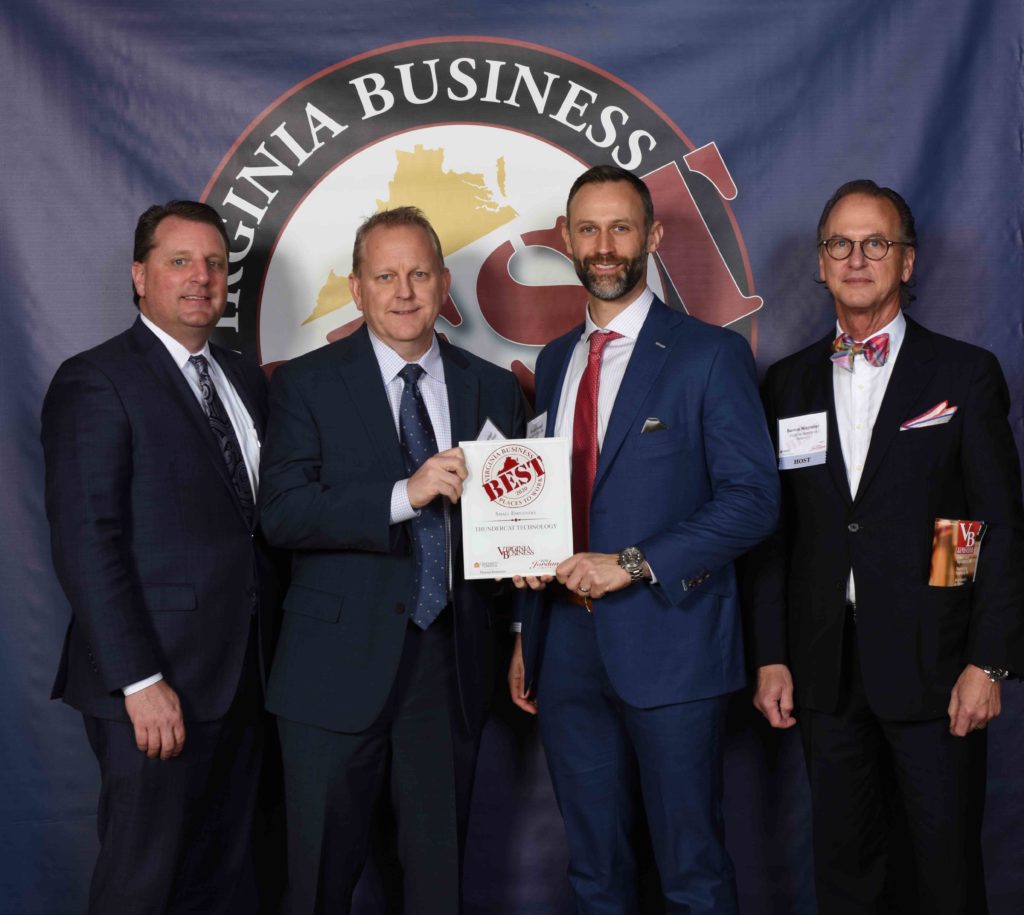
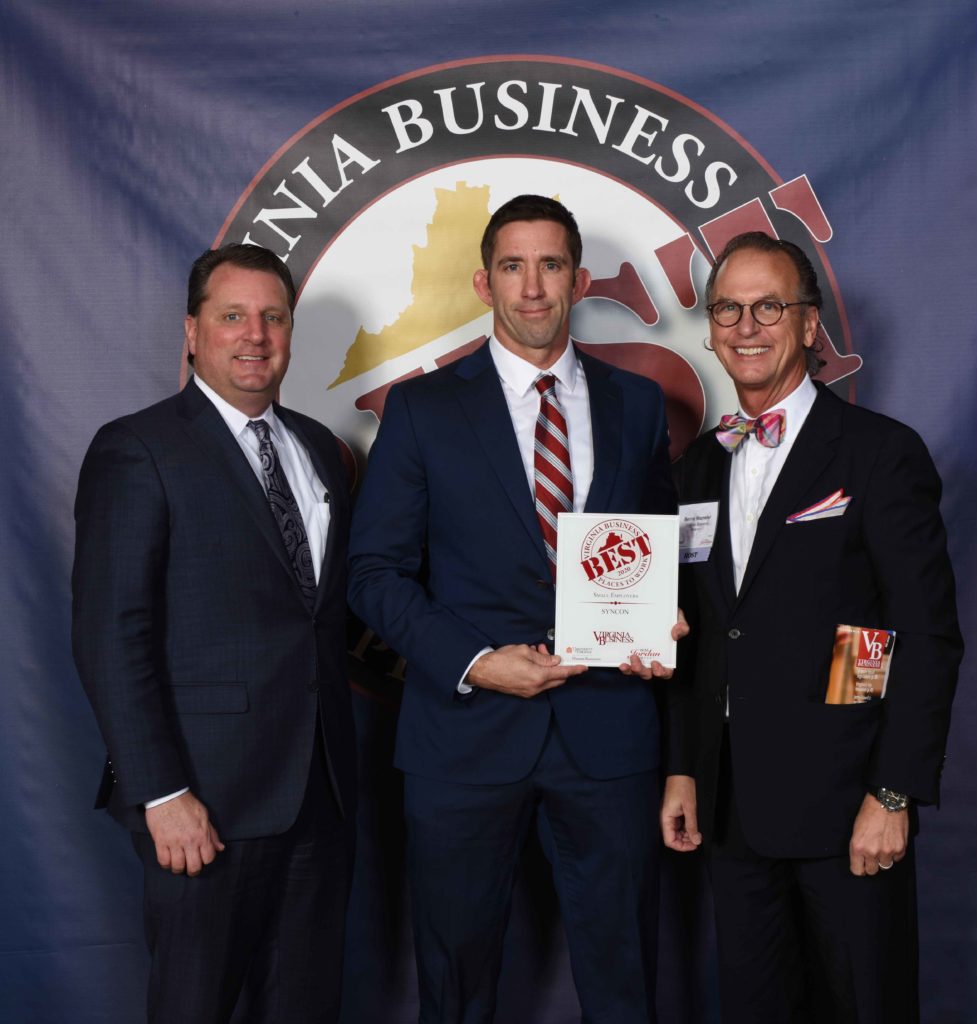
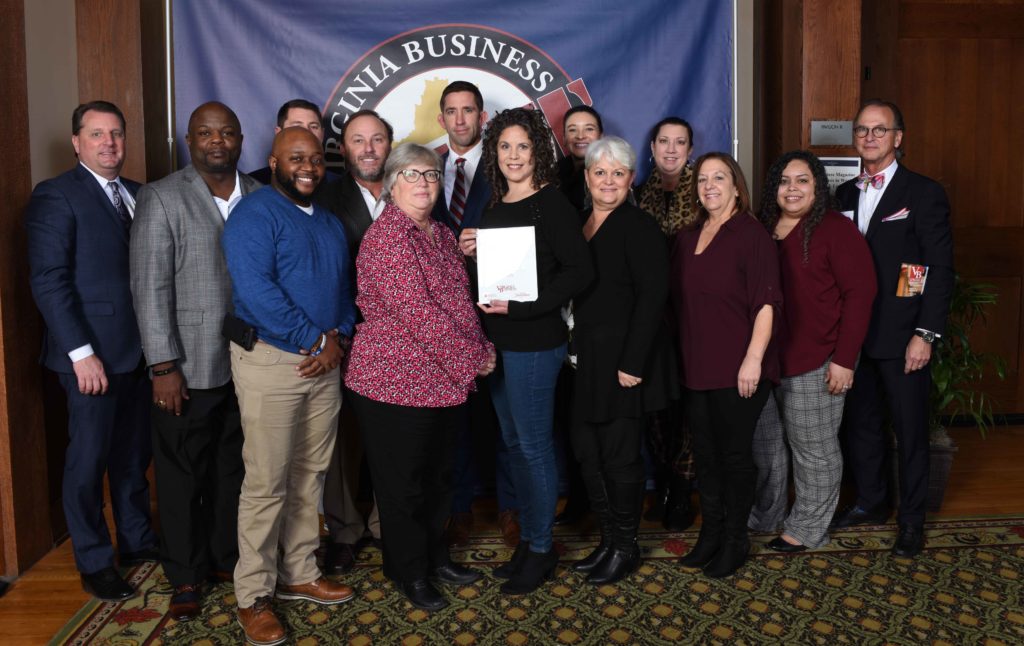
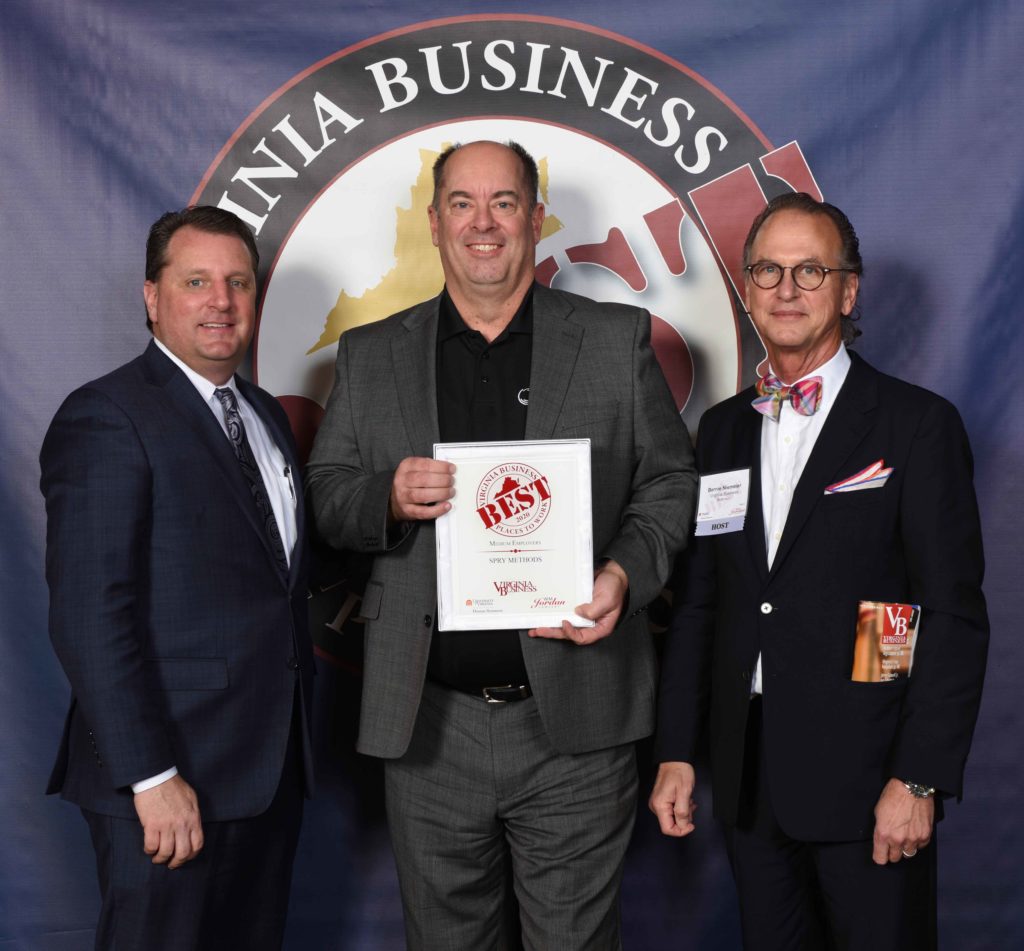
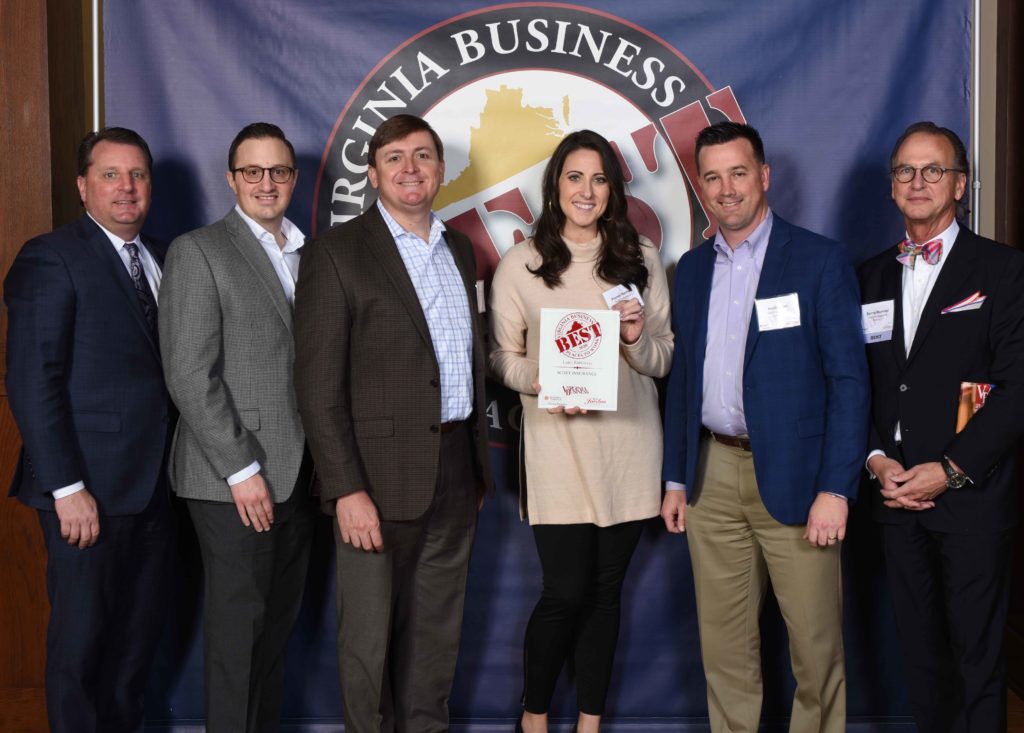
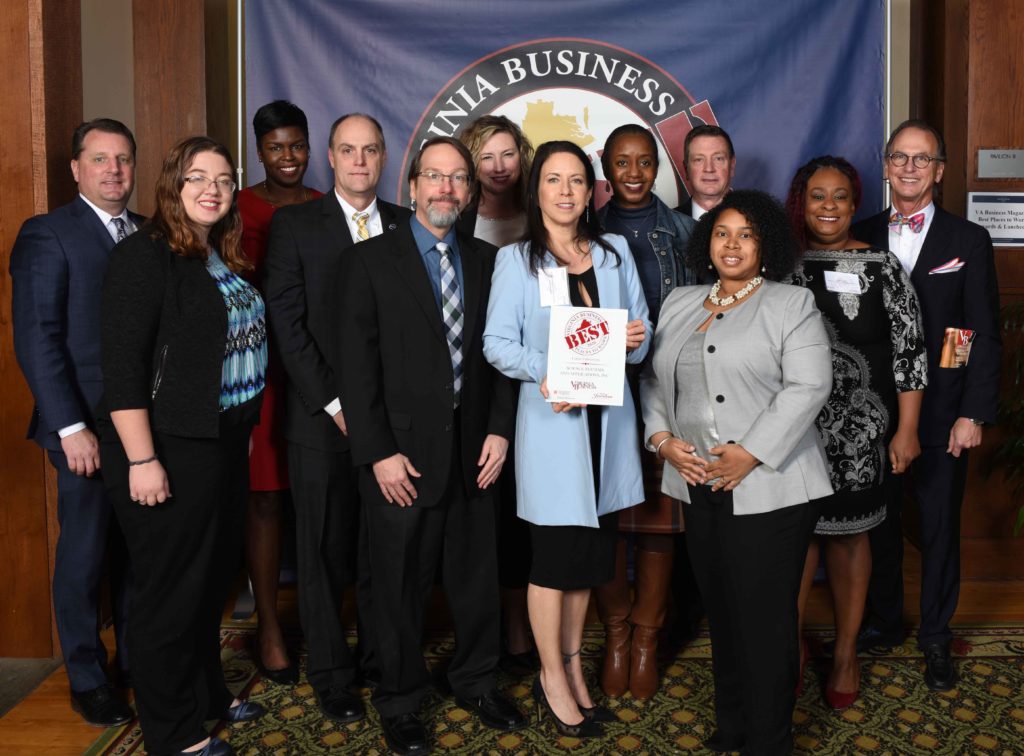
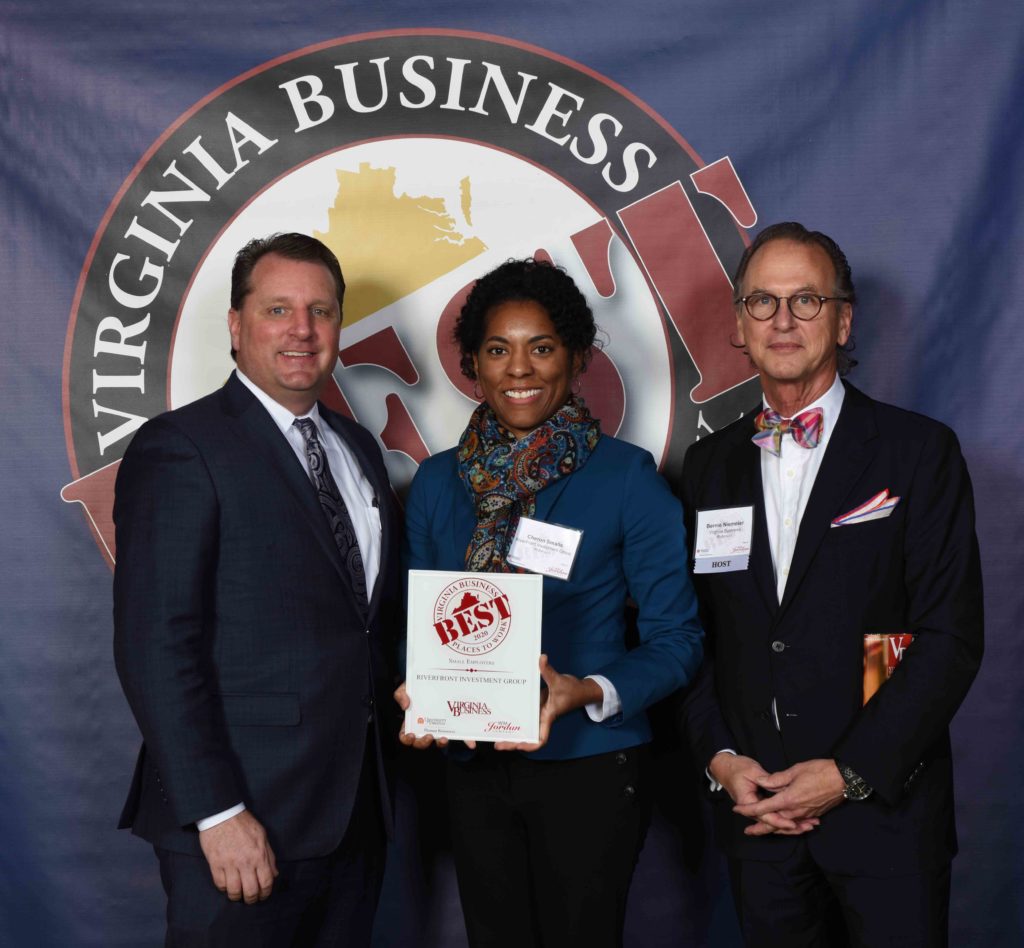
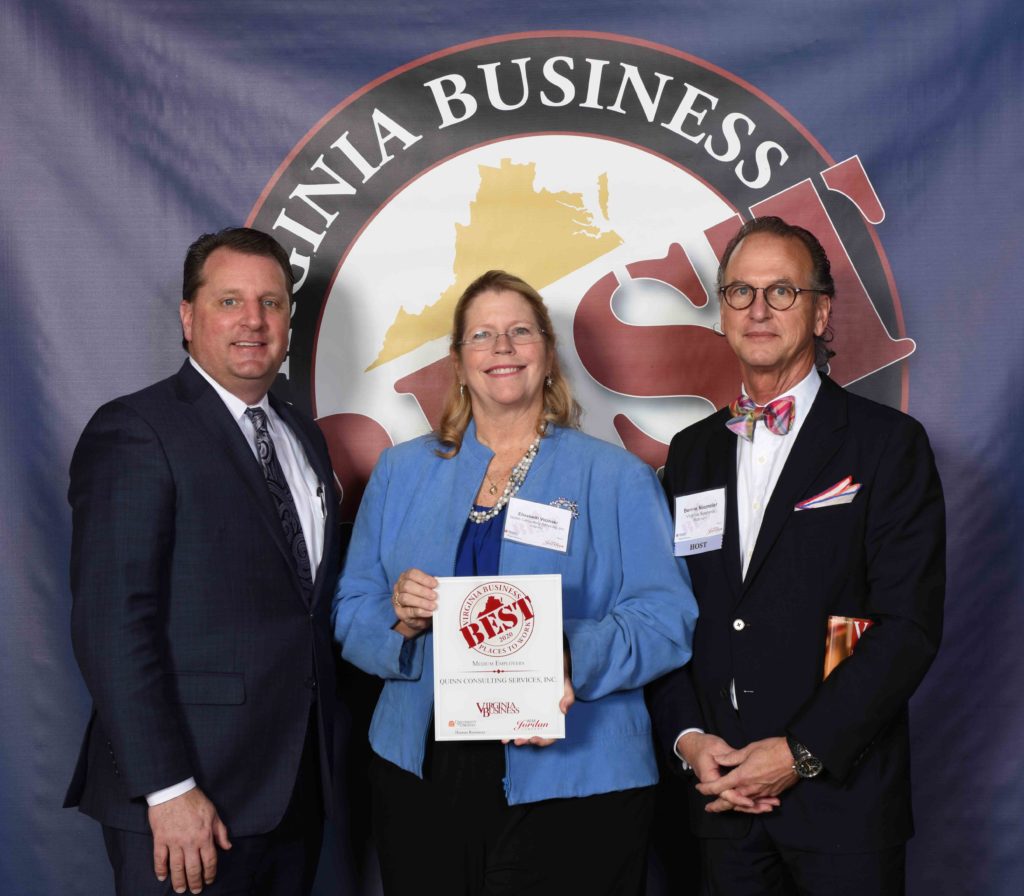
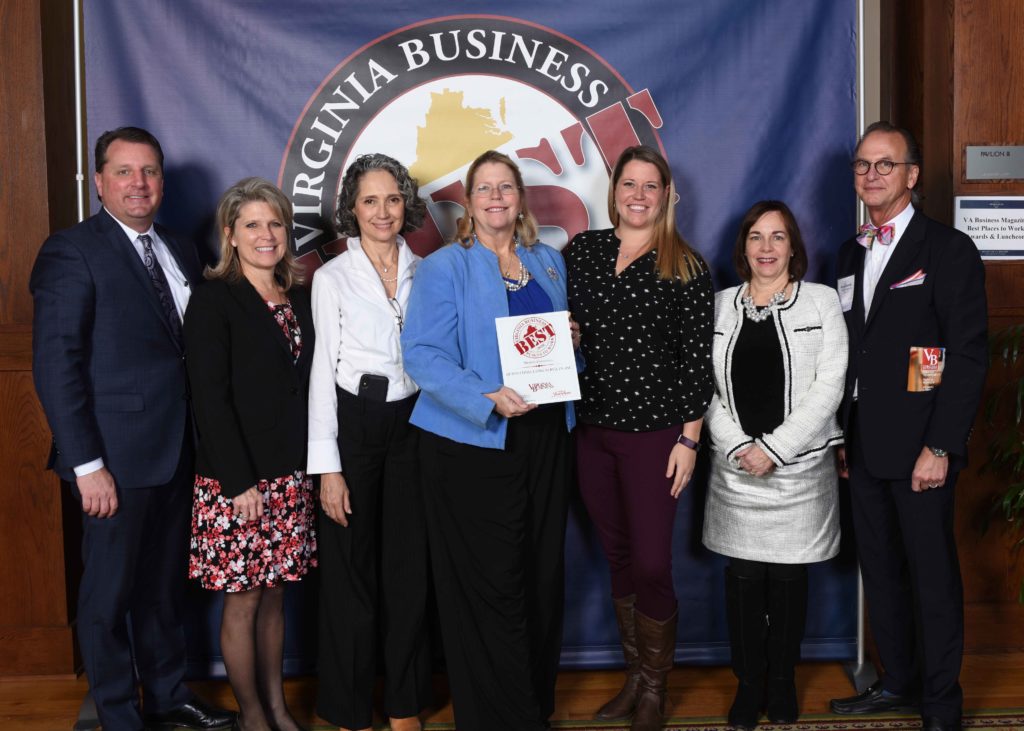
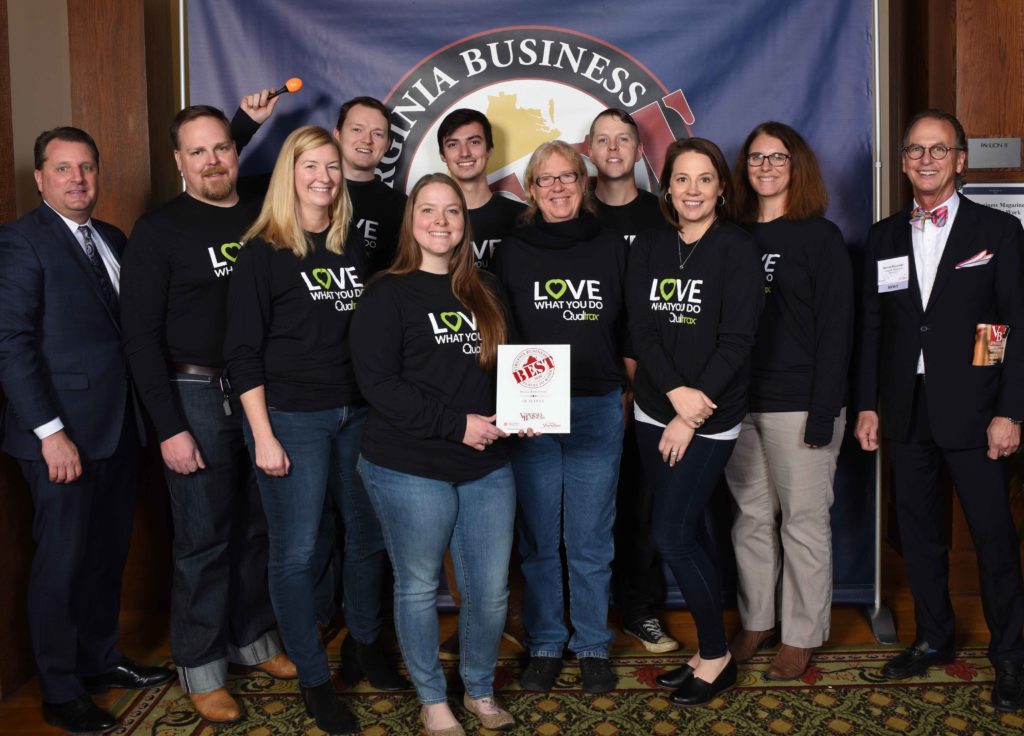
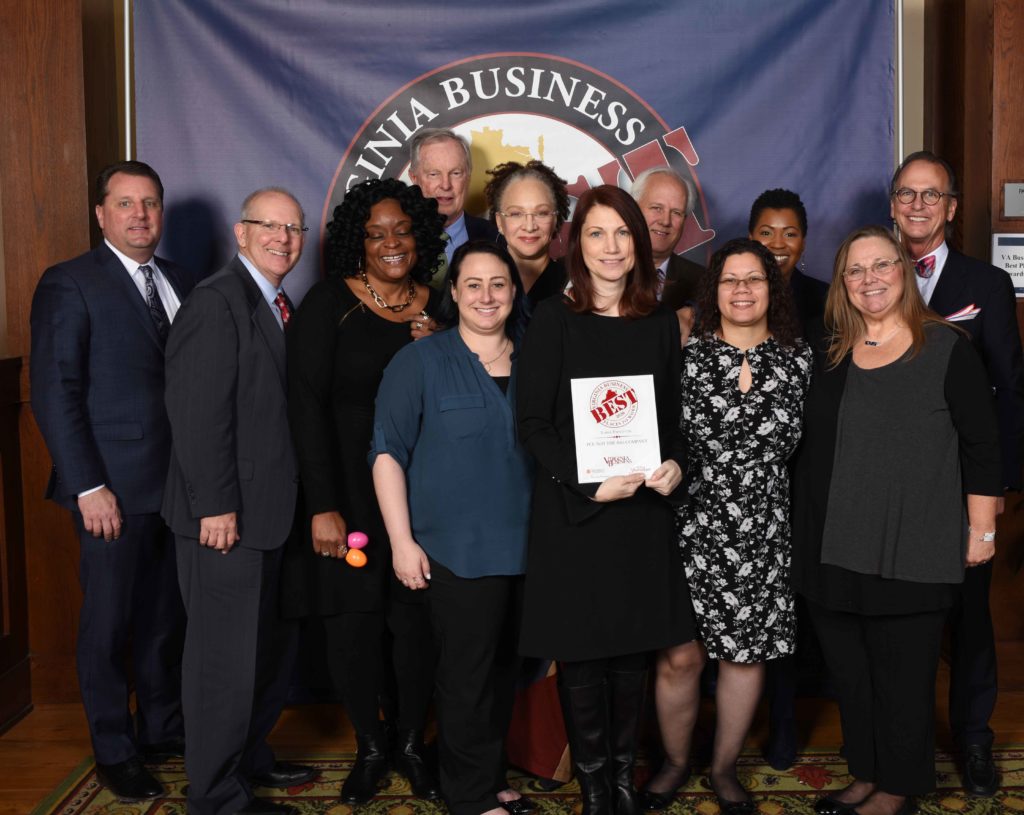
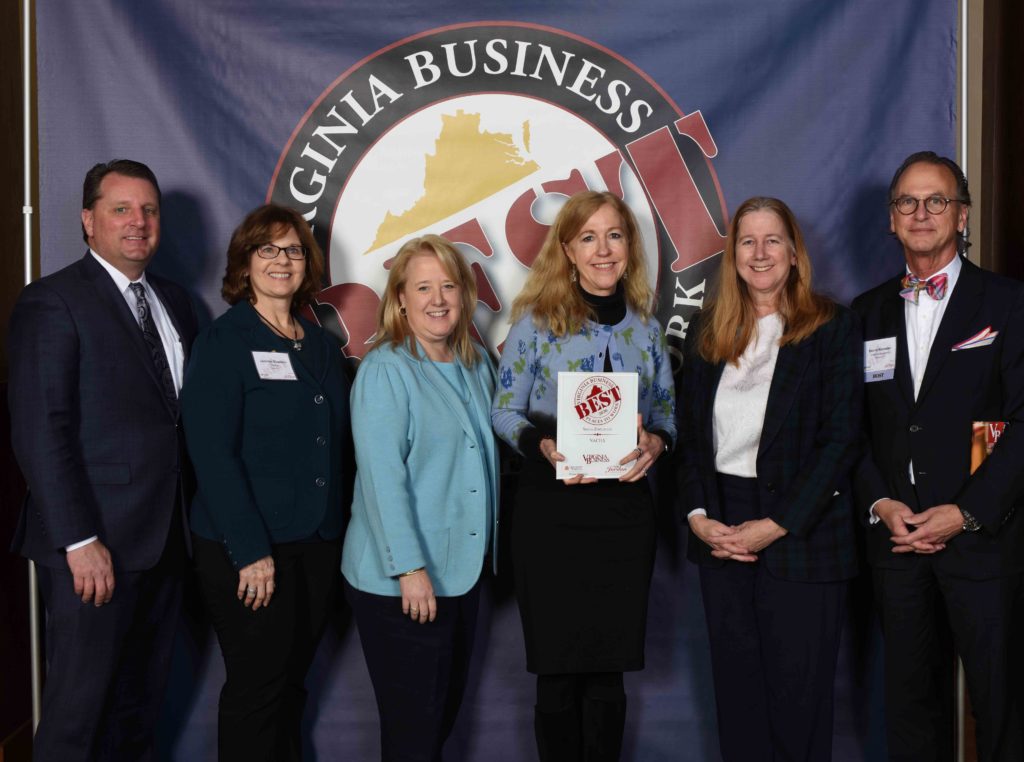
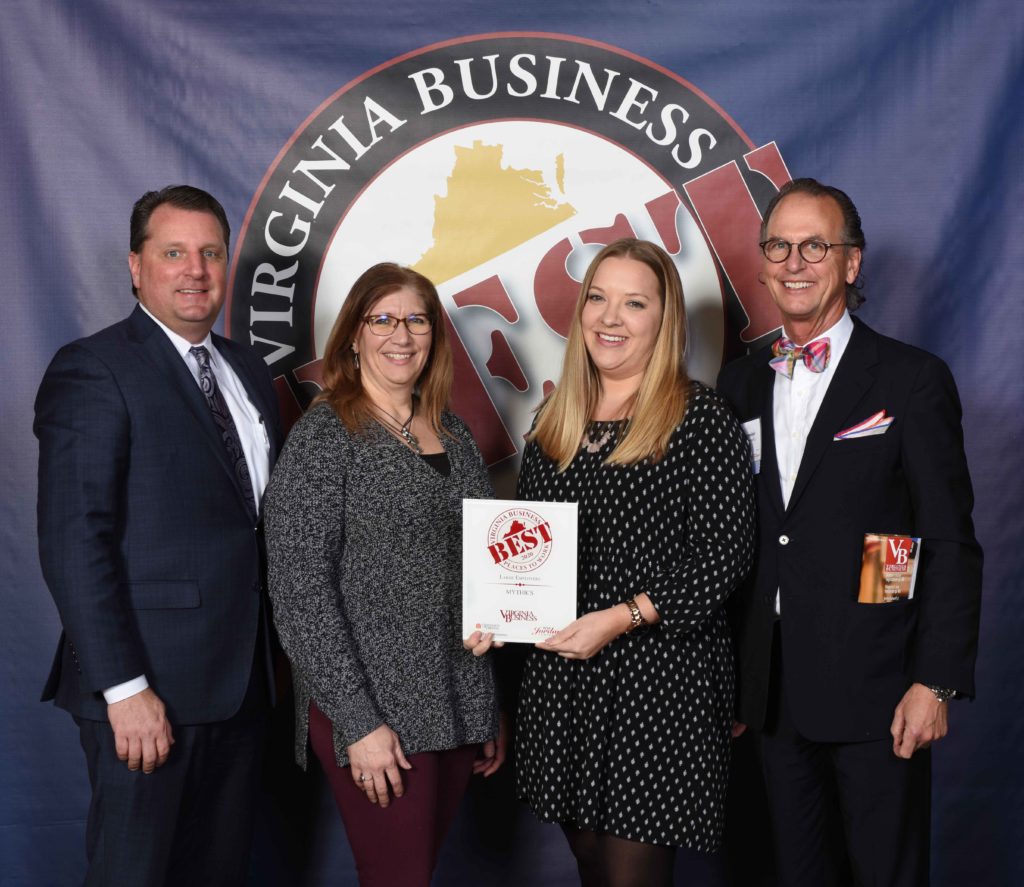
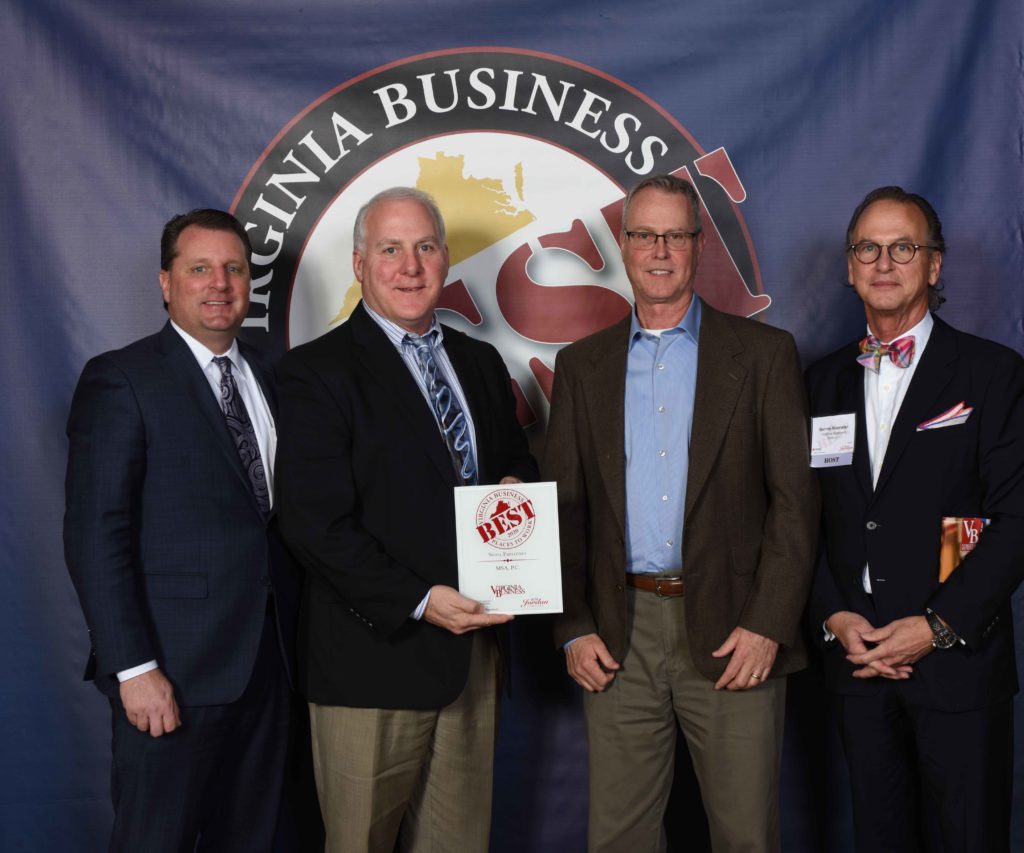
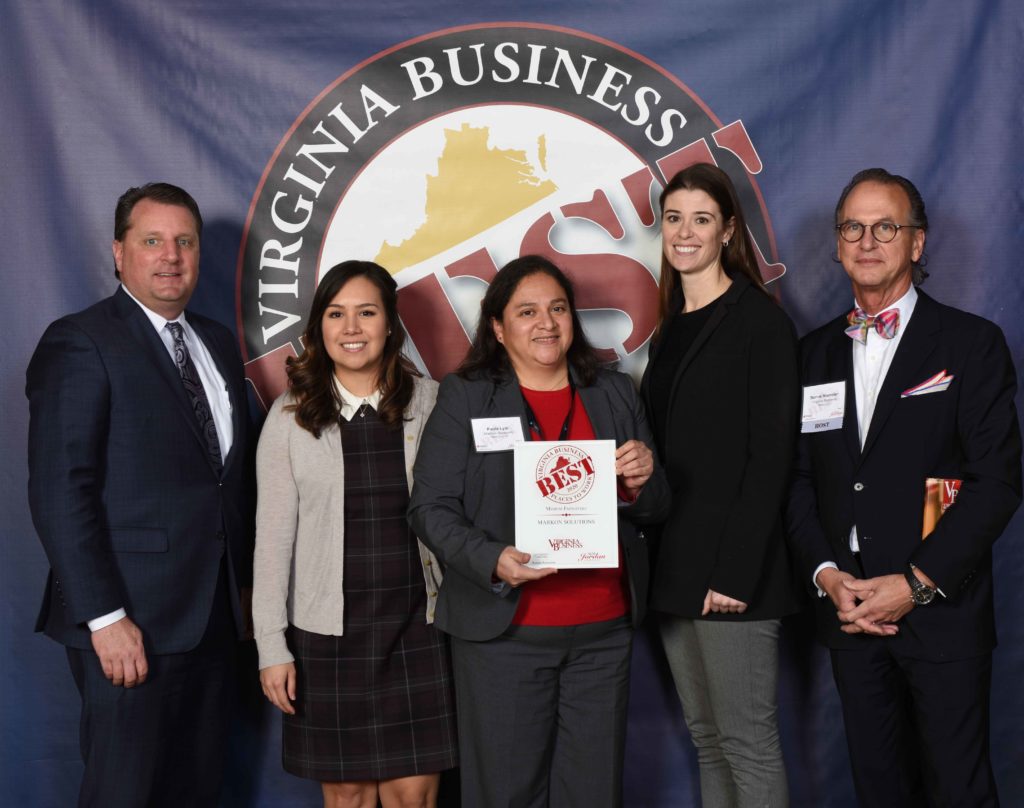
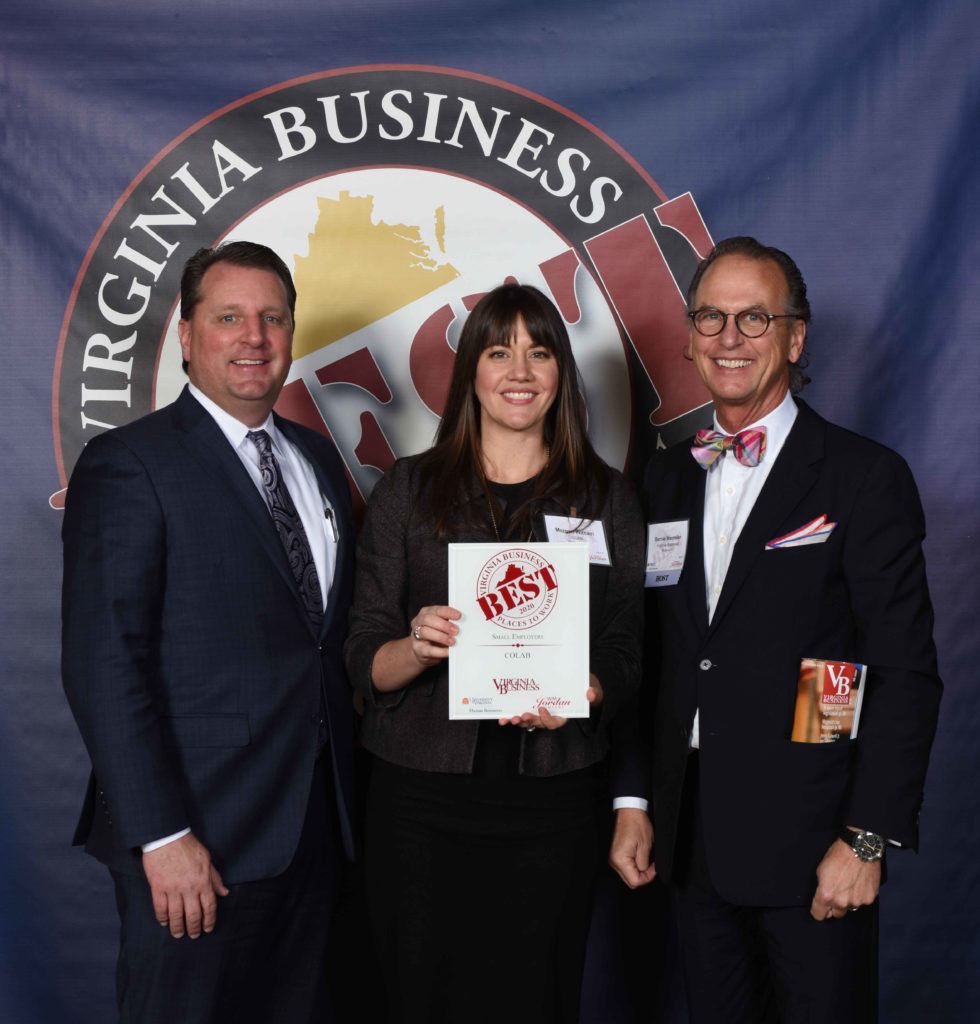
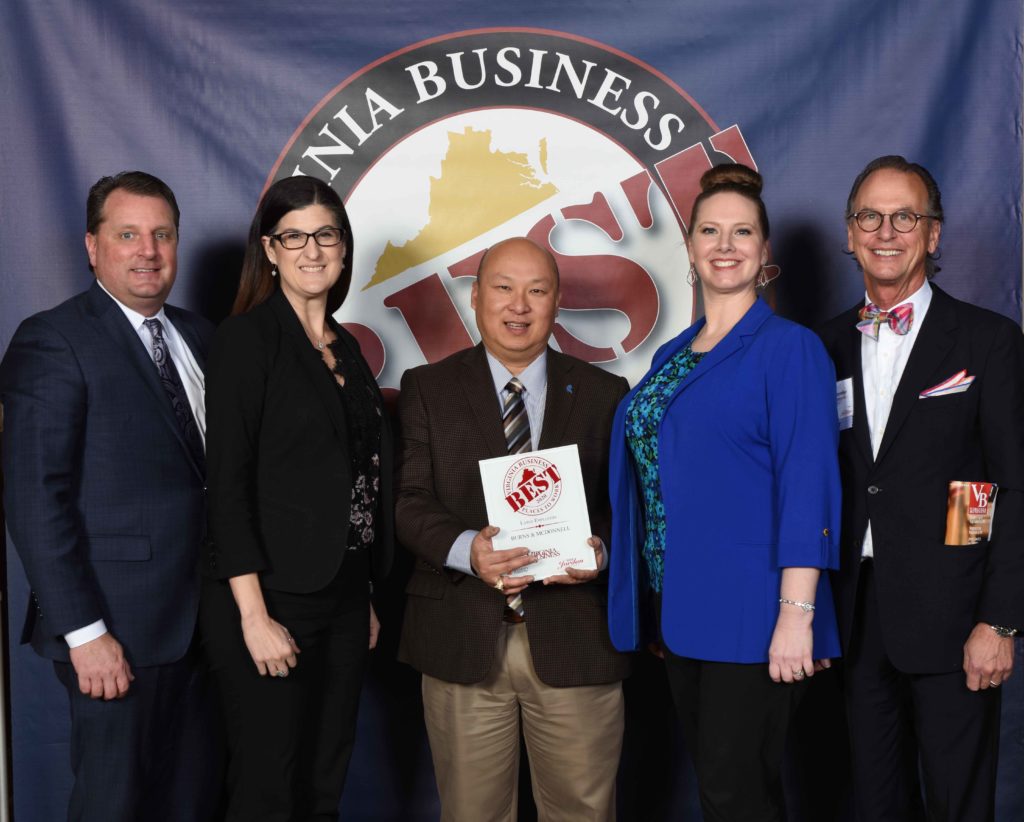
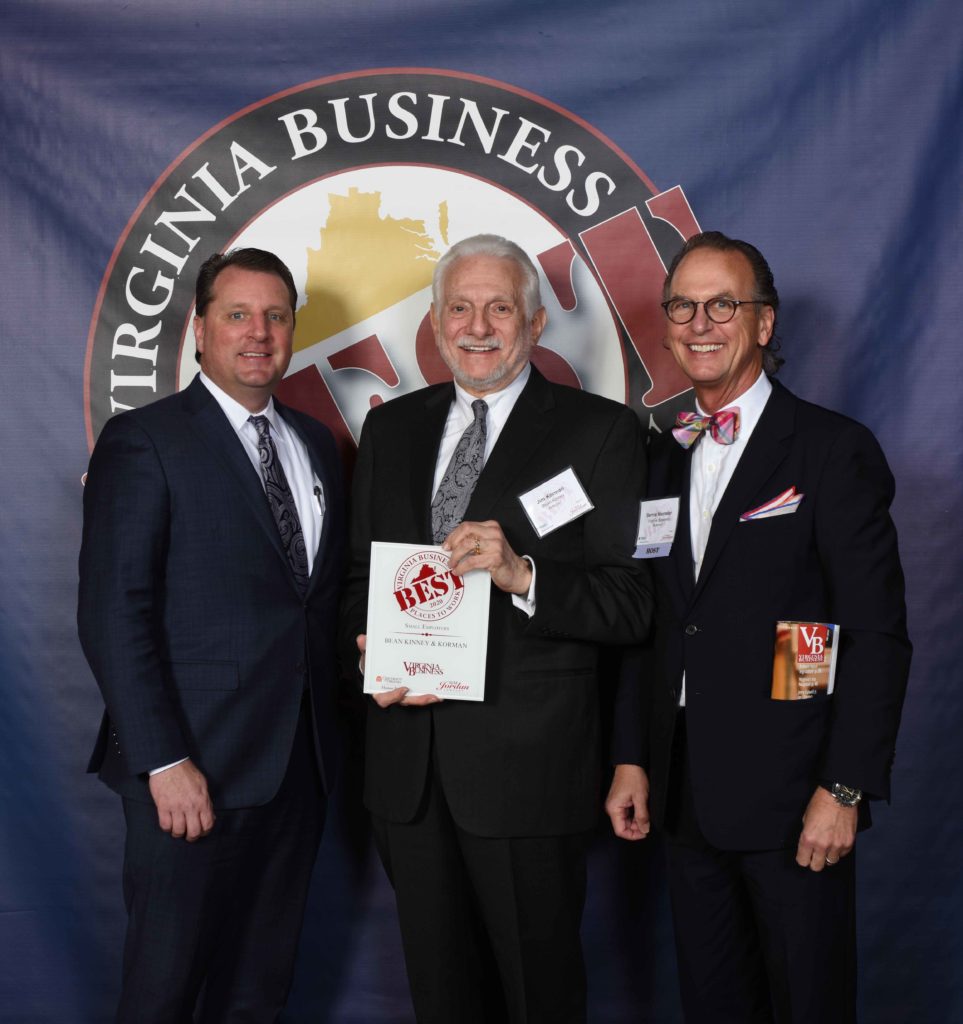
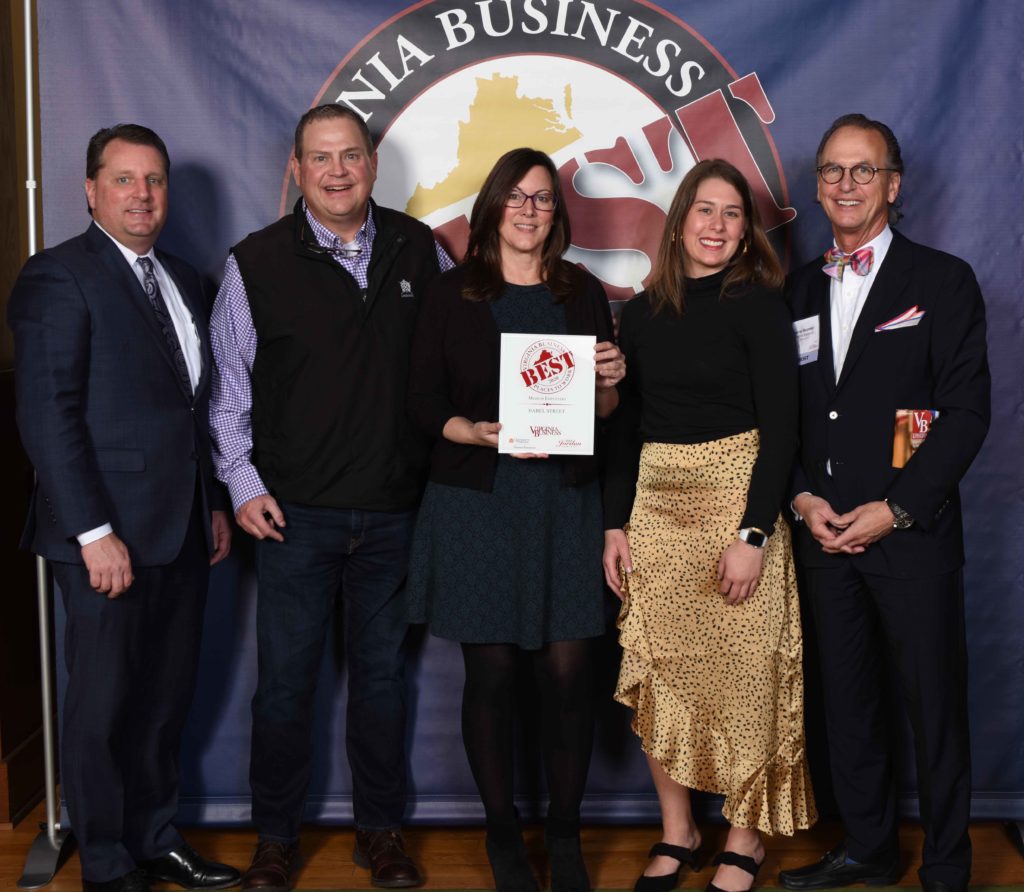
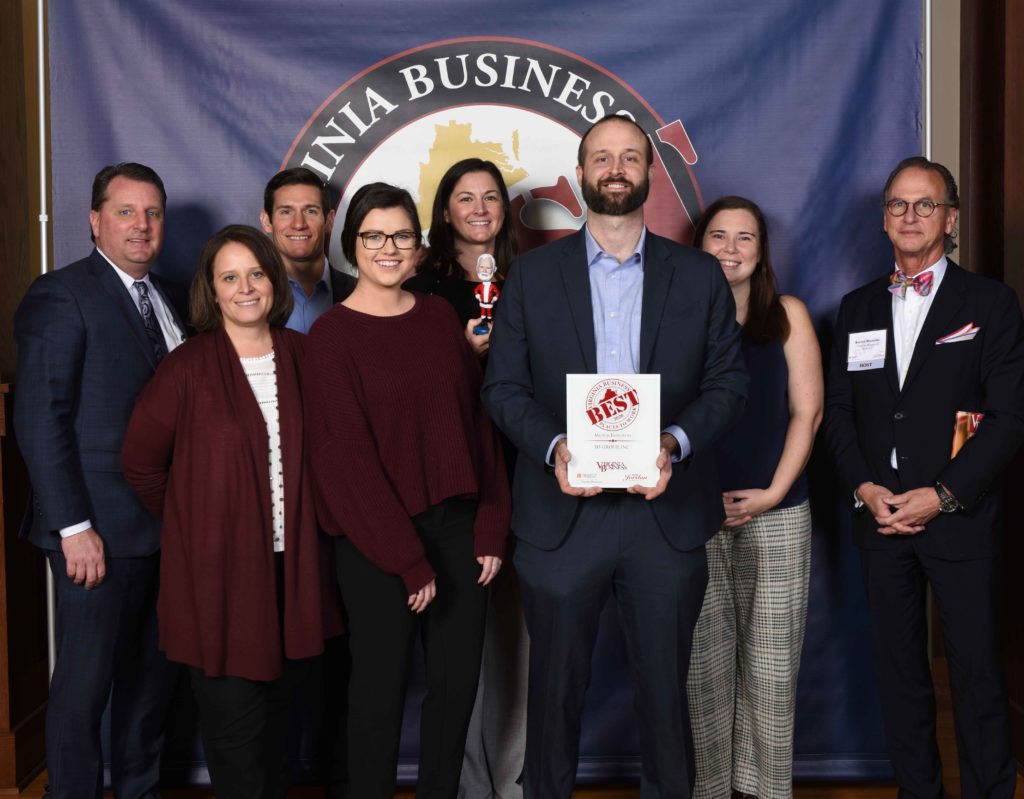
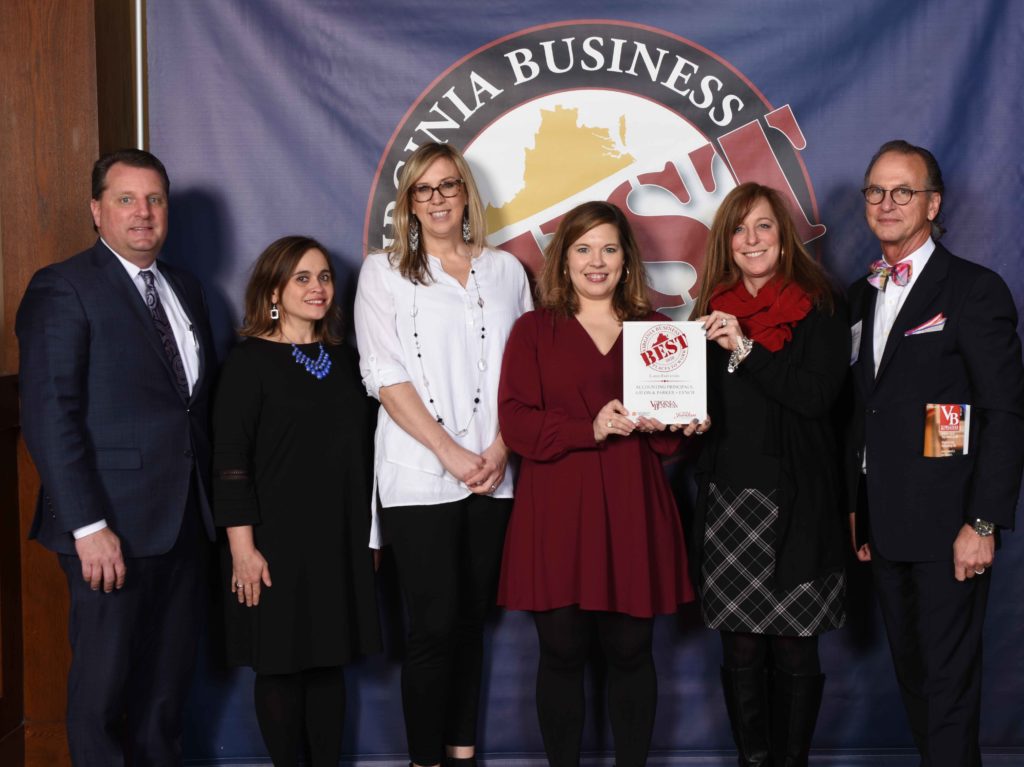
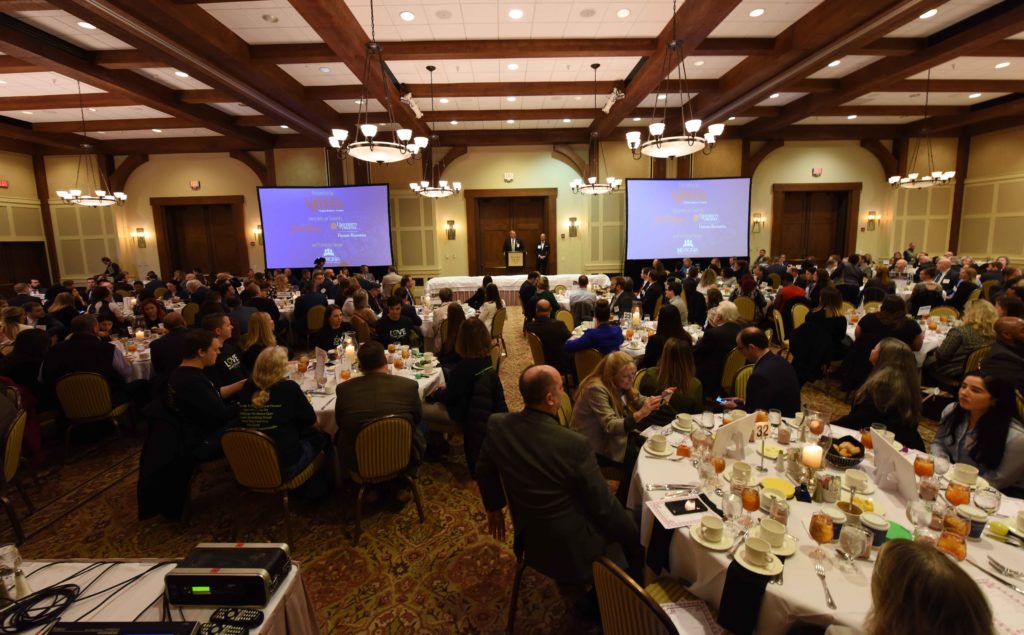
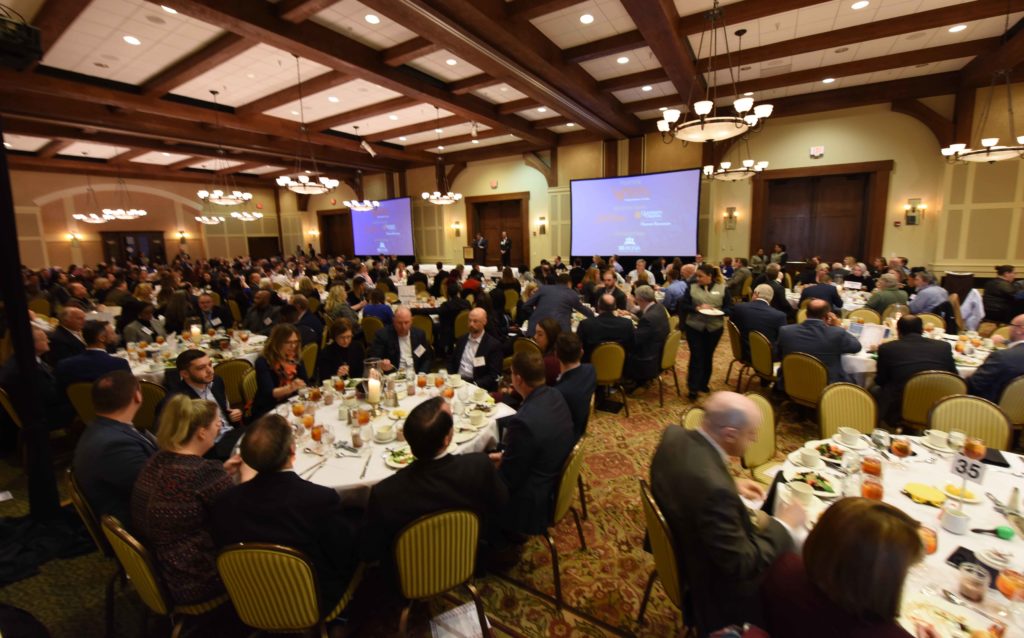
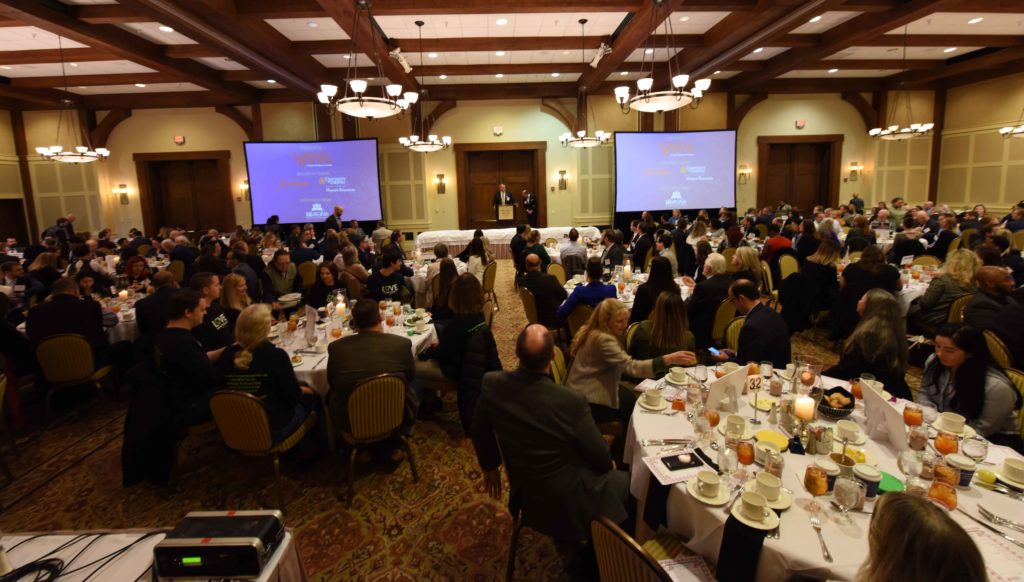
Virginia Business unveiled its 2020 list of the Best Places to Work in Virginia at its 10th annual awards luncheon, held Jan. 31 at The Boars’ Head Resort in Charlottesville.
A special thank you to event partners, Best Companies Group and HR Virginia and to event sponsors W.M. Jordan Company and University of Virginia – Human Resources.
Check out gallery of winners’ photos below. For a digital copy of your company’s photo, please contact Adrienne D. Reaves
VACO Richmond
Thundercat Technologies
Syncon
Syncon
Summit Information Solutions Inc.
Sumitomo
SRC
Spry Methods
Solvaria
SimVentions
Scott Insurance
Science Systems and Applications
Riverfront Investment Group
Quinn Consulting
Quinn Consulting
Qualtrax
Qlarion
Pinnacle Financial Partners
Peter Burke, Best Companies Group and Bernie Niemeier, Virginia Business
PCI
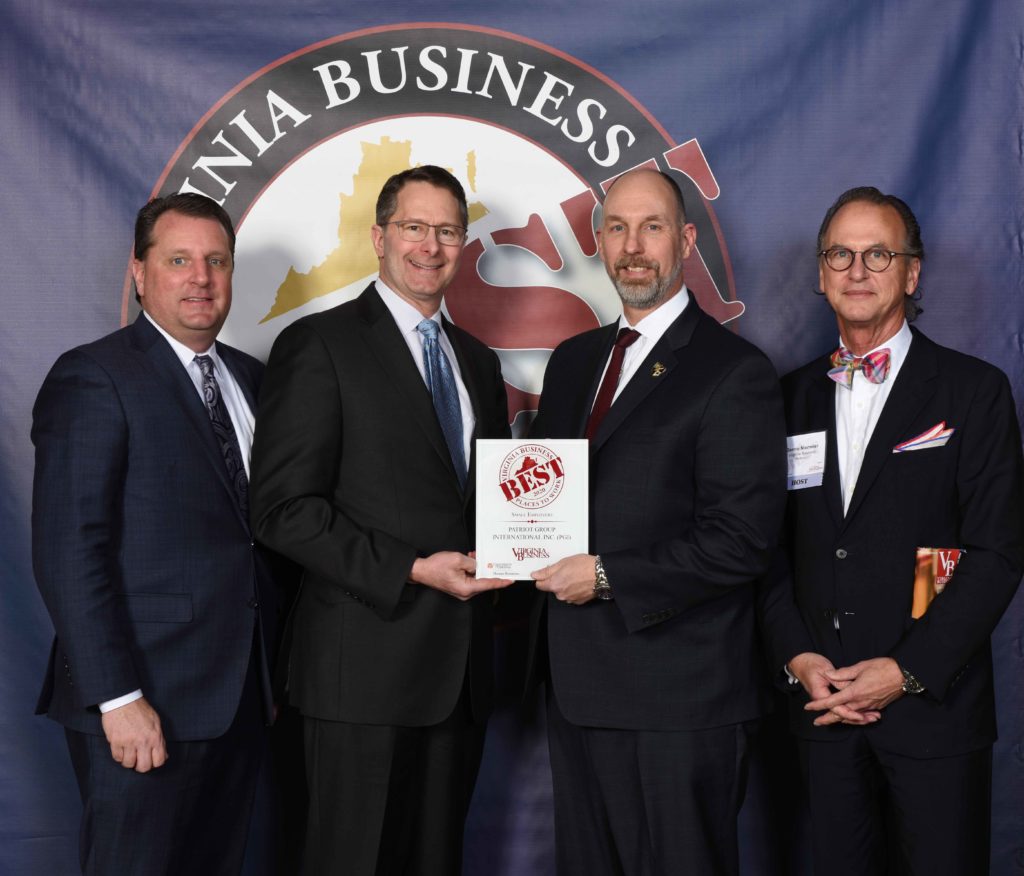
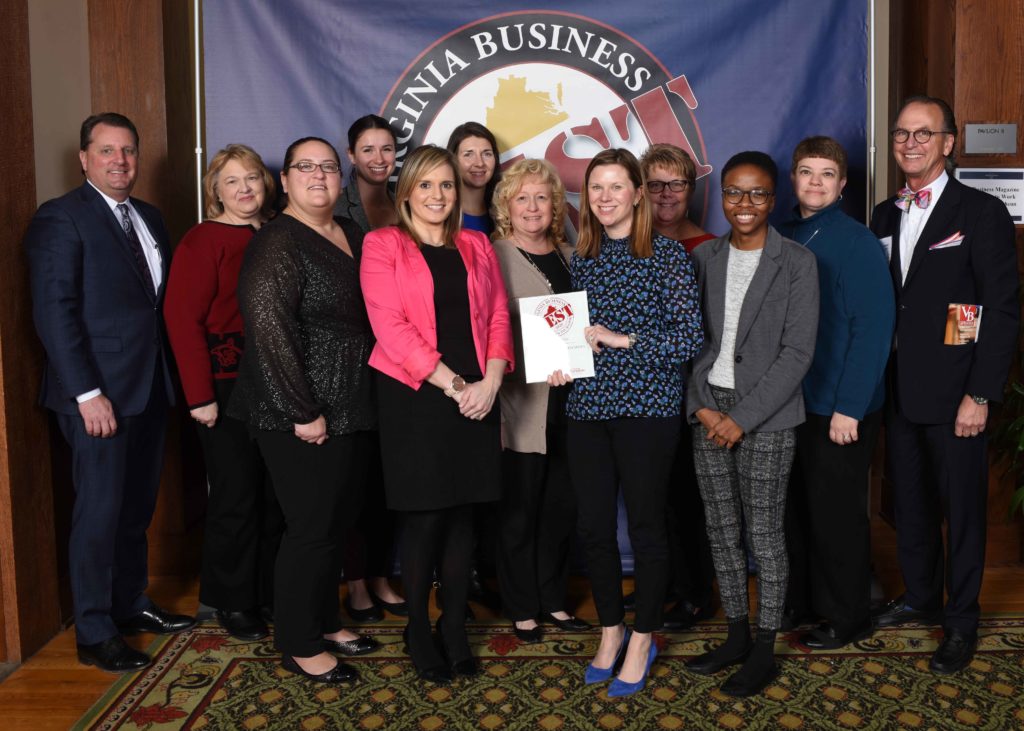
Patriot Group
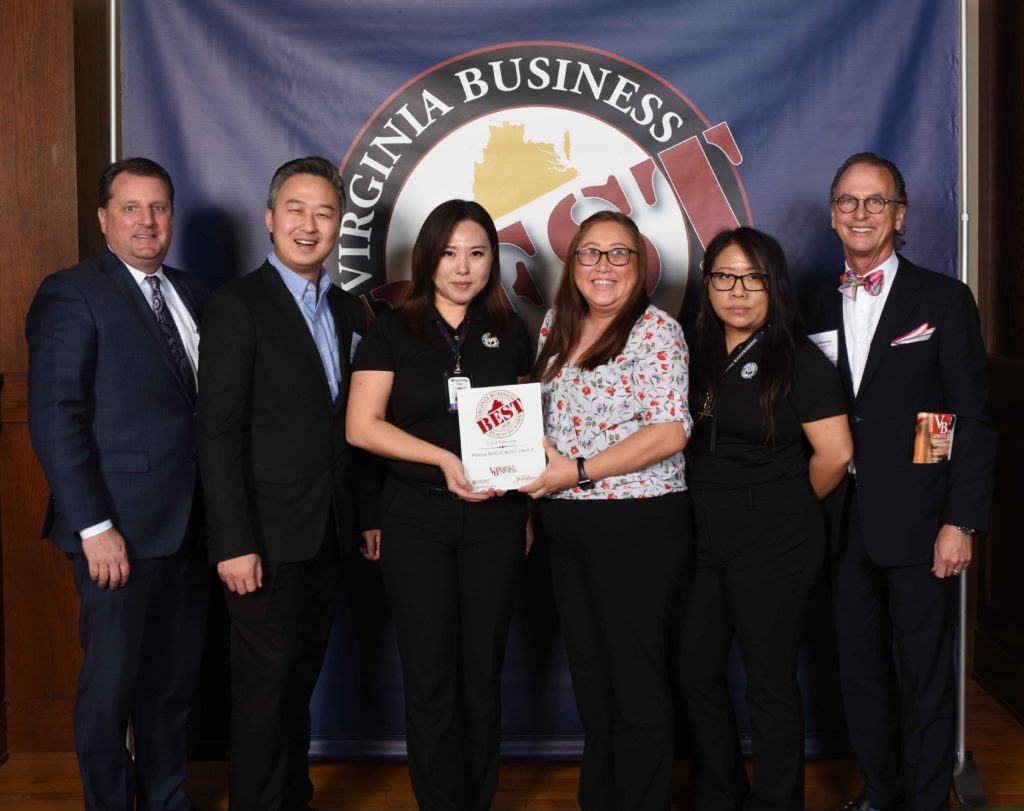
Panda Restaurant Group
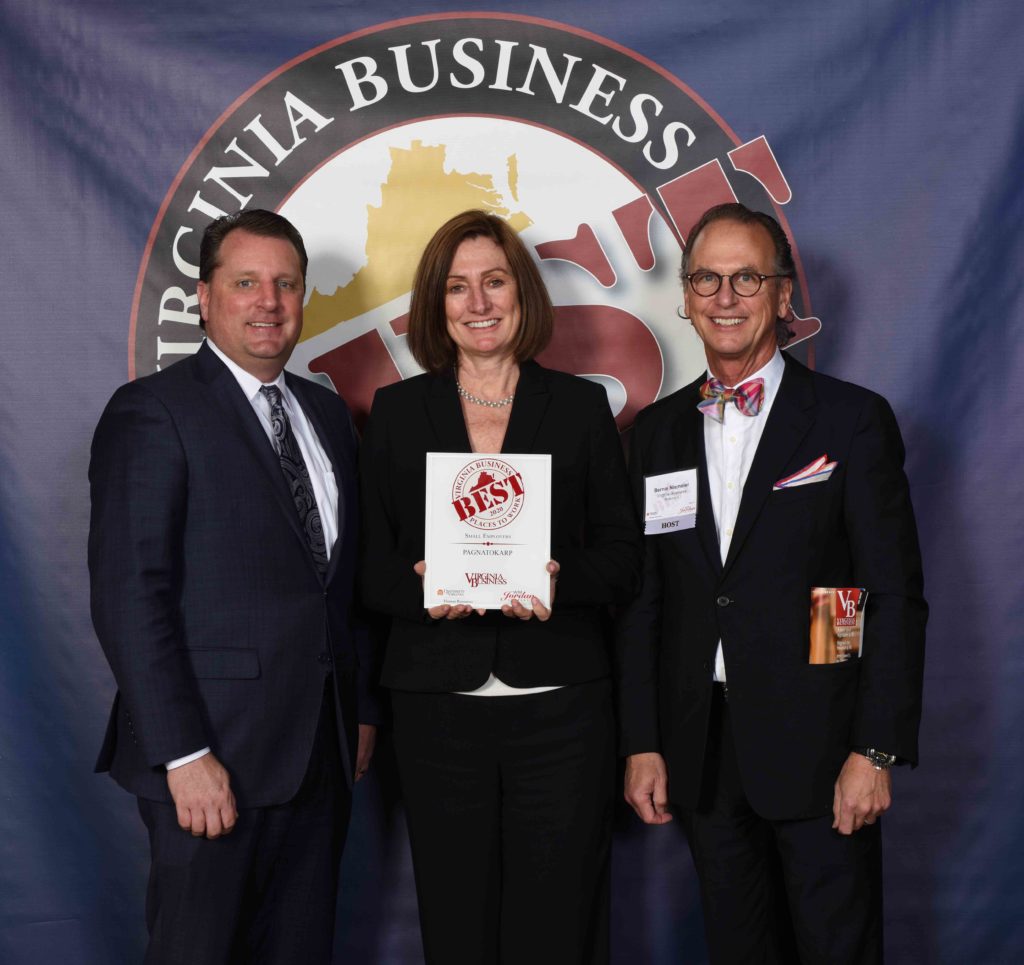
PagnatoKarp
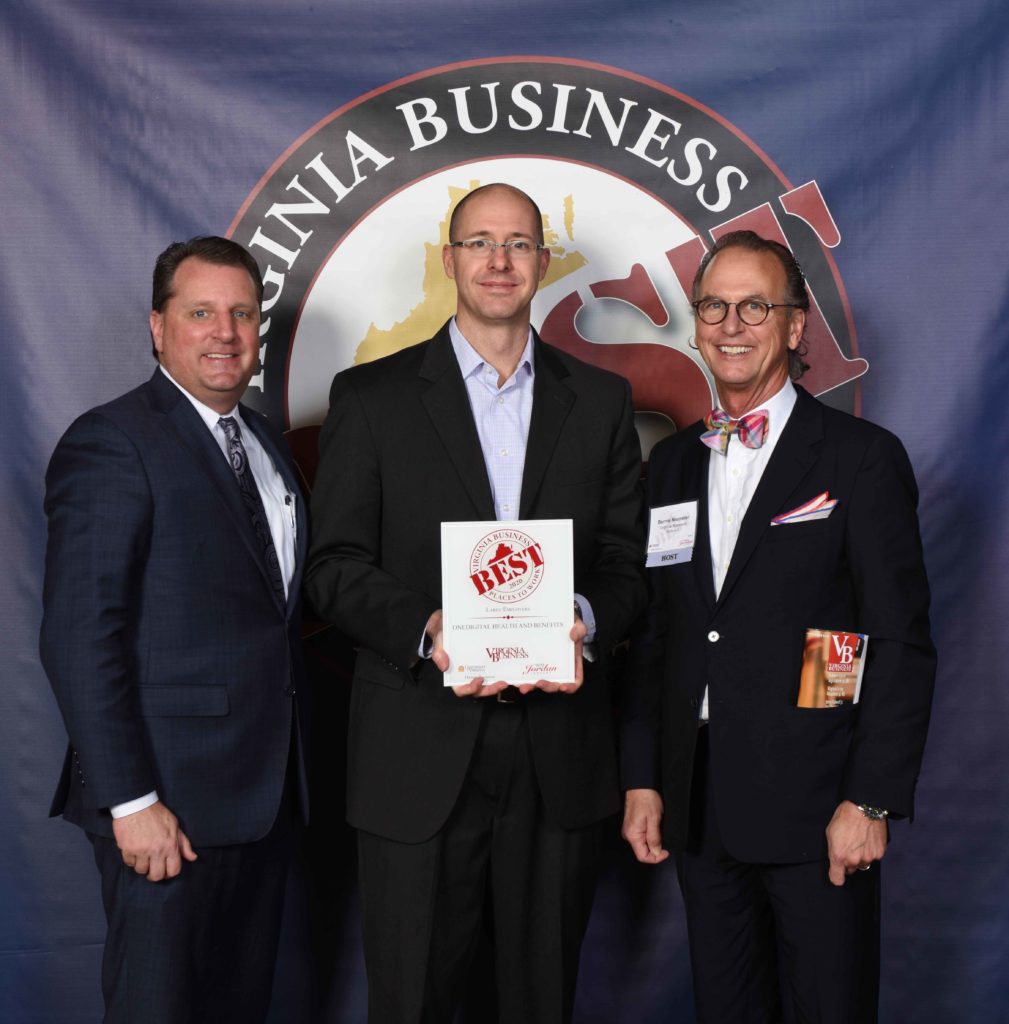
OneDigital Health
NACHA
Mythics
MSA
MEC
MBP
Markon Solutions
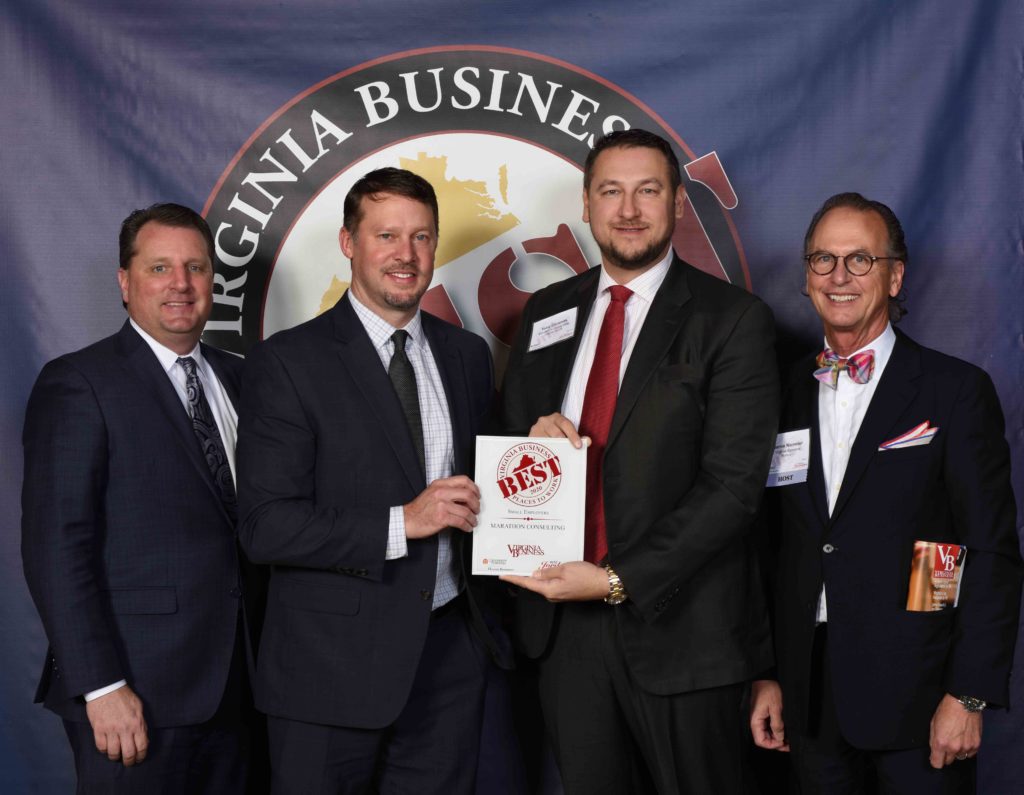
Marathon Consulting
Macedon Technologies
LeaseWebUSA
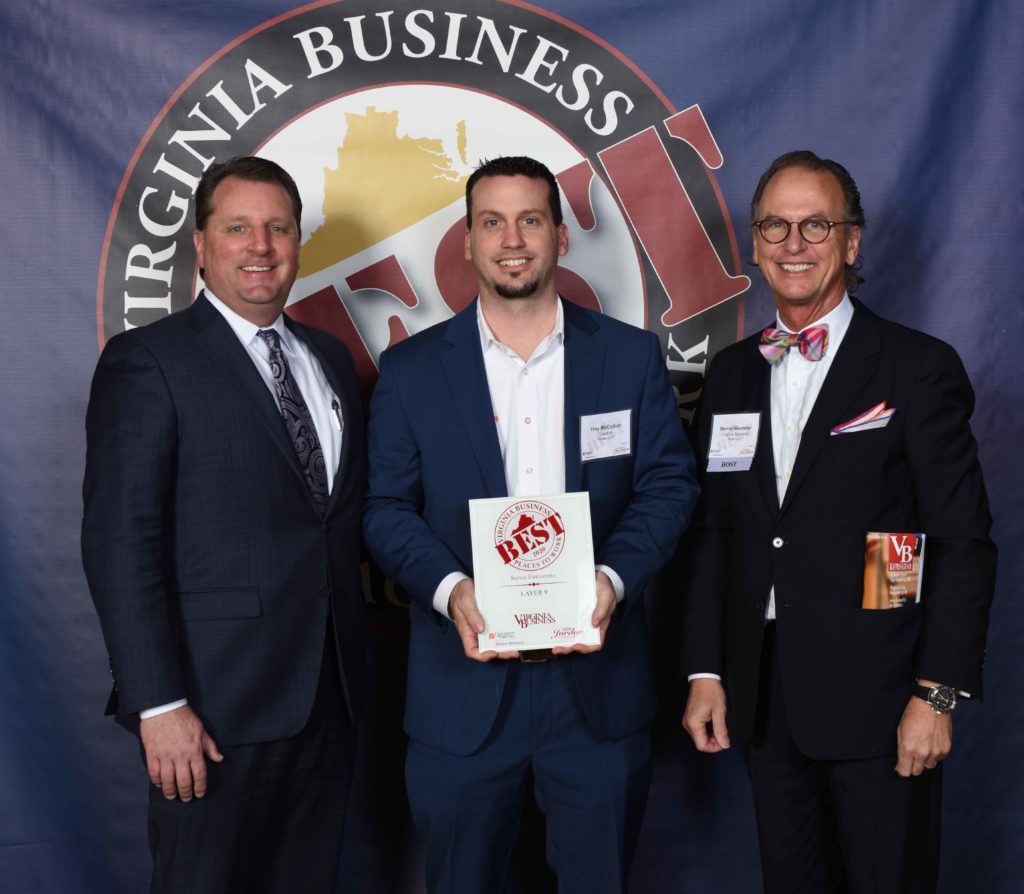
Layer 9
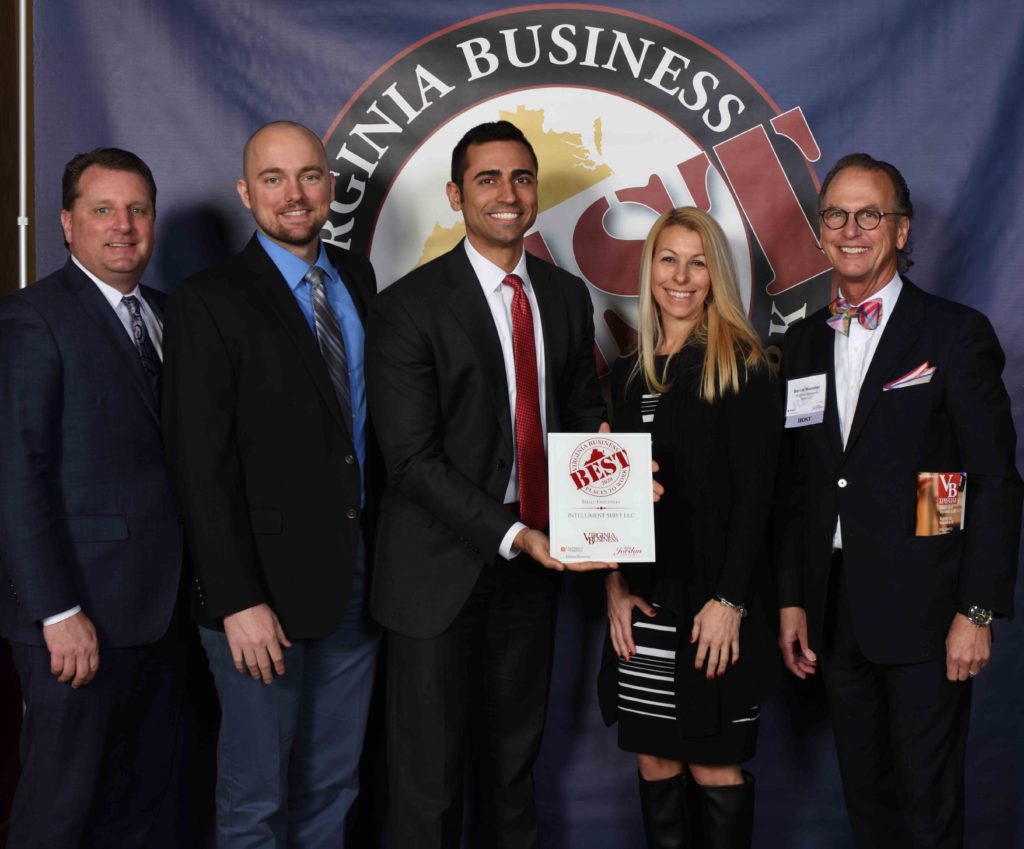
Intelligent Shift
Infinitive
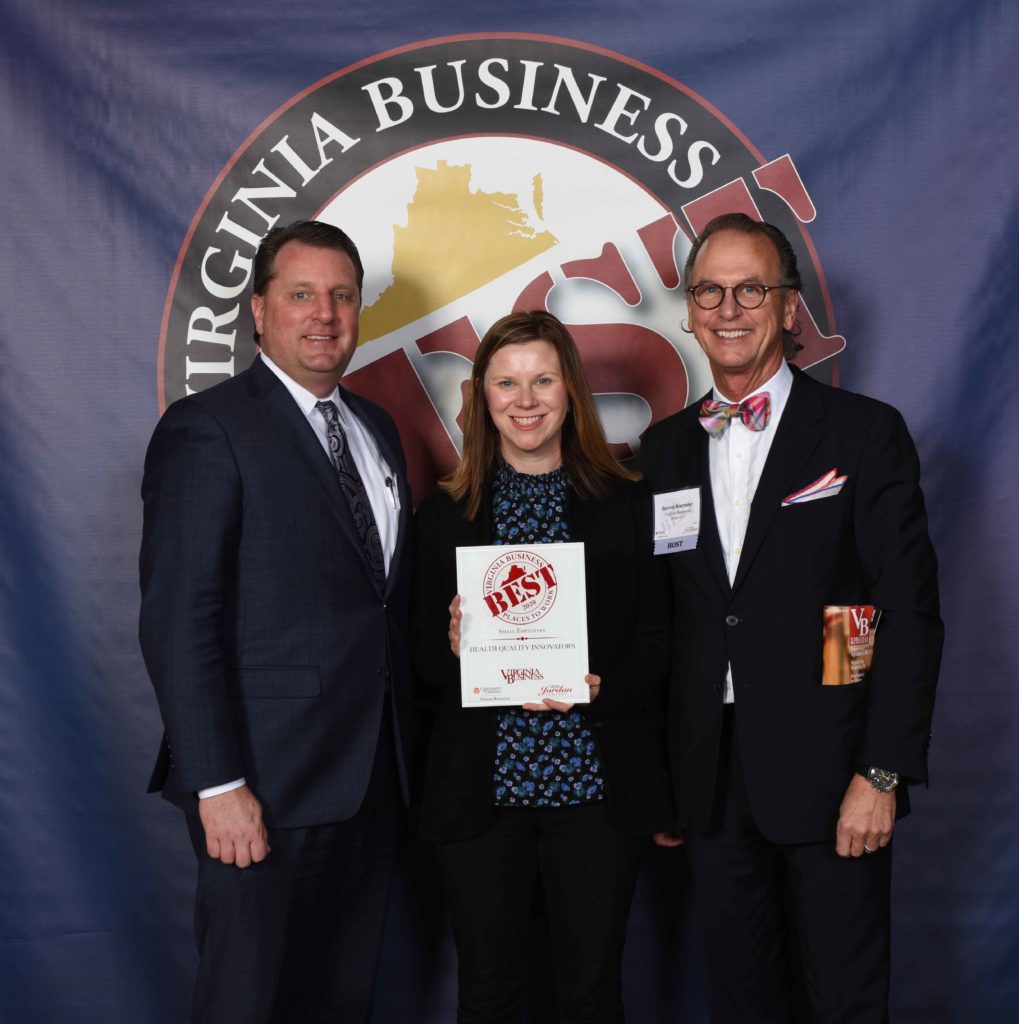
Health Quality Innovators
Health Quality Innovators
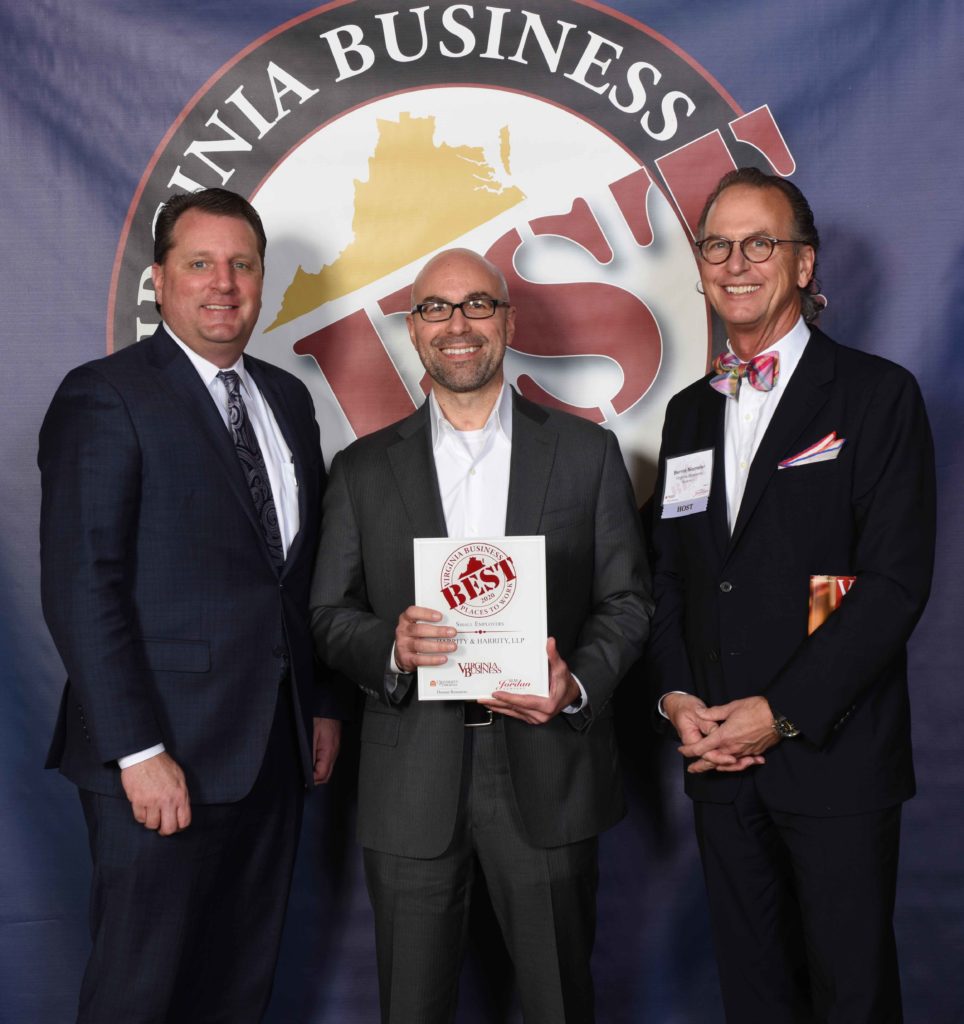
Harrity & Harrity
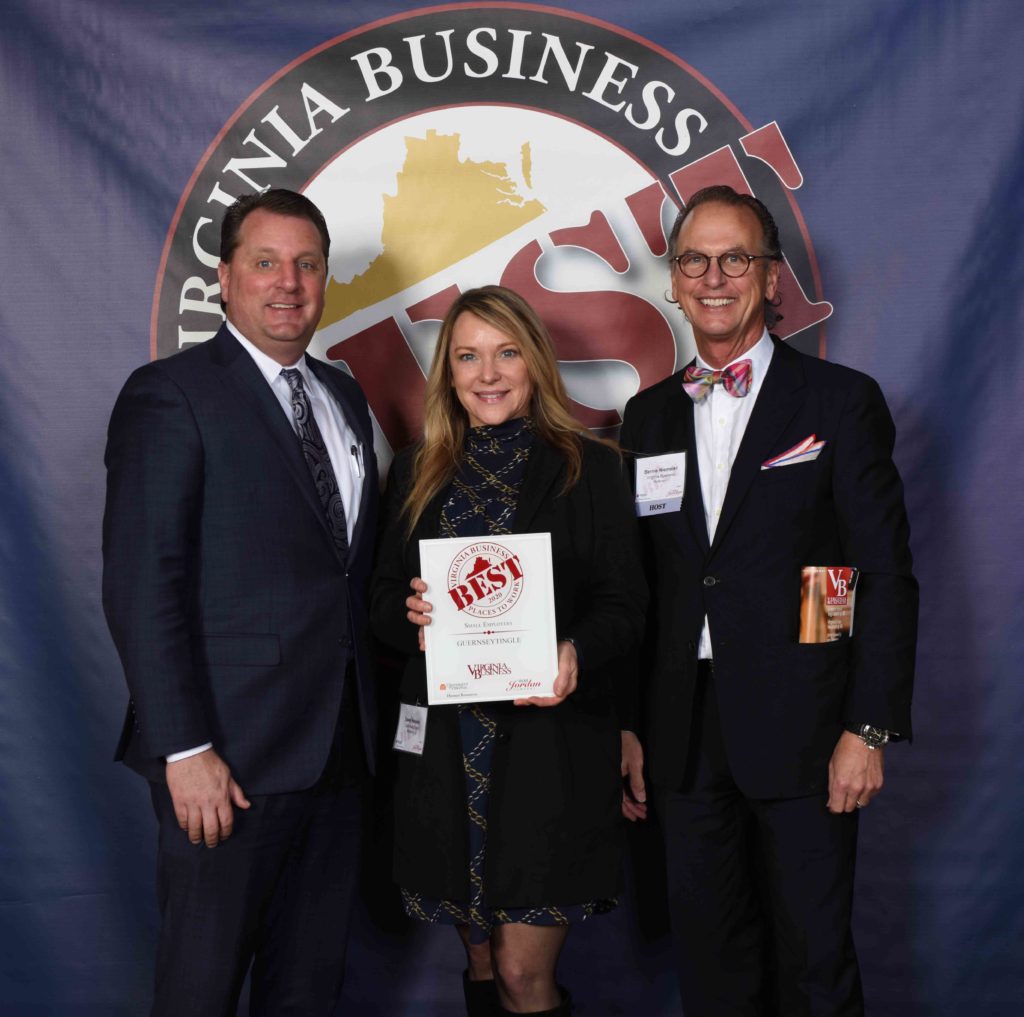
GuernseyTingle
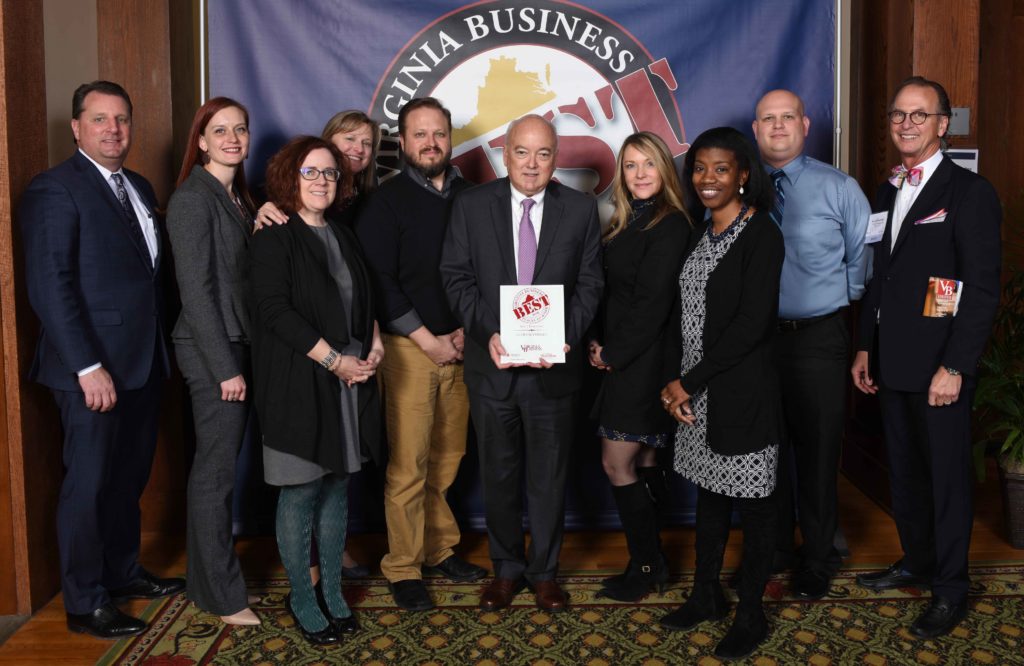
GuernseyTingle
Gilbane Building Co.
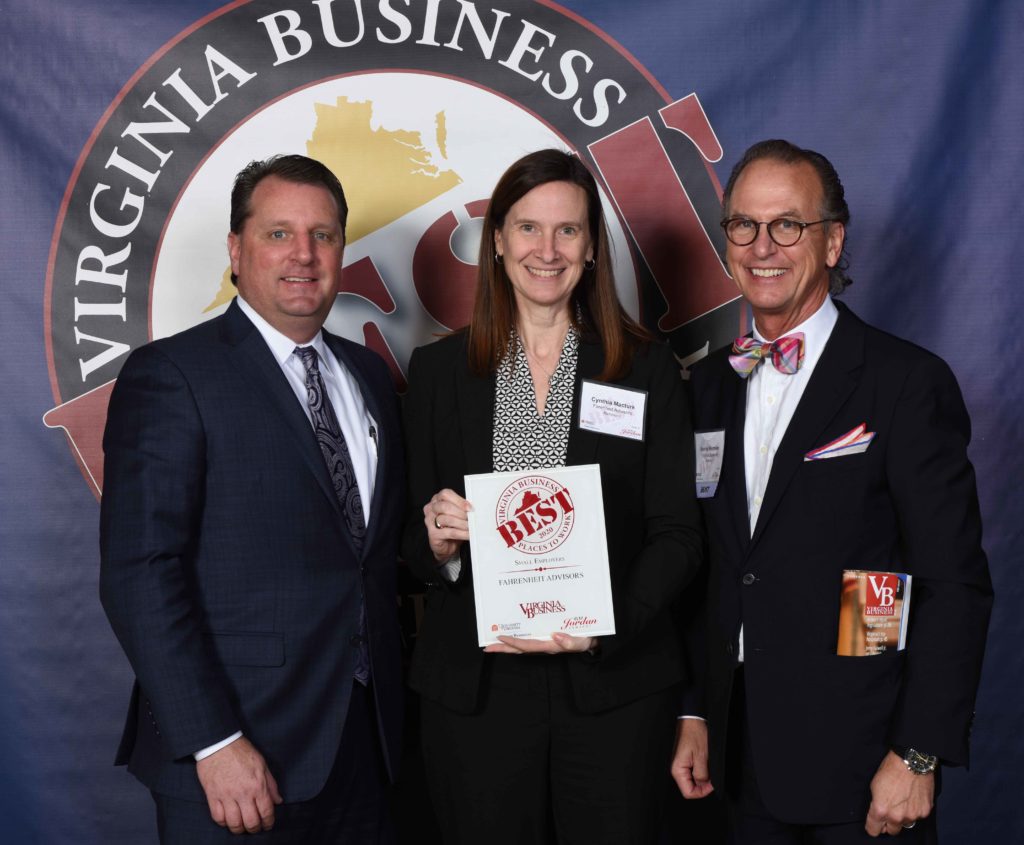
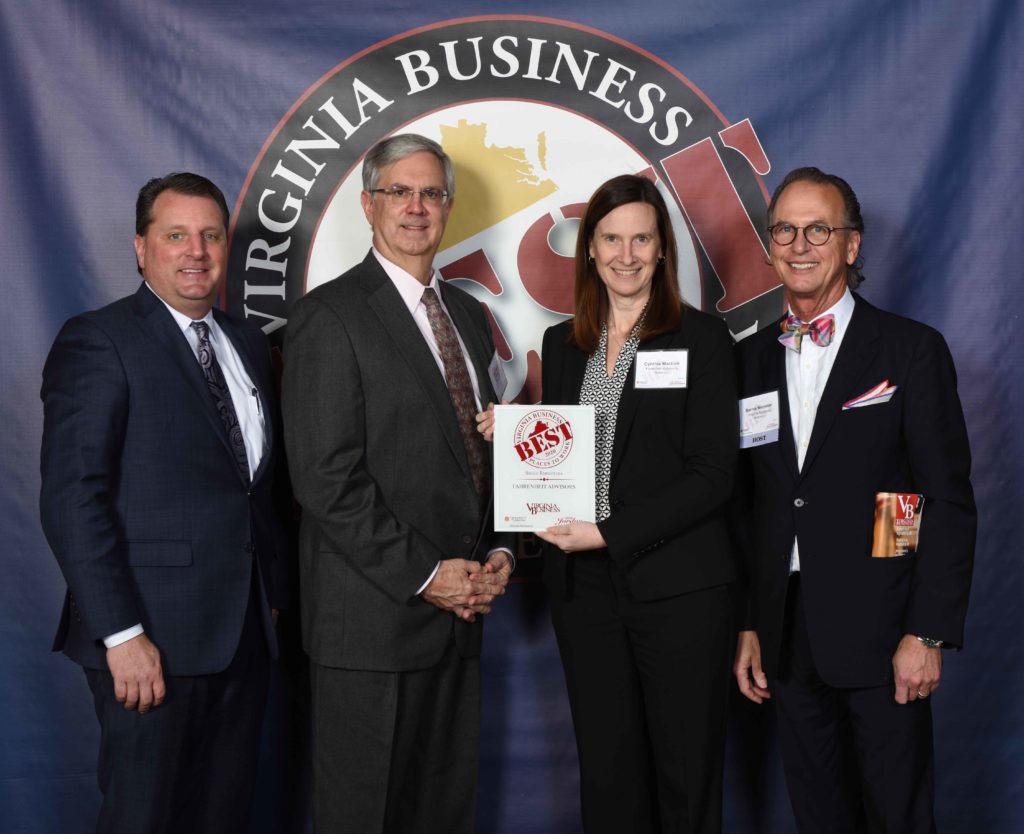
Fahrenheit Advisors
Fahrenheit Advisors
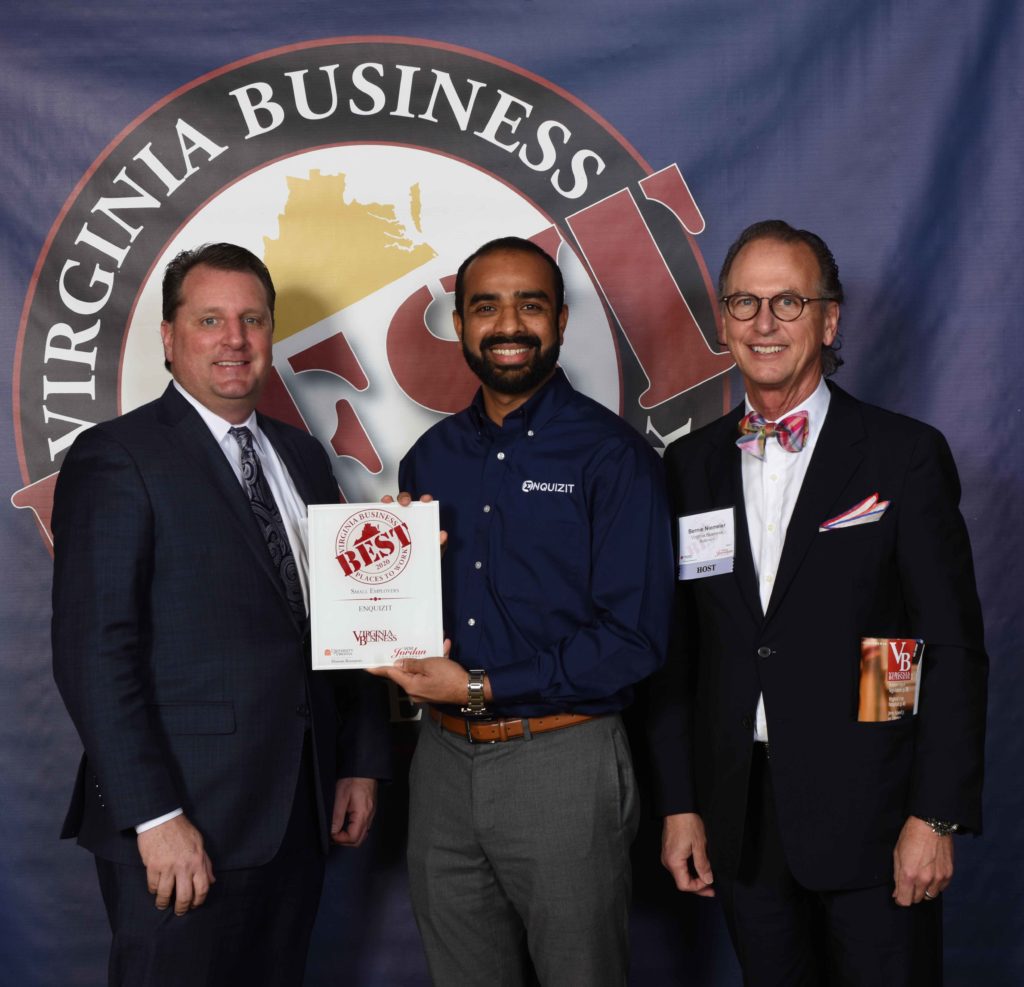
Enquizit
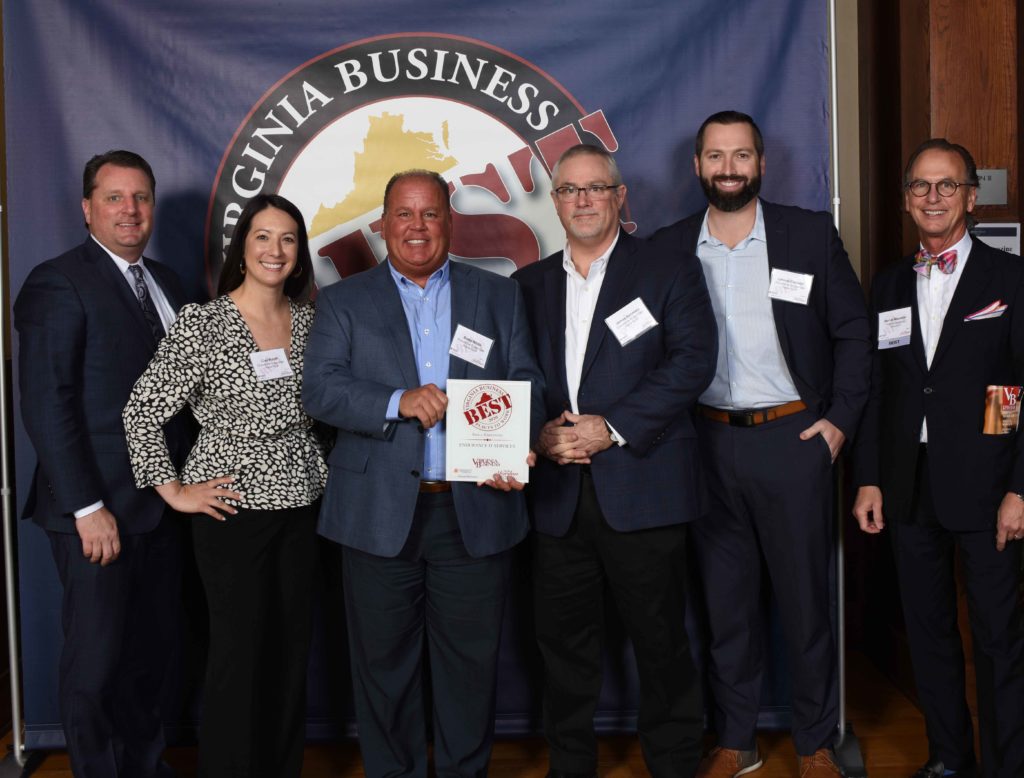
Endurance IT
Emerald Construction
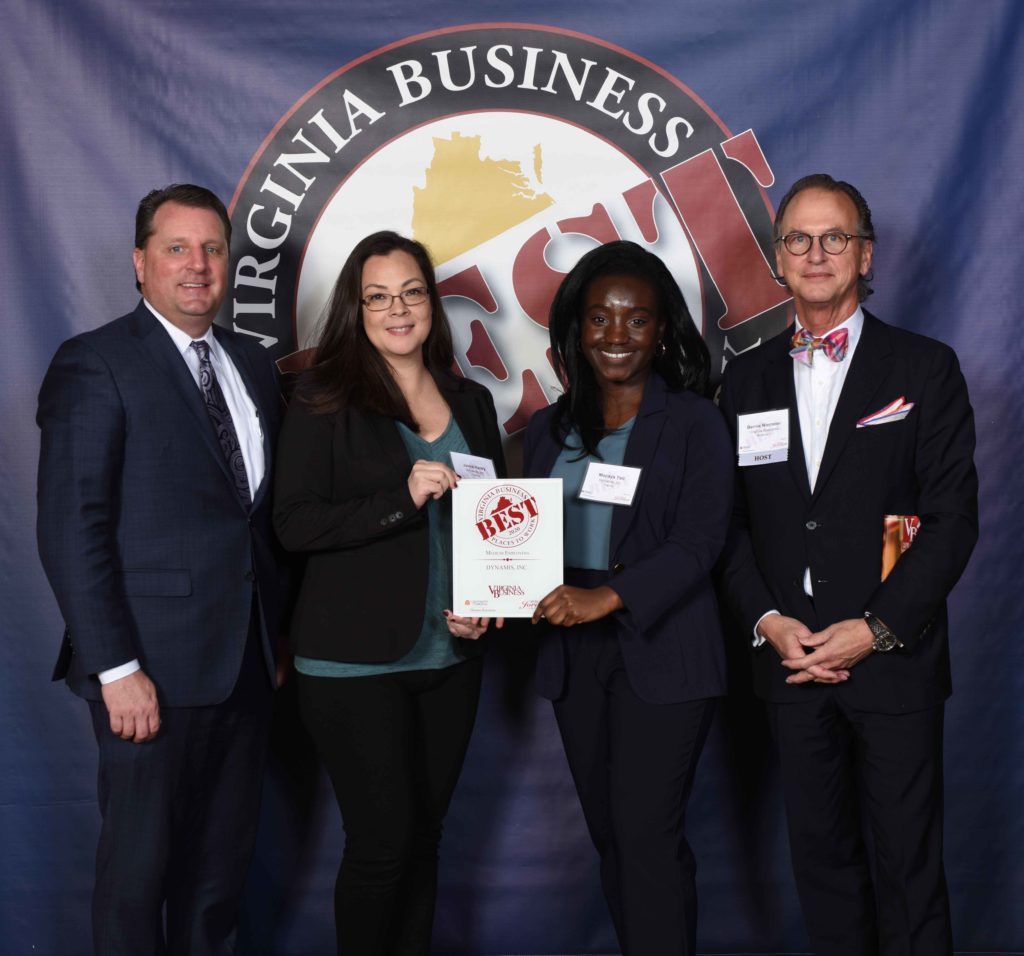
Dynamis
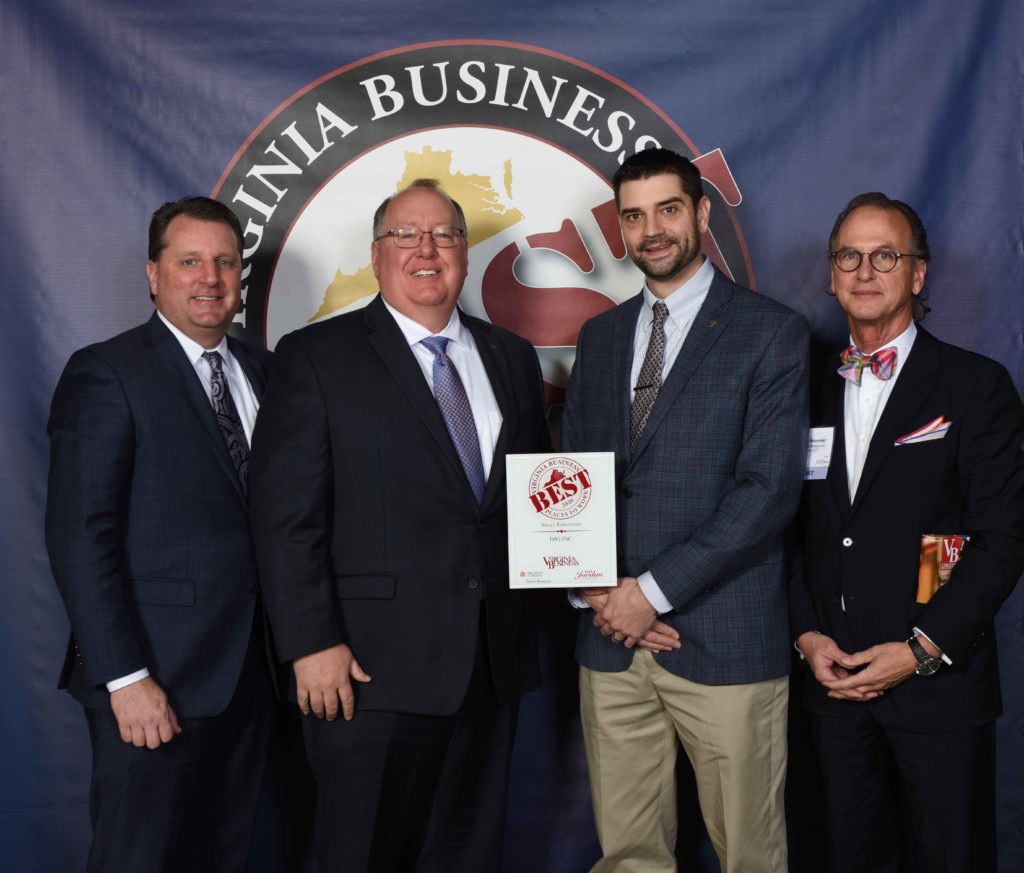
DJG
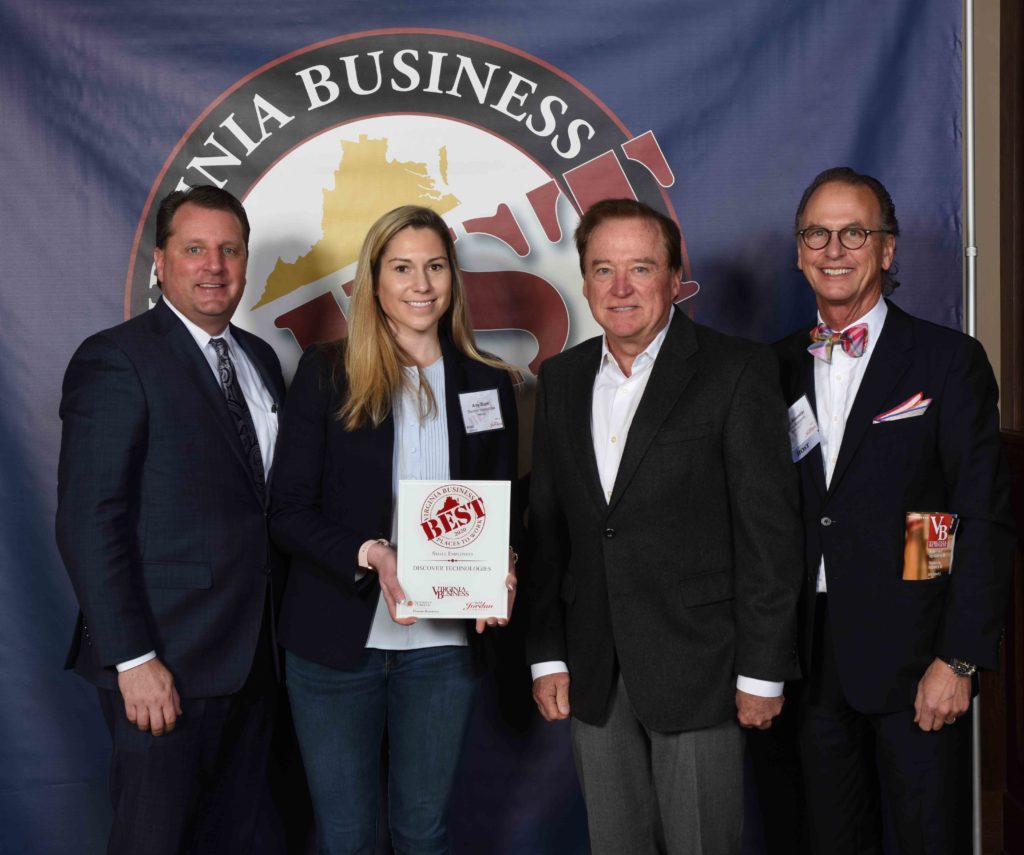
Discover Technologies
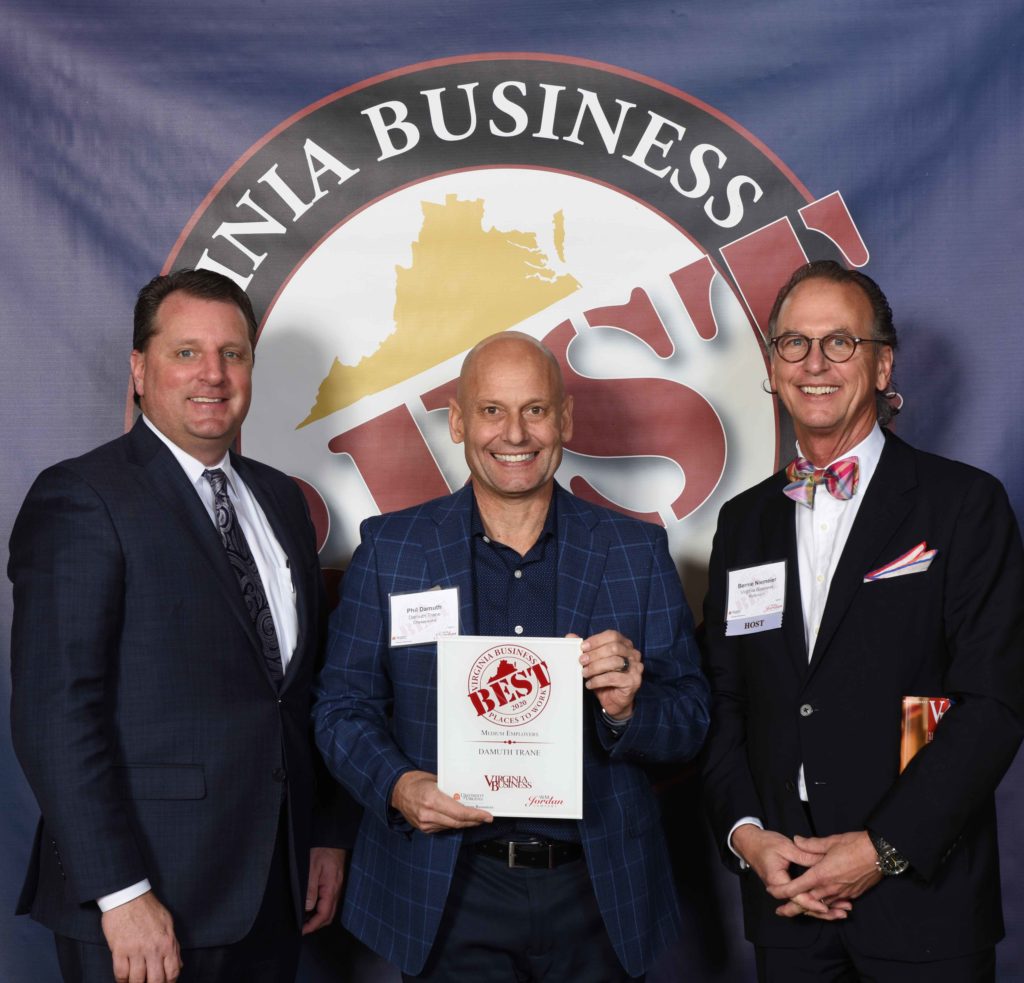
Damuth Trane
Counterpoint Consulting
Colab
Burns & McDonnell
Bean Kinney and Korman
Bable Street
B3Group
B&A
Armada Hoffler
ALKU
Accounting Principals
2020 Virginia Business Best Places to Work luncheon
2020 Virginia Business Best Places to Work luncheon
2020 Virginia Business Best Places to Work luncheon
2020 Virginia Business Best Places to Work luncheon
Gov. Ralph Northam announced Thursday that Mack Trucks will create 250 jobs at a Roanoke County facility building a new line of medium-duty trucks. The company, part of the Volvo Group, plans to invest $13 million in the project, according to state and county officials.
The plant, to be known as Mack’s Roanoke Valley Operations facility, will be housed in the former LSC Communications building in Salem. The Roanoke Regional Partnership anticipates that the project — set to be fully operational in the next few months, according to spokesman Thomas Becher — will have an overall annual impact of $364 million at full operation and generate 594 secondary jobs.
Northam approved a $700,000 grant from the Commonwealth’s Opportunity Fund to assist the county with landing the project, and the Virginia Jobs Investment Program will provide training, funding and other services at no charge to Mack Trucks. Roanoke County plans to provide a matching performance grant based on employment and investment goals.
“We look forward to the opportunities our new medium-duty product line will bring for the company, our employees and the Roanoke Valley community,” Mack Trucks President Martin Weissburg said in a statement. “We’re very grateful to the commonwealth of Virginia and Roanoke County for their support of this project, and we look forward to growing this new business and being a successful and engaged corporate citizen.”
The announcement comes amid shifts in Volvo Group’s New River Valley workforce over the past few months. In June, the Swedish company announced it would hire 777 more people in Pulaski County over the next six years as part of a $400 million expansion of its North America New River Valley assembly plant.
But in late November 2019, Volvo announced the January 2020 layoff of 700 workers at the Dublin plant because of a decline in orders of Class 8, heavy-duty trucks. Last October, 3,000 workers at the Dublin plant were temporarily laid off during a United Automobile Workers strike at Mack Trucks facilities in Maryland, Pennsylvania and Florida.
LSC Communications closed its Salem book manufacturing plant in July 2017, laying off 140 workers. The building is 278,000 square feet.
“Landing Mack Trucks’ new medium-duty truck production plant is a tremendous win that builds on our efforts to make Virginia a leader in automotive manufacturing,” Northam said in a statement. “Virginia has enjoyed a longstanding partnership with the Volvo Group, which includes Mack, and we are confident that the company will be a valuable addition to Roanoke County and the entire commonwealth.”
A House committee decided Wednesday to temporarily postpone action on a comprehensive transportation bill that, in part, establishes a governing body to purchase and manage railways, something supporters said the state has gone too long without.
The House Finance Committee, citing time constraints and the bill’s complexity, will act Monday on House Bill 1414, introduced by House Speaker Eileen Filler-Corn, D-Fairfax.
The bill also amends several laws related to funds, safety programs and revenue sources.
The Virginia Passenger Rail Authority would be led by a board of directors consisting of 11 members, nine of which would be appointed by the governor, and would have the power to purchase and manage railways. Eight of the members will have voting power and would represent localities across the state. The authority would be tasked to promote, sustain and expand Virginia’s passenger and commuter rail service and to increase ridership.
Danny Plaugher, executive director of Virginians for High Speed Rail, said his organization has supported the creation of a rail authority for decades. The nonprofit advocates for frequent and fast rail service throughout the state and along the East Coast.
“It creates an entity that can own real infrastructure,” Plaugher said. “The state has not been in the business of owning rail since the state sold the Richmond to D.C. corridor in the early ’90s.”
Plaugher said that rail service in Virginia has increased by about 30% in the past decade. He noted that while Virginia has been expanding train service, trains in Virginia typically run north and south, not east and west.
He noted that the state’s four-year gubernatorial terms can limit certain initiatives and priorities can change.
“One of the benefits of a rail authority really is that you can have that long term sustaining vision for the expansion of passenger rail that supersedes the changing of any gubernatorial administration,” Plaugher said.
The authority would have the power to build and maintain rail facilities, borrow money and issue bonds to finance rail facilities. It also would make rules and regulations pertaining to railways. Local authorities would be subordinate to the rail authority.
The legislation includes the establishment of a transit incentive program, which would promote transit in areas with a population over 200,000 and “reduce barriers to transit use for low-income individuals.”
The rail authority is part of a larger transportation legislation package announced Monday by Gov. Ralph Northam and legislative leaders. Together with Senate Bill 890, HB 1414 aims to increase driver safety and modernize Virginia’s transportation system.
“Virginians should be able to get to work or to school safely, without sitting in traffic,” Northam said in a statement. “This bold package will reduce congestion, transform transit and rail service, and support economic growth across Virginia.”
Both bills would reduce vehicle registration fees to $13 for private passenger cars weighing 4,000 pounds or less and $18 for private passenger cars weighing more than 4,000 pounds. It also would allocate funding for interstates and streets to meet safety targets and raise the gas tax by 4 cents each year for the next three years. The gas tax will increase from 16 cents to 20 cents in July and will reach 28 cents by 2023. After that, the gas tax will be adjusted annually based on the United States Average Consumer Price Index.
“In November, Virginians overwhelmingly demanded we take swift, decisive action to move our Commonwealth forward,” Filler-Corn said in a statement provided to Capital News Service. “I am excited to work with the Governor and my colleagues in the General Assembly to pass this legislation that will make our roads safer, commutes shorter and transform passenger and commuter rail in Virginia.”
Plaugher sees the potential establishment of the Virginia Passenger Rail Authority as a step in the right direction for Virginia transportation.
“The Passenger Rail Authority is really positioning Virginia to take hold of their transportation destiny,” Plaugher said.
After a quick overview from the state Secretary of Transportation, Shannon Valentine, the chair moved to act on the bill Monday.
“I would invite the public to also please communicate with us any questions that you might have,” said House Finance Committee Chair Vivian Watts, D-Fairfax, who advised members to thoroughly read the bill. “Thank you very much for the overview of a very large, very complex, good look to the future.”
After a 15-hour work day, Lenka Mendoza is tired but she prepares to do it all over again the next day.
Mendoza spoke Tuesday at a Care in Action press conference in support of several General Assembly bills, dubbed the Virginia Domestic Workers Bill of Rights. The nonprofit advocates for fairness and dignity for U.S. domestic workers, including 60,000 domestic workers in Virginia, according to director Alexsis Rodgers. The bills would increase the quality of life for a group of workers that includes house cleaners, cooks, waiters, nannies and caregivers who provide services in a private home.
“Virginia is actually dead last when it comes to workers’ rights across the country,” Rodgers said. “I would say we’re not even on the list.”
Care in Action announced its support of Senate Bill 804, introduced by Sen. Jennifer McClellan, D-Richmond. The bill guarantees domestic service workers to not be excluded from employee protection laws, laws regarding payment of wages and other laws regarding the workforce.
“It is time for us to cut the last vestiges of Jim Crow by expanding worker protections to the best workers,” McClellan said. “Laws that ensure minimum wage, safe workplace and protection and against discrimination currently are not extended to domestic workers due to minimum employee thresholds, as well as specific exclusions from wage compensation and workplace saving laws.”
Currently under the Virginia Minimum Wage Act, minimum wage laws do not apply to employers with less than four employees at any given time. McClellan’s bill removes this exemption. It also allows an employee to bring an action against their employer if they are in violation of the Virginia Human Rights Act, regardless of the number of people employed.
McClellan cited statistics from the Economic Policy Institute that 17% of domestic workers live in poverty. In Virginia, personal care aides make an average of $21,240 a year, while home health aides earn an average of $23,440 per year, according to the same data.
“While we have the opportunity to create new jobs, we need to ensure that those jobs come with protections that those workers so desperately need,” McClellan said.
Del.Wendy Gooditis, D-Clarke, introduced House Bill 1730, which is similar to McClellan’s bill. She says it’s time to care for the people who have cared for others over the years.
Gooditis said she decided to introduce a bill focused on domestic workers because of a personal experience. Both her parents have dementia, and they are taken care of by two “amazing women,” Gooditis said. She said domestic workers deserve minimum wage protections and other benefits.
HB 1200, introduced by Del. Kathy Tran, D-Fairfax, also may help domestic workers. The bill says no employer can discriminate against workers based on race, color, religion, national origin, sex, childbirth, age or pregnancy or related medical conditions.
Mendoza has been a domestic worker for the past 18 years. With a Spanish translator by her side, Mendoza said she lives without the benefits for which she now fights.
“We are here to petition to our legislators to support the domestic labor laws,” she said.
She said domestic workers don’t get the luxury of having sick days or being able to go to doctor’s appointments, because they are there to care for others.
“Not only are we caring for your children, older people in your homes and preparing your food, we’re also a pivotal point in education for those young people who will eventually grow to be very active members and contributors to our society,” Mendoza said.
Both bills have yet to advance to the House or Senate floor.
In 2018, Virginia’s data center industry directly provided approximately $4.5 billion in economic output and employed more than 14,000 people, according to a study released Wednesday commissioned by the Northern VirginiaTechnology Council’s Data Center and Cloud Committee.
Despite the economic impact, however, Virginia’s data center incentive structure is one of the most restrictive in the U.S, the study found.
Although Northern Virginia is touted for its high concentration of data centers (1,027.9 megawatts of power capacity) the study states that Central Virginia and Hampton Roads each account for almost 10% of overall data center industry employment in Virginia. However, Northern Virginia’s data center market has grown the most in the past year — 22% of Northern Virginia’s total data center capacity was added during the second half of 2018 and the first half of 2019, according to the study, which was prepared by Henrico County-based Magnum Economics.
In terms of employment, Northern Virginia carries 75% of data center employment, with Central Virginia and Hampton Roads tied at 9%, followed by Southern Virginia at 4%, the Shenandoah Valley at 2% and Southwest Virginia trailing behind at 1%. A. Fletcher Mangum, founder and CEO of Mangum Economics, said during a presentation Wednesday at law firm McGuireWoods’ Richmond headquarters that the lack of both infrastructure and employment connected to data centers is due in great part to Southwest Virginia’s terrain.
Central Virginia data centers generated 1,275 jobs and more than $341 million in economic impact, according to the study, while data centers in Hampton Roads provided 1,322 jobs and $329 million in economic impact. Northern Virginia accounted for approximately 77% of the total $4.5 billion impact of data centers across the commonwealth.
Despite the economic impact, however, data centers face higher barriers for earning state tax incentives, including a sales and use tax exemption. According to the study, a data center has to invest at least $150 million, add 50 new jobs to the local economy and pay 50% more than the average annual wage in the locality in order to earn the tax exemption. Virginia is one of few states with such a high threshold for such tax incentives, according to the study.
In fiscal year 2018, eligible data centers in Virginia received $86 million in sales and use tax exemptions.
Such tax incentives have kept major data center players here, including Microsoft Corp, and Facebook Inc. Mangum explained during the presentation Wednesday. Once fiber cables are installed in concentrated areas, there is more incentive and capability to build additional data centers in close proximity, he said.
Northern Virginia Technology Council’s Data Center and Cloud Committee promotes the interests of Northern Virginia’s data center, cloud and infrastructure community. Data for the study was supplied by the Loudoun County Department of Economic Development, the Prince William County Department of Economic Development and the Virginia Economic Development Partnership.
Manage Consent
This website uses cookies, web beacons, pixels, tags, software development kits, and related tracking technologies, as described in our Privacy Policy and Cookie Policy, for purposes that may include website operation, analytics, analyzing site usage, enhancing site navigation optimizing a user's experience, and third-party advertising or marketing purposes. Through these technologies, we and certain third parties may automatically collect information about your interactions with our website, such as your browsing behavior and page views. We also may share this information about your activity on our website with our social media, advertising, analytics, and other business partners. By clicking “Accept All”, you consent to the use of these technologies and that we can share information about your activity on our website with third parties in accordance with our Privacy Policy and Cookie Policy. If you do not agree with our use of non-essential tracking technologies, please click “Reject All.” You may opt out of certain non-essential technologies by clicking “Cookie Settings.”
Functional
Always active
The technical storage or access is strictly necessary for the legitimate purpose of enabling the use of a specific service explicitly requested by the subscriber or user, or for the sole purpose of carrying out the transmission of a communication over an electronic communications network.
Preferences
The technical storage or access is necessary for the legitimate purpose of storing preferences that are not requested by the subscriber or user.
Statistics
The technical storage or access that is used exclusively for statistical purposes.The technical storage or access that is used exclusively for anonymous statistical purposes. Without a subpoena, voluntary compliance on the part of your Internet Service Provider, or additional records from a third party, information stored or retrieved for this purpose alone cannot usually be used to identify you.
Advertisement
The technical storage or access is required to create user profiles to send advertising, or to track the user on a website or across several websites for similar marketing purposes.

 Sign In
 Free Newsletter



 PGI has established a pipeline to recruit veterans from Marine Corps Base Camp Lejeune in Jacksonville, North Carolina, and the military installation at Fort Bragg, North Carolina.