Reston-based Noblis subsidiary Noblis MSD (mission solutions for defense) won a potential $72 million contract from the Naval Surface Warfare Center Philadelphia Division.
Under the five-year indefinite delivery, indefinite quantity multi-award contract, Philadelphia-based Noblis MSD, previously McKean Defense Group LLC, will work on system modernization and sustainment for naval surface ships. The company will compete for task orders to deliver engineering, logistics, cybersecurity and waterfront training.
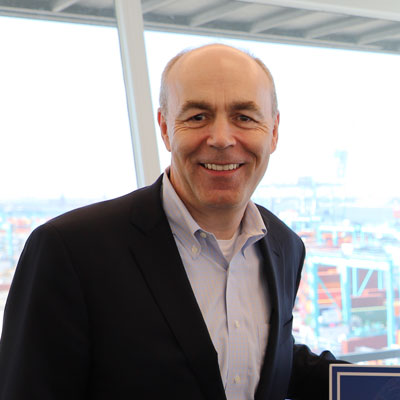
“The Noblis MSD team has a long-standing relationship with the Navy and unique experience with this program,” Noblis MSD president Glenn Hickok said in a statement. “We look forward to building on this experience to help the Navy achieve critical modernization and security goals.”
Work will be performed in Philadelphia and at various naval ports.
Noblis spun off from The Mitre Corp.’s Center for Advanced Aviation System Development in 1996. It acquired McKean Defense Group, at the time an employee-owned defense contractor specializing in U.S. Navy surface ship readiness, on April 30 and rebranded it in July.
Built in 1999, the building, Reflections IV, is 79,946 square feet and sits on 4.51 acres. It is located at 2901 S. Lynnhaven Road, and its tenants include Timmons Group, RK&K, Midgett Preti Olansen PC (MPO) and Integrity Bank for Business.
Reflections IV LLC bought the property from Whitehall LLC. Rob Wright and Josh Fulton with Thalhimer handled the sale on behalf of the seller.
A neighborhood shopping center in Virginia Beach sold for $6.43 million, Colliers’ Retail Investment Group announced last week.
Located at 3208 Holland Road, the center, Buckner Plaza, is 63,500 square feet and sits on 5.48 acres. It is 95.4% leased and anchored by Food Lion and Dollar General. Food Lion has been a tenant since the center opened in 1986. Buckner Plaza was renovated in 2015.
VB-GC-RA 18 LLC bought the property from Club Forest Buckner LLC. Jeffrey Fritz, Colliers’ vice president of investment sales, and Jay O’Donnell, first vice president with Colliers’ Retail Investment Group, represented the seller. Michael Ettel, a senior associate with Colliers, represented the buyer.
Located at 1784 General Booth Blvd., the building is 5,105 square feet.
Mahant Enterprise LLC bought the building from El Tapatio III for a Fuddruckers restaurant. Rob Wright with Thalhimer handled the sale on behalf of the buyer.
Vienna-based Tigercomm, a clean energy-focused public relations firm, is acquiring Tampa, Florida-based Chase Media Services LLC, in a deal that is expected to be completed by Nov. 1.
Mike Casey, the Tigercomm founder and president, said the acquisition will help Tigercomm meet growing demand from clean economy sectors.
“This acquisition is a strong fit with our growth trajectory,” he said in a statement. “As a firm specializing in clean energy, we know that many times the U.S. energy market acts more like a collection of 50 state markets. Chase Media spent a decade working in one of those top bellwether markets.”
Chase Media focuses on cleantech and climate change communication, with clients including the Union of Concerned Scientists and Florida Clinicians for Climate Action.
Chase Media founder Melissa Baldwin became a senior vice president for Tigercomm last week.
“I’m excited to put my skills to use to accelerate the transition to a clean economy,” Baldwin said in a statement. “I look forward to helping cleantech firms win with customers, investors and policy makers.”
More than two years after FreightCar America left town, eliminating about 200 assembly jobs, the buildings once occupied by the railcar manufacturer in downtown Roanoke remain empty.
Chicago-based FreightCar America opened its Roanoke plant in 2005, leasing space at the East End Shops, a locomotive workshop and maintenance complex of about 900,000 square feet of industrial space owned by Fortune 500 rail company Norfolk Southern Corp.
“There’s a lengthy history of rail maintenance and activity on that property,” says John Hull, executive director of the Roanoke Regional Partnership.
During its early 20th century peak, more than 5,000 laborers worked at the multibuilding facility, which was owned by Norfolk and Western Railway, a Norfolk Southern forerunner. Last year, Norfolk Southern closed down the 136-year-old East End Shops, relocating its remaining 85 skilled labor jobs there to Pennsylvania and eliminating about 20 clerical positions.
Marc Nelson, Roanoke’s economic development director, says a team including the Virginia Economic Development Partnership and the Roanoke Regional Partnership are working with Norfolk Southern to find a lessee or buyer for the East End Shops property. One offer was in the initial stages as of late July, he added.
Located along Campbell Avenue in downtown Roanoke, the property is “quite sizeable,” Hull says. “There aren’t very many spaces like this available. It’s a very special-purpose space. There are rail lines through it.”
In April 2020, FreightCar America received a $10 million Paycheck Protection Program loan that FreightCar said would enable it to retain jobs at its sole remaining U.S. production plant in Alabama, according to SEC filings. But just five months later, the company raised eyebrows when it announced it would be moving all those jobs to Mexico.
A handful of the 200 laid-off FreightCar workers from Roanoke had moved to the Alabama plant, says Morgan Romeo, executive director of Virginia Career Works – Blue Ridge. But most of them needed help finding new jobs, prompting a regional assistance effort.
One advantage for the former FreightCar employees, Romeo says, is that “FreightCar guys have lots of technical skills that transferred to Newport News shipbuilding.” Other ex-FreightCar employees received training to qualify for welding certifications and some received on-the-job training for new positions as machine operators and machinists.
“It was a big hit,” she says, but local officials “did their best to remedy the situation, to get folks back to work.”
Taking on a new job during a pandemic could spell rough waters, particularly if the job relies on global commerce.
But the past eight months largely have been smooth sailing for Stephen Edwards, the new CEO and executive director of the Virginia Port Authority, which oversees the Port of Virginia.
Edwards came onboard in January, relocating from the West Coast where he was CEO of Los Angeles-based TraPac LLC, which operates container terminals and provides stevedore services in California and Florida. He replaced John Reinhart, who retired in January after a seven-year tenure during which he oversaw major revenue growth and expansion at the port, which had been faltering financially before Reinhart took over.
Stephen Edwards became CEO and executive director of the Virginia Port Authority in January.
Edwards inherited a modernized port that continues to see record increases in shipping volume, despite a challenging year for the movement of goods and services. Also, the port is moving forward with numerous projects to increase its business, with the potential to benefit economic development efforts in Hampton Roads and across the state.
During the 2021 fiscal year, which ended June 30, cargo volume for the Port of Virginia, the fifth largest container port in the United States, was up by 16.8% compared with the prior year. Though cargo volume was lower in July and August 2020 due to the pandemic, the port processed 3.2 million TEUs (20-foot equivalent unit containers, a standard unit of cargo capacity) during fiscal 2021, compared with 2.75 million TEUs in the prior year.
Also, loaded import TEUs were up 18.6%, compared with the previous year, while rail containers rose 16.7% in fiscal 2021.
Strong e-commerce buying patterns are one of the main factors driving cargo volume increases.
“One of the outcomes of changing behavior during the pandemic has been an extraordinary boom in buying goods,” Edwards says. “There’s been a significant uptick in shipments in home improvements, whether it’s furniture or refrigerators or bathroom improvements.”
Additionally, cargo shippers “are winning confidence in Virginia as a port,” says Edwards. “We have this strong market going, and we have had people choosing to use us because we have been able to provide good service.”
Digging deep
The port’s growing business sets the stage for one of its major projects — dredging the commercial channels that serve the Norfolk Harbor to 55 feet by 2024 to accommodate super-size cargo vessels, as well as two-way shipping traffic. The $350 million project also will widen the channels to more than 1,400 feet in specific areas.
In July, the port authority board awarded a $39.5 million contract to Great Lakes Dredge & Dock Co. LLC to dig on the east side of the Chesapeake Bay Bridge-Tunnel. The contract builds on work by another company, Weeks Marine, which is dredging the west side.
In May, the port welcomed the CMA CGM Marco Polo, thought to be the biggest container ship ever to call in Virginia, at nearly 1,300 feet in length (more than four football fields long) with a capacity of 16,022 TEUs.
Deeper waters are needed for bigger ships.
Deepening and widening port channels “speaks directly to our customers, the ocean carriers,” says Joe Harris, spokesman for the port. “In two years, you are going to be able to bring in bigger ships and bigger ships with more cargo.”
Once complete, the channels would be able to simultaneously accommodate ultra-large container vessels. Making room for two-way traffic will increase shipping efficiency, says David White, executive director of the Virginia Maritime Association, which promotes international and domestic commerce through Virginia’s ports.
In July, the port’s board agreed to lease 70 acres at Portsmouth Marine Terminal to Dominion Energy, which will use the terminal as a construction staging site for its $7.8 billion Coastal Virginia Offshore Wind farm. Photos courtesy Port of Virginia
Right now, when an ultra-large container ship calls on the port, the channel is restricted to one-way traffic for three to four hours, he says. Ships sailing in the opposite direction must wait until the one-way traffic restriction lifts before continuing.
Once the dredging project is complete, two-way traffic will be allowed at all times.
Also, this fall, the port will break ground on a $44 million expansion project to double the capacity of the railyard at its Norfolk International Terminals. The bulk of the work will focus on construction of 10,700 feet of new track inside the terminal.
The Norfolk rail operation can handle 368,000 containers annually. In the next decade, the port projects that it will need capacity to process an additional 200,000 containers for export. Edwards says the expansion will add about 80% more rail capacity at the Norfolk facility.
As of October 2020, 34% of the port’s total volume moved to market via double-stack rail service.
A $20 million grant from the U.S. Department of Transportation‘s 2020 Port Infrastructure Development Discretionary Grants Program will help fund a portion of the Norfolk rail expansion.
InterChange Group Inc., a storage and supply chain logistics company based in Mount Crawford, plans to take advantage of this expanded rail capacity. It’s been using the port since 2005 to transport packaging materials, cabinets, frozen fruit, poultry and more via truck and rail.
InterChange has a new cold storage facility, and the company is making plans to ship more frozen foods via the port’s truck and rail services.
As of October 2020, 34% of the port’s total volume moved to market via double-stack rail service. Photos courtesy Port of Virginia
“We expect more rail movements into the future, and the Port of Virginia is a leader in rail movements already,” says Devon Anders, president of InterChange Group.
Plus, moving items by rail keeps trucks off the road, which reduces traffic congestion, he says.
Trade wind
The port has another key goal for the future — to become the hub for Virginia’s developing offshore wind industry.
In July, the port’s board agreed to lease 70 acres at its Portsmouth Marine Terminal to Dominion Energy, which plans to build its $7.8 billion Coastal Virginia Offshore Wind farm 27 miles off Virginia Beach‘s coast, erecting about 180 wind turbines. The Portsmouth terminal would be used as a staging space to deploy equipment for building the massive turbines, each of which will tower 800 feet above the ocean surface. Dominion has already installed two pilot wind turbines, each 600 feet high.
“It really is an enabling step to help the whole [offshore wind] industry develop in Hampton Roads,” Edwards says.
Hampton Roads is a prime area for this kind of industry to grow because it has accessible ports and employs a workforce that is similar to the one already employed by the region’s maritime and Navy facilities, says Matt Smith, director of offshore wind business development for the Hampton Roads Alliance.
“When we talk about the Port of Virginia, one of our natural advantages is our port infrastructure. We feel like it’s the best and well suited to support the offshore wind industry on the East Coast,” he says.
There will be at least 900 jobs needed to support various stages of developing, manufacturing, installing and operating the Coastal Virginia Offshore Wind project, according to an economic analysis conducted by Glen Allen-based Mangum Economics for the alliance. Also, it’s estimated that for each gigawatt of new offshore wind energy capacity, it will require roughly 3,100 workers in Hampton Roads, and the Dominion wind farm plans to generate 2.6 gigawatts.
“It’s not often that you have the chance to be one of the hubs of the industry that has the potential to create a lot of jobs and new development in the region,” Smith says. “We’re excited about the industry for both of those benefits.”
The Portsmouth Marine Terminal is well positioned to support the Dominion project due to its proximity to the ocean, as well as the fact that there are no bridges that ships must pass under, making it easier to ferry large wind turbine components, White says. “We have tremendous advantages in terms of infrastructure,” he adds.
But all of Virginia, not just Hampton Roads, stands to reap economic benefits from the development of the offshore wind industry. The economic impact of the project has the potential to trickle throughout the state, White says. For example, the Dominion wind farm turbines will need companies to install service elevators for maintenance, White says, and those may come from outside the region.
The Port of Virginia offers numerous benefits for Virginia’s economic development, whether in offshore wind development or other work. But one needed ingredient to help the port continue to grow and boost Virginia’s economy is drawing more large manufacturing companies to the commonwealth, says Stephen Moret, president and CEO of the Virginia Economic Development Partnership. He also serves on the port’s board.
“If you imagine, a huge portion of the business of the Port of Virginia is not starting or ending in Virginia,” Moret says. “We are missing out on opportunities that are not in the port’s control. Attracting more of these large projects to locate in Virginia, they would be great customers for the port and maximize the return on investment.”ν
Brought to you by Virginia Business and Bank of America, join us every other month for the Diversity Leadership Series — virtual fireside chats with a diverse group of Virginia business leaders sharing their insights and thoughts on leadership, their career paths, and diversity and equity.
Our series kicked off on July 20 with Brian Robertson, CEO of Mechanicsville-based Marion Marketing Global LLC, interviewing Ron Carey, founder and CEO of Tilt Creative + Production, a Richmond-based agency that produces advertising and promotional content for clients such as Capital One Financial Corp., Walmart Inc. and Audi of America.
Below is an abridged version of their conversation, edited for brevity and clarity.
Brian Robertson: Under your leadership, you have turned Tilt Creative + Production into a global player in the creative space. What do you attribute to the credit of your rapid growth?
Ron Carey is founder and CEO of Tilt Creative + Production, a Richmond ad and marketing agency with clients such as Capital One, Walmart and Audi of America Photo by Shandell Taylor.
Ron Carey: First of all, I’ll make a comment that I didn’t … do it by myself. I had a wonderful set of great partners. Stacy Murphy and Dave Trownsell are my business partners in that venture. First of all, we started with a small plan … to try and find a better way of creating content. That’s what we wanted to do. We wanted to make sure that we could do it with some of the best people in the world creatively as well as just some people who were just good people at their core. That’s really the foundation of Tilt.
Robertson:Briefly, Ron, explain to us how Tilt Creative + Production even came about.
Carey: That’s an interesting story. … This was 2017 and I had been running a small digital agency called Studio Squared. Studio Squared at the time primarily focused on creating content in-store for Walmart. There were some changes in the business, and we had a wonderful opportunity to step back and think about, “Where would we like the business to go moving forward?” That was November of 2017. At the time … one of my senior creatives said [to me], “Chief, you used to have a conversation with the Park Group. Dave and Stacy, they would be interesting. They’ve got some ideas and thoughts.”
From that conversation, started … this notion of what would happen if we took a creative company, Studio Squared, … and [a media production company like] Park Group and we merged it into one thing? At the time it was unheard of that you would have a creative agency and a production company all under one roof, but … we were anticipating that brands would have a need for a content partner, and a way to more easily develop content [and] develop a strategy around it. That started us on the path. We … literally moved across the street down to Park Group, and in January 2018, we started working together. That’s been almost four years now.
Robertson: That’s amazing — wow! — to have that vision.
Carey: I would like to think that was a vision. Some of it was a bit of luck. I think some of it was a bit about just being able to focus on seeing an opportunity. … We often hear business school professors talk about, “Well, what’s the need? What’s the problem to be solved?” … We believed enough in it that we thought, “Let’s go ahead and take the step.” When you can take the step with people that you trust, and you feel they’re going to hold up their end of the bargain, it makes it a lot easier.
Robertson: What has been some of your toughest challenges of being an entrepreneur in a media space that is dominated by people who mainly don’t look like us?
Carey: It’s interesting. Sometimes I’ll say it jokingly, but I’ve been Black 53 years, my entire life. You don’t think about it. … I think you recognize that there’s a transformation that was going on, both in media and marketing and advertising, Richmond, the broader community, as well as the broader business environment. I’m thankful, really, to my parents for this … approach of, “There are just some amazing people in the world. Some of them are going to look like you and some of them won’t look like you.” Some of the folks that didn’t look like me were folks that were incredibly influential on my career.
Brian Robertson is CEO of Mechanicsville-based Marion Marketing Global LLC. Photo by Shandell Taylor
I look back at … what I learned from the Mars family [of Mars Inc.], because I spent 13 or 14 years working for the Mars family. I walked away with a vast amount of knowledge. … On the surface, we might not have had a lot of things in common, but from that experience, I was able to take The Five Principles away, just as one example.
I don’t think I thought about the racial component [in my own business] as much as I thought about, “How do you make payroll? How do you bring your talent along that you need to bring along? Do you really have something that’s compelling, that a client’s going to want to pay for?” Because at the end of the day, that’s what I want to make sure that we do.
The fact that I’m an African American is important, but I want … our clients to feel like the work that we do is amazing work, it’s smart work, it stands up against the work that anyone else can be doing, and for that, you’re willing to compensate us for it. That’s the path that I’ve gone down. I think along that journey … what I realized is I had been awarded this platform because of the success of the business and some of the things I’d done in the community … to be able to speak out about some things and bring awareness to some things, and also share a perspective back. … Maybe there were obstacles there from a race perspective, but quite honestly, I didn’t feel like I had the time to pause and think about it.
I will say this though, I remember … we had closed on the [Tilt Creative] deal [on] Jan. 31st, [2018]. The offices were empty, and I had been so busy that I had forgotten that it was Martin Luther King King [Jr.] Day. My head of finance came to me, and she said, “Wow, this is pretty amazing. You guys got this deal closed. You’ve been able to buy the company, get things started. Oh, by the way, happy Martin Luther King Day.” I was just like, wow. I had been so heads-down that I’ve forgotten what the time was. It was a momentous occasion for me.
Robertson: You work with a lot of global brands like Hellmann’s, Walmart, Audi. Tell us about a rewarding campaign that you worked on for not so much of a big brand.
Carey: I think that’s a really interesting one. A business partner, she thought highly enough of us to reach out to us. It’s a fairly small thing, but again, there were moments in times, there are pivotal moments, when things happen.
She brought us an opportunity for VCPI, Virginia Center for Policing Innovation. They were really looking for assistance on how to think about speaking to diverse communities, and not just African American, but Native American, so they wanted to have a very broad conversation about that. It’s been our pleasure, over the last several years, to find that voice of those communities, to be able to articulate and create a dialogue between the Virginia Center for Policing Innovation that they were working on and this broad set of communities. That’s just one that we took great pride in.
I love the brand work that we have a chance to do, but I also think about …. ChildSavers. It’s [a nonprofit] organization focused on mental health and child development services. We had the opportunity to develop a long-form piece of content to help tell the story around the work that they’ve been doing for almost 100 years, which is just amazing. It was our pleasure to just really get in and be able to tell an emotional story and help during a time where they’re going through a significant capital campaign.
Those are the two things that resonate with me as you start to think about how you take the art of storytelling and then have it impact the world.
Robertson: Tilt mainly creates content for online digital space as well as for television, repurposing it all over the place. Where do you see Tilt growing in the next five years?
Carey: I’ll get to what I think the growth is … [but] I feel like as the keeper of the culture … I think the intent, first and foremost, is let’s make sure that we continue to have a positive impact on the world. That’s the most significant thing. I often tell people, when we started the company, it wasn’t just purely about the profit that could be generated, it was not only about the opportunities, but it was about having a broader impact on the world, in our communities. Providing our folks a living and being able to invest in the things that we feel like make a difference to people, that would be a key driver for us.
That should ground where Tilt is over the next several years, but I see a really bright future. I feel like Tilt and the model that we’ve put together is something that certainly can grow across North America. You mentioned globally, we are already working globally. I think with the right opportunities that present themselves, I could certainly see another presence someplace else in North America … as well as outside, in perhaps Europe. … What’s happened over the last year and a half is we’ve all learned how to work remotely. We’ve made investments in technology. … Now we can shoot and record things out of our production studio and then have clients sit almost virtually anywhere in the world and provide feedback on cuts and edits and things that we’re doing. The business model has shifted dramatically and may not require nearly as much physical structure because you can work from anywhere in the world as long as you’ve got the right connectivity.
Robertson: Absolutely. With a staff of over 40 people, how do you find all of these great creative minds, first of all? And how do you keep them all engaged and happy?
Carey: That’s an interesting challenge, right? Creative people are really interesting, as you know, and unique and special. It’s like harnessing a bunch of superpowers together. It’s like getting a team of the Avengers and trying to get them to all work together, move in the right direction, but I think we do it well. … How do we do that? I think it [goes] back to that bit around the culture that I was talking about — truly being a culture that cares about people, that seeks people who are really good to their core, that’s massive. I can’t teach you that. I can’t give you that gift. I can model it for you, but I think if you have it inherently, then we should attract those kinds of people.
When you look for good people, and you find them, and you treat them well, it starts to attract other people. I think that’s the most powerful talent model that we’ve got. … Once that radiates to the world, there are others that then want to say, “Gosh, that’s something I want to be a part of.” That’s literally what I think my role is: to make sure that we can set up that type of environment and model that behavior, such that others say, “That’s something I want to be a part of.”
Robertson: For my final question, what motivates you each day? What makes Ron Carey care in Tilt?
Carey: It’s something that I would challenge anyone who’s looking at this to think about, and that is understanding what your purpose is. Several years ago, I came to the conclusion that my purpose was to leave this world better than I found it and have a positive impact on the lives of people that I come in contact with. Some of those interactions may be big, some of those interactions may be small. … It’s not about the words you say, it’s about the feelings that you leave people with, and that’s what I want us to continue to do.
What motivates me is looking at my three daughters, two of which are grown now, and putting people into the world who are resilient and thoughtful, and hopefully wanting to have an impact.
Then I look with great pride [at] the 45 employees that we’ve got, that are doing things in the world and being thoughtful and having an impact on both clients and the broader Richmond community. That’s what keeps me going, man. I’m an optimist to my core. I will continue to be optimistic about the opportunities both for Richmond and our business and the broader community. That’s just how I roll. ν
This year was expected to be a rough one for employers, following predictions of a coming tidal wave of costly employee lawsuits and labor complaints powered by the COVID-19pandemic and last year’s racial justice protests.
So far, though, that onslaught of litigation hasn’t materialized. Why not? Partly because the pandemic itself closed courts for months last year in Virginia, so there is a backlog of litigation to work through, say employment attorneys. And lawyers for employers and employees are waiting to see how the courts rule in any active employment-related lawsuits to help them figure out legal strategies. Plus, there are new state and federal laws to sort out.
A wave is likely still coming, though, say employment attorneys, so businesses shouldn’t let their guard down. “While the sky is not falling, I still think there’s a lot of risk for employers,” says Todd Leeson, a partner at Roanoke-based Gentry Locke Attorneys.
For one thing, many employers have gone from offering incentives for vaccinations to mandating that their employees get vaccinated. And while courts have generally been upholding an employer’s right to issue employee vaccination mandates, Leeson says, there are legitimate exceptions that can be carved out for health issues and religious beliefs and that can create some room for disputes around a hot button issue that can trigger strong emotions.
“While the sky is not falling, I still think there’s a lot of risk for employers,” says Todd Leeson, a partner at Roanoke-based Gentry Locke Attorneys. Photo courtesy Gentry Locke Attorneys
“I do think the folks who are not vaccinated who perceive that they’re being singled out unfairly are going to challenge that if they end up getting fired,” says Leeson, who represents companies and employers in labor and employment cases.
Another reason businesses haven’t yet seen the predicted wave of litigation is Virginia’s particular business and legal culture, says Alexandra Cunningham, a Richmond-based partner with Hunton Andrews Kurth, who co-heads the firm’s products liability and mass tort litigation practice group. Virginia juries generally aren’t that tort-friendly, she says, and the state’s purple-shaded politics means less chance of conflict between courts and state policymakers. Virginia also has a less vulnerable workforce than other states, offering more white collar jobs that allowed work-from-home options, she says.
“I also think frankly we had a pretty strong [state] response to the virus, so we don’t have some of the issues that states like New York had,” she says, adding that better control over the pandemic generally means fewer lawsuits. “And we were late to have a surge and the guidance was already in place.”
According to a national database maintained by Hunton Andrews Kurth that tracks state and federal litigation involving COVID-19 claims, the most litigious state, California, had 2,018 pandemic-related legal complaints from January 2020 through July 2021. New York was second, with 1,743 pieces of litigation. During the same period, Virginia tallied just 135 pandemic-related complaints.
Even nationwide, the pandemic litigation count shows no surge in 2021, according to the Hunton database. Nationwide last year there were 7,734 lawsuits related to the pandemic. Through July of this year, there are 3,767 complaints.
Nevertheless, employment attorneys say they haven’t lacked for work amid the pandemic. “Firms have been incredibly busy over the past year,” Cunningham says. “Like the rest of the world, businesses have had to drink from a fire hose to figure out the obligations they have to respond to [in regards to] protecting employees and following mandates — especially at the [pandemic’s] beginning, when those mandates were changing constantly.”
Expected boom is quiet
A major development for employers is the Virginia Values Act, which went into effect in July 2020. It expands the scope of the Virginia Human Rights Act to prohibit discrimination in employment and housing based on sexual orientation and gender identity. Leeson says when the act was approved, defense attorneys predicted disaster for corporate defendants, while plaintiff’s lawyers were saying, “This is a new day in Virginia and we’re anxious to start filing these claims.” But “lo and behold,” Leeson says, “there have been very few cases” related to the act.
That’s partly because of the timing — the Virginia Values Act took effect during the pandemic — and partly because of the administrative processes the new law includes. This January, Virginia Attorney General Mark Herring created the Office of Civil Rights, which expanded and reorganized his office’s previous Division of Human Rights. Prior to the Virginia Values Act, discrimination claims based on race or gender identity would have been handled exclusively in federal courts. Now there’s a state court option with different rules and an investigation phase that can take months to complete. “There’s probably not a smooth-running machine in trying to process these complaints,” Leeson says. That could push potential litigation even farther down the road, as attorneys for both employers and workers study what the law requires and watch to see how courts respond.
Recent developments such as vaccine mandates, remote work and marijuana legalization may lead to litigation against employers, says University of Richmond law professor Henry Chambers Jr. Photo courtesy University of Richmond
There are plenty of issues that might result in litigation against employers, says Henry Chambers Jr., a professor with the University of Richmond School of Law who teaches constitutional law and employment discrimination. There are vaccine rules, the treatment of remote and in-office workers, and marijuana policies now that recreational marijuana use is legal in Virginia.
Given the social protests related to civil rights that erupted last year following the murder of George Floyd by a Minneapolis police officer, Chambers predicts workers returning to the workplace will have “shorter fuses, and they will feel freer to discuss issues in the office” that they previously might have avoided.
“It’s difficult because our workplaces can become kind of our second homes, which can be a plus and a minus,” he says. As people return to commuting and to sharing a workplace again, “there are a whole host of human resources issues that might turn into litigation.”
Compliance confusion
There also continues to be considerable confusion among businesses over pandemic-related state and federal requirements. And providing compliance advice is driving a lot of business for law firms. “It’s been that way the entire time,” says Karen Doner, founding partner of Tysons-based Doner Law, which specializes in employment law and commercial litigation.
Virginia, for example, was the first state to pass a workplace safety standard specific to COVID-19, she says. The Virginia Department of Labor and Industry’s “Final Permanent Standard for Infectious Disease Prevention of the SARS-CoV-2 Virus That Causes COVID-19” went into effect in January. Before that, Virginia employers were expected to operate under a “Temporary Permanent Standard” implemented in July 2020.
Depending on the types of tasks employees perform, state workplace requirements for employers to control and prevent the spread of COVID-19 can include a range of requirements for training, protective equipment, and reporting and notification. Virginia employers failing to comply with the state standard are subject to fines up to $12,726 for serious violations and $127,254 for willful violations.
“Many employers are under the impression that the Final Permanent Standard is no longer in effect, but it is,” Doner says. “It’s troubling that the guidance has not been clearer.”
There also continues to be considerable confusion among businesses over pandemic-related state and federal requirements, says Karen Doner with Tysons-based Doner Law. Photo by Will Schermerhorn
Additionally, employers who provide health care services or support services must comply with the federal OSHA COVID-19 Emergency Temporary Standard, which went into effect in June.
Employers remain perplexed over which of the layers of state and federal rules apply to them. Mask requirements, for example, have been hard to follow, Doner says, with differing requirements for certain work settings and rule changes from federal, state and local authorities.
With the rising threat of the COVID-19 delta variant interfering with planned returns to offices, employers can count on uncertainty to continue. And for attorneys who guide employers through the changing legal terrain, there is much to learn. The past year is “the most challenged I’ve been in my whole career,” Doner says.
Much of what’s happening now for businesses and their legal counsel is based around preventing legal liability. Jeremy Schneider, principal with the Washington, D.C., office of Jackson Lewis, represents businesses facing workplace litigation, and his firm also conducts corporate trainings to help businesses avoid litigation in a range of areas, such as diversity in hiring related to age, race, gender, religion, sexual orientation or other characteristics unrelated to job performance. “We have a lot of employers asking us to do unconscious bias training,” he says. “Now more than ever, employers need to be vigilant and aware of the problems that can arise.”
As courts work through any legal challenges to the new laws, employment attorneys are paying close attention to how courts are interpreting new laws and regulations. “It’s been fun to watch a new area develop,” says Cunningham with Hunton Andrews Kurth. “There’s a lot of new law being developed right now, so it’s interesting.”
Nicole Clark wants the nurses she supervises to do everything they can to keep themselves, their patients and co-workers safe from COVID-19.
That means wearing personal protective equipment, social distancing, frequent hand washing — and getting vaccinated against the disease.
Valley Health, a nonprofit health system that includes Winchester Medical Center and five other hospitals, as well as urgent care facilities and physician practices, announced in July that all employees, medical providers and contractors will be required to get the COVID-19 vaccine.
“This was just one more thing we could add to our toolkit to protect our patients and our staff,” says Clark, a nursing director at Winchester Medical Center.
Valley Health has about 6,300 employees, and about 72% have received a COVID-19 vaccine, according to Valley Health President and CEO Mark Nantz.
In Virginia, Inova Health System, Mary Washington Healthcare and VCU Health System also require staff to receive COVID-19 immunizations. UVA Health requires all new employees to be vaccinated before beginning work. Current employees must either be vaccinated, have had COVID-19 in the last 150 days, or be working remotely to avoid weekly COVID-19 tests.
More than 55 medical groups, including the American Medical Association, issued a statement in July supporting mandatory COVID-19 vaccines for health care workers.
“I think you’ll see more and more [health systems] require it as the days go by,” says Nantz.
That’s not to say everyone was happy with Valley Health’s new policy.
On July 26, the Front Royal Town Council heard from more than 50 residents over a proposed ordinance to prohibit town employers from terminating workers who refuse to get a COVID-19 vaccine. The council rejected the measure by 3-2.
Brittany Watson, a registered nurse at Winchester Medical Center, and her girlfriend, Katherine Hart, a nurse practitioner at nearby Valley Health Urgent Care in Martinsburg, West Virginia, planned to lead protests over the mandatory COVID-19 vaccination policy in early August.
Watson and Hart both fell ill with COVID-19 in 2020. Neither woman plans to get a vaccine. “I believe in natural immunity,” Watson says.
Nantz expects some employees will leave Valley Health over the requirement. Watson and Hart are considering opening an independent practice together.
It’s a price Valley Health System is willing to pay. “I need a vaccinated workforce that’s well-protected,” Nantz says.
Manage Consent
This website uses cookies, web beacons, pixels, tags, software development kits, and related tracking technologies, as described in our Privacy Policy and Cookie Policy, for purposes that may include website operation, analytics, analyzing site usage, enhancing site navigation optimizing a user's experience, and third-party advertising or marketing purposes. Through these technologies, we and certain third parties may automatically collect information about your interactions with our website, such as your browsing behavior and page views. We also may share this information about your activity on our website with our social media, advertising, analytics, and other business partners. By clicking “Accept All”, you consent to the use of these technologies and that we can share information about your activity on our website with third parties in accordance with our Privacy Policy and Cookie Policy. If you do not agree with our use of non-essential tracking technologies, please click “Reject All.” You may opt out of certain non-essential technologies by clicking “Cookie Settings.”
Functional
Always active
The technical storage or access is strictly necessary for the legitimate purpose of enabling the use of a specific service explicitly requested by the subscriber or user, or for the sole purpose of carrying out the transmission of a communication over an electronic communications network.
Preferences
The technical storage or access is necessary for the legitimate purpose of storing preferences that are not requested by the subscriber or user.
Statistics
The technical storage or access that is used exclusively for statistical purposes.The technical storage or access that is used exclusively for anonymous statistical purposes. Without a subpoena, voluntary compliance on the part of your Internet Service Provider, or additional records from a third party, information stored or retrieved for this purpose alone cannot usually be used to identify you.
Advertisement
The technical storage or access is required to create user profiles to send advertising, or to track the user on a website or across several websites for similar marketing purposes.

 Sign In
 Free Newsletter