Sign In
Upcoming Event
 Free Newsletter

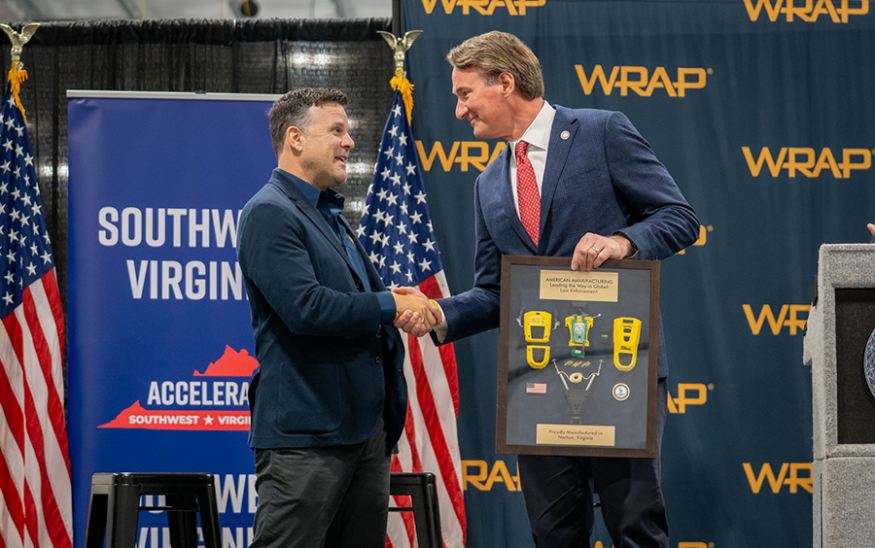
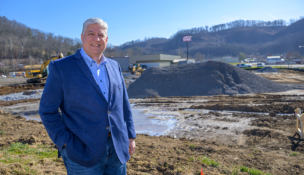
Wrap Technologies held a ribbon cutting in September 2025 for its $4 million manufacturing headquarters in Norton. Official photo by Kaitlyn DeHarde, Office of Gov. Glenn Youngkin
Wrap Technologies held a ribbon cutting in September 2025 for its $4 million manufacturing headquarters in Norton. Official photo by Kaitlyn DeHarde, Office of Gov. Glenn Youngkin
Manufacturing-heavy Southwest Virginia captures new industries
Chris Suarez //March 1, 2026//



Summary:
- Oasthouse Ventures began planting tomatoes at a new 65-acre greenhouse in Carroll County, creating 265 jobs.
- Wrap Technologies opened a $4 million manufacturing center in Norton, adding 50 jobs.
- Tate expanded its Russell County facility with a $6.5 million investment, adding 35 jobs.
Southwest Virginia has attracted investment from companies far and wide in the last few years, from indoor agriculture to manufacturing, and regional leaders are also pursuing energy and data center projects.
A year after announcing plans to invest $104 million in Carroll County, United Kingdom-based Oasthouse Ventures and its subsidiary, Pluck’d, were set to begin planting the first crop of tomatoes at their new 65-acre greenhouse development early this year.
The project comes to the region as Arizona-headquartered Wrap Technologies and Ireland-based Tate opened manufacturing centers in the region over the last two years, helping uplift Southwest Virginia’s industrial base.
Jonathan Belcher, executive director and general counsel for the Virginia Coalfield Economic Development Authority, which represents seven southwestern counties and Norton city, says development activity seemed to cool down over the summer but ramped up again soon after.
“It’s actually been a much more active, positive year than what I thought it was going to be,” he says. “It was a pretty tough year for economic development in the South, generally. It started out kind of slow, but it definitely picked up.”
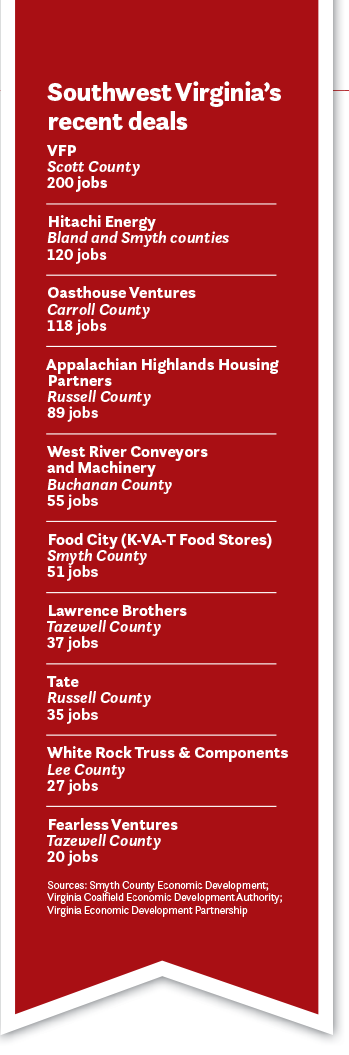 A few weeks after the September 2025 ribbon cutting ceremony for public safety and defense tech company Wrap’s national manufacturing headquarters in Norton, marking a $4 million investment and 50 new jobs, longtime Scott County manufacturer VFP announced a $35 million expansion that will add 200 employees at its Duffield campus.
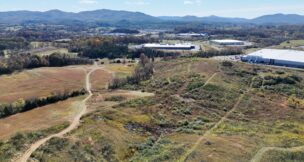
Meanwhile, construction started on the Pluck’d greenhouses at the Wildwood Commerce Park in Carroll County, kicking off a project that’s expected to create 265 full- and part-time positions.
Ashlyn Shrewsbury, executive director of the Mount Rogers Regional Partnership, which represents communities in the Interstates 81-77 Crossroads area, says the Oasthouse project is a result of collaboration between several localities, as Carroll County will split tax revenue from the development equally with Grayson County and Galax.
“This will have a strong, positive impact on both Carroll County, where the Wildwood Commerce Park is located, and the region as a whole,” she says.
Area economic development leaders say the recent investments are a result of regional efforts to develop and market new and underutilized industrial parks and sites throughout the region.
“When you do these projects, it takes a long time in order to get the water, sewer, natural gas, electrical and those types of things in place,” says Carroll County Administrator Michael Watson. “The gas was put in about three years ago, and the substation was completed within the last year with construction.”
The greenhouse project remains on schedule to enter operation on Feb. 1, Shrewsbury and Watson say. Pluck’d representatives did not respond to multiple requests for comment.
Manufacturing remains strong
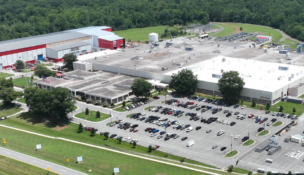
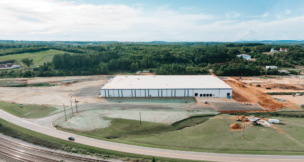
In December 2025, VCEDA announced that Tate had acquired the former 131,000-square-foot Alcoa manufacturing building, closed since 2009, in Russell County to expand its U.S. manufacturing operations, adding 35 full-time jobs within three years. The company, which manufactures raised floors and other interior systems for data centers, expects to invest $6.5 million in the expansion.
The project came together after VCEDA earlier this year approved an up to $4 million loan for the Russell County Industrial Development Authority to buy the property and prepare it for a lease to Tate.
“They employ close to 200 people,” Belcher explains. “That was a great project for the area. They really did that in a short time period because they just located here less than two years ago, so that’s been a rapid growth.”
Hitachi Energy in April 2025 announced it would invest $22.5 million to upgrade its Bland County facility and open a new 75,000-square-foot property in Atkins, expanding its dry-type transformer manufacturing. The Swiss company also announced a $457 million transformer facility in South Boston later in the year.
Kendra Hayden, director of community and economic development for Smyth County, says her locality landed the Atkins project after working with the Mount Rogers Regional Partnership and colleagues in Bland. It took nearly a year to finalize the plans, she says, but Hitachi wanted to expand within the region because of its logistical advantages in the I-81 and I-77 corridors.
“The way that we have to operate here in Southwest Virginia, especially in our area, we have to be regionalists,” Hayden says. “We have to have the whole region in mind, because economically, it impacts us all.”
Belcher also highlighted the creation of a modular housing production facility in Russell County that will receive a $3 million VCEDA loan as part of a partnership with the county’s industrial authority and the Wellspring Foundation of Southwest Virginia and its nonprofit subsidiary, Appalachian Highlands Housing Partners.
With 89 hires expected, the plan calls for the creation of 260 housing units at a 92,000-square-foot facility in Russell County in the first year of operation. The Wellspring Foundation and VCEDA say they approved the loan because of the need for more housing in the region.
On the horizon
Northern Virginia’s Data Center Alley, through which more than 70% of the world’s internet traffic courses, is unparalleled. But economic development officials in Southwest Virginia are targeting the market, too.
Duane Miller, executive director of the state-appointed LENOWISCO Planning District Commission for Lee, Wise and Scott counties and Norton, says part of that strategy requires thinking of how the region can power the data centers locally and throughout the state.
The U.S. Department of Energy in 2024 estimated that data centers’ electricity need nationally has tripled in the past decade and projects it will double or triple again by 2028.
Though coal mining has subsided over several decades, Miller says the region still aspires to be a leader in the domestic energy sector.
“When it comes to power, not just for data centers, but for the overwhelming demand on the grid that’s going to occur with the development of technology, we’ve had a huge focus on that,” he says.
Belcher says natural gas remains the most significant source of energy today, but that the region is also looking to support the development of renewable energy sources.
“We try to help solar developers find locations for solar farms and help them navigate that process,” he adds. “Wind energy we have looked at, but there’s not quite as good a potential for wind in our area as there is for solar, and part of that is due to the studies on wind volume in our region, but also because we have a lot of reclaimed surface mine land, which is relatively flat.”
r