Sign In
Upcoming Event
 Free Newsletter

Fed’s Warsh vows to ‘disappoint’ anyone who thinks he will tolerate inflation above 2%
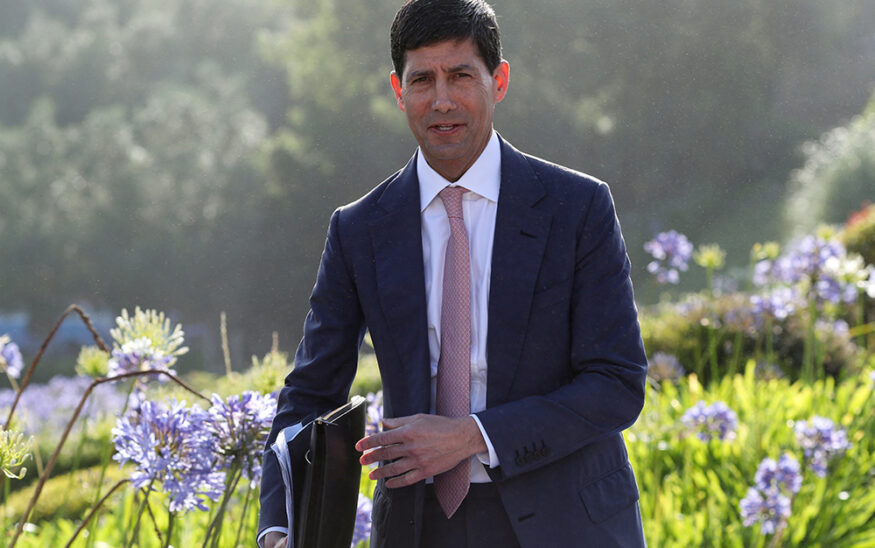
Chair of the Board of Governors of the Federal Reserve System Kevin Warsh enters for the morning session at the ECB Forum, in Sintra, Portugal June 30, 2026. REUTERS/Pedro Rocha
Chair of the Board of Governors of the Federal Reserve System Kevin Warsh enters for the morning session at the ECB Forum, in Sintra, Portugal June 30, 2026. REUTERS/Pedro Rocha
Fed’s Warsh vows to ‘disappoint’ anyone who thinks he will tolerate inflation above 2%



Summary:
- Kevin Warsh affirms Fed’s 2% inflation target
- Warsh rejects forward guidance on rate decisions
- Fed plans task forces to review post-2008 policies
SINTRA, Portugal, July 1 (Reuters) – Federal Reserve Chairman Kevin Warsh said on Wednesday he will stick firmly to the U.S. central bank’s 2% inflation target and “disappoint” anyone who expects loose monetary policy despite President Donald Trump’s call for interest rate cuts.
“If people thought this central bank was going to be comfortable with an inflation objective above 2%, they would be disappointed,” Warsh told a European Central Bank panel in Sintra, Portugal, emphasizing that — beyond restating the inflation objective — he’d give little indication about where he thinks monetary policy or the economy are headed.
Asked if the potential for disappointment extended to Trump, who picked Warsh to take over as head of the Fed and has said he expects borrowing costs to fall, Warsh said, “we have been an independent central bank for a long time. We are going to be an independent central bank at this moment and you will see no changes on that.”
Warsh spoke just two days after the U.S. Supreme Court ruled Trump could not fire Fed Governor Lisa Cook, affirming the central bank’s standing even as the justices expanded the president’s power to remove members of other ostensibly independent bodies — a ruling Warsh said he read but doesn’t think will change how the Fed goes about its business.
The public appearance in Portugal, Warsh’s second since taking over as Fed chief in May, saw him join with other top central bankers in what became a common rejection of “forward guidance” and a seeming reluctance even to say much about the economy.
Warsh said U.S. central bankers will decide whether to raise rates, for example, when they “shut the door” and begin their next two-day meeting on July 28, and told the moderator of the panel she would “fail” to break his rule against commenting about rate decisions or even the risks and factors framing the debate.
Traders slightly trimmed their rate-hike bets as Warsh spoke, but still put 70% odds on the Fed increasing borrowing costs at its September 15-16 meeting.
“It increasingly looks like investors’ early assumption that a Warsh-led Fed would quickly cut rates will not play out,” Oren Klachkin, financial market economist at Nationwide, wrote after Warsh’s appearance. “The balance of risks has clearly shifted,” Klachkin added, even though he expects the Fed will ultimately hold rates steady through the year.
Speaking at the ECB’s annual policy forum in the Portuguese hillside town, Warsh said, “We get into that room and shut the door, we’re going to have a good debate, but I don’t have much more for you than that.”
“I am not going to give forward guidance,” Warsh continued, answering a follow-up question from CNBC anchor Sara Eisen saying that, “Sara is trying to get me to break this rule. She is going to fail.”
He later extended his rule to the economic outlook, usually a staple of Fed commentary and distinct from discussing rate outcomes.
“We are playing Mad Libs now?” Warsh said when Eisen asked about his view of upcoming economic growth, referring to a popular word game.
“You’re back to forward guidance. I’m going to disabuse you of trying to extract that. … My view is financial markets and the real economy work best when you look at what’s happening in the real economy. You make your own judgments.”
Asked if he thought artificial intelligence might for now at least be inflationary — another central issue the Fed is analyzing — he responded generically that it was up to the central bank to ensure it is not, rather than untangle how some aspects of AI might strain available resources even if it ultimately raises productivity.
GOING BACK TO FIRST PRINCIPLES
Warsh shared the stage in Portugal with ECB President Christine Lagarde, Bank of England Governor Andrew Bailey, and Bank of Canada Governor Tiff Macklem, who are all dealing with elevated inflation and the fallout from the U.S.-Israeli war with Iran.
But the impact of that conflict has taken them in different directions. Warsh’s comments after the June 16-17 policy meeting prompted investors to boost the odds that the Fed will raise rates as soon as September, while the ECB has already hiked borrowing costs. Central bankers in England and Canada have been more reluctant to tighten monetary policy given local economic weakness.
The other central bankers on the panel also shared Warsh’s approach that saying too much about rates was unwise, a fact Warsh suggested might be ushering in a new global reliance on “first principles” in central banking, and a final exorcism of problems he attributes to Fed policies created in the wake of the 2007-2009 global financial crisis. Warsh was a Fed governor during those years before leaving the job in opposition to some of the programs being put in place, and then campaigning against them in the next 15 years.
“I feel incredible comfort that I’m not sure I had internalized that there is a willingness by my colleagues in the central banking community around the world to go back to first principles,” Warsh said. “We’ve all been burdened with many of the policies that, in some sense, the Fed created in the 2008 financial crisis,” including large balance sheets and providing too much information to steer financial markets.
Those specific policies and other issues are to be reviewed by a series of task forces Warsh said on Wednesday will be named next week, hinting that former foreign central bankers may be named to some of the panels — in the spirit of reviews that Warsh and others have done for institutions like the BOE — and from which he expects quick results.
In particular, he said it was his “aspiration” that within a year the Fed will be shifting to the use of real-time data to make monetary policy and relying less on backward-looking government surveys.
Because of AI and what he described as an “exponential” pace of change, Warsh said it was important to recognize new trends as they are unfolding, not after the fact.
The potential changes coming in the job market are of particular note, he said.
“We are in the first or second inning of this revolution. … Jobs will be greater, prosperity will be greater … the question is timing,” Warsh said. “We have a dual mandate and we have to deliver on both the employment side and the stable price side.”
(Reporting by Howard Schneider; Additional reporting by Francesco Canepa and Balazs Koranyi in Sintra; Editing by Dan Burns, Andrea Ricci and Paul Simao)
e