Sign In
Upcoming Event
 Free Newsletter

Spanberger, legislators come to marijuana retail compromise
Under deal, sales would start in July 2027
Kate Andrews, Beth JoJack //June 16, 2026//
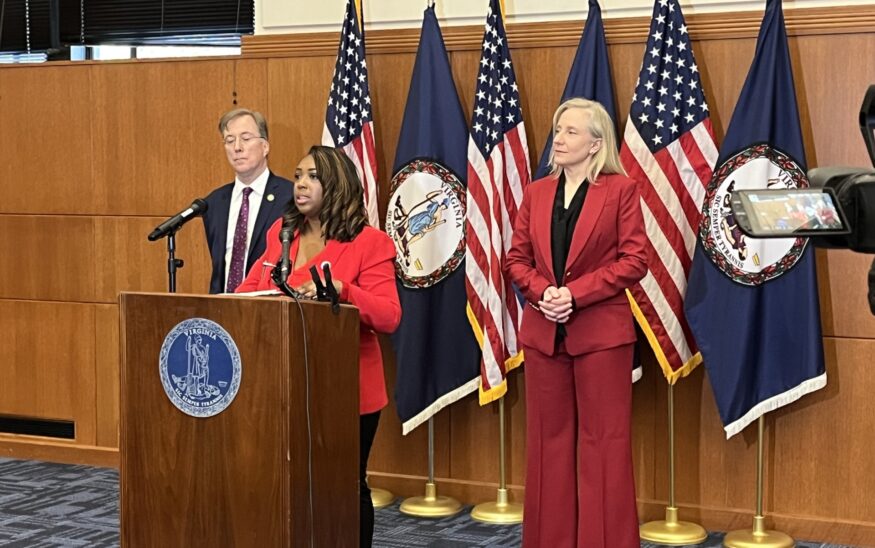
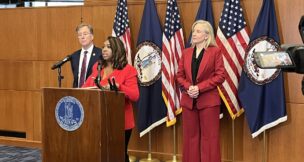
Sen. Lashrecse Aird speaks during a June 16, 2026, news conference announcing Virginia's cannabis recreational sale framework, along with Gov. Abigail Spanberger and Del. Paul Krizek. Photo by Kate Andrews/Virginia Business
Sen. Lashrecse Aird speaks during a June 16, 2026, news conference announcing Virginia's cannabis recreational sale framework, along with Gov. Abigail Spanberger and Del. Paul Krizek. Photo by Kate Andrews/Virginia Business
Spanberger, legislators come to marijuana retail compromise
Under deal, sales would start in July 2027
Kate Andrews, Beth JoJack //June 16, 2026//



SUMMARY:
Following her May veto, Gov. Abigail Spanberger and the Virginia General Assembly have reached a deal on cannabis retail sales in Virginia.
Flanked by Democratic legislation sponsors Sen. Lashrecse Aird and Del. Paul Krizek, Spanberger announced at a Tuesday news conference that licensed recreational marijuana sales would start July 1, 2027, under compromise language entered into the Virginia House of Delegates’ budget proposal.
There will be 350 store licenses, as lawmakers wanted, instead of Spanberger’s preferred 200 licenses, although they will not all be released at once. The Cannabis Control Authority would open applications Feb. 1, 2027.
Legislators sought to start recreational sales at the start of 2027, although some marijuana advocates supported a later start to allow smaller businesses to compete with larger out-of-state business interests, some of which are already major players in Virginia’s medical marijuana industry.
Krizek noted that the compromise includes regulatory language preventing license sales within the first five years of licensing, as well as limiting transfers and ownership changes. These measures, he added, are “designed to protect impact licensees and small businesses from predatory investment structures. These protections matter, because without them, larger entities can use equity or impact licensing as a back door for market capture.”
Krizek said that the deal’s wording also allows up to 100 microbusiness licenses to be issued starting May 1, 2027, and there will be state support for entrepreneurs entering the industry, explaining regulations and other matters. He said 75% of all license fee deposits in the first year would be directed to a state cannabis equity business loan fund.
“This is important because access to capital is one of the biggest barriers for small businesses entering a highly regulated marketplace,” Krizek noted. However, the delegate said the legislature would work out details on how that money would be spent in the 2027 session.
Under the deal, the state tax rate will be set at 6% at the start of sales next July and cannot be raised to 8% until July 1, 2029, Aird said. Localities can add up to 3.5% local tax on top of the state tax.
“If our goal is to move consumers away from the illicit market, the legal market has to be able to compete, and keeping the tax rate low is not just an economic decision,” Aird said. “It is a public safety strategy.”
Meanwhile, Spanberger scored a win in enforcement and public safety. Included in the compromise is a $250 public consumption civil penalty delayed until 2027, as well as strengthened oversight on intoxicating hemp products sold at convenience stores and gas stations, Aird said. The CCA also would be authorized to create penalties for stores’ failing to check customer IDs, up to license revocation for repeated sales to underage people.
“It’s not the end of the conversation,” Aird added, noting that the state’s Joint Commission on Cannabis Transition will still deal with specifics over the next year.
Although the governor and the two legislators appeared as a united front Tuesday at the Virginia State Capitol, the retail cannabis market’s immediate future hinges on a signed state budget, which is still being worked out despite the state’s looming July 1 deadline to avoid a government shutdown.
Spanberger, the House of Delegates and the Virginia State Senate are locked in an intraparty budget battle over data center tax breaks. Last week, the governor publicly backed a data center study proposed by the state House of Delegates in its latest budget but no immediate halt to tax breaks for data center developers, which Senate Finance Chair Louise Lucas and other state senators are pushing amid growing unpopularity of data centers in the commonwealth.
House Speaker Don Scott, whom Lucas dubbed “Amazon Don” in league with “Data Center Diva” Spanberger in a recent tweet, blamed Lucas for starting “a civil war among Democrats” in an interview with the Richmond Times-Dispatch this week. Tensions don’t appear to be letting up as the budget deadline approaches.
Democratic legislators, among other stakeholders, have worked for years to create a framework for a recreational marijuana market in Virginia following cannabis legalization in 2020, and lawmakers previously passed legislation only to see it vetoed by Republican Gov. Glenn Youngkin.
The Democratic Spanberger said on the campaign trail that she supported a retail marijuana market and would sign legislation if it reached her desk, but she added significant amendments to Krizek and Aird’s legislation this spring that would delay the start of recreational sales and reduce the number of store licenses to 200 from 350. However, the General Assembly sent the legislation unchanged back to Spanberger, and she vetoed it.
Spanberger said Tuesday that “all of the goals that I had were met” in the compromise.
Response from stakeholders
Supporters of a state marijuana retail market reacted to the news with cautious optimism.
Tanner Johnson, CEO of Pure Shenandoah, an Elkton-based, family-run CBD and hemp products business, had hoped to launch Pure Virginia, the company’s marijuana entity, in 2027, but he noted that the governor’s May veto chilled his investors’ enthusiasm a bit.
“All these false starts are not good for investors, that’s for sure,” Johnson said. “They start looking at other places they can put money instead.”
Greg Habeeb, a former delegate who is now president of Gentry Locke Consulting and a lobbyist for the Virginia Cannabis Association, noted that it would be “cleaner” to have a standalone bill instead of incorporating the retail market’s language into the budget.
“Just because they have, at least, philosophical agreement on the cannabis part of it doesn’t mean anything if the whole [budget]’s not agreed to,” Habeeb said. “The big question at this point is, are they going to end up with a conference report, which would then delay us fairly significantly.” Habeeb added that he’s heard from some out-of-state firms that help cannabis businesses start in new markets that they’re taking a wait-and-see approach for Virginia’s industry.
JM Pedini, executive director of Virginia NORML and development director for the National Organization for the Reform of Marijuana Laws, said that although NORML has “deep concerns” about the civil penalty for public consumption included in the compromise language, “we are encouraged by other areas of broader agreement. This bill establishes a consumer-friendly regulated marketplace, improves public safety and provides clear rules for everyone involved.”
Marijuana Justice Executive Director Chelsea Higgs Wise, who is based in Richmond, called the compromise “a meaningful step forward for Virginia,” while expressing concern about the public consumption provisions that increase fines. “As implementation moves forward, we’ll be pushing to ensure this framework advances equity rather than undermining it,” she said.