Sign In
Upcoming Event
 Free Newsletter

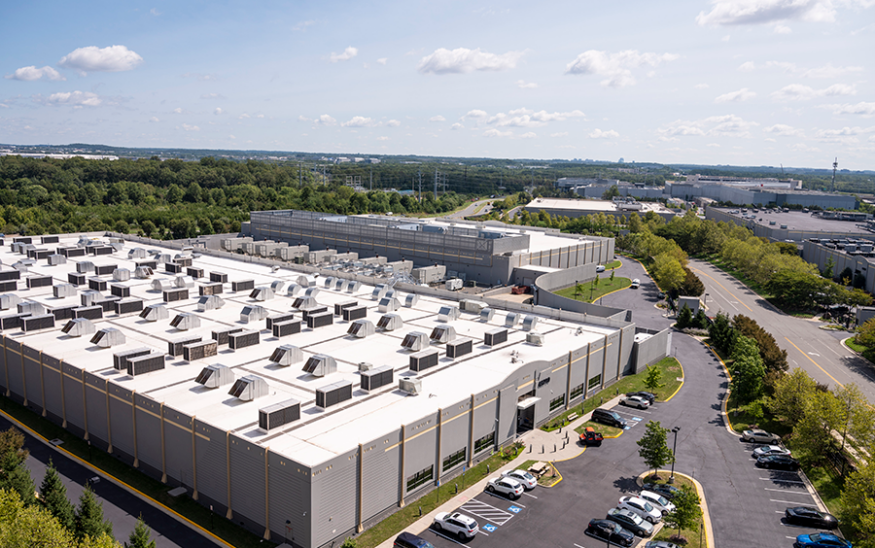
Tighter regulations, local opposition and less available land have prompted data center developers to seek sites beyond Loudoun’s Data Center Alley. Photo by Will Schermerhorn
Tighter regulations, local opposition and less available land have prompted data center developers to seek sites beyond Loudoun’s Data Center Alley. Photo by Will Schermerhorn
Beyond Loudoun: Why data centers are seeking new markets
Josh Janney //February 2, 2026//



Summary
- Loudoun County‘s tighter zoning rules are slowing new data center approvals
- New projects are rising in Stafford, King George, Caroline and Louisa counties
- Power constraints and community opposition are reshaping site selection
For close to two decades, Loudoun County has dominated not just Virginia’s data center market but the world’s, with 200 data centers in operation and 117 more in the pipeline as of the end of 2025.
Prince William County’s 44 data centers and 15 under development also contribute to Northern Virginia‘s dominance in the field. However, tighter local regulations and growing opposition to data centers — especially their energy demands — in the region have led developers to look elsewhere.
“There’s lots of land, tons of land undeveloped [in Loudoun],” says Ben Mann, a Washington, D.C.-based vice president at Cushman & Wakefield. “But there’s not very much land left where it’s legal to build a data center.”
Even Loudoun, famed for being home to one of the world’s largest concentrations of data centers, has now set in place a policy that eliminates data centers as a by-right use on most available large land parcels — mandating that builders seek approval from the Board of Supervisors and go through a public hearing process.
Tracy Baynard, senior vice president of infrastructure and economic development at McGuireWoods Consulting, says there are few parcels left in Loudoun that would be suitable for data centers and not subject to the county’s change in by-right land use standards.
Today, applicants face a more discretionary path, and citizens have more opportunities to weigh in on issues such as design, proximity to homes and natural resource impacts.
As a result, Mann says Loudoun is no longer the most supportive locality for data center development in Virginia, noting that approvals have become more difficult “for just about anything.”
Power access
For developer Ross Litkenhous, a co-founder of Oasis Digital Properties, those constraints were the reason to look beyond Northern Virginia. He says Oasis was founded explicitly to develop data centers outside the primary markets in Northern Virginia, where approvals were becoming harder to secure due to a “shift in the temperament,” both politically and regarding community support.
“There are two things that matter the most right now when it comes to data centers, and that is zoning and access to power,” Litkenhous says. “Loudoun had both. … That has now changed.”
Litkenhous says Loudoun’s long reliance on by-right approvals accelerated data center growth but also resulted in “patchwork” development.
“Data centers have to be connected to the grid, and what that requires is power infrastructure,” he says, “… and so, you end up with people’s power lines running through people’s backyards across farms, and it becomes a point of frustration. And I think people have kind of said ‘enough.’”
Indeed, state Sen. Danica Roem, who represents part of Prince William County, which has seen major local pushback to giant data center projects such as the Digital Gateway, said in December 2025 that she planned to file statewide legislation that would limit data centers to industrial areas and remove sales tax exemptions, which mounted to $1.6 billion in lost statewide tax revenue in fiscal 2025, the state reported.
Although the state has passed little data center legislation introduced over the past three General Assembly sessions, the Joint Legislative Audit and Review Commission issued a report in 2024 warning that unconstrained electricity demand in Virginia would double over the next 10 years, mainly driven by data center growth and artificial intelligence use.
JLARC concluded that building enough generation and transmission infrastructure to meet that level of demand would be “very difficult,” and that even meeting half of the projected demand would still be challenging — a prediction that Dominion Energy and other utilities share.
In November 2025, the Virginia State Corporation Commission approved a new Dominion natural gas plant in Chesterfield County, saying in its decision that reliable power cannot be maintained without the use of carbon-emitting resources.
Meanwhile, data center developers are looking further south for land in counties with fewer policy constraints.
One example of this shift is Oasis’ Dahlgren West project in King George County, east of Fredericksburg. The 485-acre campus, approved unanimously by county supervisors in 2025, is a multi-building development that, once fully built out, is expected to generate roughly $100 million to $120 million annually in real estate and personal property tax revenue.
“You can’t find 500 acres of developable land in Loudoun County,” says Litkenhous, the developer behind Dahlgren West. “And so, you go out to these places that have large swaths of land which can be more easily assembled with access to high voltage transmission lines. And in some cases, the taxation structure is more advantageous in some of these markets as well.”
CoStar data shows that while Northern Virginia still dominates Virginia’s existing data center inventory, new development is becoming more geographically distributed. CoStar tracks 254 operating data centers statewide, a dataset focused primarily on large, industrial-scale facilities rather than smaller telecom sites. Of those, 58% are located in Loudoun County. However, that share drops to 51% of projects under construction and just 16% of proposed developments, as a growing portion of the pipeline shifts south and into other regions of the state.
Among the roughly 140 data center sites currently proposed across Virginia, Stafford County accounts for 18%, King George for 12% and Hanover County for 10%, according to CoStar. In November 2025, Vantage Data Centers announced plans to invest $2 billion in a Stafford campus.
South of Fredericksburg, Caroline County will host a $3 billion data center campus developed by CleanArc Data Centers, former Gov. Glenn Youngkin announced in November 2025. In Spotsylvania County, Amazon has invested more than $480 million to date in 329-acre Cosner Tech Campus, where it plans to build seven data centers.
Juan Arias, national director of U.S. industrial analytics at CoStar, says that up until the past couple of years, data center development was clustered around Washington Dulles International Airport, where developers could tap into existing grid and fiber infrastructure.
Today’s developers, who need access to more power as AI use increases, now look along Interstate 95 toward Richmond for land, as well as other localities further afield.
“The cost is not that big of a concern right now,” Arias says. “It’s mostly where you have existing access to the grid infrastructure and existing access to energy capacity. That’s like the No. 1 need right now, and wherever you can find it, they will justify the pricing for that land play.”
In Louisa County, Amazon is investing roughly $11 billion to construct two large data centers at the Lake Anna and North Creek technology campuses. The company previously proposed a third Louisa facility but later withdrew those plans following community opposition.
In addition to Dahlgren West, Oasis is pursuing a separate 466-acre data center campus in Greensville County. If approved by the county, Litkenhous said Oasis expects to begin development by late 2029.
As of fall 2024, Mecklenburg County had a dozen data center sites either operating or under construction — including 11 owned by Microsoft. Meanwhile, in 2025, Google purchased a 312-acre parcel in Botetourt County, in western Virginia, for data center development.
“Once [developers] have a certain number of facilities in a certain geographic area, best practice is to start putting facilities elsewhere, because something can occur within a certain area that might take all of those offline,” Mann says.

Certainty matters
McGuireWoods attorneys and consultants who advise data center clients say clarity from local governments on zoning and expectations has become an increasingly important factor in site selection.
“That also helps … answer the question of speed to market, because if you’re able to go in, understand very clearly what a locality wants from you as a data center developer and essentially community partner for many decades, you’re more likely to look at that jurisdiction, because there’s no guessing,” Baynard says. “You know exactly what you’re getting into.”
Litkenhous adds that localities that identify specific areas for data center development, often through overlay districts and pre-designated technology zones, have become especially attractive because they reduce potential for added costs or project failures.
But as communities grow increasingly wary of data centers — as seen in Chesapeake and Charles City County, where a Kansas developer pulled out of a proposed massive data center campus in August after significant political opposition arose — developers say early engagement is essential.
Litkenhous notes that with Dahlgren West, Oasis held multiple public meetings before submitting its rezoning application, which he said helped defuse concerns. He says when there is a “vacuum of information,” residents tend to fill in the blanks themselves.
Greg Riegle, a partner with McGuireWoods, says the industry is facing “highly organized” regional and national opposition to data centers, and is now working to do a better job of getting its narrative out there to explain how the facilities can positively contribute to their communities.
Virginia remains the nation’s dominant data center market. Arias estimates that roughly 35% of all U.S. data center space currently under construction is in Virginia, far more than any other state. Texas and Arizona follow, each accounting for roughly 20% of the national pipeline.
Arias says those three states are driving the next wave of data center construction, but Virginia remains “way in the lead.”
That advantage won’t be guaranteed forever, however. Jon Hukill, communications director for the Data Center Coalition, says other states are increasingly focused on replicating the economic impact data centers have delivered in Virginia.
“Other states are taking notice of that and are working to make themselves as competitive, to make sure they’re attracting that investment as well,” he says.
Litkenhous says his company is already looking beyond Virginia and that Oasis recently secured a 700-acre site in Alabama.
“Virginia is still unequivocally the biggest data center market in the world, and the access to fiber, power, taxation, structure clustering — it is still one of the most desirable locations,” he says.
But he noted developers are looking “wherever they can” to access power and zoning. “So, you’re starting to see a significant growing interest for some of these large, hyperscale campuses in areas outside of Virginia.”
p