Sign In
Upcoming Event
 Free Newsletter

Why Commercial Vehicle Accidents in Roanoke County are Raising Liability Concerns
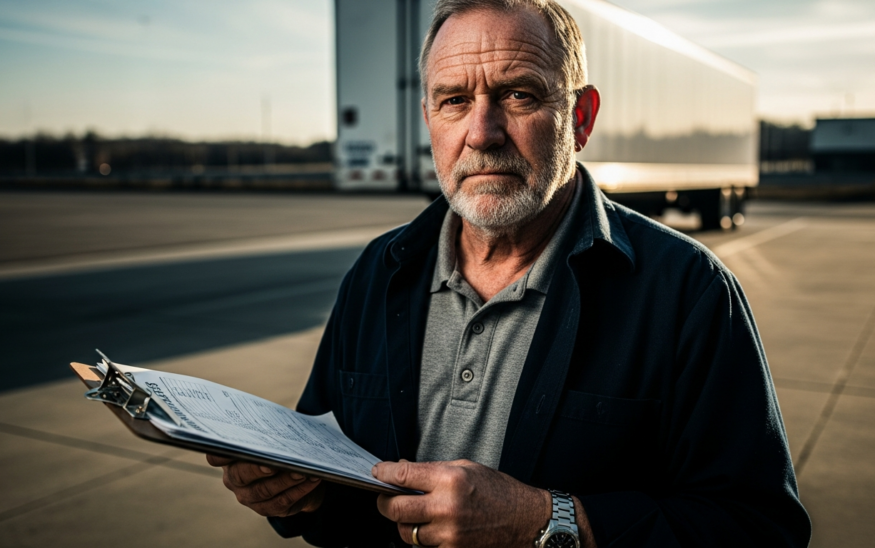
Image generated by Gemini
Image generated by Gemini
Why Commercial Vehicle Accidents in Roanoke County are Raising Liability Concerns



For many businesses, the interstate is an essential ingredient to their success. These super highways provide them with a reliable and verified way to quickly and efficiently get the kinds of components they need, when they need them most. In fact, in modern business, you can think of interstates as the arteries, pumping blood directly to the heart. These interstates bring the goods that businesses need in order to stay alive, which is why it can become such an issue when that interstate is blocked or the delivery process is substantially slowed by accidents.
In Virginia and Roanoke County specifically, Interstate 81 has long acted as a vital artery of the area’s economy. However, in recent years, Interstate 81 has become an increasing source of pain, disaster, and disruption. Commercial vehicle accidents are a growing area of concern for many businesses in Roanoke County when it comes to operational risk and legal liability.
Unfortunately, this local trend reflects a broader statewide problem where, in 2023, Virginia’s roads saw a total of 127,597 motor vehicle crashes, averaging one incident every 4.1 minutes.
Analyzing the Surge
Investigating the causes of the rise in commercial vehicle accidents reveals a complex mix of factors, all of which contribute to crashes. Official data from the Virginia Department of Motor Vehicles (DMV) provides a clear, data-driven look at the factors contributing to collisions across the Commonwealth. In 2023, speeding was the leading cause of all crashes, implicated in 25,274 incidents. This pressure to meet tight delivery deadlines often compels commercial drivers to exceed speed limits, particularly on demanding, high-traffic routes like I-81.
The ongoing problem of distracted driving further worsens the situation. DMV data shows that distracted driving played a role in almost 17% of all crashes in 2023. This is corroborated by a recent poll, where 66% of Virginia drivers admitted to driving while distracted in the past six months. For commercial drivers, extended hours of driving can heighten the urge to use mobile phones or partake in other distractions, which can lead to disastrous outcomes because of the size and weight of their vehicles.
These statewide trends are manifesting in tangible ways on local roads. Roanoke County has seen several high-profile incidents that underscore the data. The intersection of Electric Road and Colonial Avenue has become a notable problem spot, with multiple recent crashes involving commercial vehicles that resulted in hospitalizations.
One such incident in November required three people to be transported to the hospital after a collision between a sedan and a tractor-trailer, prompting a police investigation. Similarly, the stretch of I-81 near Roanoke frequently experiences significant delays due to accidents, such as a recent crash that closed the south right and left lanes of the highway, snarling traffic and disrupting logistics for hours.
The Bottom-Line Impact: How Accidents Disrupt Business and Beyond
For Virginia’s business community, the consequences of a commercial vehicle accident extend far beyond the immediate scene of the crash. The financial toll is both direct and indirect, creating a ripple effect that impacts everything from insurance premiums for everyone to client relationships when it comes to commercial services. Immediate costs include significant property damage to expensive fleets, loss of valuable cargo, and the onset of substantial legal fees. These initial expenses can easily run into the tens or hundreds of thousands of dollars, depending on the severity of the incident.
Beyond the direct financial outlay, operational disruptions pose a severe threat to all traffic. A single major accident can shut down a highway for hours, which in places like Roanoke County can disrupt logistics schedules for many companies at once. Such delays can lead to missed deliveries, spoiled perishable goods, and production line stoppages for manufacturers who rely on just-in-time inventory. The resulting damage to client relationships and corporate reputation can have lasting negative effects.
This heightened risk environment is directly reflected in the rising cost of commercial auto insurance. Premiums have been climbing steadily as insurers adjust to the increased frequency and severity of claims. The economic impact is staggering; a recent analysis found that fatal and serious traffic crashes in 2023 cost the Commonwealth an estimated $8.5 billion in economic costs alone.
Furthermore, the financial stakes are set to rise. Effective January 1, 2025, Virginia’s minimum liability insurance requirements increased substantially, with coverage for bodily injury per person rising to $50,000 and per accident to $100,000. This legislative change means that businesses without adequate coverage will face even greater financial exposure in the event of a major accident.
Key Business Liabilities After a Commercial Vehicle Accident
- Direct Financial Liability: Responsibility for property damage, medical bills for injured parties, and potential wrongful death claims.
- Increased Insurance Premiums: A poor safety record will lead to significantly higher commercial auto and liability insurance costs.
- Workers’ Compensation Claims: Costs associated with injuries sustained by employee drivers.
- Regulatory Fines and Scrutiny: Potential penalties from the Federal Motor Carrier Safety Administration (FMCSA) for safety violations.
- Reputational Damage: Accidents can harm a company’s public image, impacting customer trust and brand value.
- Supply Chain Disruption: Delays and cargo loss can lead to breach of contract claims from clients.
Navigating the Legal and Financial Aftermath
When a commercial vehicle is involved in a serious accident, the ensuing legal process is significantly more complex than a standard passenger car collision. These cases often involve a web of potentially liable parties, including the driver, the trucking company, the owner of the trailer, the cargo loader, and even the vehicle or parts manufacturer. Untangling this web to determine fault requires a sophisticated investigation and deep legal knowledge, as multiple layers of corporate and commercial insurance policies come into play.
In these situations, businesses often find themselves working with insurance carriers and claims teams that follow structured processes to evaluate liability and coverage. They may attempt to shift blame, dispute the severity of injuries, or offer quick, lowball settlements to unrepresented parties. For any business facing these circumstances or for individuals injured in such a crash, securing experienced legal representation becomes a necessity to ensure a fair outcome.
Local Legal Experience in Commercial Vehicle Accident Claims
For businesses and individuals caught in the aftermath of serious commercial vehicle accidents, the path to fair compensation is often complicated and adversarial. Specialized legal counsel can help immensely when it comes to navigating complex insurance structures, uncovering all potentially liable parties, and countering the strategies of corporate defendants. Law firms that focus on these cases routinely analyze driver logs, maintenance records, and company safety protocols to build strong claims that account for medical costs, lost income, and long-term losses.
Local experience can be especially valuable. For example, Altizer Law, a Roanoke-based firm, has guided many Virginia clients through commercial vehicle and serious car crash claims. Firms like this draw on a detailed understanding of regional car accident settlement amounts to help clients evaluate what their claims may realistically be worth and to avoid accepting lowball offers. By combining careful investigation with knowledge of local courts and insurers, a Roanoke personal injury lawyer provides a practical roadmap for injured people and businesses facing complex transportation-related disputes.
A Call for Safer Corridors and Smarter Business Practices
The spike in commercial vehicle accidents in Roanoke County is a symptom of broader statewide issues: speeding, distraction, and intense economic pressures on the logistics industry. This trend serves as a critical indicator for business leaders that the status quo is becoming increasingly costly, both in human and economic terms. Addressing this challenge requires a multifaceted approach, as the responsibility is shared among all stakeholders.
This underscores the importance of safety practices and infrastructure designed to support traffic flow and reduce risk along critical corridors like I-81. For Virginia’s business leaders, this trend demands a renewed commitment to fostering a culture of safety. This includes robust driver training programs, implementing new technologies that monitor for fatigue and distraction, and establishing realistic delivery schedules that do not implicitly encourage risky driving behaviors.
Ultimately, the safety of Virginia’s commercial corridors is intrinsically linked to their economic vitality. Addressing this trend is not just about preventing accidents; it is about protecting people and the services they need most.
This article is provided for general informational and educational purposes and should not be construed as legal, financial, medical, or other professional advice. You should not make decisions based solely on this content; instead, consult a qualified professional for guidance specific to your situation. We are not responsible for any losses or damages, whether direct or indirect, that may result from using or relying on the information in this article.
P