Sign In
Upcoming Event
 Free Newsletter

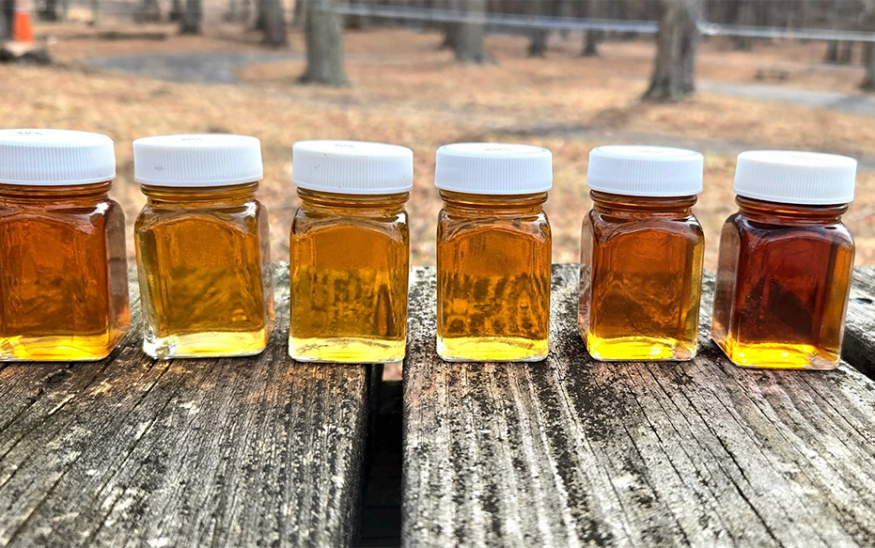
Sample bottles of Puffenbarger’s Sugar Orchard’s Pure Highland County Maple Syrup Photo courtesy Puffenbarger’s Sugar Orchard
Sample bottles of Puffenbarger’s Sugar Orchard’s Pure Highland County Maple Syrup Photo courtesy Puffenbarger’s Sugar Orchard
Weather disrupts Highland maple syrup yield



The annual maple syrup festival has been a big deal in Highland County for almost 70 years. This year, the March festival drew tens of thousands of people, but the star of the event — maple syrup — was in short supply.
At Puffenbarger’s Sugar Orchard, owner Doug Puffenbarger said his trees produced so little syrup that he had nothing left to sell by the festival’s second weekend. In 2025, his 2,000 trees produced 350 gallons; in 2026, they yielded just 150.
Maple syrup production peaks in late winter and depends on freezing nights and milder days for sap to flow. This season, those conditions were disrupted.
First came a January storm that deposited an icy snowpack — “ice-crete,” the locals called it. Then came an unseasonably warm spell in March, also terrible for sap production. Chris Swecker, executive director of the county’s chamber of commerce, said it wasn’t just a local problem; producers farther north also had a poor year.
Despite the short supply, the festival still generated $1.36 million to $2 million in direct spending — a significant contribution to the county’s yearly budget of $8 million to $11 million, Swecker says.
What caused this season’s unusual conditions is less clear. A Washington Post report described climate change as a growing threat to the region’s maple syrup production, but local researchers told Virginia Business that it’s unclear how much it contributed to this year’s poor season.
Sarah Collins-Simmons, a syrup research specialist with Future Generations University in West Virginia, said the real challenge for producers is how to work with weather that has become more volatile and unpredictable. Local weather data is mixed. Keith Carson, who tracks temperatures for Allegheny
Mountain Radio, said winters since 2010 have included both cooler- and warmer-than-
average seasons. Collins-Simmons said producers can adapt with improved equipment and extend their tapping season. “It is absolutely not a dire situation, and it won’t be any time soon,” she says.
Swecker is not overly worried. Maple syrup producers had bumper yields in 2025, and good and bad years are just a fact of the business, he says.
Meanwhile, Puffenbarger tapped his trees earlier this year and now wonders whether to start even sooner.
“It’s a roll of the dice,” he says.
i