Sign In
Upcoming Event
 Free Newsletter

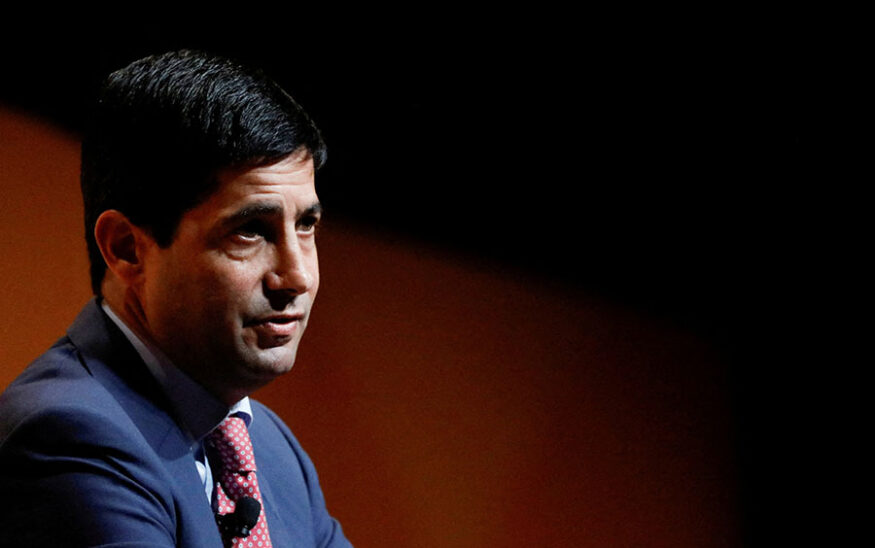
FILE PHOTO: Kevin Warsh, Fellow in Economics at the Hoover Institution and lecturer at the Stanford Graduate School of Business, speaks during the Sohn Investment Conference in New York City, U.S., May 8, 2017. REUTERS/Brendan Mcdermid/File Photo
FILE PHOTO: Kevin Warsh, Fellow in Economics at the Hoover Institution and lecturer at the Stanford Graduate School of Business, speaks during the Sohn Investment Conference in New York City, U.S., May 8, 2017. REUTERS/Brendan Mcdermid/File Photo
Warsh’s room to move at the Fed may narrow in a war-clouded outlook



Summary:
- Kevin Warsh‘s chances for quick Fed rate cuts are declining amid ongoing oil price shocks and Iran conflict.
- January inflation remained above the Fed’s 2% target, complicating monetary policy decisions.
- Fed officials likely to keep interest rates steady in the near term, delaying rate cuts until fall or later.
WASHINGTON, March 13 (Reuters) – Chances for President Donald Trump’s Federal Reserve chair nominee Kevin Warsh to quickly loosen monetary policy are dwindling in the eyes of investors and analysts who have begun to question how far Warsh can steer his colleagues towards lower borrowing costs if an ongoing oil price shock persists.
The volatile outlook continued on Friday in data that pulled against both sides of the Fed’s twin goals of stable prices and maximum employment, with new reports showing a key inflation measure in January remained more than a percentage point above the Fed’s 2% target, while new estimates showed the economy grew far more slowly at the end of last year than initially thought, expanding at a near stall speed annual pace of 0.7%.
Despite moves by major developed nations to release stockpiled oil reserves, the price of benchmark Brent Crude meanwhile remained near $100 a barrel on Friday, off recent triple-digit levels but still elevated amid ongoing Iranian attacks against shipping in the strategic Strait of Hormuz, more oil infrastructure closures in the region, and rhetoric from Trump that has veered from hints of a quick end to U.S.-Israeli bombardment of Iran to demands for “unconditional surrender” from the country’s ruling Islamist regime.
Investors have switched gears fast, at one point nearly pricing out any Fed rate cuts this year before returning on Friday to expectations of a reduction sometime in the fall.
Even that would frustrate Trump’s demands for immediate rate reductions, reiterated by the president this week as the war with Iran posed new risks to this effort to focus on pocketbook “affordability” issues. The price of gasoline jumped again on Friday to $3.63 a gallon from less than $3 before the start of hostilities. Interest rates on 30-year home mortgages this week rose to 6.11% from 6% last week according to housing agency Freddie Mac, and interest rates on a variety of U.S. government debt have also jumped since the start of U.S.-Israeli bombing in Iran, a challenge if sustained to Trump’s pledges to curb U.S. deficits. Stock markets are also lower, possibly undercutting a prop to consumer spending among wealthier households.
Central bankers typically regard commodity supply shocks as leading to temporary price disruptions with only a fleeting impact on underlying inflation. But the longer oil prices remain elevated, the more it feeds through to top-line consumer items like gasoline as well as to the diesel fuel that powers the trucking industry, and eventually to things like airline ticket prices and even food given the potential for fertilizer prices to rise.
With inflation expected to stay above the Fed’s 2% target for now and memories of the pandemic-era inflation shock still fresh, policymakers remain concerned that their credibility is at stake, and that it would send the wrong message if they relent on interest rates as prices escalate.
The Fed’s response will “depend on the scale, scope, and length” of the oil shock, said Vincent Reinhart, chief economist at BNY Investments, who noted that rising energy costs get spread through the economy in complex ways, increasing some prices but also leading consumers to shift or slow spending, and changing expectations for economic growth and hiring. The current Fed has the added complication that public attitudes about inflation may be primed to shift given the experience of the last five years when inflation soared to levels not seen since the 1980s – during a different U.S. conflict with Iran.
“If expectations are less well anchored, it’ll show up more in inflation,” than as a blow to growth, Reinhart said. Though he believes the Fed is still leaning towards rate cuts, “this is a situation in which uncertainty is elevated and the appropriate policy is to sit and wait to see what happens.”
Preliminary data for March from the University of Michigan’s consumer survey showed recent improvement in inflation expectations had stalled on the basis of responses received after the start of the war with Iran from people anticipating higher prices are on the way.
Fed officials are likely to hold the policy rate of interest steady in the current 3.5% to 3.75% at their meeting next week, with attention more on the language of a new policy statement, the more detailed outlook provided by Fed Chair Jerome Powell in a press conference, and new economic projections that will show policymakers’ initial assessments about the impact of the war on prices, jobs, growth and interest rates.
It is a difficult moment to look ahead, with the Iran war front of mind but important unsettled questions also around tariff policy, immigration, and other issues.
Government data only arrives with a lag, and it may even take time for higher-frequency sources to show meaningful change.
Michael Gunther, senior vice president for research and market intelligence at Consumer Edge, a firm that aggregates spending data from credit and debit cards, said that since the war began there have been early possible signs of consumers adjusting to higher gas prices by ordering more from online retailers, and boosting per-trip spending at some stores perhaps to space out the need to drive.
But “in terms of meaningful drop-offs in spending since Saturday, the 28th of February — we are not seeing it,” Gunther said.
As oil prices add to inflation worries, investors see the Warsh Fed increasingly constrained. Expectations that the new Fed chair would usher in his term with a rate cut at his first meeting in June and follow that with more reductions have now shifted steadily back toward the fall. Data from the CME Group’s FedWatch indicate a long wait from there, with another cut not coming until late in 2027.
Warsh must still be confirmed by the Senate before an anticipated handoff from Powell in May.
EY Parthenon chief economist Gregory Daco said he now does not expect the Fed to cut until December, and “it is entirely plausible that the Fed won’t deliver any rate cuts this year.”
Yet alongside currently sticky inflation, Fed officials are weighing recent jobs data that showed firms shed 92,000 jobs in February, an unexpected slide that highlighted concerns about labor market weakness.
Luke Tilley, chief economist at Wilmington Trust, said that while the Fed is likely to strike a somewhat hawkish tone still at the upcoming meeting, weakness in the real economy will eventually lead to a series of rate cuts this year.
Job growth, for example, remains concentrated in a single sector, health care, and “we’ve never had a time where we were losing this many jobs outside of health care, that we didn’t go into recession,” Tilley said. “I don’t see us at a really solid place to be managing an energy price cycle like this right now.”
(Reporting by Howard Schneider; Editing by Anna Driver)
l