Sign In
Upcoming Event
 Free Newsletter

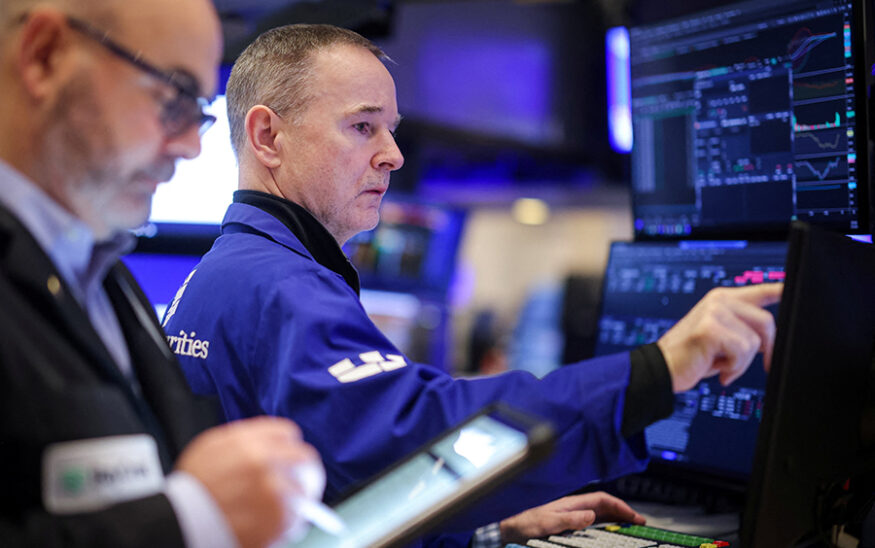
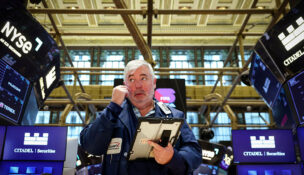
Traders work on the floor at the New York Stock Exchange (NYSE) in New York City, U.S., January 21, 2026. REUTERS/Brendan McDermid
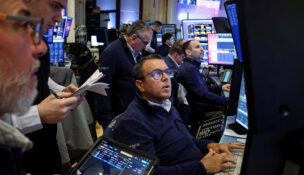
Traders work on the floor at the New York Stock Exchange (NYSE) in New York City, U.S., January 21, 2026. REUTERS/Brendan McDermid
Wall Street ends up as investors buoyed by tariff relief, upbeat data



Jan 22 (Reuters) – Wall Street‘s main indexes ended higher on Thursday, the second straight day of gains, as investors bought shares after U.S. President Donald Trump rescinded tariff threats on European allies while data highlighted American economic resilience.
The advance came the day after the S&P 500’s biggest daily percentage gain in two months, when Trump stepped back from imposing tariffs as leverage to seize Greenland and said the framework of a deal to end a dispute over the Danish territory was in sight.
Investors have quickly returned to stock markets after Trump’s Wednesday U-turn. Still, two days of gains have yet to fully erase losses the three U.S. benchmarks took on Tuesday, when Trump’s tariff threats sent shivers through global markets.
“It’s very weird to wake up every day as a money manager and you do not know whether it is Christmas morning or Friday the 13th,” said Gregg Abella, CEO at Investment Partners Asset Management.
Abella said geopolitical issues are creating additional focus on managing client portfolios through volatility, and emphasizing the importance of diversification away from certain names, sectors and asset classes.
Reflecting such diversity, and increased risk appetite among investors on Thursday, the small-cap Russell 2000 index rose to a record closing high.
According to preliminary data, the S&P 500 gained 36.51 points, or 0.53%, to end at 6,913.40 points, while the Nasdaq Composite gained 205.31 points, or 0.91%, to 23,430.13. The Dow Jones Industrial Average rose 298.01 points, or 0.61%, to 49,375.24.
EARNINGS A PROVING GROUND
The earnings season is picking up pace, and could test market sentiment as companies detail how consumer demand, cost pressures and a bumpy macro backdrop shaped their year-end performance.
Many of the so-called Magnificent Seven stocks are set to report earnings next week. Given their weighting on indexes, their performances have outsized influence on overall market direction. Their outlooks will be closely watched to see how much juice remains in the growth stories which so far have justified their sky-high valuations.
All seven were gainers on Thursday, led by Meta and Tesla <TSLA.O.
Banking stocks have generally performed well in response to earnings, although Huntington Bancshares fell on Thursday after posting fourth-quarter numbers weighed by costs related to recent acquisitions. Some larger regionals which had risen in recent days also saw pullback on Thursday, including Fifth Third Bancorp and Regions Financial.
Procter & Gamble gained following quarterly results.
GE Aerospace slipped despite forecasting its annual profit above estimates. Abbott slid after the medical device maker forecast current-quarter profit below Wall Street expectations, and Cholula hot-sauce maker McCormick dropped after forecasting weak annual profit in 2026 on higher costs related to tariffs and other inputs.
ECONOMIC DATA IN SPOTLIGHT
The latest economic data releases were also supportive of positive momentum.
U.S. consumer spending increased solidly in November and October, likely keeping the economy on track for a third straight quarter of strong growth, the personal consumption expenditures index showed.
Separate data showed initial claims for state unemployment benefits increased less than expected last week, while the U.S. economy grew by a slightly more-than-expected 4.4% in the third quarter of 2025.
Federal Reserve policymakers will meet next week to decide on U.S. interest rates. The central bank is widely expected to stand pat on rates due to sticky inflation and evidence of economic resilience.
(Reporting by Sruthi Shankar and Pranav Kashyap in Bengaluru and David French in New York; Editing by Maju Samuel and David Gregorio)