Sign In
Upcoming Event
 Free Newsletter

Virginia lawmakers outline new retail marijuana plans
Sales could begin as soon as November 2026
Beth JoJack //December 2, 2025//
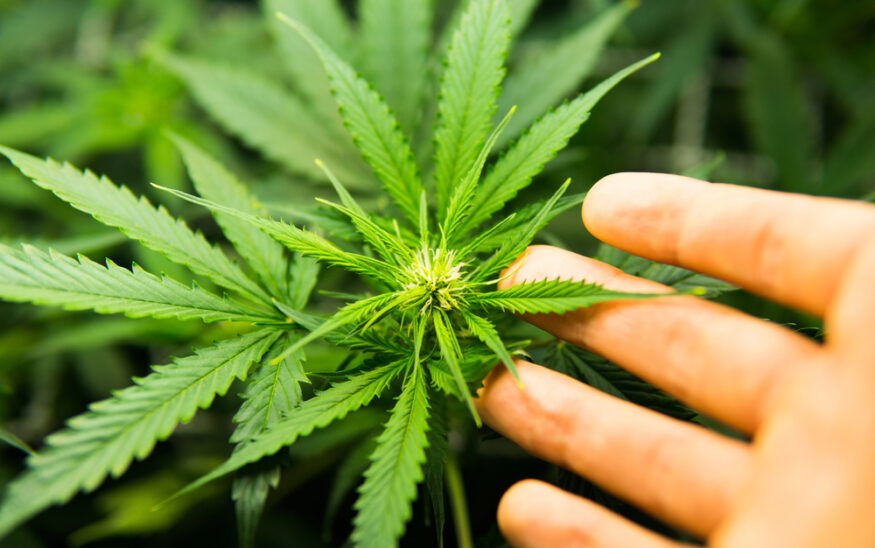
Photo: Depositphotos
Photo: Depositphotos
Virginia lawmakers outline new retail marijuana plans
Sales could begin as soon as November 2026
Beth JoJack //December 2, 2025//



Lawmakers who in coming months will contribute to shaping the bills that launch Virginia’s long-awaited retail marijuana market unveiled some plans Tuesday.
Members of the Joint Commission to Oversee the Transition of the Commonwealth into a Cannabis Retail Market discussed at a meeting in Richmond proposed legislative amendments they will suggest making to the 2025 bills that would have created that retail marijuana market if the 420-unfriendly Gov. Glenn Youngkin had signed them.
“We’ve designed a licensing framework that prioritizes small businesses and prevents market dominance by a few large companies,” Commission Chair and Del. Paul Krizek, D-Fairfax, said early in the meeting.
As of now, the joint commission seems in favor of opening the legalized, adult-use market quickly. Retail sales could begin by Nov. 1, 2026, according to the committee’s proposed amendments.
Another big takeaway from Tuesday’s meeting: The joint commission does not seem inclined to recommend that localities could opt out of retail marijuana sales.
“By allowing opting out, what we’re really doing is allowing opting in to the illicit market, so there will not be any dry counties like in the days of alcohol,” Krizek said.
The committee did not reveal language for a proposed bill Tuesday, however Krizek stressed that the commission members are all on the same page about what they want legislation to include. But more needs to be worked out, he said, before it’s made public.
“This bill hopefully has a little for everybody, and it builds a new market that supports hundreds of small businesses and strengthens Virginia agriculture, reduces the racial disparities created by the prohibition on marijuana, and protects, most importantly, public safety and health,” Krizek said.
Virginia’s first medical marijuana dispensary opened in 2020. The next year, under the then-Democratic-majority state legislature, the commonwealth became the first state in the South to legalize marijuana. However, Youngkin, a Republican, has vetoed bills that would have enabled retail sales of marijuana for recreational use.
But Gov.-elect Abigail Spanberger, a Democrat, has pledged to sign legislation creating a retail marijuana market. Earlier this year, the General Assembly established the joint commission to help create the legislative framework for those sales.
The stakes for getting it right are high. Virginia is projected to take in $400 million in annual revenue from the retail marijuana market over the next five years, according to Krizek.
Other proposed amendments discussed Tuesday examined who would receive licenses to sell marijuana. Under the proposed amendments, there will be a maximum of 350 licenses for retail establishments and 10 licenses for large cultivation facilities.
Pharmaceutical processors who have already been awarded permits by the CCA to grow and sell medical marijuana can obtain licenses for the retail market after paying a one-time $10 million conversion fee.
Some licenses will go to what’s being called impact licensees, a group formerly described by the General Assembly as micro-businesses. Impact licensees are intended to be individuals who meet criteria such as living in economically disadvantaged communities, being disproportionately policed for marijuana crimes in earlier years and/or qualifying for financial assistance from the U.S. Department of Agriculture as a distressed farmer in the last five years.
“Equity is not an afterthought,” Krizek said of the committee’s proposed amendments.
A direct-to-consumers license, which is also on the list of proposed amendments, would allow small operations to cultivate and process marijuana and sell marijuana and marijuana products to consumers through “age-verified delivery and limited on-site retail sales at their licensed premises.”
“That will help small businesses … to get going and have the resources then to invest and to be able to segue into a retail license,” Krizek explained.
If the proposed amendments discussed Tuesday pass the legislature, marijuana would be subject to a 12.75% Virginia sales tax and localities could issue additional local taxes of up to 3.5%. “If they want to go less, they can,” Krizek said.
The audience at Tuesday’s meeting was perhaps rowdier than others assembled at the General Assembly. One bearded attendee wore a flag emblazoned with a cannabis leaf tied around his neck as a cape.
The crowd voiced its opposition during the discussion of a proposed amendment to require a minimum distance between retail marijuana stores to one mile.
“My name is Mark. I’m just a guy,” one speaker told the commission during the public comment portion of the meeting. “About the mile distance between stores: It seems really strange to equivocate cannabis to … liquor when I can walk a block that way and buy as much beer as I want at 7-Eleven, it seems kind of unalike.”
Chelsea Higgs Wise, co-founder and executive director of Virginia-based nonprofit Marijuana Justice, said Tuesday she’s concerned that the state may launch the retail marijuana market too quickly. She wasn’t sure if the CCA would be able to hire, train and implement the needed regulatory staff by November 2026. Wise also asked whether impact licensees will be ready to sell that soon. If they’re not, only medical marijuana pharmaceutical operators will be able to sell by then.
Todd Gathje, vice president of government relations for The Family Foundation, a Christian conservative lobbying organization, spoke against the commission’s opposition to allowing localities to opt out of participating in the retail marijuana market. “We’re extremely discouraged by the fact that we’re not going to have some type of local referendum to allow localities to decide what’s going to be put in their localities,” he said.
The 2026 General Assembly session starts Jan. 14, 2026.
e