Sign In
Upcoming Event
 Free Newsletter

Virginia moves closer to legal retail marijuana sales
State House and Senate pass different weed bills
Beth JoJack //February 18, 2026//
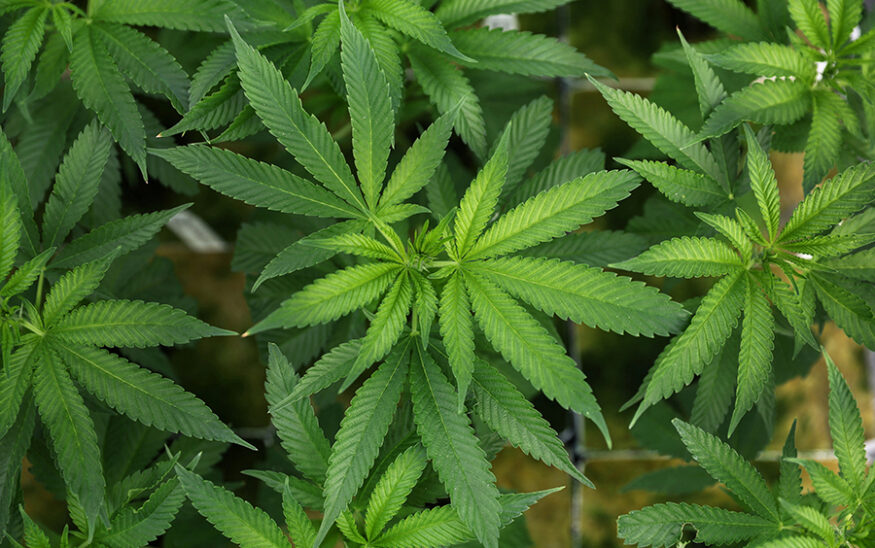
FILE PHOTO: Marijuana plants are seen inside the Glass House Farms flowering greenhouse in Camarillo, California, U.S., April 13, 2022. Picture taken April 13, 2022. REUTERS/Shannon Stapleton/File Photo
FILE PHOTO: Marijuana plants are seen inside the Glass House Farms flowering greenhouse in Camarillo, California, U.S., April 13, 2022. Picture taken April 13, 2022. REUTERS/Shannon Stapleton/File Photo
Virginia moves closer to legal retail marijuana sales
State House and Senate pass different weed bills
Beth JoJack //February 18, 2026//



SUMMARY:
- Virginia House and Senate passed different retail marijuana bills Tuesday.
- Retail sales could begin as soon as Nov. 1 under the House plan, while Senate would delay sales until Jan. 1, 2027.
- Tax structures differ between bills.
It’s all over but the shouting.
Legislation to create a retail marijuana market for adults 21 and older in Virginia passed both chambers of the state legislature Tuesday. Gov. Abigail Spanberger has said she would sign such a bill, after her predecessor vetoed similar legislation.
However, the two bills passed by the Virginia State Senate and the House of Delegates have a few differences that lawmakers must resolve first.
Under the House bill, retail sales would be allowed to start Nov. 1, but the start date for retail sales in the Senate bill would be Jan. 1, 2027. Tax structures and other details also differ somewhat between the bills.
Virginia first legalized possession of marijuana in 2021. However, the state failed to set up a framework for legal sales of recreational marijuana before Republican Gov. Glenn Youngkin took office in 2022.
Famously opposed to Mary Jane, Youngkin twice vetoed bipartisan legislation to offer retail marijuana sales in the commonwealth.
On Tuesday, the House approved House Bill 642, sponsored by Del. Paul Krizek, D-Fairfax, by a 65-31 party-line vote, with the Democratic majority voting yea.
Senate Bill 542, introduced by Sen. Lashrecse Aird, D-Petersburg, passed later in the day with 21 Democratic votes in favor and 19 Republicans against.
Democratic Sen. Adam Ebbin, who is resigning from his seat Wednesday to join Spanberger’s administration as a senior adviser of the Virginia Cannabis Control Authority, previously abstained from voting on the measure Tuesday “out of an abundance of caution because I didn’t want to appear that I represent the governor yet on this position,” he said.
However, Ebbin went on to say he has “no financial stake in it, so under the rules of the Senate I will be voting on this,” before casting a yes vote.
The two bills’ differences will now be worked out in a conference committee.
Krizek said Tuesday that his bill was about fixing the status quo. “Adult possession of cannabis is legal, but sales are unregulated, and that means no testing, no standards and no oversight whatsoever,” he said. “This bill replaces that gray market. It’s a $5 billion illegal market.”
Too soon?
Chelsea Higgs Wise, the Richmond-based executive director of Marijuana Justice, a nonprofit with a mission “to educate on the history of cannabis criminalization and the implications of past policies that have created disparities within our communities today,” thinks Nov. 1 and Jan. 1, 2027, start dates are too soon.
By those dates, she said in an interview Wednesday, the only licensees ready to open retail stores will be the companies already licensed to sell medical marijuana in Virginia, most of which are large national entities. Earlier this month, New York-based The Cannabist Co. sold its Central Virginia medical marijuana business for $130 million to an entity connected to a Boston private equity fund.
“If we open up the doors the first day of sales in Virginia, either on Nov. 1, and probably even on Jan. 1, we’re going to have lines opened up around the buildings for out-of-state publicly traded companies, and we’re going to be excluding Virginia businesses because they’re not going to be ready,” Wise said.
Max Jackson, the New Jersey-based founder of Cannabis Wise Guys, a consultant to retail marijuana operations, has found it typically takes between 18 and 36 months from getting a license to securing financing, leasing property, completing buildout and getting through a first crop cycle.
By starting retail sales in November or early 2027, Jackson wrote in an email, “Virginia’s new independent licensees will spend their first year or two building while incumbents are already capturing customers and establishing market position.”
The two bills also differ on their taxing structures.
The Senate bill would set a tax on marijuana of about 12.9% in addition to about a 1.1% state retail sales and use tax and a 3% local tax. The House bill would have an excise tax of 6% as well as the state’s 5.3% retail sales and use tax, as well as a local tax between 1% and 3.5%.
Wise argued those taxes are too high. “I’ve always said anything above 15%, we’re going to price ourselves out, and many people will never leave the illicit market,” she said.
Jackson agreed. “If the legal price is significantly higher than what’s available through existing channels, most people don’t convert,” he wrote.
The companies currently licensed to operate Virginia’s medical marijuana operations, all entities tied to multi-state marijuana companies, could enter the retail market under the Senate bill by paying a $15 million fee, while the House bill sets a $5 million fee.
Wise had hoped to see that fee set at $20 million, because larger outfits enter the retail market with advantages such as already having an established presence.
“We think the highest number is the most appropriate number,” she said.
Another difference is that the House bill would make Virginia’s Cannabis Control Authority a division of the Virginia Alcoholic Beverage Control Authority.
“The cannabis control authority will manage the license and regulatory portions while the marketplace is immediately being stood up. But [this bill] does state the intent of the General Assembly to transition to the Alcoholic Beverage and Cannabis Control Authority as of Jan. 1, 2028,” said Aird.
Under the House’s version, 60% of net profits will go toward the Cannabis Equity Reinvestment Fund, which, among other things, supports people and communities historically targeted by drug enforcement. Another 25% would go to the Department of Behavioral Health and Development Services, while 10% would go to programs for at-risk pre-kindergarten-age kids, and 5% toward public health programs.
The Senate bill directs 30% to the equity fund and 40% to support early childhood care and education. This bill also gives 25% to the Department of Behavioral Health and Development Services and 5% to public health programs.
The similarities
The bills do have a few things in common.
Neither allows a locality to opt out of marijuana retail sales. “When municipalities can opt out, you end up with geographic deserts where consumers never convert to the legal market and the illicit market fills the void,” said Jackson.
Under both measures, the CCA can issue 100 licenses for microbusinesses, which can grow up to 5,000 square feet with an indoor canopy and up to 10,000 square feet as an outdoor canopy.
“These bills create a competitive marketplace with diversified licenses including vertically integrated micro licenses designed for smaller operations,” said Eric Postow, Fairfax-based managing partner for Holon Law Partners who specializes in marijuana law. “This ensures opportunities for local Virginians rather than large multi-state operators.”
Under both measures, adults can purchase up to 2.5 ounces of marijuana or an equivalent product amount. Edible marijuana products would be limited to 100 milligrams of THC per package.
Both bills would begin permit applications by July 1, 2026. Both would allow for 350 retail stores statewide; Virginia ABC currently has about 400 stores.
Both would allow five Tier V marijuana cultivation facilities in the state, which permits licensees to grow up to 35,000 square feet of canopy indoors.
After Jan. 1, 2028, the state can set the number of licenses “to ensure that there is a sufficient supply of marijuana to meet demand, provide market stability, avoid market dominance, ensure a competitive market that considers small business opportunities and concerns, and limit the sale of unregulated marijuana.”
Pure Virginia, an Elkton-based company, applied in 2024 to win the permit to grow, manufacture and sell medical marijuana in the Shenandoah Valley region. However, the CCA gave AYR Virginia, an entity tied to AYR Wellness, a Miami-based multistate marijuana company, conditional approval to serve as the pharmaceutical processor for that region.
In the summer of 2025, AYR Wellness entered a restructuring agreement due to overwhelming debt. As part of the agreement, the company agreed to sell its assets in several states including Virginia. That sale was held late in 2025 and a group of AYR Wellness’ senior noteholders made the successful bid.
Tanner Johnson, CEO of Pure Virginia, thinks his company will be able to get into the game with the new retail marijuana framework. He plans to apply for one marijuana processing facility license, three marijuana retail store licenses, and a Tier V marijuana cultivation facility license.
“We believe Pure Shenandoah and our marijuana-arm Pure Virginia are in the best possible position to lead the Virginia cannabis industry to national prominence,” Tanner wrote in a message.
o