Sign In
Upcoming Event
 Free Newsletter

Virginia universities faced federal probes over DEI in 2025
Trump administration put focus on U.Va., GMU
Kate Andrews //March 1, 2026//
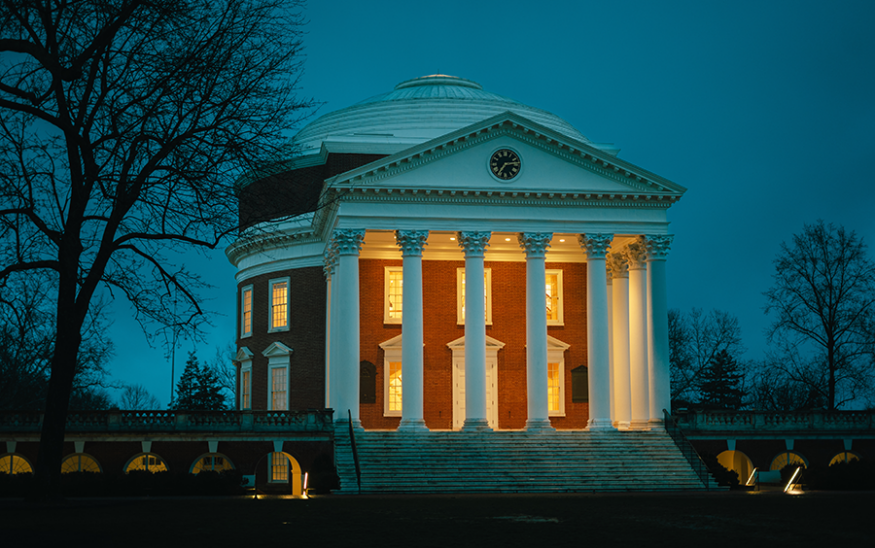
The University of Virginia in 2025 was investigated by the U.S. Department of Justice for allegedly failing to dismantle diversity, equity and inclusion initiatives. Photo by Adobe Stock
The University of Virginia in 2025 was investigated by the U.S. Department of Justice for allegedly failing to dismantle diversity, equity and inclusion initiatives. Photo by Adobe Stock
Virginia universities faced federal probes over DEI in 2025
Trump administration put focus on U.Va., GMU
Kate Andrews //March 1, 2026//



For two of Virginia’s public universities, 2025 was a time of crisis, as well as an illustration of disparate approaches to federal pressure.
In April 2025, the University of Virginia received notice that the U.S. Department of Justice‘s civil rights division was investigating the university for allegedly failing to dismantle diversity, equity and inclusion initiatives. Although Harvard, Columbia and other private universities had come under fire by the Trump administration and seen their federal research funding threatened, U.Va. was the first public university placed in the hot seat.
Within three months, President Jim Ryan resigned. Although he said he was “inclined to fight for what I believe in … I cannot make a unilateral decision to fight the federal government in order to save my own job,” he wrote in a June 2025 letter to U.Va.’s community.
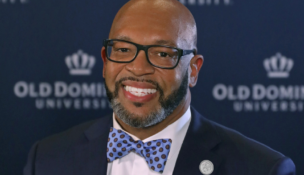
In July, it was George Mason University‘s turn. In a single month, two federal departments launched four investigations against the university, Virginia’s largest and most diverse by enrollment. The probes included allegations that President Gregory Washington had racially discriminated against white job candidates in an effort “packaged as ‘antiracism,’” said Craig Trainor, acting assistant secretary for civil rights at the U.S. Department of Education. Washington denied the accusations.
Later in the summer, the Department of Education found Mason in violation of federal civil rights law, and a GOP-authored House Judiciary Committee report released in November 2025 accused Washington of lying to Congress.
But Washington refused to step down, and the university’s board of visitors, led by then-Rector Charles “Cully” Stimson, until recently a Heritage Foundation official, did not take action to fire Washington. As of February, under a new board of visitors, mostly appointed by Democratic Gov. Abigail Spanberger, Washington still leads the university.
In November, Ryan made public a lengthy letter documenting his final months in office at U.Va., in which he alleged that then-Gov. Glenn Youngkin and some of his board appointees and attorneys hired by the board may have been the major source of pressure to resign, instead of the DOJ. The letter makes clear Ryan didn’t have the full picture back in June.
“The whole episode still feels surreal and bewildering, and I still cannot make complete sense of it,” he wrote. “I’ve also asked myself a million times if I should have done something differently.”
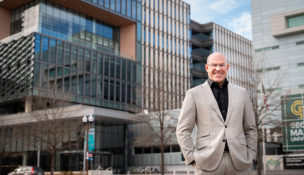
U.Va. now has a new president, former Darden School of Business Dean Scott Beardsley, who was hired by the board of visitors at the end of 2025, in defiance of a request from Spanberger to pause the hiring process, as well as calls from hundreds of faculty members.
Now, five of those board members have resigned, and Spanberger has appointed 10 new members to U.Va.’s board, in addition to 12 board members at George Mason and five at Virginia Military Institute.
While Virginia’s other university and college presidents have not encountered as much public pressure from the Trump administration, all the public institutions’ boards have voted to dissolve their DEI functions, and most schools are coming up with contingency plans for potential losses of federal funding, as well as declining foreign student enrollment.
Big gifts from philanthropists, including billionaire MacKenzie Scott’s $50 million donations in late 2025 to Norfolk State and Virginia State universities, have made headlines, but they’re a drop in the bucket compared to the historic federal funding provided for university research and federally backed student loans.
Federal money, Virginia Tech president Tim Sands said in April 2025, represents $550 million of the Blacksburg university’s annual $2.3 billion operating budget, a fairly standard share for a large public research university.
Previously, the federal government rarely threatened to pull funding, but under the new administration, it “has been a consistent threat,” Sands said. “They rarely use that hammer. The difference now is that you can see the federal government is swinging that hammer rather wildly and then asking questions later. It is just hard to know where that is going to end up.”
g