Sign In
Upcoming Event
 Free Newsletter

Virginia health systems face $26B in federal cuts
One Big Beautiful Bill Act cuts Medicaid spending by $911B over decade
Beth JoJack //March 1, 2026//
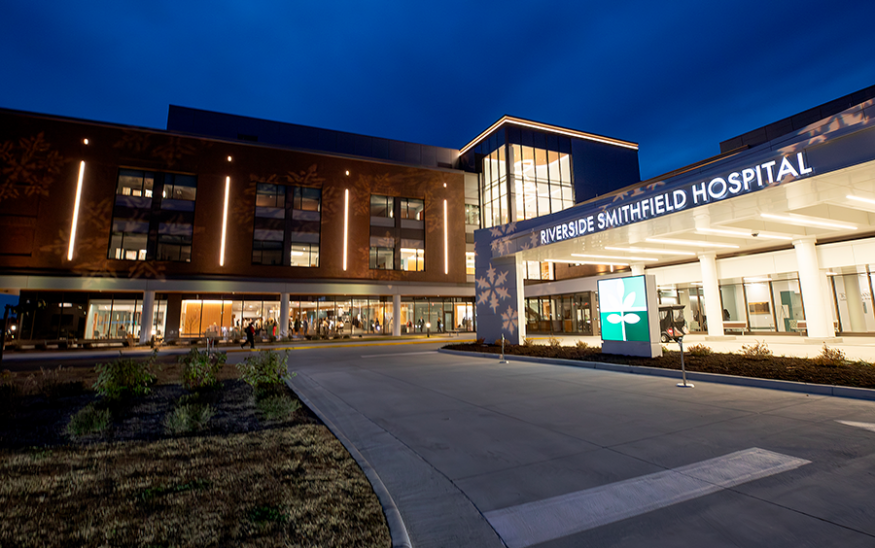
In January, Riverside Smithfield Hospital opened in Isle of Wight County. Photo courtesy Riverside Health
In January, Riverside Smithfield Hospital opened in Isle of Wight County. Photo courtesy Riverside Health
Virginia health systems face $26B in federal cuts
One Big Beautiful Bill Act cuts Medicaid spending by $911B over decade
Beth JoJack //March 1, 2026//



Summary:
- The 2025 federal One Big Beautiful Bill Act cuts Medicaid spending by $911 billion over a decade.
- Virginia’s health care facilities may lose $26 billion in federal payments over 14 years due to the bill.
- Several Virginia hospitals have opened or expanded despite federal Medicaid funding cuts.
The budget reconciliation bill referred to as the One Big Beautiful Bill Act, which President Donald Trump signed into law July 4, 2025, is expected to cut federal Medicaid spending by $911 billion over a decade.
That’s bound to impact the commonwealth’s health systems and hospitals, but by how much?
Last July, Virginia’s Department of Medical Assistance Services estimated that health care facilities in the state will likely lose $26 billion in federal payments over the next 14 years because of the bill. Then-Gov. Glenn Youngkin later dismissed that number, stating it wasn’t part of an official analysis, but health system officials are still voicing concern.
What isn’t in dispute is that by September 2025, Virginia had its first Big, Beautiful Bill casualties. Augusta Medical Group, part of Augusta Health, announced plans to close an urgent care clinic and two primary care clinics in Augusta and Rockbridge counties, specifically citing the federal law as the cause.
Medicaid cuts could shut down more than doctor’s offices. Last June, four Democratic U.S. senators warned in a letter to the president and Republican congressional leaders that 338 rural hospitals, including six in Virginia, would be at risk of closing if the bill passed.
Ultimately, it passed the House in a 218-214 vote, with two Republicans joining Democrats in rejecting the bill. In the Senate, three Republicans voted no with Democrats, but it passed with a tie-breaking vote by Vice President JD Vance.
Slightly blunting the blow, at the end of 2025, Virginia received a $189.5 million grant from the federal Rural Health Transformation Program “to strengthen and modernize health care in rural communities.” The amount was far less, however, than the $1 billion Youngkin requested last November.
As Virginia health care executives weighed the impact of federal cuts in recent months, they’ve also taken time to celebrate openings of new facilities and to plan additional construction.
Riverside Smithfield Hospital opened Jan. 6, providing residents of Isle of Wight County and surrounding communities access to a 24/7 full-service emergency department. The hospital, along with a new medical office building that opened last September, cost $300 million.
Also in January, Stuart Community Hospital in Patrick County reopened after closing in 2017. BradenHealth, which has reopened several shuttered rural hospitals in the Southeast, invested about $15 million to renovate the facility, according to news reports.
Meanwhile, in June 2025, Carilion Clinic opened the $500 million Crystal Spring Tower at Carilion Roanoke Memorial Hospital. The 12-story, 500,000-square-foot facility houses an expanded emergency department, a Level 1 trauma center and a cardiovascular institute.
In Suffolk, Bon Secours opened its $85 million, 100,000-square-foot Harbour View Medical Center in May. The new medical center features 18 private inpatient rooms and four operating rooms.
There are other projects now under construction, including a $370 million expansion of Bon Secours St. Mary’s Hospital in Henrico County, where an eight-story tower for critical care services is being built. In September, Centra Lynchburg General Hospital held a groundbreaking ceremony for a six-story tower set to be finished in 2028. It’s part of Centra Health’s $600 million in capital investments planned.
Other expansions are in the planning stages, including VCU Health’s proposed hospital tower in downtown Richmond, a 16-story facility that will one day have 576 beds, the health system announced last summer. The new tower would likely be ready for patients in 2032 or 2033, a request for proposals said. Carilion Clinic announced in October that it had raised more than $105.6 million in its fundraising campaign for the Carilion Taubman Cancer Center in Roanoke. Construction on the seven-story, 260,000-square-foot center is expected to be completed in 2028, and the health system is now working to raise $50 million to bring proton therapy to the center.
The health system’s fundraising success “demonstrates our community’s shared commitment to ensuring the most advanced care is available right here,” Carilion Clinic president and CEO Steve Arner said in a statement.
e