Sign In
Upcoming Event
 Free Newsletter

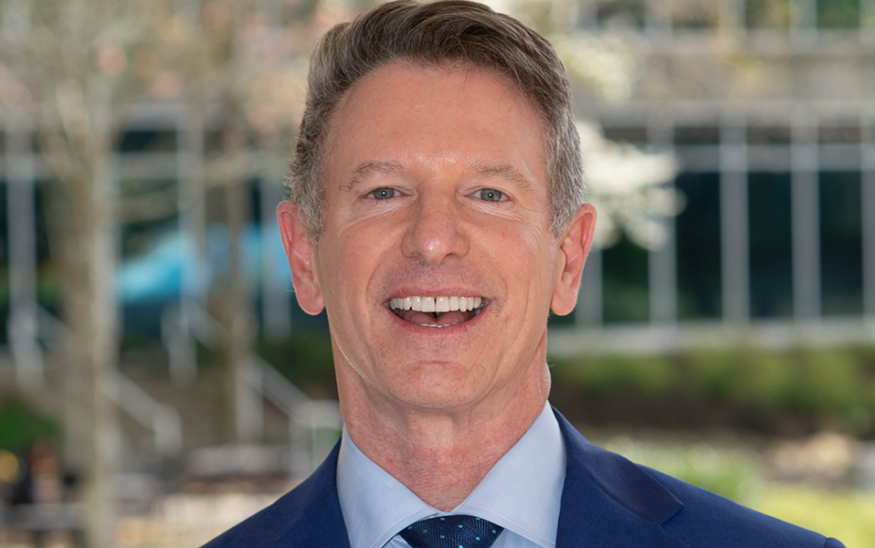
Virginia Community College System Chancellor David Doré says labs and other workforce training needs cost more than traditional classrooms. Photo courtesy Virginia Community College System
Virginia Community College System Chancellor David Doré says labs and other workforce training needs cost more than traditional classrooms. Photo courtesy Virginia Community College System
Virginia community colleges boost workforce development focus
Chris Suarez //March 1, 2026//



Summary:
- Virginia allocated $698.6 million to its 23-college community college system in 2024, a 10% increase from 2023.
- FastForward program offers 8-12 week courses in high-demand industries, with graduates earning an average $10,800 more within a year.
- Governor Abigail Spanberger aims to expand enrollment and funding for FastForward and G3 programs to address workforce needs and social mobility.
Gov. Abigail Spanberger says it’s time for Virginia to stop lagging behind its neighbors on community college spending.
As past gubernatorial administrations have emphasized career and technical education along with economic development throughout the commonwealth, the new governor says she wants to continue the trend by investing more in the Virginia Community College System.
“It means aligning our community colleges with employer needs — and recognizing that right now, Virginia invests less per community college student than our neighbors in West Virginia and North Carolina,” Spanberger told state legislators a few days after her inauguration in January. “We can do better.”
In 2024, the state allocated $698.6 million to the 23-college system, a 10% increase from the previous year, after seven years of minimal changes in funding. According to the State Higher Education Executive Officers Association, Virginia spent an average of $7,848 per community college student in 2024, about 72% of the national average and below North Carolina’s $9,530 average and West Virginia’s $9,852. The state’s spending on two-year college students also lags behind its $10,677 average spent on four-year students.
In her State of the Commonwealth speech, Spanberger said there are opportunities to strengthen the state’s G3 and FastForward programs, two initiatives started in the last decade with the goal of subsidizing community college tuition for disadvantaged students and offering rapid training for jobs in high-demand industries.
The governor’s office did not elaborate on its exact plans for the current budget, but VCCS‘s strategic plan adopted in 2024 aims to seek additional funding for FastForward, increase its annual enrollment by 20% and have 50% more graduates “achieve upward mobility” by 2030.
Other goals in the Accelerate Opportunity plan include adding 8,000 more online students and awarding 12,500 post-secondary credentials for high school students who are dual enrolled, but shifting population demographics and limited funding to meet expected demand for FastForward loom over the new administration.
Researchers at the Joint Legislative Audit and Review Commission determined last fall that FastForward will be underfunded this spring, even as appropriations in the state budget have grown from $5 million in the 2017 fiscal year to $24 million.
VCCS Chancellor David Doré says he’s hopeful that the governor will follow through on her policy proposals.
“The needs of Virginia’s students and employers don’t change with elections,” he says. “Our focus remains on being responsive, innovative and really essential to Virginia’s future. And so I’m looking forward to partnering with Gov. Spanberger’s team to really make that happen.”
Meeting employer demand
Virginia’s FastForward program allows participants to complete eight-to-12-week courses in high-demand industries, creating a pathway for students to change careers or adopt a new trade.
Citing data from the Virginia Employment Commission, VCCS says there are 2.6 million “middle-skilled” jobs that require some professional training but are open to people without a four-year college degree. According to last fall’s JLARC study, students who finish the program and obtain credentials start earning an additional $10,800 within a year.
Doré says the program appeals to people who don’t fit the mold of a typical community college student. The average age of the program participant is 34 years old.
“We have a very intentional focus on what I like to call ‘The New Majority’ of learners. So, we’re not just serving the K-12 graduates and those dual-enrollment [high school] students, but also these adult learners in today’s competitive economy needing to upskill and reskill,” he says. “So, there’s more focus on increasing the adult learner population across our 23 colleges.”
At Tidewater Community College, the state’s second largest community college, graduates of the Skilled Trades Academy have often entered careers in the shipbuilding and welding trades that power the region’s maritime and defense sectors.
TCC President Marcia Conston says the college’s trade program launched around the same time as FastForward. She says it’s expanded from a 20,000-square-foot facility to a training center in Portsmouth spanning 32,000 square feet.
Enrollment in the program has grown tremendously, she says, with about 2,000 students enrolled this past fall. “The demand is critical,” she says. “We’re in the business of responding to providing the workforce training solution for the Hampton Roads area.”
Conston says the growth of FastForward is meeting employer demands for more skilled workers, and it is a major discussion topic for the General Assembly.
“We are seeing that the demand for training has outgrown the funding,” she says. “That’s why you will hear so much focus on FastForward dollars, because these are the funds that we use to provide training for the students.”
Further up the totem pole
The FastForward program alone may not be enough to create the upward social mobility that’s a goal for VCCS.
While the JLARC study says the program can create more wealth for graduates, it still isn’t enough for households with dependents, which make up about half of the people enrolled in FastForward.
The median wage for a graduate after 12 months is $41,000. While that’s above the living wage threshold for a single adult in Virginia, it’s still about $7,000 short of the baseline for a home with one adult and one child, according to JLARC.
Doré says FastForward graduates can continue professional education studies to earn more. And there are longer term professional education and conventional two-year degree programs that can link students to a stable, well-paid career.
Virginia Western Community College, based in Roanoke, has focused on nursing to meet regional demands that mirror national trends. Last summer, The New York Times reported that U.S. Census data showed that health care had accounted for about a third of all labor growth in 2024-25.
In September 2025, RegisteredNursing.org ranked Virginia Western’s nursing associate’s degree program the third best nursing program in the state, up from seventh in 2024. The school noted that students have a 100% pass rate of the National Council Licensure Examination, a test required of nursing grads.
The professional nursing organization says the average wage for the profession in the Roanoke Valley region is $29.16 per hour, which equals about $60,000 annually for a 40-hour-a-week job.
Jamie Snead, Virginia Western’s director of communications, says further boosting funding for the state’s G3 program, which provides tuition assistance for students considering a career in six in-demand fields, can help students start a new career trajectory with a lighter debt burden.
The program generally offers support for households that make $120,000 or less a year. The money can be applied for degrees associated with six industries — nursing, education, hospitality and culinary arts and information technology. VCCS promotes the program by telling prospective students that, along with other financial aid, they can graduate without paying a dollar for tuition.
“Those G3 funds have helped not only increase enrollment but also decrease the amount of debt” that students graduate with, Snead says.
Money crunch
Maintaining or growing enrollment in Virginia’s community colleges is expected to be a challenge throughout the Spanberger administration and beyond.
Over the past decade, university and college systems have been preparing for a likely decline in enrollment as the number of 18-year-olds will fall annually through 2031-32, according to the U.S. Department of Education.
Doré says the demographic decline will challenge the community college system, but that VCCS will remain important for students who need remedial support or a more affordable pathway to obtain a four-year degree. And while there has been more investment from the state in recent years, a new law allowing high schools students to take dual enrollment classes for free has sacrificed local tuition revenue for colleges.
The JLARC study found that expanding access to community colleges has helped increase enrollment after significant declines that followed the COVID-19 pandemic in 2020. After growing from 37,400 students in 2015-16 to 58,100 last year, dual-enrollment students now make up one quarter of all students in the VCCS system.
The state’s 2025 review of the community college system found that students taking courses asynchronously has increased significantly since the shift to online learning during the pandemic. While remote learning offers more flexibility, students taking classes on their own schedule are passing classes at a slightly lower rate, JLARC noted.
Out of eight recommendations in the report, several advise VCCS to give more support to students who fail or withdraw from courses or who are in the process of earning credits through dual enrollment.
At Virginia Peninsula Community College, enrollment is still lower than it was before 2020, but it’s been steadily increasing each year since fall 2021. JJ Bonavia, director of analytics and planning for the college system, which serves students from James City County to Hampton, says it’s seeing many students transferring from other colleges or returning after a break.
“Most of our growth seems to be coming from the retention of existing students,” he says. “We’ve also partnered with a third- party, ReUp, to re-engage with students who had stopped attending for various reasons, and work with them to re-enroll at the college.”
Similar to the G3 program, dual enrollment can help graduates save money on their secondary education, but the cost to offer more professional and technical education programs has put pressure on community colleges, as lab space and recruitment costs for skilled trade educators are far higher than conventional classroom instruction, Doré says.
“There’s a lot of things that are really pressuring us in terms of those costs. Moving forward, we’ve got to invest if we want to be aligned in these really high-demand sectors,” he says. “We’ve got to invest in Virginia’s community colleges, and we’re going to need more investment from the commonwealth.”
!