Sign In
Upcoming Event
 Free Newsletter

With Assembly passage, Virginia inches closer to cannabis retail sales
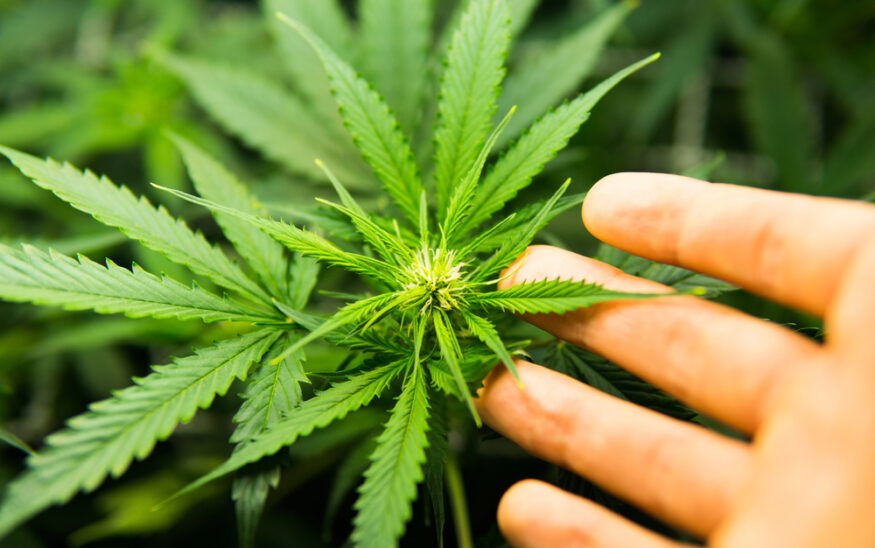
Photo: Depositphotos
Photo: Depositphotos
With Assembly passage, Virginia inches closer to cannabis retail sales



Summary:
- Virginia Senate and House passed a bill to regulate adult-use cannabis retail sales, sending it to Gov. Abigail Spanberger.
- The bill includes a 6% state cannabis tax and allows localities to impose additional taxes between 1-3.5%.
- 40% of tax revenue will fund early childhood education, and 30% will support the Cannabis Equity Reinvestment Fund.
Legislators have sent a bill to Gov. Abigail Spanberger that would create a cannabis retail market in Virginia.
On March 13, the state Senate voted 21-18, along party lines, to advance a conference committee report that reconciles differences between Senate and House of Delegates bills to regulate retail sales of cannabis to adult customers. The next day — the final one of the 2026 session —the House of Delegates passed along a similarly partisan 64-32 vote to send it to Spanberger’s desk for her signature.
The main difference between the versions was the start-up date for retail cannabis. The House version would have started it this July, while the Senate wanted it started on Jan. 1, 2027.
In a statement, Sen. Lashrecse Aird, D-Henrico County, said the bill will “establish a safe, regulated cannabis marketplace” similar to what has already been set up in more than two dozen other states.
“This legislation is about building a responsible and inclusive cannabis market that works for Virginia communities,” Aird, vice chair of the Joint Commission toOversee the Transition of the Commonwealth into a Cannabis Retail Market, said. “By creating strong pathways for impact licensees and small businesses, we are working to ensure that those who bore the brunt of prohibition have real opportunities to participate in this emerging industry. “At the same time, bringing this market into a regulated framework allows us to address the illicit market, protect consumers, increase small business opportunities, and support early childhood education and reinvestment in communities across the commonwealth.”
Aird sponsored the Senate version, while the House version was patroned by Del. Paul Krizek, D-Fairfax County, the chair of the joint commission.
“This legislation brings that market into the light with clear rules, consumerprotections, and enforcement tools that allow us to target the illicit market while ensuring products sold in Virginia are tested and safe,” Krizek said in the shared statement with Aird. “The goal is simple: protect public safety, create a well-regulated marketplace and finally move beyond the chaos of the unregulated system we have today.”
What does the legislation do?
In summary, the bill sets up the retail market as follows:
- It sets up a 6% state cannabis tax and allows localities to adopt a 1-3.5% local tax on top of existing retail sales and use taxes.
- Forty percent of the cannabis tax revenues will go to early childhood care and education, and 30 percent will support the Cannabis Equity Reinvestment Fund.
- It props up “entrepreneurs historically and disproportionately affected by marijuana prohibition” to participate in the legal market “through impact license opportunities and financing support,” Aird and Krizek said in the statement.
- It consolidates oversight of hemp sales under the Virginia Cannabis Control Authority to ensure regulation, safety standards and consistent testing.
Five years after marijuana decriminalization
Virginia decriminalized possession of small amounts of marijuana in 2021 but held off on retail-sales regulation. In their statement, Aird and Krizek said the state was “left in a gray area in which illicit sales quickly filled the gap.”
The commission was established to study the best practices for setting up the retail market. After several years, legislation was proposed for the 2026 legislative session. Each chamber passed their own versions of the legislation that differed on aspects of that creation, most importantly the start-up date.
When both sides refused to budge on their versions, the bill went into a conference committee led by Aird on the Senate side and Krizek on the House side.
“The final legislation reflects a balanced, negotiated compromise between the House and Senate and incorporates significant feedback from regulators, public health experts, small business advocates, industry leaders and community stakeholders, all with the shared goal of moving Virginia forward,” Aird and Krizek said in their statement.
Spanberger has publicly said she will sign the legislation when it reaches her desk.
Reporting by Bill Atkinson, Petersburg Progress-Index