In January, Virginia Attorney General Jason Miyares joined a group of 24 other state attorneys general in challenging a U.S. Department of Labor rule allowing fiduciaries to consider environmental, social and corporate governance (ESG) criteria such as climate change in making investment decisions for retirement funds. The AGs argued that ESG practices work against investment companies’ fiduciary duties to maximize profits for their clients.
Of the 25 plaintiff states, 22 are solidly red states; all but two have Republican governors.
In March, congressional Republicans, with the help of two moderate Senate Democrats, passed legislation to undo the Labor ESG investing rule. President Joe Biden issued the first veto of his presidency on March 20, preserving the ESG rule for now.
The attempts to overturn the Labor rule are part of ongoing GOP efforts to oppose corporate use of ESG standards in making financial decisions like loans and investments. This comes despite widespread ESG support from big business and arguments from some financial experts that anti-ESG stances could hurt state retirement funds.
In Republican-controlled Texas, for example, the legislature has prohibited most of its state agencies and local governments from entering into contracts with firms that “boycott” energy companies using fossil fuels. This led to Texas state worker pension funds pulling investments from big mainstream companies like BlackRock.
Eyeing a potential presidential run, Virginia’s Republican governor, Glenn Youngkin, has fallen into line and spoken out against ESG, just as he’s taken predictable stances banning teaching “critical race theory” in state public schools (which, arguably, wasn’t happening anyway). Additionally, he mandated that public school students play on sports teams and use locker rooms matching their assigned-at-birth genders.
In January, the governor took credit for blocking a $3.5 billion Ford Motor Co. electric vehicle battery plant from bringing 2,500 jobs to Pittsylvania County over concerns the factory would be, in Youngkin’s words, “a front for the Chinese Communist Party.”
He also supported state legislation to ban abortions after 15 weeks, although that effort was doomed to fail in the Democratic-held state Senate.
Politicians often propose such “brochure bills” that have a better chance of appearing on a campaign flyer than making it through a committee and being passed into law. They go through the motions to satisfy their party’s base and donors. Think of it as a process of checking off boxes for electoral reasons, not for governing or legislating.
Youngkin’s checked most of these boxes lightly and only once, just enough for a campaign ad. This is political gamesmanship that values talking points over policy and substance.
However, it’s doubtful whether this gambit will pay off for Youngkin, who lagged far behind former President Donald Trump and Florida Gov. Ron DeSantis in a March poll by Roanoke College of Virginia Republicans’ choices for the 2024 GOP presidential nominee.
Meanwhile, the business community, once almost entirely aligned with Republican positions, has shown little interest in wading into such culture-war conflicts. The U.S. Chamber of Commerce, which spent $81 million on lobbying last year, has in recent years begun endorsing some Democrats. It’s also supported ESG and immigration labor reform and opposed the Trump administration’s trade war with China. Because of these evolving stances, House GOP leaders, including Speaker Kevin McCarthy, have refused to take meetings with the chamber and considered launching a House investigation into the chamber over its endorsements of ESG criteria.
Big corporations, which largely comprise the chamber’s membership, have gradually trended toward more progressive positions on social issues, including gender-based rights, diversity, equity and inclusion, and ESG policies. Some Republicans rail against this as “corporate wokeness” — whatever that means.
It’s time to get politicians out of our bedrooms, bathrooms, doctor’s offices and classrooms. And let’s also keep them out of our boardrooms and financial investment decisions. Fiduciary responsibility means considering all risks and opportunities, including those related to ESG.
The news comes as Amazon plans to open HQ2’s first phase, Metropolitan Park,
in June, and as the Fortune Global 500 tech company laid off a record 18,000 workers amid concerns over slowing revenues and a potential recession.
Amazon anticipated the groundbreaking for its second phase, PenPlace, to occur this year. While the e-tailer has not offered an updated timeline for construction on phase two, Amazon has begun some pre-construction work, including applying for permits, and expects to continue such efforts this year.
“We’ve already hired more than 8,000 employees in HQ2 and we’re excited to welcome them to our new Met Park campus this June,” Amazon Vice President of Global Real Estate and Facilities John Schoettler said in a statement March 3. “We’re always evaluating space plans to make sure they fit our business needs and to create a great experience for employees, and since Met Park will have space to accommodate more than 14,000 employees, we’ve decided to shift the groundbreaking of PenPlace out a bit.”
Amazon originally announced that HQ2 would create 25,000 jobs by 2030, and the company says its hiring goals have not changed.
Amazon rapidly grew its global workforce during the pandemic, ending 2021 with more than 1.6 million employees, up from 798,000 in the fourth quarter of 2019, according to CNBC. The company began layoffs in November 2022 and paused corporate hiring. Citing the need to reevaluate designs for hybrid work environments, Amazon also paused construction in July 2022 on six office buildings in Bellevue, Washington, and Nashville, Tennessee, according to Reuters.
The company has not yet decided whether it will modify its PenPlace plans, which include 3.3 million square feet of office and retail space spread across three, 22-story buildings, as well as the distinctive spiral Helix building.
Arlington County Board Chair Christian Dorsey says the delay is not a cause for concern.
“As we all negotiate the post-pandemic reality, everyone from every sector is thinking about … long-term plans in a new light, and sadly, we don’t all have all of the answers,” he says, “so it’s not incredibly surprising that Amazon is taking a pause before beginning the second phase of a project for which they haven’t fully opened the first phase.”
“Over the last many years, we have [seen] proven success at the park that is very visible,” boasts Dale Wagoner, Henry County’s administrator.
In January, Gov. Glenn Youngkin announced Commonwealth Crossing would receive about $22 million from the Virginia Business Ready Sites Program, an effort to grow the state’s inventory of project-ready industrial sites larger than 100 acres. The award was the second largest among the 21 funded projects, which received a total of $90 million.
Officials plan to use the money to grade 93 acres sitting next to 57 already graded acres in the county-owned industrial park. During the past two years, the lot has had 14 inquiries and four site visits from prospects, Heath says.
Declining to reveal what types of businesses expressed interest in the park, he notes that 71% of those prospective businesses required at least 70 acres, and 50% required more than 100 acres. “We fall short on both, which points to our great need to grade the balance,” Heath explains.
About 276 acres of the industrial park’s 740 acres will be graded once work is complete. When finished, it will be the only site in Virginia offering more than 100 developable acres with rail access and all utilities in place, according to Wagoner.
“As it will be the only pad-ready site of its size in Norfolk Southern’s mid-Atlantic territory, Commonwealth Crossing Business Centre is a unique asset for Virginia” and the Southeast, says Virginia Economic Development Partnership President and CEO Jason El Koubi.
The idea for the industrial park was born around 2006, with it being seen as a needed booster for the Martinsville region’s flagging economy, which suffered after area textile manufacturing jobs were eliminated in the 1990s and early 2000s.
The park’s success took a while. It came as “a great relief,” Heath says, when Press Glass signed on as the park’s first tenant in 2018, followed by Crown Holdings in 2021.
“Successful economic development is a long game,” he adds. “Very little is accomplished quickly.”
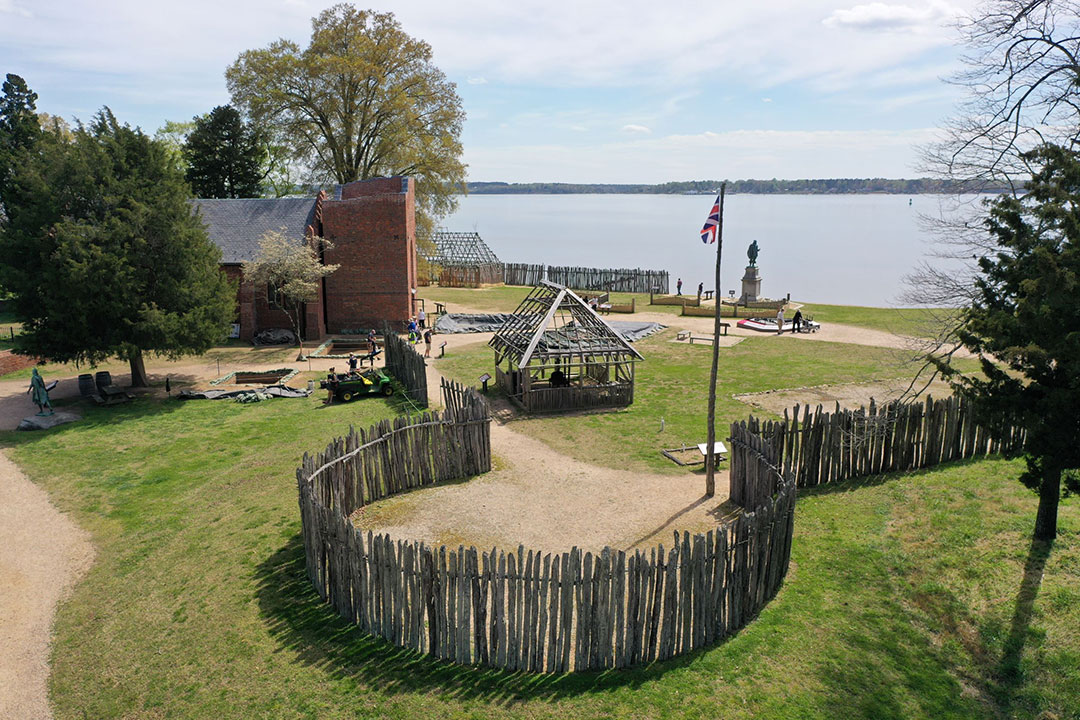
Williamsburg, Jamestown and Yorktown are all significant parts of the nation’s foundation, and historic tourism drove the region’s economy during the 20th century. But Colonial Williamsburg hasn’t been enough to keep
big crowds coming to the area consistently in the 21st century, even before the pandemic.
Visitation dropped from 960,000 in 1999 to 534,000 in 2019, officials reported, although after running at a $4.6 million deficit in 2017, The Colonial Williamsburg Foundation’s net income improved to $87.3 million in 2020. One reason for the decline in visitor numbers is that fewer people today visit historic sites compared with earlier generations, the Colonial Williamsburg Foundation’s former president and CEO, Mitchell B. Reiss, said in 2019 upon his retirement. He also said that Colonial Williamsburg in particular needed to update its marketing efforts to meet today’s digital culture.
“There was a time when we as a community had a notion that Colonial Williamsburg would always take care of us, that Busch Gardens would always be enough, but that’s just not the case,” Williamsburg Mayor Doug Pons says. “When I was in the hotel business, I realized that Williamsburg was seeing declining visitation. It was no secret.”
So, in 2016, Pons decided to convert his Quarterpath Inn into multifamily affordable housing.
Over time, as visitation to Williamsburg and other historic attractions (including Jamestown and Yorktown) declined, it became apparent to civic leaders that the so-called Historic Triangle needed another large investment in tourism to maintain the region’s quality of life and to keep its economy humming.
And unlike John D. Rockefeller’s rescue of Colonial Williamsburg in the 1930s, which extended to $79 million in family support through the 1970s, “there wasn’t going to be another billionaire showing up to make that investment,” Pons says.
Using teamwork
One way the Historic Triangle region’s three localities — York and James City counties and Williamsburg — decided to invest in the area’s economic development was an indoor sports venue, which they hope also will give a boost to Busch Gardens, Colonial Williamsburg and other attractions.
In March 2022, officials formed the Historic Triangle Recreational Facilities Authority to spearhead the development of a 160,000-square-foot indoor sports complex with 12 basketball courts that can be converted into volleyball and pickleball courts. It represents the largest intergovernmental project ever undertaken by the three localities. One estimate projected the cost could be $45 million or more, but many of the final details are in flux.
In September 2022, the authority approved an interim agreement with MEB General Contractors of Chesapeake for $2.3 million to initiate the design of the core sports center complex, about 35% of the project, according to York County documents. The next decision, expected to come in the next few months, will be to choose a construction firm.
Officials have identified a preferred site for the sports complex. It would be located on underused property next to the Colonial Williamsburg Regional Visitor Center, a site that may also allow room for an adjoining performing arts center or amphitheater.
“It’s going to happen,” Pons says. “The funds to service the debt are already identified, it’s already coming in. And, there’s money in the bank to begin.”
While Pons says the visitor center will remain a hub for tourism activity, the sports complex will add a new dimension to tourism in the city and adjoining counties by attracting youth athletics and other events from around the country.
Meanwhile, the Colonial Williamsburg Foundation is working closely with the Historic Triangle Recreational Facilities Authority to determine the best uses for the visitor center campus, but emphasizes that the proposed sports complex will have no impact on the visitor center itself.
James City County’s economic development director, Christopher Johnson, notes that all three localities must approve funding for the indoor sports complex this year. James City’s tax revenues have been stable, offering the county some room to invest in the sports complex, Johnson says.
Although Williamsburg will likely benefit most directly from the venue if it’s sited at Colonial Williamsburg, Johnson says that in James City County, “one of our main revenue sources is hospitality and tourism, [and] the complex [also] provides additional space for activities during the week for James City citizens.”
Additionally, the county has benefited from its busy manufacturing sector, including Anheuser-Busch Inc., which saw an increase in demand during the pandemic. Also, the county is seeing more traffic from the Port of Virginia and hopes to have a shovel-ready industrial site prepared at Hazelwood Farms Enterprise Center by next spring.
Owned by SeaWorld Entertainment Inc., the Busch Gardens Williamsburg and Water Country USA theme parks are the Historic Triangle’s largest tourism draws. Photo courtesy Busch Gardens Williamsburg
New and old attractions
In addition to planning the sports complex, the three localities have also collaborated on the Edge District, a restaurant and entertainment-driven locale at the shared borders of York and James City counties and Williamsburg. Established in 2019, the Edge District offers high-end food and boutique shopping, and the resulting tax revenue from lodging and meals taxes have led to a joint fund to help finance the sports complex.
In the past two years, further cementing the spirit of regional cooperation, Williamsburg has begun including the area’s two largest employers, Colonial Williamsburg and William & Mary, in its annual State of the City events, inviting the chief executives from each to deliver addresses covering highlights from the year and future plans.
During the 2022 State of the City event, William & Mary President Katherine Rowe said that the 250th anniversary of Williamsburg in 2026 will be an important opportunity to remind the nation of the city’s role in U.S. history. “We’re going to make the case for Williamsburg’s significance as the best place in the country to understand our nation’s complex history,” she said.
Unsurprisingly, Colonial Williamsburg is also geared up for the anniversary.
“Williamsburg was host to an astonishing number of events leading up to and including 1776 that contributed to America’s founding,” Colonial Williamsburg Foundation President and CEO Cliff Fleet said during his State of the City address. “Today, this history positions our region to lead the commemoration effort on behalf of our nation. The impact of this moment will rest on the preparations we make today.”
It’s also a time to focus on the largely overlooked roles of Black and Indigenous people in our history, to provide “a fuller account of the founding of the United States,” Fleet said.
In February, the 273-year-old Bray School, believed to be the oldest surviving building in America dedicated to the education of Black children, was moved from William & Mary’s campus to Colonial Williamsburg, Fleet said, where it will be fully restored by November 2024. University and Colonial Williamsburg staffers are working with the descendants of students who attended the school during the era of slavery, “so that everyone can see themselves in America’s story.”
The First Baptist Church, one of the nation’s oldest Black churches, was founded in 1776, and Colonial Williamsburg Foundation is working with the congregation to uncover the church’s original site on Nassau Street, with a goal of reconstructing the building by its 250th anniversary.
Meanwhile, Rowe noted that this year will mark the 300th anniversary of the Brafferton Indian School, which educated Indigenous students over several decades and sits on W&M’s campus near the Wren Building.
“Like the Bray School, the Brafferton tricentennial offers an opportunity to provide a fuller account of the founding of the United States,” Rowe said in her State of the City remarks.
Colonial Williamsburg also has opened an interpretive Native American camp that explores regional Indigenous peoples’ relationship with the Colony of Virginia. One of Colonial Williamsburg’s major events this year will be the groundbreaking for the Colin G. and Nancy N. Campbell Archaeology Center, which will become the hub of all archaeological endeavors in the former colonial capital.
York County is looking forward to tourism income that will come from Princess Cruises making Yorktown a port of call beginning in spring 2024, county Supervisor Sheila Noll says. Photo by Mark Rhodes
Into the present
Busch Gardens Williamsburg also has ramped up its act, following the pandemic. Since 2022, the theme park has expanded its operating months to include January through March, making it a year-round attraction.
That’s been good news for the region’s hospitality industry, says Ron Kirkland, executive director of the Williamsburg Hotel & Motel Association.
The region’s hotel occupancy rate for 2022 was 50.4%, up from 45.2% in 2021 and better than 2019. Also, the average daily room rate was $148.76, “which was [an] all-time best,” Kirkland notes, compared with $125.51 in 2019.
Virginia Restaurant, Lodging and Travel Association President Eric Terry has seen some good growth in the region and believes the Historic Triangle’s larger tourism marketing budget has significantly aided its recovery.
In 2018, the General Assembly passed a special Historic Triangle tourism tax, an added 1% sales tax that helped create Visit Williamsburg, a marketing organization with an annual budget of about $15 million, Pons says. “It really changed the landscape in how we are able to promote ourselves in a broader reach. Before that, we had budgets of $2 [million] to$3 million.”
In neighboring York County, tourism is also a big draw, and Supervisor Sheila Noll says that she was energized by a February announcement that Princess Cruises will be making Yorktown a port of call in late spring 2024, opening the door to potentially thousands of new visitors coming to the region and boosting historic tourism.
The cruise ships, which can carry between 2,000 and 3,000 guests each, will land at Yorktown on the York River five times next year, and the Virginia state Senate’s budget proposal this year includes $7.5 million to build a permanent pier to accommodate the cruise ships. Currently, the river has just floating docks.
“History is very, very important to people who visit here and to people who live here,” Noll says. “We have the benefit of the past.”
Historic Triangle at a glance
James City County, York County and the city of Williamsburg make up the Historic Triangle. Located between Hampton Roads and Richmond, the area includes historical attractions, the Busch Gardens Williamsburg theme park and William & Mary, the nation’s second oldest institution of higher learning, chartered in 1693. Joint Base Langley-Eustis is a U.S. military installation formed by the 2010 merger of Langley Air Force Base and the U.S. Army’s Fort Eustis. In use since 1917, Langley is the world’s oldest continuously active Air Force base.
Population
James City County: 76,484
Williamsburg: 15,590
York County: 68,890
Top employers
William & Mary
Colonial Williamsburg Foundation
Sentara Healthcare
York County
Walmart Inc.
Williamsburg-James City County School Board
SeaWorld Entertainment Inc.
Major attractions
The American Revolution Museum at Yorktown tells the story of the nation’s fight for independence. Yorktown Battlefield, the site of the Revolutionary War’s final major clash, offers a visitor’s center and guided tours. Colonial Williamsburg, a popular living history attraction showcasing Colonial American life, features museums, lodging, restaurants and shops. Historic Jamestowne is the site of America’s first permanent English settlement and features an archaeological museum with 17th-century artifacts unearthed on site. Jamestown Settlement features a rebuilt interpretation of America’s first permanent settlement. The nearby Busch Gardens Williamsburg and Water Country USA theme parks are the region’s biggest tourism draws.
Top convention hotels
Williamsburg Lodge, Autograph Collection 323 rooms, 45,000 square feet of event space
DoubleTree by Hilton Hotel Williamsburg 295 rooms, 42,089 square feet of event space
Fort Magruder Hotel –Trademark Collection by Wyndham 303 rooms, 26,000 square feet of event space
Boutique/luxury hotels
Kingsmill Resort
Williamsburg Inn
Wedmore Place
Notable restaurants
Fat Canary,American fatcanarywilliamsburg.com
Food for Thought,American foodforthoughtrestaurant.com
Even though William & Mary is best known as a liberal arts “public Ivy,” it’s also a research university where professors are quietly producing innovative technology — and are less quietly trying to create an entrepreneurial network to support it.
Local capital isn’t as available in the Williamsburg area as it is around larger state research universities like the University of Virginia or Virginia Tech. “We don’t have much of a real startup ecosystem” in the region, acknowledges Jason McDevitt, director of W&M’s Technology Transfer Office.
But under the leadership of W&MPresident Katherine Rowe, the second-oldest institution of higher learning in the nation has been developing and encouraging entrepreneurship among students, faculty and the community through the Alan B. Miller Entrepreneurship Center, part of the university’s Raymond A. Mason School of Business. In partnership, W&M’s Tech Transfer Office has also been actively supporting the development of an ecosystem to commercialize university research in areas ranging from health technology to environmental protection and artificial intelligence.
“It’s a grab bag of different things. We’re always trying to find something that is commercially viable,” says McDevitt, whose one-person office plays a key role in bringing university research to market.
“I provide guidance and advice to students and faculty looking to develop their technologies, particularly university-owned technologies,” he says. That guidance “can range from technology development to business development to manufacturing to legal to anything else such that our technologies become useful to the public.”
That can include licensing patented and unpatented technologies “to big companies, small companies and startup companies,” McDevitt says. The university also helps form some spinoff companies based on licensing intellectual property created by students, faculty or staff.
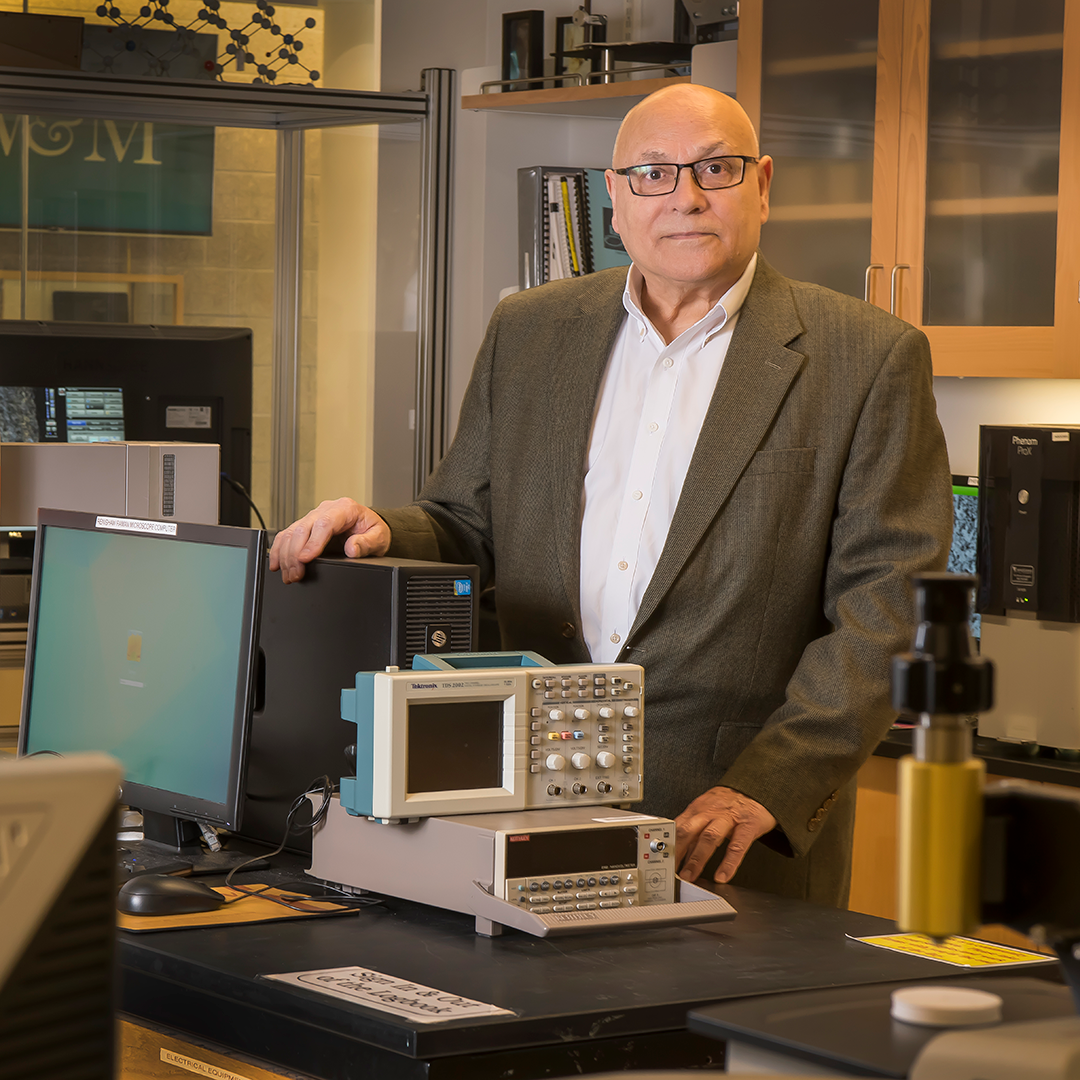
Much of the research work at W&M is hands-on, says Dennis Manos, CSX professor of physics and applied science, and the university’s vice provost for research.
“The research has a practical basis; it’s not just scratching an itch. Each day a new problem arises. Solving those problems is what researchers are all about,” Manos says. W&M faculty and students “work sometimes cheek by jowl with industry and government to solve problems of interest and importance in providing fundamentally useful things.”
W&M inventors are rewarded with 50% of the net revenues from licensing activities. That’s at the high end of the range that universities are required to offer, McDevitt says. W&M’s earnings are reinvested in supporting research at the university.
Dennis Manos, a physics professor and William & Mary’s vice provost for research, says the university’s researchers are hands-on problem solvers focused on practical applications. Photos by Mark Rhodes
Most universities with significant research funding have some type of technology transfer office, all of which have the same general goals: to manage the university’s patent portfolio, to license technology and to promote commercialization of research products and processes.
Some universities have formal entrepreneurial seed funds to help spur spinoff companies, but W&M does not. However, McDevitt says that the university’s Tech Transfer Office does make some small grants from its licensing proceeds.
Valuable stock
One source for commercialized research tools at W&M is the Virginia Institute of Marine Science (VIMS), founded as the Virginia Fisheries Laboratory in 1940 through the efforts of the then-chair of the W&M biology department. It’s now among the largest marine research and education centers in the United States, with a front-row seat to the effects of sea-level rise.
The institute’s mission includes conducting research in coastal ocean and estuary science, educating students and providing advisory services to policymakers, industry and the public. William & Mary’s School of Marine Science is also based there.
VIMS’ research has helped revitalize Virginia’s oyster industry, which had suffered from overharvesting, pollution and disease, McDevitt says. “Our disease-resistant oyster bloodstock is widely licensed to hatcheries along the East Coast, particularly in the Chesapeake Bay.”
Oyster health is a major part of Jessica Moss Small’s job as director of VIMS’ Aquaculture Genetics and Breeding Technology Center (ABC), which was started with state funding in 1997 to address the oyster problem. A portion of VIMS’ funding continues to come from the state — in 2022, it received $27 million — and “our primary focus is breeding in Virginia environments,” Small says. However, the impact of the center’s oyster innovations stretches from Maine to North Carolina, where its oyster strains are sold commercially.
When royalties are paid by the hatcheries, “the payments are made to W&M’s Tech Transfer Office directly and then 80% of that income is paid to ABC, which helps fund the unfunded portion of our operations,” Small says.
Although Small started in the field of molecular biology, she came to VIMS
almost 20 years ago to complete her Ph.D. and became the aquaculture center’s director a year and a half ago.
“I really like the applied aspect” of the research, she says, and “the resources are tremendous. We have a brand-new facility,” the 22,000-square-foot Acuff Center for Aquaculture, which houses a shellfish research hatchery. “It’s state of the art. We’re becoming the hub of shellfish research.”
Health technology
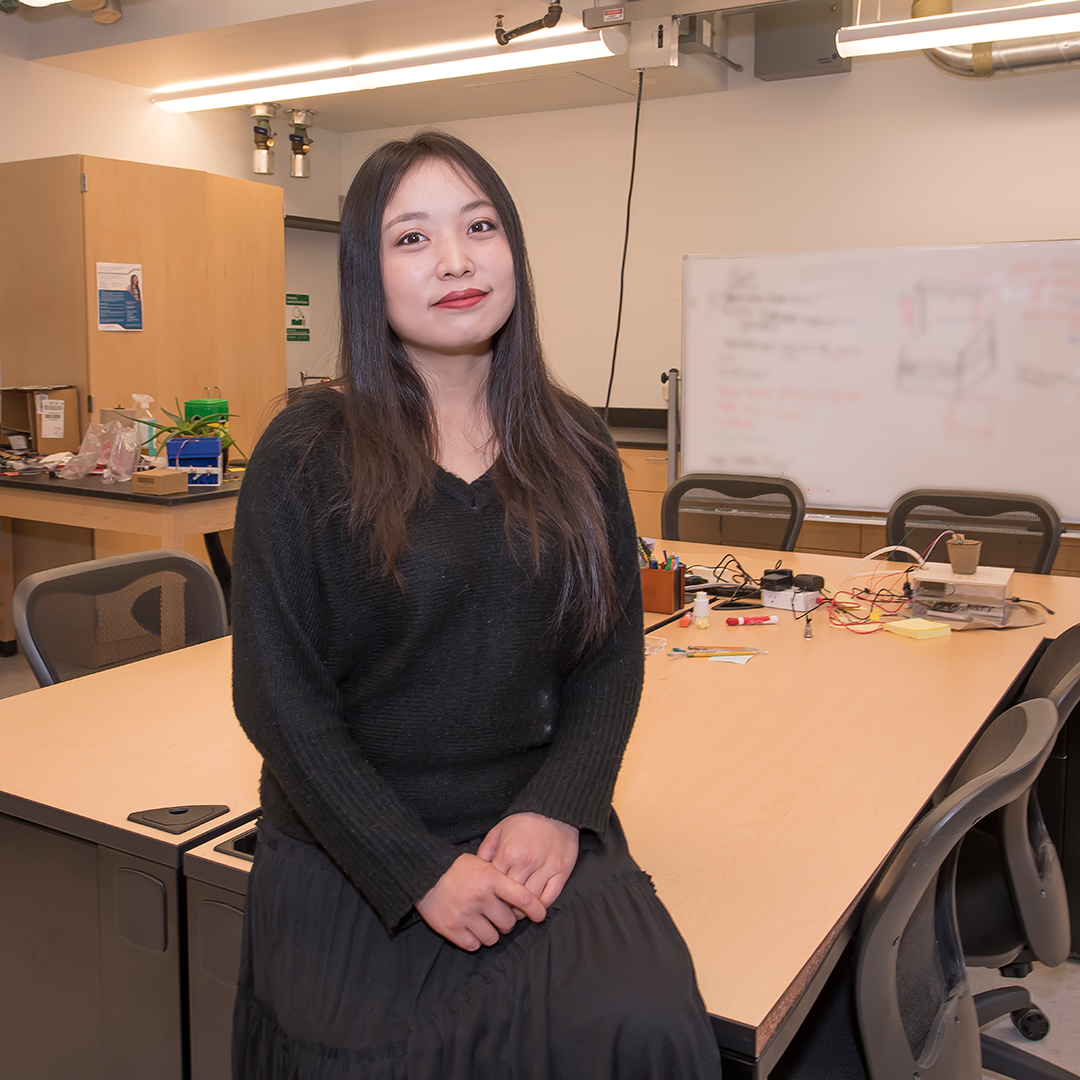
W&M physicist Ran Yang led development of the Britescope, an AI-assisted laryngoscope that helps paramedics insert breathing tubes in patients’ tracheas with greater precision. Photos by Mark Rhodes
Other commercialized research at William & Mary is directed at solving health problems by drawing on resources from a variety of departments, including computer science and physics.
One disease W&M researchers are tackling is Parkinson’s, a progressive disorder that affects the nervous system and has no cure. Nearly one million people in the U.S. and more than 10 million people worldwide have the disease, according to the Parkinson’s Foundation.
Gang Zhou, a W&M computer science professor and inventor known for his work on smart health, is leading an interdisciplinary research team that’s tackling a Parkinson’s symptom known as “freezing of gait,” a temporary inability to move while walking.
The condition “is so dangerous,” says Ph.D. candidate Ken Koltermann, a member of Zhou’s team. “The patient doesn’t know it’s going to happen. It increases the risk of falling.”
A computer science scholar, Koltermann started at W&M studying hardware security, but his interest shifted. “I was introduced to a former student who was setting up a project for Dr. Zhou,” he says. “I became interested because my grandmother had Parkinson’s. This project kind of hits home to me.”
W&M’s team is collaborating with Virginia Commonwealth University’s nursing and medical schools on the project.
“We are the computing side. VCU is the health side of things,” Koltermann says. Together, the researchers created wearable sensors to help users keep walking as normal and avoid falling.
The sensors are attached to a patient’s ankles and send data via Bluetooth technology to a smart phone, which “acts as the brain,” according to Koltermann. With that data the phone determines whether a freeze is occurring. If so, it sends tailored vibrations to ankles.
In an effort to bring the product to market, “we’ve applied for patents through William & Mary and have received at least one commerialization grant,” says Koltermann, who is waiting to hear about another grant.
Meanwhile, William & Mary is also celebrating the imminent commercial launch of Auxulin, a dietary supplement co-invented by McDevitt that’s used to reduce the duration and magnitude of hyperglycemia for people with diabetes.
The patent for the supplement is being licensed by W&M to a startup company, which will pay sales royalties to the university. Auxulin Pharmaceuticals’ founders are Dr. Gary Ritz, an Ohio-based podiatrist, and his son, W&M Mason School of Business alum Tommy Ritz, both of whom have Type 1 diabetes.
In W&M’s physics department, Ran Yang leads a team of students in the Engineering Physics and Applied Design program who have engineered a smart laryngoscope. Known as the Britescope, the device uses AI to help paramedics insert a breathing tube into a patient’s trachea with greater precision. Although the Britescope is not yet licensed for commercial use, it’s still drawing plenty of attention, including from Virginia Innovation Partnership Corp., which approved a grant for the device last fall through its Commonwealth Commercialization Fund.
Now, in addition to being a physics lecturer, Yang’s learning to become a businessperson, she says, which brings up a whole host of new questions to research: “What is the revenue model? Do I want to license it or start up and run a company? I’m working with business mentors to find a clear pathway.”
McDevitt is among those mentors. “Jason helps me to navigate looking for patents. When he sees opportunities, he brings them to me,” Yang says. “William & Mary is supportive of faculty innovation, especially if you can bring it to the real world.”
AT A GLANCE
Founded
The second oldest university in the United States, William & Mary was established in 1693 under a royal charter signed by King William III and Queen Mary II of England, Ireland and Scotland. It became a public university in 1906.
Campus
Stretching across 1,200 acres in downtown Williamsburg, William & Mary’s campus includes the Martha Wren Briggs Amphitheatre, Lake Matoaka and College Woods. Its Wren Building, built in 1700, is the oldest U.S. university building still in use.
Enrollment (fall 2022)
Undergraduate: 6,797
Graduate: 2,251
Employees
The largest employer in Williamsburg, William & Mary employs 2,845 people.
Faculty
680 full-time and 165 part-time faculty
Students
Female: 58%
Male: 42%
Minority students: 32%
International students: 6%
Virginia residents: 60%
Tuition, fees, housing and financial aid (2022-23)
In-state tuition and fees: $23,970
Out-of-state tuition and fees: $47,196
Room and board: $13,534
Average financial aid awarded to full-time, in-state freshmen seeking assistance: $27,548
(2020-21)
“It is worth remembering that not every bank failure becomes Lehman Brothers,” Barkin said. “We’re all understandably scarred by the memory of 2008, but banks have failed throughout history, many without creating a broader crisis.”
On March 22, the Fed raises interest rates by a quarter-point, or 25 basis points, pushing rates to a range of 4.75% to 5%.
“If you back off on inflation too soon, inflation comes back even stronger, which requires us [the Fed] to do even more and cause even more damage,” said Barkin, who is currently an alternate member on the Fed’s powerful policy-setting Federal Open Market Committee. “With inflation high, broad-based and persistent, I just didn’t want to take that risk.”
While the broader implications from the failures of Silicon Valley Bank and Signature Bank and resulting actions taken by the Federal Deposit Insurance Corp., the Federal Reserve and Department of Treasury “aren’t yet clear,” Barkin said, banks, including in his region, the Fed’s Fifth District — a multistate region including Virginia, North Carolina, South Carolina, West Virginia and Maryland— seem to be resilient, with relatively stable deposit flows and adequate liquidity.
Meanwhile, the Fed’s interest rate increases don’t seem to be having much of an effect on inflation yet, with the headline consumer price index at 6% in February.
“Monetary policy is said famously to work with long and variable lags, but our 475 basis points of rate hikes over the past year have not yet compellingly moved inflation back to our 2% target,” Barkin explained.
Although inflation could drop quickly if banks tighten access to credit and the effects of increasing interest rates appear, Barkin said he expects it will take time for inflation to cool.
Economic disruptions from the COVID-19pandemic continue, he said, with low vehicle and housing inventories, continuing order backlogs and a tight labor market. Consumers have unprecedented levels of wealth: “There was stimulus and suppressed spending that together still haven’t been put in the economy — well over a trillion dollars,” Barkin said.
Barkin also pointed to increasing prices and wages, as sectors like health care, utilities and food seek to restore margins to pre-pandemic levels and workers who saw a decline in their real wages seek higher wages to catch up.
Richmond Fed President and CEO Tom Barkin speaks in the University of Richmond’s Jepson Alumni Center. Photo by Katherine Schulte/Virginia Business
High pricing is the third inflationary pressure that Barkin is watching.
“Supply chain challenges have just worn down purchasing departments,” he said. “They now seem more willing to accept increases, at a time when volatility has made supplier cost structures more opaque and availability more important.”
The Fed will have to be nimble, Barkin said, since the effects of the banking crisis and of high inflation could have wide-ranging results. “And if I’m wrong about the pricing dynamics at play, or about credit conditions, then we can respond appropriately,” he added.
On Thursday, Federal Reserve Bank of Boston President Susan Collins also backed the Fed’s decision to increase rates by a quarter-point in a speech during the National Association for Business Economics (NABE) Economic Policy Conference in Washington, D.C., according to Yahoo!Finance.
What does the future hold? What has happened in the economy in the last two or three years is almost like what happens when the country goes through a war, Barkin said, with lots of spending, monetary support, people moving in and out of jobs and inflation as a result. He’s hopeful the U.S. economy will get through the “post-war” period and calm.
“My hope is that on the backside of this is something that looks more normal,” he said, “looks more like the early ’20s, it looks like the late ’40s and early ’50s, where supply and demand have the opportunity to get back into balance through whatever combination of demand side moves, like the ones we’re making with rates, or supply side moves, like the ones I referenced earlier.”
Atlantic Park, the $335 million dollar surf park development planned for Virginia Beach’s Oceanfront, has broken ground and closed on its financing, according to an announcement Thursday from Venture Realty Group, the firm developing the project with music icon Pharrell Williams.
The 11-acre surf park has been in development since 2017 and its first phase is expected to be open in summer 2025, a year later than initially announced.
Construction on Atlantic Park’s first phase will begin immediately, developers said Thursday. It will include about 100,000 square feet of mixed-use retail, including restaurants, shops and “experiential attractions.” The development also will have 309 apartments and about 10,000 square feet of office space in addition to a 70,000-square-foot entertainment venue, called “The Dome”, and the nearly 3-acre surf lagoon.
The surf lagoon will feature wave-making technology from Wavegarden, an engineering company based in northern Spain, and will generate about 1,000 waves per hour. Amenities will include cabanas in a beach club environment
Atlantic Park’s second phase, which is still being conceived, will include public parking, residential and retail space and a boardwalk connecting Atlantic Park to the Virginia Beach Boardwalk and 17th Street Park. A target date has not been confirmed.
“After a lengthy, complicated and unorthodox process that included various COVID-related shutdowns and historic post-pandemic inflation, we are honored to finally get started on bringing Atlantic Park to life,” Donna MacMillan-Whitaker, Venture Realty Group’s founder and managing partner, said in a statement. “This project hits close to home for our entire Virginia Beach-based team, and we’re immensely proud to move our vision forward.”
Along with Venture Realty, the project is being developed by Williams, the Virginia Beach Development Authority, Newport News-based W.M. Jordan Co., Virginia Beach-based Bishard Development Corp. and Virginia Beach- based Priority Title & Escrow /Virginia Beach-based H2O Investments LLC.
The city of Virginia Beach will contribute $125 million of public investment to the project, including funding for two parking decks, the entertainment venue and public infrastructure improvements to the central resort area.
The public-private partnership is also funded by $210 million of private investment, including the sale of Atlantic Park Community Development Authority (CDA) Revenue Bonds and Virginia Small Business Authority (VSBFA) Sports and Entertainment Facility Revenue Bonds, according to a new release from Venture Realty. The Atlantic Park CDA is the first community development authority in Virginia Beach and relies on project tax revenues to provide support for the project’s infrastructure. The VSBFA bonds will finance the surf lagoon, which will be owned by P3 VB Holdings LLC, a nonprofit that will contribute excess revenues from the surf park to community organizations.
Private construction financing was led by Fulton Bank, including Old Point National Bank and Dollar Bank, according to the release. Additional supporting construction lending was provided by TowneBank. Venture Waves LLC, supported by a team of local investors and community leaders, provided equity.
Atlantic Park rendering courtesy Venture Realty Group
The Dome will seat 5,000 people at full capacity, with indoor and outdoor seating — when a convertible door is opened. With the door closed, the venue will seat 3,500 patrons inside. Douglas Higgons, senior vice president with Oak View Group, told Virginia Business in July 2022 that there are only about a half dozen or so similarly sized venues with indoor/outdoor capabilities around the country. The venue’s indoor area will be air-conditioned, even when the door is open for outdoor events.
The entertainment venue’s name harks back to the property’s roots as the site of The Dome, a geodesic dome concert venue and civic center that was demolished in 1994. Acts such as The Rolling Stones, Ray Charles, and The Monkees were among the musicians that rocked the house in The Dome’s heyday.
OVG360, a venue management and hospitality division of global sports and entertainment company Los Angeles-based Oak View Group LLC and Live Nation, will operate and manage programming for the entertainment venue.
“Atlantic Park changes everything for Virginia Beach,” Virginia Beach Mayor Bobby Dyer said in a statement. “With year-round surfing, entertainment, community gatherings and the influence of global visionaries like Pharrell, the heart of the Virginia Beach Oceanfront will be changed forever and for the better, for locals and visitors alike.”
Graham, who started Tuesday, will oversee the $1 billion SAIC unit, which serves U.S. Navy and Marine Corps customers. She reports to Bob Genter, president of SAIC’s defense and civilian sector.
“Barbara is an exceptionally talented and experienced leader whose deep customer relationships and knowledge will drive results for our Navy and Marine Corps customers,” Genter said in a statement. “As a growth-minded leader, she will continue building our Navy business, drive organic growth, scale into key submarkets and focus on developing a new generation of talent and innovative capabilities.”
Graham previously served as vice president and general manager of GDIT’s Navy and Marine Corps sector for five months. Before that, she worked for CACI International Inc. for almost four years, ending her tenure there as a senior vice president. Prior to joining CACI, Graham held various roles with BAE Systems Inc., most recently as director of strategic capture.
Graham is a Navy veteran who holds a bachelor’s degree in management computer information systems from Park University.
SAIC employs approximately 26,000 people and reported $7.4 billion in fiscal year 2022 revenue.
A familiar face is returning to the United Way of Greater Richmond & Petersburg as its next president and CEO: Barbara Couto Sipe, formerly president and CEO of nonprofit NextUp RVA, will take over leadership of the United Way of Greater Richmond & Petersburg starting June 16, the United Way chapter announced Wednesday.
“Returning to United Way feels like coming home,” Sipe said in a statement. “I believe United Way is a community asset and one of the few organizations that sits at the intersection of public, private, nonprofit and civic sectors uniting compassion, service and accountability.”
“Barbara’s long history with United Way, coupled with her strong leadership skills and tremendous ability to build strong partnerships within the community, make her the right person to lead our United Way,” Chapter Board Chair Corynne Arnett said in a statement.
Sipe has a bachelor’s degree in social work from Virginia Commonwealth University. She graduated from Leadership Metro Richmond in 2012, and in 2021, she was named a YWCA Outstanding Women Award winner. Sipe serves on the city of Richmond’s Human Services Expert Cabinet.
She has served as president and CEO of NextUp RVA since 2013. The nonprofit connects Richmond Public Schools and city teenagers with afterschool enrichment programming. NextUp RVA now connects more than 1,000 Richmond teenagers to 70 partner organizations annually.
Before joining NextUp RVA, Sipe was director of corporate relations for Alexandria-based United Way Worldwide. She had previously served as the United Way of Greater Richmond & Petersburg’s vice president of community impact and director of Smart Beginnings Greater Richmond for 12 years, helping with initiatives like a regional school readiness plan.
Sipe succeeds James L.M. Taylor, who took a job in West Virginia in November 2022 after leading the United Way chapter for seven years. Angela Otto, who has served as the chapter’s interim president and CEO, will return to her role as vice president of finance and administration.
Isham “Jay” Bennett was previously vice president of human resources at Lockheed Martin before joining Smithfield Foods as chief human resources officer in March. In a role new to Smithfield, Bennett will report to the president and CEO and is responsible for developing and executing a talent strategy, as well as leading the company’s recruiting, retention, training, development, and diversity, equity and inclusion programs.
Before Bennett was at Lockheed Martin, he was in similar roles at Sikorsky and Rolls-Royce plc and served in leadership positions with United Technologies Corp. and General Motors. He has a bachelor’s degree from DePauw University and law degree from Indiana University School of Law.
Tennille Checkovich Photo courtesy Smithfield Foods Inc.
Tennille Checkovich has been promoted to Smithfield Foods’ general counsel, after joining the company in 2020. She most recently served as the company’s deputy general counsel for litigation. Checkovich will report to Mike Flemming, the company’s chief legal officer. In her new role, she will manage all litigation involving Smithfield Foods, oversee risk mitigation efforts related to regulatory and compliance issues and assist the chief legal officer with managing the legal team.
Before joining Smithfield Foods, Checkovich was an equity partner at McGuireWoods LLP in its business and securities litigation department. She also served as an attorney at Cravath, Swaine & Moore LLP in New York, handling securities litigation and white collar defense issues for Fortune 100 companies. She earned a bachelor’s degree in economics from the University of Virginia and her law degree from Yale University School of Law. She serves on the boards of directors of the Legal Aid Justice Center and Alliance for the Chesapeake Bay. Last year, she won three awards from the Virginia Access to Justice Commission, a project of the Virginia Supreme Court, for her pro bono work.
Both will be based in Smithfield.
We use cookies on our website to give you the most relevant experience by remembering your preferences and repeat visits. By clicking “Accept All”, you consent to the use of ALL the cookies. However, you may visit "Cookie Settings" to provide a controlled consent.
This website uses cookies to improve your experience while you navigate through the website. Out of these, the cookies that are categorized as necessary are stored on your browser as they are essential for the working of basic functionalities of the website. We also use third-party cookies that help us analyze and understand how you use this website. These cookies will be stored in your browser only with your consent. You also have the option to opt-out of these cookies. But opting out of some of these cookies may affect your browsing experience.
Necessary cookies are absolutely essential for the website to function properly. These cookies ensure basic functionalities and security features of the website, anonymously.
Cookie
Duration
Description
cookielawinfo-checkbox-analytics
11 months
This cookie is set by GDPR Cookie Consent plugin. The cookie is used to store the user consent for the cookies in the category "Analytics".
cookielawinfo-checkbox-functional
11 months
The cookie is set by GDPR cookie consent to record the user consent for the cookies in the category "Functional".
cookielawinfo-checkbox-necessary
11 months
This cookie is set by GDPR Cookie Consent plugin. The cookies is used to store the user consent for the cookies in the category "Necessary".
cookielawinfo-checkbox-others
11 months
This cookie is set by GDPR Cookie Consent plugin. The cookie is used to store the user consent for the cookies in the category "Other.
cookielawinfo-checkbox-performance
11 months
This cookie is set by GDPR Cookie Consent plugin. The cookie is used to store the user consent for the cookies in the category "Performance".
viewed_cookie_policy
11 months
The cookie is set by the GDPR Cookie Consent plugin and is used to store whether or not user has consented to the use of cookies. It does not store any personal data.
viewed_cookie_policy
11 months
The cookie is set by the GDPR Cookie Consent plugin and is used to store whether or not user has consented to the use of cookies. It does not store any personal data.
Functional cookies help to perform certain functionalities like sharing the content of the website on social media platforms, collect feedbacks, and other third-party features.
Performance cookies are used to understand and analyze the key performance indexes of the website which helps in delivering a better user experience for the visitors.
Analytical cookies are used to understand how visitors interact with the website. These cookies help provide information on metrics the number of visitors, bounce rate, traffic source, etc.
Advertisement cookies are used to provide visitors with relevant ads and marketing campaigns. These cookies track visitors across websites and collect information to provide customized ads.

 Sign In
 Free Newsletter