Please ensure Javascript is enabled for purposes of website accessibility

Average US rate on a 30-year mortgage edges higher, ending a seven-week slide

The average rate on a 30-year in the U.S. edged higher this week, ending a seven-week slide that helped ease borrowing costs for home shoppers just in time for the spring season. The average rate rose to 6.65% from 6.63% last week, mortgage buyer Freddie Mac said Thursday, March 13.

A year ago, it averaged 6.74%. After climbing to just above 7% in mid-January, the average rate has been declining, echoing moves in the 10-year Treasury yield, which lenders use as a guide to pricing home loans. However, the pullback in hasn’t improved the affordability equation for many would-be homebuyers, keeping the housing market in a sales slump.

The average rate on a 30-year mortgage in the U.S. edged higher this week, ending a seven-week slide that helped ease borrowing costs for home shoppers leading into the spring homebuying season.

The rate averaged 6.65% this week, up from 6.63% last week, mortgage buyer Freddie Mac said Thursday. A year ago, it averaged 6.74%.

Borrowing costs on 15-year fixed-rate mortgages, popular with homeowners seeking to refinance their home loan to a lower rate, also ticked up this week. The average rate rose to 5.8% from 5.79% last week. A year ago, it averaged 6.16%, Freddie Mac said.

Mortgage rates are influenced by several factors, including bond market investors’ expectations for future inflation, global demand for U.S. Treasurys and the ‘s interest rate policy decisions.

After climbing to just above 7% in mid-January, the average rate on a 30-year mortgage declined through last week, echoing moves in the 10-year Treasury yield, which lenders use as a guide to pricing home loans.

The yield, which was approaching 4.8% in mid-January, has been mostly falling since then, reflecting worries about the ‘s growth and the fallout from the administration’s decision to impose on imported goods from many of the nation’s key trade partners. The yield was at 4.31% in midday trading Thursday.

Tariffs can drive inflation higher, which could translate into higher yields on the 10-year Treasury note, pushing up mortgage rates. That’s because bond investors demand higher returns as long as inflation remains elevated.

On Thursday, the Labor Department said that U.S. wholesale inflation last month was milder than economists expected. That followed a similarly encouraging report from the day before showing inflation at the consumer level slowed in February for the first time since September.

Still, the Fed, which is scheduled to give its latest interest rate policy update next Wednesday, has signaled that it intends to take a more cautious approach as it gauges where inflation is headed and what impact the Trump administration’s policies on trade, taxes and other fronts will have on the economy.

So far, the pullback in rates hasn’t improved the affordability equation for many would-be homebuyers, keeping the housing market in a sales slump.
Still, as rates have eased in recent weeks, more would-be homebuyers have been applying for a home loan.

Last week, mortgage applications jumped 11.2% from the previous week and 31% compared to a year earlier, according to the Mortgage Bankers Association. And a measure of home loan refinancing applications surged 16%, the said.

While a pickup in mortgage applications is typical for this time of year, the sharp increase suggests the pullback in mortgage rates is encouraging would-be homebuyers.

Home shoppers who can afford to buy at current home loan rates or to sidestep them entirely by paying cash also stand to benefit from a wider selection of properties on the market. The inventory of for sale has risen sharply from a year ago and prices are rising more slowly nationally and declining in many metropolitan areas, such as Austin, Dallas and Tampa, Florida.

“The combination of modestly lower mortgage rates and improving inventory is a positive sign for homebuyers in this critical spring homebuying season,” said Sam Khater, Freddie Mac’s chief economist.
More than 50 universities face federal investigations as part of Trump’s anti-DEI campaign

WASHINGTON (AP) — More than 50 are being investigated for alleged racial discrimination as part of President Donald ‘s campaign to end diversity, equity and inclusion programs that his officials say exclude white and Asian American students.

The Department announced the new investigations Friday, one month after issuing a memo warning America’s schools and colleges that they could lose federal over “race-based preferences” in admissions, scholarships or any aspect of student life.

“Students must be assessed according to merit and accomplishment, not prejudged by the color of their skin,” Education Secretary Linda McMahon said in a statement. “We will not yield on this commitment.”

Most of the new inquiries are focused on colleges’ partnerships with the PhD Project, a nonprofit that helps students from underrepresented groups get degrees in business with the goal of diversifying the business world.

Department officials said that the group limits eligibility based on race and that colleges that partner with it are “engaging in race-exclusionary practices in their graduate programs.”

The group of 45 colleges facing scrutiny over ties to the PhD Project include major public universities such as Arizona State, Ohio State and Rutgers, along with prestigious private schools like Yale, Cornell, Duke and the Massachusetts Institute of Technology. is the only Virginia school listed.

A statement from Ohio State said the university “does not discriminate on the basis of race, ethnicity or any other protected class, and our PhD programs are open to all qualified applicants.”

A message sent to the PhD Project was not immediately returned.

Six other colleges are being investigated for awarding “impermissible race-based scholarships,” the department said, and another is accused of running a program that segregates students on the basis of race.

The Education Department said those schools are: Grand Valley State University, Ithaca College, the New England College of Optometry, the University of Alabama, the University of Minnesota, the University of South Florida and the University of Oklahoma at Tulsa.

An initial press release from the Education Department erroneously identified the University of Tulsa as one of the schools under .

The Feb. 14 memo from Trump’s Republican administration was a sweeping expansion of a 2023 Supreme Court decision that barred colleges from using race as a factor in admissions.

That decision focused on admissions policies at Harvard and the University of North Carolina, but the Education Department said it will interpret the decision to forbid race-based policies in any aspect of education, both in K-12 schools and .

In the memo, Craig Trainor, acting assistant secretary for civil rights, had said schools’ and colleges’ diversity, equity and inclusion efforts have been “smuggling racial stereotypes and explicit race-consciousness into everyday training, programming and discipline.”

The memo is being challenged in federal lawsuits from the nation’s two largest teachers’ unions. The suits say the memo is too vague and violates the free speech rights of educators.

___

The Associated Press’ education coverage receives financial support from multiple private foundations. The AP is solely responsible for all content. Find the AP’s standards for working with philanthropies, a list of supporters and funded coverage areas at AP.org.

Skanska completes offshore wind staging project at Port of Virginia

New York-based construction company announced Thursday that it has completed a $223 million redevelopment project for the , upgrading 72 acres of and 1,500 feet of wharf that now serves as an offshore wind staging .

-based will use the terminal staging port for its $10.7 billion project. According to Skanska, the terminal serves as a collection and storage site for wind turbine components, which are then transferred to installation vessels.

“We are proud to support the vital role of the Virginia Port Authority and Dominion’s work to build clean energy infrastructure, in this case enough wind energy to power 660,000 a year,” said Brook Brookshire, senior vice president of Skanska USA civil operations said in a statement. “This project strengthens vital port infrastructure while advancing sustainable energy production and benefiting local communities through job creation.”

Skanska began work on the project in 2022 and substantially completed it in March. The work involved constructing three heavy lift berths: the wind turbine generator delivery berth, the wind turbine generator load-out berth and the berth for the steel tube monopiles.

Other tasks completed included strengthening the soils and surface in the upland areas to accommodate heavy surface loadings and driving 1,335 150-foot-long piles and pouring 26,500 cubic yards of concrete. Skanska also installed high mast lighting, stormwater collection systems and other ancillary structures and systems.

Virginia Port Authority CEO and Executive Director Stephen Edwards said that Skanska delivered the project on time and on budget.

The CVOW calls for the construction of 176 wind turbines 27 miles off the coast of Virginia Beach by 2026. Once the project is fully constructed, it will generate up to 9.5 million megawatt-hours per year of energy, enough to power up to 660,000 homes, according to Dominion.

Once Dominion Energy completes the CVOW project, which includes assembling and installing offshore turbines, they will generate 2.6 gigawatts of energy.

Skanska USA, the U.S. subsidiary of the Swedish parent company, is headquartered in New York City with 28 offices around the country and 6,500 employees. Globally, Skanska has 27,000 employees.

Henrico County’s $2.3B GreenCity project is dead

The $2.3 billion GreenCity development in is dead, as the developers of the project failed to make more than $5 million in overdue payments by a March 13 deadline, the county said Friday.

The county previously sent two notices of default — one in regard to the property purchase agreement and one relating to the development agreement — to the developers of the planned 220-acre GreenCity mixed-use development, which was proposed in 2020 as an environmentally friendly development that would be anchored by a 17,000-seat sports and entertainment arena. It was expected to include two hotels with 600 rooms, about 2.2 million square feet of office space, 280,000 square feet of retail space, 2,100 residential units, and green space and plazas.

The developers were Michael Hallmark of Los Angeles-based Future Cities and Susan Eastridge of Falls Church-based Concord Eastridge, who head development entities Partners and Green City Development Corp. LLC. They did not immediately return calls seeking comment Friday.

Henrico County announced in a statement that it will reacquire the property from the Green City developers, saying the parties “have mutually agreed to go in a different direction, and the developers will expeditiously work to transfer the property back to the county and terminate the existing agreements.”

The county says the process will take roughly 30 days, noting that this transfer “will ultimately set the stage for the Best Products site to thrive as a large, mixed-use development anchored by a privately funded arena.”

On Feb. 15, county Manager John Vithoulkas sent the developers a notice of default on a development agreement between the county, the economic development authority and the developers, following a nonperformance notice sent in December 2024. Under the development agreement, Green City Partners had a 60-day cure period to address the nonperformance.

A March 3 default notice revealed that Green City Development Corp. failed to make the final payment on the roughly 93-acre land, the site of the former Best Products headquarters, for the planned arena. More than $5.22 million was due Feb. 28.

The purchase agreement between the county’s economic development authority and the developers included an initial payment of $500,000 due on Feb. 28, 2023, and a second payment of the same amount due Feb. 28, 2024.

GCDC had a 10-day cure period for the remaining payment from receipt of the March 3 notice. If the developers failed to make the payment by March 13, the EDA had the right to repurchase undeveloped property and has “all rights and remedies available at and in equity.”

Henrico said Friday that once the repurchase process on the Best Products property is complete, it plans to work with interested arena operators and developers “to make the vision a reality.”

“The need is abundantly clear,” Henrico County said in its statement. “Our region remains the most underserved community along Interstate 95 in terms of a venue capable of hosting large concerts, sporting events, and other family entertainment. This economic development and tourism project will also bring more quality housing, hotels, and commercial cores to the county, making it a destination center.”

Henrico says it’s eager to move forward and will be working closely with the economic development authority and Henrico Sports & Entertainment Authority to identify “a proven, competent, and capitalized development partner or partners with both the vision and the capacity to deliver a world-class private development for our community.”

This is a breaking news story and will be updated.

Bon Secours hires new chief clinical officer for Richmond market

Dr. David Hasleton is the new chief clinical officer for market, the health system announced Thursday.

In this role, Hasleton will oversee clinical operations, working with clinical teams, operational leaders and physicians and advanced practice clinicians.

Most recently, Hasleton served as chief officer for Intermountain Health, a health system headquartered in Utah. In that role he oversaw clinical and operational outcomes across five states.

Hasleton earned his medical degree and from the University of Illinois College of Medicine.

“I am confident that his strategic vision, dedication to patient safety and commitment to quality will further enhance our mission to deliver exceptional care to our communities,” Bon Secours Richmond President Mike Lutes said in a statement.

The Bon Secours Richmond Health System offers a network of seven acute hospitals, primary and specialty care practices, ambulatory care sites and continuing care facilities across a 24-locality region.

Close calls at Washington DC airport raise questions about why changes weren’t made before crash

WASHINGTON (AP) — While Congress pushed ahead last year with adding 10 new daily flights to Washington, D.C.’s , many looked past concerns about dangers in the congested skies over the nation’s capital.

Squeezing in more flights would only increase the risks, said Virginia’s two senators, who called a near miss between two planes on a runway of the last April a “flashing red warning light.”

What wasn’t publicly known at the time — and didn’t surface until this week during the into the January midair collision between an airliner and military helicopter that killed 67 — was that close calls at the airport were far more frequent than travelers and aviation experts knew.

Now, safety experts and family members who lost loved ones in the Jan. 29 are asking why no one acted in the face of what appeared to be a looming disaster.

The National Transportation Safety Board said pilots were alerted to take evasive action to avoid hitting helicopters at least once a month from 2011 through 2024, citing data compiled by the Federal Aviation Administration, and that there were 85 near misses when aircraft were within a few hundred feet (meters) of each other during recent years.

“How does that happen in this day and age and somebody doesn’t do something about it?” asked Doug Lane, whose wife, Christine Conrad Lane, and their 16-year-old son, Spencer, died in the crash.

Pilots have long worried about the congested and complex airspace around the airport near the heart of the capital, where flights must maneuver around military aircraft and restricted areas. It was no secret there had been previous close calls, but the numbers found by the NTSB were alarming.

“Why someone was not paying attention to those numbers and those events are questions yet to be answered,” said James Hall, a former NTSB chair during the Clinton administration.

“What not to do is to ignore that many incidents,” he said.

officials have not yet addressed whether they knew there were so many encounters between planes and helicopters at Reagan National. Messages seeking comment were not immediately returned Thursday.

Current NTSB Chairwoman Jennifer Homendy and Transportation Secretary Sean Duffy, who oversees the FAA, both said they were angry that the number of close calls were not recognized earlier by the FAA.

“If someone was paying attention, someone was on the job, they would have seen this,” Duffy said. He also announced he will move forward with banning some helicopter flights around the airport, a move that was temporarily made after the crash.

Safety advocate Mary Schiavo, a former inspector general of the U.S. Transportation Department, said that while there was plenty of blame to go around for the midair collision, the FAA was shockingly complacent.

“They literally wait for a disaster,” she said. ”I can’t even fathom how the families of those lost in this crash can even deal with this. I mean this would be so maddening to hear.”

The crowded airspace around Washington drew attention last year when Congress debated an aviation safety bill that allowed 10 more flights a day at Reagan National, despite strong objections from Virginia’s Democratic senators, Tim Kaine and Mark Warner.

Kaine, during a speech on the Senate floor, didn’t mention specific concerns about encounters between airliners and helicopters or cite any statistics, but he did say the congestion was “a problem waiting to happen.”

While Congress did OK the extra flights, they had not started as of the deadly January collision.

The FAA limits arrival and departure slots at three of the nation’s busiest airports, where demand exceeds the airport’s capacity: Reagan National and New York City’s LaGuardia and John F. Kennedy International airports.

But Congress has a history of directing the FAA to add slots at Reagan, even though Washington’s other international airport, Dulles, has capacity to handle them. Reagan is closer to the capital and most federal departments and therefore more convenient, particularly for lawmakers.

Mike McCormick, coordinator of the Air Traffic Management program at Embry-Riddle Aeronautical University, said the congestion at Reagan National clearly contributed to the midair collision because the American Airlines jetliner, which was on a newly added route from Wichita, Kansas, was diverted to a different runway closer to the helicopter flights.

“In this instance, the sole reason for doing it was because they were too busy,” McCormick said. “This is something that controller has probably done thousands of times.”

The flight from Wichita to Washington began operating in early 2024, with the backing of Kansas lawmakers who said it was a “vital” to link the nation’s capital with the city, which has a long history as an aircraft hub.

U.S. Rep. Sharice Davids, a Kansas Democrat who serves on an aviation subcommittee, said the cause of the accident and the congestion at Reagan National are for now, “two different conversations.”

“I understand, the desire for us all to be able to connect these dots,” she said. “Right now that is not a connection that has been made by the NTSB.”

___

Associated Press reporters Michael Casey in Boston; Heather Hollingsworth in Mission, Kansas; and Maryclaire Dale in Philadelphia contributed to this report.

Wall Street tumbles after Trump escalates his trade war

NEW YORK (AP) — ‘s sell-off hit a new low Thursday after President Donald Trump’s escalating trade war dragged the S&P 500 more than 10% below its record, which was set just last month.

A 10% drop is a big enough deal that professional investors have a name for it — a “correction” — and the S&P 500’s 1.4% slide on Thursday sent the index to its first since 2023. The losses came after upped the stakes in his trade war by threatening huge taxes on European wines and alcohol. Not even a double-shot of good news on the U.S. could stop the bleeding.

The Dow Jones Industrial Average dropped 537 points, or 1.3% Thursday, and the Nasdaq composite fell 2%.

The dizzying, battering swings for stocks have been coming not just day to day but also hour to hour, and the Dow hurtled between a slight gain and a drop of 689 points on Thursday.

The turbulence is a result of uncertainty about how much pain Trump will let the economy endure through and other policies in order to reshape the country and world as he wants. The president has said he wants jobs back in the United States, along with a smaller U.S. government and other fundamental changes.

Trump’s latest escalation came Thursday when he threatened 200% tariffs on Champagne and other European wines, unless the European Union rolls back a “nasty” tariff announced on U.S. . The European Union unveiled that move on Wednesday, in response to U.S. tariffs on European steel and aluminum.

U.S. households and businesses have already reported drops in confidence because of all the uncertainty about which tariffs will stick from Trump’s barrage of on -again, off -again announcements. That’s raised fears about a pullback in spending that could sap energy from the economy. Some U.S. businesses say they’ve already begun to see a change in their customers’ behavior because of the uncertainty.

A particularly feared scenario for the economy is one where its growth stagnates but inflation stays high because of tariffs. Few tools are available in Washington to fix what’s called “stagflation.” If the were to cut interest to boost the economy, for example, that could also push inflation higher.

Good news came on both those economic fronts Thursday.

One report showed inflation at the wholesale level last month was milder than economists expected. It followed a similarly encouraging report from the prior day on inflation that U.S. consumers are feeling.

But “the question for markets is whether good news on the inflation front can make itself heard above the noise of the ever-changing tariff story,” said Chris Larkin, managing director, trading and investing, at E-Trade from Morgan Stanley.

A separate report, meanwhile, said fewer U.S. workers applied for unemployment benefits last week than economists expected. It’s the latest signal that the job market remains relatively solid overall. If that can continue, it could allow U.S. consumers to keep spending, and that’s the main engine of the economy.

On Wall Steet, some stocks connected to the artificial-intelligence industry resumed their slide and weighed on stock indexes. Palantir Technologies, which offers an AI platform for customers, sank 4.8%. Super Micro Computer, which makes servers, lost 8%. Nvidia swung between gains and losses before finishing with a dip of 0.1%.

Such stocks have been under the most pressure in the U.S. ‘s recent sell-off after critics said their prices shot too high in the frenzy around AI.

Other areas of the market that had also been riding big earlier momentum have seen their fortunes swing drastically. Elon Musk’s Tesla fell 3% following a rare back-to-back gain, and it’s down more than 40% so far in 2025.

American Eagle Outfitters dropped 4.1% after the retailer said “less robust demand and colder weather” have held back its performance recently. It forecasted a dip in revenue for the upcoming year, though it also delivered a stronger profit report for the latest quarter than analysts expected.

On the winning side of Wall Street was Intel, which jumped 14.6% after naming former board member and semiconductor industry veteran Lip-Bu Tan as its CEO. Tan, 65, will take over the daunting job next week, more than three months after Intel’s previous CEO, Pat Gelsinger, abruptly retired amid a deepening downturn at the once-dominant chipmaker.

All told, the S&P 500 lost 77.78 points to 5,521.52. The Dow Jones Industrial Average dropped 537.36 to 40,813.57, and the Nasdaq composite sank 345.44 to 17,303.01.

In the bond market, Treasury yields lost an early gain to sink lower. The yield on the 10-year Treasury fell to 4.27% from 4.32%. The yield has been mostly dropping since January, when it was approaching 4.80%, as traders and economists have ratcheted back their expectations for U.S. economic growth.

While few are predicting a recession, particularly with the job market remaining relatively solid, recent reports have shown a souring of confidence among U.S. consumers and companies.

In stock markets abroad, indexes fell across much of Europe and Asia, but the moves were relatively modest.

___

AP Business Writers Matt Ott and Elaine Kurtenbach contributed.

Speyside Bourbon Cooperage in Smyth lays off 75 workers

Speyside Bourbon Cooperage in Atkins will lay off 75 employees at the end of April due to slowdowns in the bourbon industry, according to a Worker Adjustment and Retraining Notification (WARN) letter dated Feb. 28.

Speyside plans to end second-shift production and third-shift maintenance at the facility. Laid-off workers may be recalled “as business needs warrant based on department, by seniority,” according to the letter.

Sales of American , a category that includes bourbon, increased during the pandemic. But good times don’t last forever. In 2024, domestic sales of American whiskey dropped 1.8%, according to the Distilled Council of the United States. A Feb. 11 economic briefing by the council attributed the slowdown to an increase of prices for goods in the United States, which has limited consumers’ discretionary spending.

A tariff war could make the sales slump worse.

On Wednesday, the European Union announced plans to raise on American goods, including bourbon, as a response to ‘s 25% increase in tariffs on steel and aluminum imports.

, in a Thursday morning social media post, vowed a new escalation in his trade war if the EU goes forward with the planned 50% tax on American whiskey, threatening a 200% tariff on European wine, Champagne and spirits.

“The U.S.-EU spirits sector is the model for fair and reciprocal trade, having zero-for-zero tariffs since 1997,” Chris Swonger, CEO and president of the Distilled Spirits Council, said in a statement Thursday. “We urge President Trump to secure a spirits agreement with the EU to get us back to zero-for-zero tariffs, which benefits the hospitality industry and U.S. craft distillers who export their products. We want toasts not tariffs.”

Tariffs, according to Bob Hausladen, program director of the distilled spirits business certificate at the University of Louisville College of Business, would slow the bourbon industry down. “But I don’t expect it to stop things,” he said.

The global bourbon market grew by 6.4% in 2024, according to the Business Research Company, a market intelligence firm based in Florida.

While tariffs might hurt American whiskey sales to Europe, Japan and India are both home to bourbon lovers, Hausladen noted. “I think we’ll still get some growth internationally,” he said.

Plans to invest $26 million to build the Speyside Bourbon Cooperage in Atkins were announced in 2018, by then-Gov. Ralph Northam, who said the project expected to create 125 jobs. The cooperage launched operations in February 2020, according to the Virginia Economic Development Partnership.

Speyside Bourbon Cooperage is a division of Speyside Cooperage, which was founded in 1947 in Scotland. In 2008, the Tonnellerie François Frères Group bought Speyside Cooperage. In the United States, Speyside has cooperages in Kentucky and Ohio.

The company opened a stave mill in Bath County in 2018. The mill produces staves, or strips of wood, from American White Oak, which are used to make the company’s bourbon barrels. In 2020, Speyside opened another stave mill in . In July, Gov. Glenn Youngkin announced Speyside’s plans to invest $16.85 million to build another stave mill in ‘s Brosville Industrial Park, a project expected to create 40 jobs.

A request for comment Thursday on the status of the Pittsylvania County project was not immediately returned by Matt Rowe, director of economic development in Pittsylvania County. Messages to Speyside Bourbon Cooperage and officials in Smyth County were also not immediately returned.

Details about the were posted on the Virginia Department of Development and Advancement site Wednesday.

The Associated Press contributed to this article. 

Inside South Carolina operations of the largest military shipbuilder in the US

A new division of the largest military shipbuilder in the U.S. is in full swing after establishing operations in South Carolina just two months ago.

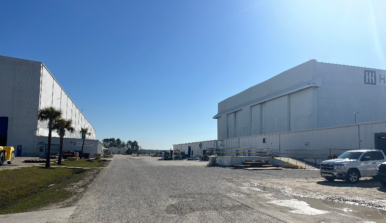
-Charleston Operations, a facility in a division of Virginia-based , better known as HII, began in Goose Creek roughly 60 days ago.

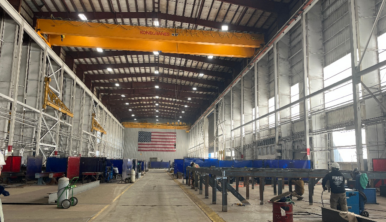
In two days, the site, which spans nearly 50 acres and includes roughly 500,000 square feet of space, will send off its first structural unit to headquarters in Virginia for U.S. aircraft carrier production.

NNS is the sole builder of aircraft carriers for the nation and one of the two companies that build for the U.S., Matt Needy, general manager and vice president of Charleston operations, said during a tour of the sprawling facility on Wednesday. The company has overseen the design, construction, overhaul and repair of more than 800 ships for the U.S. Navy and commercial customers since beginning 139 years ago.

The purpose of the NNS Goose Creek operations is to specialize in modules of the submarines and aircraft carriers to unburden the main production in Virginia, Needy said.

In January HII closed on the acquisition of all the assets of metal fabricator W International SC LLC and Vivid Empire SC LLC (collectively “W International”). Financial terms of the deal were not revealed.

The company specializes in two classes of nuclear-powered submarines, the Virginia-Class and the Columbia-Class. Modules that the Goose Creek operations produce include the habitability module, auxiliary machine room and weapons module of the Virginia-Class along with the auxiliary machine room and the weapons module for the Columbia-Class, Needy said.

Needy said HII had it sights set on South Carolina for some time, considering the pre-established manufacturing in the region.

“Because of the buildings, because of the that are here, because of the pipelines, because of the state and regional and educational relationships that we already had the foundation of, this became the obvious choice to most rapidly expand capacity and frequency for Newport News,” Needy said.

Creating a workforce pipeline

During the acquisition, 99% of the legacy employees from W International transitioned. Currently employing 475 workers at the Goose Creek location, Needy hopes to see those numbers rise by the hundreds.

Alexis Mervin, a class-three welder, has been working at the facility for three years.

“Everyone gets along very well here, its a lot of team membership and working with each other,” Mervin said. “I’m over here building aircraft carriers for the Navy, submarines as well. It’s just an amazing experience.”

When joining the NNS Goose Creek facility, employees go through a 12-week course learning the specifics of NNS operations. During their training, they are considered full-time employees with benefits.

“This is a people-centered business,” Needy said. “It takes the heads, the hearts, the minds of a lot of great shipbuilders doing this complex work every day to bring the ships to life.”

Since starting the training program in October 2021, there have been about 1,200 students to graduate from it, Mark Schmitt, director of plant services operations, said. Schools like Goose Creek High School and Berkley High School teach a curriculum that helps the transition into the Newport News curriculum.

“You have these young guys and gals coming out of high school and signing letters in front of everybody going to colleges and universities,” Schmitt said. “Our version of that is The Summit. They come here, their parents come out here and they sign a letter of intent saying ‘I’m going to go be a welder for Newport News.’ It really is a powerful thing for us.”

Ashanti Grant, an 18-year-old welder for Newport News, heard about the opportunity through his high school. After attending Trident Technical College, he is finished his training with Newport News and has been working for about a year

“I didn’t know anything about welding before the job fair,” Grant said. “It’s really good here.”

The site spans 48-acres along the Cooper River, allowing access to deep water transportation as well as rail transportation that goes through the acreage. The land contains 480,000 square feet of manufacturing space.

Making an investment in the Lowcountry

Located next to the HII campus is a Leonardo DRS building under construction to open in 2026. The company is a leading provider of naval power and control technology solutions for the U.S. Navy. Needy said the two companies share a property line, road access and single barge slip so they are having meetings to maintain that relationship.

Materials for the productions are all sourced from the U.S. According to Needy, HII spends $500 million annually on local sourcing in the Lowcountry. Additionally, HII operations contribute $110 million per year in to its workforce, including education, scholarships, retirement and more.

“The Navy is in more demand than ever,” Needy said. “In my 34 years here with Newport News and the Huntington Ingalls Industries, I’ve never seen demand like the need for the ships that we build today.”

When the facility was W International, operations were exclusively a welding facility. Needy says the NNS goal is to build off those operations, scaling into something larger.

Needy said once the locations operations are at full capacity, it won’t just be steel structures for the modules being sent out, but fully outfitted modules with doors, walls, beds and more. He doesn’t expect the facility to be at its full-rate production capacity until 2027 and 2028.


Judge orders Trump to reinstate probationary workers let go in mass firings across multiple agencies

SAN FRANCISCO (AP) — A federal in San Francisco ordered President Donald ‘s administration to rehire thousands, if not tens of thousands, of probationary workers let go in mass firings across multiple agencies, blasting their tactics Thursday as he slowed the new president’s dramatic downsizing of the .

U.S. District Judge William Alsup said that the terminations were directed by the Office of Personnel Management and its acting director, Charles Ezell, who lacked the authority to do so.

White House White House Press Secretary Karoline Leavitt quickly pushed back, casting the as an attempt to encroach on executive power to hire and fire employees. “The Trump Administration will immediately fight back against this absurd and unconstitutional order,” she said in a statement.

Alsup’s order tells the departments of Veterans Affairs, Agriculture, , Energy, the Interior and the Treasury to immediately offer job reinstatement to employees terminated on or about Feb. 13 and 14. He also directed the departments to report back within seven days with a list of probationary employees and an explanation of how the agencies complied with his order as to each person.

The temporary restraining order came in a filed by a coalition of labor unions and organizations as the Republican administration moves to dramatically downsize the federal workforce.

“These mass- of federal workers were not just an attack on government agencies and their ability to function, they were also a direct assault on public lands, wildlife, and the rule of ,” said Erik Molvar, executive director of Western Watersheds Project, one of the plaintiffs.

Alsup expressed frustration with what he called the government’s attempt to sidestep laws and regulations governing a reduction in its — which it is allowed to do — by firing probationary workers who lack protections and cannot appeal.

He was appalled that employees were fired for poor performance despite receiving glowing evaluations just months earlier.

“It is sad, a sad day, when our government would fire some good employee and say it was based on performance when they know good and well that’s a lie,” he said. “That should not have been done in our country.”

Lawyers for the government maintain the mass firings were lawful because individual agencies reviewed and determined whether employees on probation were fit for continued employment.

But Alsup, who was appointed by President Bill Clinton, a Democrat, has found that difficult to believe. He planned to hold an evidentiary hearing Thursday, but Ezell, the OPM acting director, did not appear to testify in court or even sit for a deposition, and the government withdrew his declaration.

Alsup encouraged the government to appeal.

The case is among multiple lawsuits challenging the mass firings. Another judge in Maryland also appeared skeptical of the Trump administration in a Wednesday hearing held in a lawsuit brought by nearly two dozen states. A judge in the nation’s capital, on the other hand, ruled against unions last month, finding the fired workers needed to work through a process set out in employment law.

There are an estimated 200,000 probationary workers across federal agencies. They include entry level employees but also workers who recently received a promotion.

About 15,000 are employed in California, providing services ranging from fire prevention to veterans’ care, according to the lawsuit filed by the coalition of labor unions and nonprofit organizations that represent parks, veterans and small businesses.

The plaintiffs said in their complaint that numerous agencies informed workers that the personnel office had ordered the terminations, with an order to use a template email informing workers their firing was for performance reasons.

___

Associated Press writer Lindsay Whitehurst contributed to this story.