Please ensure Javascript is enabled for purposes of website accessibility

For the Record – Northern Virginia, April 2013

McLean-based Capital One Financial Corp. has reached an agreement to sell its Bet Buy co-branded and private label credit card accounts to Citi. The sale of the credit card accounts, with loan balances of about $7 billion, is expected to occur in the third quarter of 2013. Capital One expects that proceeds will be close to the book value of the accounts, and will result without a gain or loss. Capital One and Best Buy also have agreed to end their contractual relationship early. Financial terms of the transaction were not disclosed. (VirginiaBusiness.com)

The Environmental Protection Agency will not appeal a federal district court’s ruling declaring it is illegal for the EPA to regulate storm water as a pollutant as it flows into Virginia waterways. A federal judge ruled Jan. 3 that the EPA illegally overreached its authority in attempting to regulate water as a pollutant by imposing rules on the flow of storm water into Fairfax County’s Accotink Creek. Attorney General Ken Cuccinelli estimated the ruling would save Virginia taxpayers nearly $300 million.
(The Washington Post)

Fauquier Hospital, one of just a handful of independent hospitals remaining in Virginia, is seeking a partnership with Tennessee-based LifePoint hospitals. The two have entered into a memorandum of understanding for LifePoint to take over the operations of Fauquier (The Free Lance Star)

SAIC, McLean, announced the names of the two companies after its planned separation later this year. The $4 billion government technical services and enterprise information technology business will retain the SAIC name. The $7 billion national security, health and engineering business will be named Leidos, derived from the word “kaleidoscope.” (VirginiaBusiness.com)
Herndon-based ITT Exelis has completed its $16.8 million acquisition of C4i Pty. Ltd. (C4i) from the Longreach Group Ltd. C4i, based in Melbourne, Australia, provides advanced communications software that supports mission-critical communications for a range of applications including air traffic management, defense, public safety, mining and homeland security. Company officials said the acquisition does not materially impact Exelis financial results for the full-year of 2012 or the first quarter of 2013. (VirginiaBusiness.com)

Peter Chang’s China Café is expected to open in Fredericksburg’s Central Park shopping center in May or June. The 4,000-square-foot restaurant will open at 1771 Carl D. Silver Parkway. Chang also runs popular self-named Chinese restaurants in Richmond, Williamsburg and Charlottesville. (Fredericksburg Free Lance-Star)

Reed Smith launched an office in Houston with 12 partners. Houston marks the firm’s 14th US office and 25th worldwide. Practice areas include energy & natural resources, commercial litigation, life sciences health industry, labor & employment, financial industry, and intellectual property groups. Reed Smith has Virginia offices in Falls Church and Richmond. (News release)

Arlington-based Rosetta Stone will offer its language-learning platforms to members of the International Air Transport Association. The program will give members of the association access to the company’s TOTALe PRO solution, which is available in 20 languages and includes mobile applications, live online tutoring and group-based interactive learning games. The association includes more than 240 member airlines, 75,000 travel agents and more than 20,000 college students who want to work in the aviation industry. (VirginiaBusiness.com)

SAIC, McLean, announced the names of the two companies after its planned separation later this year. The $4 billion government technical services and enterprise information technology business will retain the SAIC name. The $7 billion national security, health and engineering business will be named Leidos, derived from the word “kaleidoscope.” (VirginiaBusiness.com)

Home builder companies Stanley Martin Homes in Reston and Piedmont Realty & Construction in Crozet have agreed to merge. Piedmont Realty & Construction will be integrated into the Stanley Martin Homes’ operational and accounting systems. For the near term, the two companies will conduct business under their respective brand names. Stanley Martin Homes and Piedmont Realty & Construction focus on building single family homes and townhomes, with current offerings ranging in price from $199,500 to $1.6 million.  (VirginiaBusiness.com)

Reston- based TNS Inc. has been acquired by investor group Siris Capital Group LLC, New York, for $862 million. Siris announced in December that it had agreed to acquire TNS for $21 per share in cash. The transaction closed after approval from TNS stockholders and the receipt required regulatory approvals. TNS provides data communications and interoperability solutions. (VirginiaBusiness.com)

Reston-based electrical contractor Truland Systems has signed a lease to occupy a 115,000-square-foot office and industrial facility in the Ladysmith area of Caroline County. Truland will use the facility at 16517 Bull Church Road as a distribution center. The company will move in around June 1, said Johnson Realty Advisors President Fitz Johnson, who brokered the deal with Andrew Ferguson of Colliers International. (Fredericksburg Free Lance-Star)

Herndon-based Washington Gas Energy Services Inc. has entered a five-year secured supply arrangement with Shell Energy North America (US) LP. Under this arrangement, WGES will be able to buy the majority of its power, natural gas and related products from Shell Energy in a structure that reduces WGES’ cash flow risk. Washington Gas Energy Services Inc. is one of the largest competitive providers of electricity and natural gas in the mid‐Atlantic region. (VirginiaBusiness.com)


On the rebound

Manufacturing in Virginia finally is bouncing back after a decade of job losses.

“From 2001 to 2010 there were approximately 110,625 jobs lost in manufacturing, and in 2011 there was a net gain of 1,107 manufacturing jobs, reversing the trend,” says Mike Lehmkuhler, the Virginia Economic Development Partnership’s vice president of business attraction.

Lehmkuhler credits the comeback to an improving economy and the “reshoring” trend among companies such as Caterpillar, General Electric and Whirlpool, bringing offshore operations back to the U.S. “We expect that trend to continue,” he says.

Several manufacturers in Virginia have expanded operations during the past year. “Other companies are looking at Virginia,” Lehmkuhler says. “There is a definite uptick. We are expecting a net gain of jobs in 2012 as well,” when all the data is compiled. Continuation of the trend, however, could depend on the ripple effects of sequestration, automatic federal budget cuts that took effect March 1.

Four Virginia manufacturers that have recently expanded are Cadence Inc. in Staunton, Homestead Creamery in Franklin County, Bauer Compressors Inc. in Norfolk and Virginia Transformer in Roanoke.

Cadence Inc.
NewsCadence, which makes precision cutting and piercing instruments used for industrial and health-care applications, expanded its Staunton facility last August, adding about 25,000 square feet and 50 jobs. It plans to add another 65 employees by the end of this year. The expansion was prompted by increasing revenues, up 34 percent in 2012 over the previous year. The Staunton facility now covers more than 93,000 square feet and employs 203 people.

“We have grown well for several years,” says company President Alan Connor, who notes that Cadence knows about projects up to three years ahead of time. (Connor is scheduled to become the company’s CEO in April.) “It was apparent we would need to have more space to grow into anticipatory projects.”

Last year, the Inc. Hire Power Awards named Cadence one of the top 10 manufacturers in the United States and the No. 1 manufacturer in Virginia for new jobs added from 2009 to 2011. “We added 79 people companywide,” Connor says. Cadence also has locations in Providence, R.I., and Pittsburgh, where it is building a new medical device facility. Cadence now has a total of 335 employee.

Cadence is “very pleased with Virginia” as a place to do business, Connor says, but the company may face space issues that would affect future growth. “We have a limitation on our current property,” Connor says. “We are almost topped out.”

Homestead Creamery
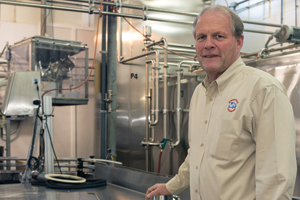
NewsHomestead Creamery is in the midst of a three-year plan to expand its production facility in Franklin County and hire 20 additional employees. The new hires will increase the company’s total employment to about 45. The company produces and distributes bottled milk, ice cream and other dairy products. “We have put in some new equipment and need storage for other equipment that we are adding, such as bigger tanks and a freezer area,” says president Donnie Montgomery.

The company’s expansion was aided last year by a $60,000 grant from the Governor’s Agriculture and Forestry Industries Development Fund, the first of its kind to be awarded. Also helping were grants of $45,000 from the Tobacco Region Opportunity Fund and $30,000 from Franklin County.

In response to customer demand, Homestead plans to expand production to include cheese and yogurt. “We made yogurt when we started but dropped it to focus on milk and ice cream and butter,” Montgomery says.

The company’s products are sold in Kroger stores statewide and offered through home delivery. “Our vision is to offer a buffet of products,” Montgomery says. The company also has a retail location in Burnt Chimney that features other Virginia products as well. “Our goal is to be a destination for people.”

Bauer Compressors Inc.
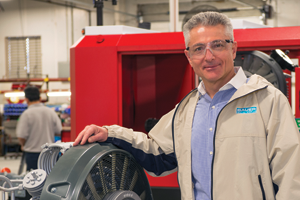
NewsDouble-digit growth has prompted Bauer Compressors Inc. to expand. The company, which currently has 170 employees in Norfolk, will add 130 employees during the next three to five years.

“Bauer is the largest player globally in the area of high-pressure compressors,” says company President Tony Bayat. “You have to have expertise and technology to do high-pressure compressors.”

Bauer’s parent company, Bauer Comp Holding in Munich, Germany, manufactures the equipment the Norfolk plant uses to build compressor systems for specific purposes. Specialties include breathing air compressors used in diving, fire and rescue operations, industry and the military. Breathing air compressors represent “about 70 percent of our market share worldwide,” Bayat says.

The Norfolk facility is Bauer’s largest manufacturing plant outside of Germany. One of the company’s growth areas is compressed natural gas. Often used in fleet vehicles, natural gas is starting to gain momentum with consumers. “That is a growing niche,” Bayat says. “That is going to be a driver for us. Another driver is industrial applications, crash test labs, non-lethal weapons such as paint ball, wind tunnel testing and offshore drilling for oil and gas.”

The company is expanding its Norfolk facilities, adding 18,000 square feet to its manufacturing area and almost doubling its office space with the addition of 13,000 square feet. The design-build project is scheduled for completion in 2014. “Then we will be maxed out space-wise,” Bayat says. “Down the line if we expand, we will have to purchase another building.”

Virginia Transformer Corp.
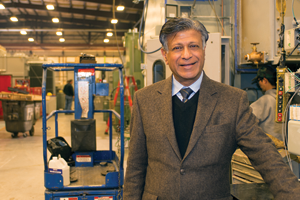
NewsVirginia Transformer Corp. is adding jobs but not capacity at its plant in Roanoke. The company makes liquid-filled and dry transformers for utility and industrial applications. “We’ve added about 30 jobs in the office and 70 in the shop area,” says company President Prabhat Jain. The company currently has 280 employees in Roanoke. “We continue to grow and add jobs. We are still in the same plant, but in the next few years we will have to build another plant somewhere.”

Virginia Transformer has been based in Roanoke since its inception in 1974. Over the years it has more than tripled the number of people it employs and opened additional manufacturing plants in Pocatello, Idaho, and Chihuahua, Mexico. The company has more than 700 employees total.

The company’s transformers are used in facilities ranging from paper mills and data centers to airports and oil fields in the U.S., Canada and Mexico. “Anywhere they have a large power usage,” Jain says. The company also exports to countries in Central America and Africa.

When the company is tapped out space-wise, Jain would like to stay in Virginia but that depends on a variety of factors, including incentives. “It takes time to find the right location and incentives,” he says, adding that a new plant would add up to 250 jobs.

Jain believes the economy is picking up momentum. “We see a lot of projects coming up,” he says. “That gives us a sense of confidence going forward.”

Award-winning efforts

Seven companies have been recognized in the Governor’s Environmental Excellence Awards. As a result of a Sustainability Roundtable sponsored last year by Gov. Bob McDonnell, this year’s awards focused on sustainability.

State officials say these company programs have achieved significant environmental benefits above and beyond regulatory requirements. 

These awards will be presented at the Annual Environment Virginia Symposium at Virginia Military Institute on April 10.

GOLD LEVEL

DuPont Spruance Plant, Richmond

The plant’s sustainability program includes numerous highly effective components, which have resulted in reductions in energy use, water consumption and generation of waste and air emissions. From 2010 to 2012, DuPont significantly reduced its environmental footprint, including water reductions of 5 million gallons per year, elimination of 230,000 pounds per year of hazardous waste and solid waste reductions of more than 600,000 pounds per year, resulting in an estimated annual savings of more than $800,000. In addition, energy conservation has resulted in savings of almost $1 million.

MillerCoors Shenandoah Brewery, Elkton

The brewery’s sustainability program consists of managing environmental, social, and economic risks and opportunities in a strategic way to protect the company’s reputation and maximize business value. By empowering grass-roots teams and investing in capital improvements, the plant’s environmental footprint has been reduced by focusing on five key areas: reducing energy, reducing water, sustaining its zero-waste-to-landfill status, reducing its carbon footprint, and reducing its overall impact. MillerCoors’ goal is to reduce total water and energy usage by 15 percent from 2008 levels. 

PepsiCo Blue Ridge Gatorade, Wytheville

The plant, built in 2006, produces Gatorade, SoBe, Propel and Lipton products and was the first food and beverage manufacturing plant of its size to receive the prestigious LEED Gold certification. Examples of the plant’s sustainability accomplishments include: solar panels that power external LED lighting; hybrid vehicles for company use; steam recovery to minimize boiler make-up water; grey water use in toilets and irrigation; recovery of heat from bottle coolers to pre-heat incoming water; addition of thermal insulation throughout the facility’s piping system to increase efficiency; donation of waste dry sugar to local bee farmers; and, an extensive recycling program for resulting in a 96.7 percent recycling rate.

Virginia Port Authority, Norfolk

The VPA is the only port in the nation to have its container terminals ISO 14001 certified. Initiated in 2002, its sustainability program focuses on four elements: air quality, water quality, habitat restoration and creation, and energy conservation and alternatives. Results include an annual sustained reduction of 30 percent in air emissions and 40 percent in water quality impacts from marine terminal operations, as well as the creation, restoration, and preservation of 50 acres of forested riparian buffer, tidal and non-tidal wetlands, open space, shallow water habitat and oyster reefs.

SILVER LEVEL

Anheuser Busch Williamsburg Brewery

Anheuser Busch’s Global Environmental and Health and Safety policies outline the foundational principles of the plant’s sustainability program: compliance with all standards; production of products in the most environmentally responsible manner; incorporation of environmental targets into performance evaluations; employee participation and accountability; integration of environmental considerations into business planning, decision making and daily activities; ensuring safe and efficient operations while promoting continuous improvement; increased awareness of environmental programs and involved stakeholders; and, evaluating, benchmarking and communicating performance. Results from the Williamsburg brewery include the recycling of more than 99 percent of its solid waste and byproducts, including more than 82,000 tons of spent grain that is used as feed by local farmers each year; savings from process improvements of over 16,000,000 gallons of water, 9 percent energy use, and 15 percent fuel use. Innovations in energy conservation, fluid savings and waste reduction have been driven by employees through the company’s “Excellence Thru Ideas” program which solicits cost savings and conservation ideas. The facility’s Environmental Committee, which consists of representatives from each operating department, promotes and helps organize community outreach events.

Smithfield Packing Company, North

Between 2008 and 2012, Smithfield reduced solid waste by 60 percent, water use by 17 percent, energy use by 13 percent, and carbon dioxide equivalents by 20 percent.  Examples of sustainability projects include composting sludge and non-pork inedible meat, reusing or recycling used oil, and recapturing hot water for reuse.

BRONZE LEVEL

Fareva Richmond

The company, which manufactures and packages pharmaceutical and consumer products, has long been working on a Zero Waste Initiative, which strives to recycle 95 percent or more of all waste generated at the site. A new effort in support of Zero Waste is the Zero Landfill Program, which was designed to move the facility’s overall recycling number from 93 percent to 95 percent and beyond.

JTI aids city’s River District development

A global company is making its mark in Danville, in more ways than one. Japan Tobacco International (JTI) has donated $400,000 for a fountain to be built in Danville’s River District, a project aimed at revitalizing Danville’s downtown.

“It was a good opportunity to bring back a little history … continue to be a part of the old tobacco heritage here and help the city at the same time,” says Steve Daniels, president of JTI Leaf Services, which is part of Geneva-based JTI.

The fountain is expected to be finished next year. It is meant to symbolize “the legacy of tobacco as an economic engine for Danville over a span of four centuries,” according to a news release.

JTI located its first U.S. plant in Danville in 2009. A big draw for the company was Danville’s ready-to-go work force, which has experience with tobacco processing. Two major tobacco processors left the area in 2005: Dimon Inc. and Universal Leaf Tobacco Co.  “We would have had to compete for that labor in another place, so it worked very well for us,” Daniels says.

JTI Leaf Services buys tobacco from farmers and processes it at the Danville facility. The tobacco then is sent to a central storage location. “From that facility, [the tobacco leaves] are shipped to a manufacturing facility, as needed,” Daniels says.

U.S. tobacco is considered to be some of the most flavorful in the world, and the leaf grown in the Old Belt of Southern Virginia and North Carolina “is considered to be best of the best,” Daniels says.

The company originally planned to invest $19 million, hire 39 full-time employees and 150 seasonal workers. JTI ended up committing more than $40 million, hiring nearly 50 full-time workers and 230 seasonal employees. “That to me was a very nice surprise,” says Jeremy Stratton, Danville’s economic development director. “They’ve been very successful here and done a great job.”

JTI has more than 25,000 employees and sales in 120 countries. It is the global tobacco division of Japan Tobacco Inc., the world’s third largest global manufacturer of tobacco products.

Daniels says JTI Leaf Services has seen consistent growth since the company began operations in 2010. “We’re planning a steady growth into the future and that continues to be our plan,” Daniels says.

Stewards of the land

About two miles east of Harrisonburg, an underground pipeline channels methane gas from the nearby Rockingham County landfill to the new Rockingham Memorial Hospital (RMH). There the gas is used to heat the facility, power its hot-water heaters, and sterilize and steam-clean surgical instruments and medical equipment. The collaboration, the first of its kind in Virginia, helps reduce carbon emissions, provides a market for a local renewable energy source and saves the nonprofit hospital about $250,000 a year on energy costs.

“If we weren’t shipping the gas out, we would have to burn it off,” says Barry Hertzler, the county’s director of public works. “Otherwise it would tend to migrate underground and cause issues with people’s wells, basements, anything with an opening.”

The landfill produces about 700 cubic feet of methane per minute — enough to power the hospital’s three boilers, two of which were retrofitted with funding from the 2009 American Recovery and Reinvestment Act. This enables RMH to run one boiler all year for cleaning purposes, another in the winter for heating and the third as a backup in case of a breakdown or routine maintenance.

As the sole beneficiary of the pipeline, RMH has an agreement with the county to purchase the gas through 2018.

“It is a win-win for the community and RMH,” says Dennis Coffman, the hospital’s director of facilities planning. “Burning methane gas from our local landfill that otherwise would have been wasted is one way we can be environmentally friendly and preserve the natural beauty of our community for years to come.”

The methane gas agreement is one of a growing number of green initiatives in a region of the commonwealth known for rolling farmland, mountain vistas and outdoor attractions such as the Shenandoah River and Shenandoah National Park.

“Valley residents have an innate sense of the importance of land stewardship and have always been respectful of the environment,” says Robin Sullenberger, executive director of the Shenandoah Valley Partnership, a regional economic development coalition. “Our agrarian nature and our tourism industry are dependent on it, and we stress that significantly in all of our economic development activities.”

The green movement has taken root in the valley as local stakeholders — residents, businesses, local governments, and colleges and universities — commit to maintaining the beauty and quality of life that helps drive the region’s economy.

Green entrepreneurs

Entrepreneurship is at the forefront of the green movement in the valley. In Rockingham County, for example, Eastern Bioplastics is manufacturing biodegradable plastics from poultry feathers. The feathers contain keratin, a protein fiber that bonds well to different types of plastics. The Mount Crawford plant partners with companies to formulate bioplastic composite resins suitable for various applications. The resins are in the form of pellets, which can be melted down and injected into molds.

Eastern Bioplastics, led by Sonny Meyerhoeffer, is experimenting with different polymer blends. Potential uses include office furniture, automotive parts, sporting goods, poultry feeders and garden pots, which the company sells through its website and in bulk to commercial greenhouses. Feather-fiber reinforced plastic helps eliminate poultry feathers from the waste stream and reduces the plastic industry’s reliance on crude oil and natural gas.

Fresh herbs enthusiast Timothy Heydon also believes in the power of sustainability. His company, Shenandoah Growers, produces fresh-cut and organic herbs in a climate-controlled greenhouse in Rockingham County. The company collects rainwater for its closed-loop nutrient system; uses sticky tape, ladybugs and other natural predators to control pests; and researches environmentally friendly packaging and alternative heating systems.

“We think this is a great example of an organic local food system — how you can produce food responsibly, sustainably and organically in a relatively small space, without affecting the surrounding environment,” Heydon says.

Another Rockingham County business, Sunrnr (pronounced “Sun Runner”), offers portable renewable energy generators that store solar and wind turbine electricity for off-grid uses or emergency power. Alan Mattichak founded the company in 2004 after recognizing the need for an alternative energy storage system that is portable and rechargeable. After years of engineering, testing, design improvements and patenting, Sunrnr units are now available to the public. Its website has numerous testimonials from customers who use the generators for uses ranging from tailgating to camping.

Meanwhile, commercial wind farms face a tougher road in the valley. In 2007, the State Corporation Commission approved a 19-turbine wind farm in rural Highland County, but the project has yet to get off the ground. And in recent years, two companies have begun exploring the possibility of building large-scale wind turbines in western Rockingham County along the Virginia-West Virginia line, though neither firm has sought a special permit from the county.

Corporations do their part

The region’s corporate employers are going green as well.

Last year, MeadWestvaco Corp. invested $285 million in a biomass boiler and associated infrastructure at its chemical plant in Covington. The project has allowed the plant to become self-sufficient in energy production and significantly reduced operating and maintenance costs. The new boiler and related systems, which replaced two fossil-fuel units, primarily burn renewable biomass such as tree bark, wood residues often left behind from logging operations and water treatment plant residuals.

Longtime Rockingham County employer MillerCoors received a 2013 Governor’s Environmental Excellence Award for its recycling and sustainability efforts at its Elkton brewery.

Meanwhile, one of the region’s prime vacation resorts is now a little greener. The Homestead in Hot Springs, founded in 1766, is designated as a Virginia Green lodging facility for its efforts to reduce waste and minimize its carbon footprint. The mountain resort’s 483 guestrooms feature low-flow faucets and showerheads as well as individual thermostats. In addition, the resort’s used printer cartridges are donated to local elementary schools so that they can be exchanged for school supplies.

“I have seen staff go above and beyond the call of duty to see that we are effectively reducing waste,” says Jason Brown, the resort’s chief engineer, who is overseeing its sustainability efforts.

Practicing what they preach

Not to be outdone, area colleges and universities are practicing what they preach about sustainability.

On the campuses of Eastern Mennonite University in Harrisonburg and Washington & Lee University in Lexington, solar panel systems installed and operated by Staunton-based Secure Futures LLC harness the power of the sun to generate up to 10 percent of the schools’ annual electricity needs.

Secure Futures CEO Anthony E. Smith is an associate professor of business at EMU and co-director of its MBA program. He uses the solar program as a case study on the practical benefits of renewable energy. “EMU is demonstrating that solar power represents a good financial and social investment — doing good and doing well,” he said.

Likewise, W&L president Kenneth P. Ruscio says Secure Futures’ solar canopy on top of one of the university’s parking structures provides a model of stewardship and sustainability. “This is another instance of how we are aligning our institutional practices with what we preach to our students about their duties as responsible citizens and their obligations to future generations,” Ruscio says.

Public partnerships

Local governments are getting into the act as well.  The city of Staunton offers incentives encouraging green development practices within its Enterprise Zone. Any commercial or industrial property owner who makes repairs, renovations or other improvements resulting in at least a 40 percent increase in assessed value will receive a five-year exemption on the real property taxes associated with the improvements.

For the past two years, the Rockingham County landfill has been accepting large animal carcasses, mostly cattle, for composting. Hertzler, the county’s director of public works, says the project safely disposed of 700 cows last year alone.

In 2010, the Shenandoah Valley Workforce Investment Board received a $5 million federal grant for a new program training workers for the region’s emerging green technology manufacturing and renewable energy industries. The funding, awarded through the U.S. Department of Labor, provides work-force training for an estimated 1,000 valley residents in 10 counties and six cities.

The program’s partners include the work-force investment board’s five training centers and the region’s three vocational technical centers, as well as Dabney S. Lancaster Community College, Lord Fairfax Community College, Blue Ridge Community College, James Madison University and the Virginia Manufacturers Association.

“Training made possible by this grant will prepare our area’s workers for jobs in energy efficiency and renewable energy industries, including occupations that have long-term demand and offer the potential for high wage, career pathway jobs,” says Bob Satterwhite, director of the work-force investment board.

Family farm continues a 239-year-old legacy

When Lynda Stuart took over Stuart Land & Cattle Co. after her husband’s death in 2008, she would ask herself a question: “What would Zan do?”

Her husband, William Alexander “Zan” Stuart Jr., ran the Russell County farm for more than 60 years.  “He was so enthusiastic,” Stuart says. “He would be anxious to pick the bulls for mating, anxious to see those calves and see how calves performed. That’s a year and a half, so he was always looking forward to the next segment, the next phase.”

The property has been farmed since 1774. Today, it sells calves to small feedlots.

Managing the family business proved to be harder than Lynda Stuart, formerly the company’s bookkeeper, expected. As a result of the Great Recession, feed costs rose, Stuart says, and calf sales fell.

“These are things I had to learn,” says Stuart, who is 72. “Keeping books and doing financial things, you’re not aware as much about what’s happening to other segments of the industry.”

Under her direction, company employees attended a workshop conducted by Temple Grandin, a renowned animal welfare expert. “It’s made a huge difference,” Stuart says.

The company also was a finalist in last year’s Resilience Awards, an annual program sponsored by the University of Virginia’s Darden School of Business recognizing companies that persevere in difficult conditions.

As one of the nation’s oldest family businesses, Stuart Land & Cattle has gone through many changes. The company, for example, once raised sheep and tobacco but left those businesses more than 20 years ago.

The company now employs eight people, who are offered free housing, health insurance and a retirement program. The oldest employee, Raleigh Lester, who is 86, has lived on the farm his entire life. In fact, his parents and grandparents worked there, and continuing the family legacy, his two sons also work on the farm. 

“Most people in the cattle business are really good folks and have long-lasting relationships. We all have a common bond,” Stuart says. “I love trying to continue my husband’s programs.”

Roll up your sleeves

In the past, people attending conventions in Virginia Beach could look forward to networking, presentations and maybe some down time to enjoy the sun and sand. These days, convention delegates could find themselves picking up trash along the Chesapeake Bay, feeding the homeless or cutting grass at a local youth shelter.
Community service projects ― as well as the chance to inspire team building through cooking classes, wine-tasting seminars and outdoor recreational activities ― are part of a growing trend at meetings and conventions. In a down economy, organizers say audiences want more out of a conference than listening to speakers in a sunless meeting room. “People want to come together and be part of something bigger and better,” says Marti Balcom, president of the Balcom Group, a meeting planning company in Heathsville.

Some groups schedule a day of service in the host community. Others focus on a specific project.  The National Association of Workforce Development Professionals meeting in Virginia Beach signed 800 postcards to send to military men and women serving overseas. “Sending 800 postcards really feels like a big impact and brings the group together,” adds Balcom, who organized the meeting in 2011.

Giving back to the host city is often the extra incentive to attract busy executives. “For us it’s the biggest trend — giving-back projects, what they can do for the community,” says Al Hutchinson, vice president of convention sales and marketing at the Virginia Beach Convention and Visitors Bureau. “It’s the world we’re living in right now. That’s who we are and what we do in America, and conventioneers are no different. They want to find a way to help our community.”

That’s a plus for Virginia Beach, which has seen fewer conventions make long-range reservations. “Instead of folks booking three or four years out, they’re waiting and booking within a year,” Hutchinson says. Economic concerns, along with the potential effects of sequestration, have especially impacted government travel, which accounts for 19 to 20 percent of annual room nights in the resort city.

The convention and visitors bureau has developed a website — One Beach One World — that lists outreach opportunities for groups meeting in the resort city. “Some groups just want to make a financial contribution because they have limited time,” Hutchinson adds. “Some groups want to create a hands-on activity.”
Delegates have donated toiletries or books to homeless shelters, while some organizations have contributed to local charities. “It helps meeting planners attain their corporate social responsibility goals. We want them to meet in Virginia Beach but also make our community a better place to live.”

The story’s the same for the Alexandria Convention & Visitors Association. Last year, it launched Alexandria Cares, a community service program that encourages corporate groups to include service activities along with their business meetings. The ACVA, which booked $3.8 million in meetings and group travel during fiscal year 2012, finds that companies are shunning lavish events in favor of community service projects.

Groups meeting in Alexandria may spend time outside the conference room bowling with underprivileged children, decorating historic sites for the holidays and building bicycles for needy families. “We are very proactive in the corporate social responsibility environment,” says Robin D. Roane, the ACVA’s senior sales manager. “If an organization needs something unique regarding a corporate social responsibility activity, we can certainly create that.”

VOLUNTEER Hampton Roads has been a major beneficiary of the trend toward corporate social responsibility. “We get a lot of corporate meetings where a company will take everybody out of the conference for a half day and do volunteer work,” says Kate Meechan, corporate relations director for the nonprofit volunteer clearinghouse. “The business is seen as giving back, and employees have a chance to do something altruistic on company time.”

Volunteerism not only promotes good will, it can play a critical role in the company’s bottom line. “The whole corporate social responsibility side of business has gone from being a nice thing to do to a need to do,” Meechan adds. “Consumers are able to see every aspect of business on the Internet. They can see if a business gives back, if it’s socially responsible.”

Team-building activities, whether working on a volunteer project, preparing a four-course dinner, or racing kayaks on nearby rivers, are becoming key features of off-site meetings, too.  Marketers say these activities build camaraderie among participants and, as an added bonus, offer a distinctive experience representative of the host region. “Team-building is a trend,” says Tim Bugas, director of sales and marketing for The Homestead in Hot Springs. Corporate groups often take a break from meetings with games of paint ball and capture the flag. Others flex their competitive muscles on kayak or canoe races on nearby waterways. “They’re looking to try to get outdoors a little more versus being in the classroom,” adds Bugas. 

The Homestead’s Canyon Ranch Spa Club, slated to open in May, will tap into the corporate wellness trend. Canyon Ranch nutritionists will be available to lead conference sessions promoting healthful lifestyle choices. “Companies recognize that they have to keep employees not only happy but healthy,” Bugas says. The resort is seeing meeting participants request trail mix, fruits, juices and vitamin water instead of sodas and cookies during refreshment breaks. “It’s not so much chocolate cookies anymore. Those are gone — not all the time — but the majority of the time.”

Meeting attendees at the 12,000-acre Primland resort in Meadows of Dan can enjoy exercise, fresh air and team-building as they participate on a high-tech treasure hunt along Blue Ridge Mountain trails. Geocaching, in which participants use GPS receivers to find hidden canisters, has become a popular exercise for groups at Primland, which hosts about 80 meetings each year.  “Even more so than meeting, they want team building,” notes Dana Puckett, Primland’s in-house group sales manager. “It gives them a chance to interact outside the work area and help each other as a team.” 

Other groups opt to boost team morale in the kitchen. “Food is a great uniter,” says Maria Kopsidas, owner of Cookology, a Dulles Town Center culinary school. “People have been doing cooking classes for a while, but we changed it up and made it into a corporate environment.”

There’s even a bit of Iron Chef-style competition. In one Mystery Basket team bonding activity, participants are divided into project management groups and use a “mystery” basket of ingredients to plan and prepare a meal within 90 minutes. Judges then choose the winning team. “It creates camaraderie,” Kopsidas notes. “They became a group of potential friends and not just colleagues.”

Fortune 500 companies, including Exxon Mobil, IBM, Hewlett-Packard and Fannie Mae frequently host meetings in Cookology’s kitchen for lessons mixed with a dash of team building. “We create this really fun situation involving food and wine that mirrors their potential work environment,” Kopsidas says. “It gives people insight to potential leadership ability.”

For groups preferring to let someone else do the cooking, marketers are touting their region’s culinary offerings. “We ensure delegates leave Alexandria with a memorable meeting experience,” says Roane. Alexandria, which hosts small- to medium-size conventions, offers visitors the chance to partake of a progressive meal at three or four restaurants while simultaneously taking a walking tour of the historic district, the third oldest in the nation. “One of the things we take pride in is we can provide the ‘wow’ factor for delegates.” 

In Roanoke, meeting organizers may include time for participants to take in Virginia Tech athletic events or mountain music in nearby Floyd, hike on the Appalachian Trail or bike on the greenway.  “We promote the hub-and-spoke philosophy where people come in for meetings and want to see what else is in the region”, says Landon Howard, president of the Roanoke Valley Convention and Visitors Bureau.

Guests these days, he adds, often extend their business travel to take in an area’s sights. Statewide, about one in five travelers extend their trip for leisure, according to fiscal year 2011 data from TNS Travels America. Bookings for meetings in the Roanoke Valley are currently three to five years in advance, the most in recent history.

The convention and visitors bureau is getting positive feedback from visitors who attend meetings in the city. “When they walk through the city with a badge on, it’s very common for local people to welcome them and offer to assist them,” says Catherine Fox, the bureau’s director of tourism and communications. 

Still, while community service, team-building and leisurely activities are becoming essential to the meeting experience, the typical convention setting is not likely to fade away. “Place and space are really important,” Balcom says. “That’s the challenge. How do you take your meeting outside the meeting environment but still accomplish your goals? I don’t think we’ll ever be able to replace the conference environment.”

Offshore wind: gaining momentum

It’s a windy day in Virginia Beach, but the Atlantic Ocean sparkles in the midday sun. Huge container ships make their way toward the Norfolk-based Port of Virginia, hauling items that range from blue jeans to jelly beans. The sprawling port, which operates four terminals in Hampton Roads, is a major consumer of electricity, and Virginia’s coastal waters could be key to meeting future energy demands. 

Roughly 23 nautical miles out to sea lies a coveted 113,000 acres. Nine companies, including Dominion Virginia Power, are bidding for a federal lease to develop these coastal waters into the first utility-scale offshore wind farm in the U.S.  It could be in operation within the next decade.

If developed as envisioned, experts say, this territory would help diversify Virginia’s fuel supplies and keep electricity rates low. Just as significantly, Hampton Roads would emerge as the main link in a U.S.-based supply chain for the offshore wind industry, including the building of Colossus-size wind turbines and the specially constructed ships needed to transport them.  That activity would bring thousands of new jobs.

“This will be a great opportunity for Virginia’s maritime community to help develop a new offshore wind industry in the U.S. Just as our port is a gateway to the Eastern seaboard, so, too, we’ll be a gateway to a whole new industry,” says Jeff Keever, the senior deputy director for external affairs at the Port of Virginia.

Many things still have to go right for that vision to take shape, but offshore wind is closer to reality in the U.S. than it’s ever been. Solar, hydropower, biomass and onshore wind are all in play as alternative sources here, but the high-velocity winds off Virginia’s coastline pack the biggest wallop and the most promise for boosting in-state generation of new electricity.

Virginia is one of only two sites along the Atlantic coastline to be selected by the federal government for the first-ever competitive lease sale for the possible commercial development of offshore wind.  (The other site is off the Massachusetts-Rhode Island coast.)

NewsVirginia’s portion of the Outer Continental Shelf could produce up to 2,000 megawatts of wind-generated electricity. That’s enough wattage to power 700,000 homes, according to the federal Bureau of Ocean Energy Management (BOEM), which will auction the lease.  The agency expects the auction to occur later this year.

Besides Dominion Resources Inc., the parent company of Dominion Virginia Power, ten other companies have applied to lease 112,799 acres in federal Atlantic waters off Virginia Beach. The only other Virginia-based company vying for the lease is Apex Wind Energy of Charlottesville, a developer of onshore wind facilities in the U.S.

One company will win the right to lease and commercially develop the entire parcel as one block, federal officials say.  “This is going to be a marker in the history of offshore wind development. Virginia has great infrastructure in Norfolk to enable construction to take place in that area,” says Maureen Bornholdt, the manager of renewable energy programs for BOEM, which is based in Herndon.

Bornholdt declined to handicap which applicant has the early lead, but Dominion’s bid almost certainly was strengthened by a $4 million matching grant it received recently from the U.S. Department of Energy (DOE). The grant money will help a Dominion-led project team install a 12-megawatt demonstration facility aimed at reducing the cost-per-kilowatt hour of wind-generated electricity.

Dominion’s project is one of seven chosen by the DOE to engineer, design and test innovative offshore wind turbines. The agency says it plans to winnow the number of projects to three next year, with the remaining projects each receiving up to an additional $47 million in grants. Dominion’s team includes turbine maker Alstom Power Inc.; construction firm KBR Inc.; the Virginia Department of Mines, Minerals and Energy (DMME); the DOE’s National Renewable Energy Laboratory; Newport News Shipbuilding; and the Virginia Coastal Energy Research Consortium.

Dominion’s test will be the only one to occur in an area adjacent to a BOEM-designated “wind energy area,” which refers to offshore locations with a high capacity for commercial development. 

“No one has any experience with how turbines will behave in the harsh environment of the Atlantic Ocean. Until we can get out there and get results, everything remains a projection,” says Guy Chapman, Dominion’s director of renewable energy research and program development. 

Crucial to Dominion’s demo is a pair of 6-megawatt turbines by Alstom Power, an international manufacturer whose North American wind division is based in Richmond.  With a rotor diameter of 150 meters, the Alstom turbines feature some of the longest blades ever designed. “That means the turbines will be able to run even when the wind is not as powerful,” Chapman says.

The flurry of activity has longtime advocates of offshore wind cautiously optimistic. Dominion’s test project is of particular interest because it may prove that offshore wind can generate electricity at a cost comparable to traditional fuel sources, says George Hagerman, a Virginia Tech professor and director of research at the Virginia Coastal Energy Research Consortium, (VCERC), a nonprofit group composed of nine Virginia universities.

“The reason businesses are attracted to Virginia is because of our low-cost and stable energy prices. We can’t afford to install large amounts of new generation that cost more than the portfolio we already have,” Hagerman says.

Commercial development of offshore wind will have a major impact in Virginia, says Jerry Giles, managing director of business expansion at the Virginia Economic Development Partnership. An offshore commercial wind farm would generate between 9,500 and 9,700 new jobs during its first five years.  Even when short-term construction jobs are removed from the equation, Virginia still figures to gain about 7,200 permanent full-time jobs.

In addition, VEDP has identified about 200 Virginia companies, extending as far west as Bristol, which could be part of a wind energy-ready work force. “We have all the assets in place.” Giles says. “There’s not much doubt offshore wind will happen. The only question now is when.”

You’ve got to be green

Michael Rao, the president of Virginia Commonwealth University in Richmond, has a pretty good idea what being green means to his nearly 32,000 students.

Nationally, two-thirds of prospective students search out information about a college’s commitment to sustainability, and a quarter of them consider an institution’s sustainability efforts an important factor in deciding where they go to school.

But the importance of growing up green really hit home when Rao’s 4½-year-old son, Aiden, recently led him through an inventory of the kitchen trash can. The boy was looking for items that had not gone into the recycling bin, and he wanted to know whether they might be repurposed in some other way. “We didn’t consider the bacteria,” Rao said with a laugh as he told the story at VCU’s annual Energy & Sustainability Conference in late January.

For a generation that has come of age with recycling in the home and lessons in environmental stewardship at school, going green has become an anthem. “It’s not just a movement, it’s a way of life,” says David Lubin, chairman of the Connecticut-based Esty Sustainability Innovators Working Group.

The group is a research consortium of leading firms — among them IBM, Boeing, Dow Chemical, Disney, Coca-Cola, Wal-Mart, FedEx, Xerox and Johnson & Johnson — that are collaborating on new models for executing corporate sustainability strategy.

Lubin was the keynote speaker at the VCU conference where he urged the more than 700 business, academic and corporate leaders to view sustainability as a “megatrend.”

The changes that shape a sustainable economy will be broad, deep and persistent, he said, and urbanization, new technology and innovation are all driving the process.

Sustainability can be defined in many ways, but one widely accepted definition is that it is a method of harvesting and using a resource without depleting it for future generations.

The corporate world often defines successful sustainability efforts with the mantra, “businesses doing well by doing good.” A growing number of Virginia businesses, from A-Active Termite and Pest Control in Virginia Beach to Philip Morris USA in Richmond, are finding that sustainable practices are helping them recruit skilled workers and improve their bottom line.


An edge in the talent search

Genevieve Roberts, a partner with the Titan Group, a human resources consulting firm in Richmond, says that companies with green practices have a leg up when searching for the best talent.
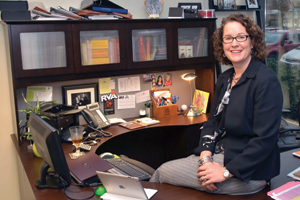
NewsIf an employer meets other values that a skilled job seeker is looking for, then a company’s green profile might be the tipping point. “People do want to work with employers who practice sustainability,” she says.
Roberts adds that young workers are much more comfortable than their parents in asking a prospective employer about its sustainability plan, whether employees work in a green building and if the company uses environmentally safe chemicals.

That doesn’t mean a company’s environmental record is the top priority of applicants in this troubled economy.  First of all, they want jobs, says John Martin of the Richmond-based Southeastern Institute of Research.

Citing results from a recent survey conducted by his firm, Martin notes that 62 percent of respondents listed “offers good health benefits” as a major employer attribute while only 28 percent cited “perceived as environmentally responsible.”

Martin suggests, however, while a green reputation may not be top-of-mind for many job seekers, they still care about how a company treats the environment.

He notes that one in three people surveyed said they would be more inclined to work for a green company, and six in 10 said their current employer should be doing more to be environmentally responsible.
In some ways the recession has aided the green movement. Martin says hard times have pushed some elements of society into a position of “responsible consumption,” and frugality also has become a trend.
As a result, a World War II-era rhyme that became popular when consumer goods were in short supply is now sometimes heard as part of the green movement: “Use it up, wear it out, make it do or do without.”
Martin also notes the increasing presence of women in the work force — they now outnumber men — bodes well for the green movement. Female influence likely will lead to more socially responsible decisions, he says.


Business school cited

Students at the Mason School of Business at the College of William & Mary receive a lot of exposure to the virtues of going green. In 2011, Bloomberg Businessweek ranked the school first nationally in sustainability, in a nod to courses such as “Green Supply Chain” and “Environmental Consulting.”  Recently, the school also was named one of the nation’s “10 Environmentally Aware Business Schools” by MBAPrograms.org.

Christopher Adkins, executive director of undergraduate programs at the Mason School, says these accolades reflect the attitudes of future business leaders.

“Students want to make a difference by what they do every day in their careers,” he wrote in a CNN blog post. “They want to work for organizations that weave sustainability into their core strategy.”
Among other evidence, Adkins cited an IBM global student study “Inheriting a complex world: future leaders envision sharing the planet.”

One finding was that students are much more interested in sustainability and globalization than CEOs, and they view the two issues as inherently linked.

The study quoted the response of a U.S. student as an example of an emerging ethos. The student said an emphasis on sustainability leads to an awareness of the effects of globalization and everyone’s responsibility to others in the world.

An example of William & Mary’s commitment to going green is its “Do One Thing” (DOT) initiative that asks the college community to do one thing for sustainability.

For example, W&M President Taylor Reveley has pledged to use non-disposable coffee cups whenever possible.

Net Impact, a San Francisco-based nonprofit group whose aim is to help business-school graduates make social and environmental impacts, recently released the results of a survey indicating that by a ratio of 2 to 1 workers who were able to make such impacts were the most satisfied.

The survey of 1,726 respondents — heavily tilted (47 percent) toward those in the 21-32 age group — was conducted by Rutgers University.


Good for more than PR
In addition to attracting skilled workers and keeping them engaged, companies are finding that being green also helps the bottom line.

A 2011 survey by McKinsey & Co., a global management consulting firm, found that many companies are actively engaged in integrating sustainability principles into their businesses. Initially, most companies used these practices as a way to manage their reputations, to show that they were doing their part to help the planet.

But the McKinsey survey found that many companies have moved beyond reputation management. Today, saving energy, developing green products and retaining and motivating employees are equally important, if not more important.

In fact, the most frequent reason to initiate sustainability efforts — chosen by 33 percent of 2,956 respondents — was not to manage a corporate reputation but to improve operational efficiency and lower costs.
The McKinsey survey noted, for example, that Wal-Mart is expecting to generate $12 billion in savings by reducing packaging across it global supply chain. The company’s goal, by this year, was to reduce packaging by 5 percent, compared with 2006 totals.

Smaller packages mean more packages per carrier of cargo, which in turn means fewer carriers, a smaller carbon footprint and less diesel fuel. That all adds up to savings, which resonates with Wal-Mart’s ubiquitous slogan “Save money. Live better.”

The McKinsey survey also cited Dow Chemical. It has invested less than $2 billion since 1994 to improve its management and use of resources but experienced a savings of $9.8 billion for reduced energy consumption and water waste in its manufacturing processes.


Virginia success stories

At VCU’s Sustainability Conference, companies with operations in Virginia told of their successes.

Sean Delehanty, sustainability manager for BAE Systems Electronic Systems Group, reported that his unit had cut its operating expenses by $6.7 million during the past four years, including an 11 percent drop in energy costs and a 14 percent reduction in its carbon footprint.

If you want to get the C-Suite’s attention for money to fund sustainability efforts, Delehanty said, a manager needs to show how those efforts will create savings or improve the bottom line.

Jeff Rinker, environmental engineer at the MillerCoors Shenandoah Brewery in Elkton, said the brewery reduced its water consumption by 23 percent, or a million gallons, compared with 2008 levels. Among the strategies used to achieve that: Everyone looks for leaks, which brings employees together in a common cause.

Blasé Keegel, utility and environmental engineer at Philip Morris USA, said the company’s Park 500 tobacco processing facility in Chester had cut landfill waste by more than 95 percent, and also had significant reductions in electricity use and water.

To reduce the level of nutrients in wastewater discharge from the facility, Philip Morris developed a wetlands system that not only reduces nutrients but provides 60 acres of wildlife habitat along the James River. The system has won environmental awards and helped the company’s relations with conservation groups and its neighbors.

Elizabeth Povar, vice president of business expansion for the Virginia Economic Development Partnership, says that for many “sustainability is almost a synonym for energy.”

And she says sustainable energy development can drive economic development. She offered several examples in Virginia, including the $75 million Enviva wood pellet manufacturing plant in Southampton County, which has a work force of about 70.

The plant, which uses local raw materials harvested through sustainable forests, will be exporting most of its wood pellets to European utility customers.

Povar also pointed to the $285 million biomass boiler that MeadWestvaco invested in its bleached paperboard mill in Covington, which employs about 1,000 workers.

The new boiler — burning mostly renewable biomass such as wood bark and wood residues left behind from logging operations —will enable the mill to be self-sufficient in energy and eliminate its need to burn coal.


The ‘green’ exterminator
NewsWhile many large national and multinational corporations can garner headlines when they commit to sustainability efforts, smaller companies also are finding their niche in the burgeoning efforts to go green.

One of the state’s most enthusiastic cheerleaders for sustainability comes from an industry — pest control —not often associated with the green movement.

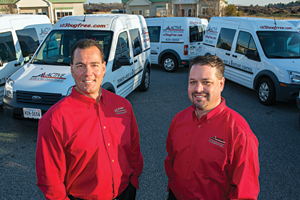
Kevin Kordek, president of A-Active Termite and Pest Control in Virginia Beach, says sustainability efforts and sensitivity about the environment have become hallmarks of his company, which has 39 employees and had revenue of $3.79 million in 2011.

A biology major in college, Kordek says he’s always tried to avoid using harsh chemicals in pest control, opting instead for treatments that are far less damaging to the environment, such as controlling termites with baits instead of sprays.

Those efforts have earned the company a “Green Pro” designation from the National Pest Management Association, a group that Kordek led in 2010-11 as its national president. “The attitude I have is not universal within the industry,” Kordek acknowledges, “but if you can turn it into a positive, it’s great for your customers. ”

Besides his belief that pest control can be environmentally responsible, Kordek also has pursued changes in his businesses that produce savings and also are environmentally friendly.

For one, he has replaced service vehicles with more fuel-efficient ones, and the company uses a routing program to reduce the number of miles driven every day. That move not only saves fuel but also helps put more money in the pockets of technicians because they can make more house calls.

Office recycling of paper, glass, aluminum and plastic and a paper-reduction program — “We’re 99 percent paperless now” — also are steps he has taken to become greener. One aspect of the paper-reduction initiative is to have technicians carry handheld devices that eliminate printed service tickets and invoices. Customers conduct most of their transactions online.

Last year, A-Active Termite was named “Small Business of the Year-Virginia Beach” by the Hampton Roads Chamber of Commerce. In February, Virginia Business named it one of the Best Places to Work in Virginia.

Kordek says stewardship of the environment is part of the culture of his company, and he looks for people who share that philosophy. He said he’s had no trouble finding them, because his employees do the recruiting. “We haven’t hired anyone off an ad in three years,” he says.

One of Kordek’s neighbors in Hampton Roads, Old Point National Bank, also has integrated sustainability practices into its culture. “We’re community oriented. We want to help the world become a better place,” says Erin Black, Old Point’s director of marketing.

The bank’s sustainability efforts range from aggressive recycling to turning off lights whenever possible. When its old headquarters was torn down, the bank reduced the environmental impact by sending debris to a recycling center and reusing the vault door.

Black says the bank’s new headquarters will be LEED certified. In that respect, Old Point will be in good company.

In 2012, Virginia ranked as the top state for new eco-friendly buildings, according to the D.C.-based U.S. Green Building Council.

No one can say for certain what overall implications the green movement will have for business. Nonetheless, Lubin told the VCU conference that companies need to build sustainability into their business strategy, because that’s where the marketplace is heading.

He acknowledged that some business leaders are trying to ignore the movement completely. They have been successful doing things the same way for many years and see no reason to change. “They are prisoners of their own success,” Lubin said.