Virginia Beach’s annual Something in the Water festival, set to take place in late April, has been canceled due to the coronavirus crisis. It will be back next year onApril 23-25, 2021, say organizers.
The brainchild of Grammy-winning musician and Virginia Beach native Pharrell Williams, the first festival in April 2019 sold 35,000 tickets and drew crowds of 12,000 to 15,000 people each of the three days of the concerts.
Amid school closures, colleges canceling in-person classes and officials urging organizers to postpone events, Something in the Water released a statement via Twitter on March 13: “After much consideration, in partnership with the city of Virginia Beach, we’ve sadly decided to postpone Something in the Water 2020. All tickets for 2020 will be honored for next year’s festival.”
The announcement came the same day that City Manager Tom Leahy declared a local emergency, activating an emergency operations and information center.
Organizers said that ticket purchasers who wanted refunds would be informed by late March how to get their money back.
The 2019 event yielded a $21.8 million economic impact on Virginia Beach and another $2.4 million financial boost to the larger Hampton Roads region, according to an analysis conducted by Vinod Agarwal, professor of economics at Old Dominion University. He predicted that the economic impact would have doubled in 2020.
This year’s festival, slated to run for an entire week, was being expanded in “just about every way possible,” according to SITW executive producer Robby Wells, and that included adding a lot more community-centric programming, including a career day for college students, a food festival and a slate of speakers highlighting innovation, entrepreneurship and technology. The SITW Marketplace was set to spotlight local musicians and vendors, selling art and other items that are unique to Virginia Beach.
The number of beachfront concert stages also was to expand from one to three stages in 2020.
Event officials expected to sell 60,000 tickets for the festival, which was to feature more than 60 top and emerging acts, including Usher, the Foo Fighters,A$AP Rocky — and of course, Williams himself. Celebrities such as Taraji P. Henson, Neil deGrasse Tyson, Tony Hawk and Sheila E. were also scheduled to appear at SITW 2020.
A group of Southwest Virginia community leaders are helping regional entrepreneurs market their ideas to investors as part of Appalachian Community Capital’s multistate Opportunity Appalachia economic development initiative.
Through the initiative, Appalachian Community Capital is seeking to match investors to 15 “shovel-ready” local projects to be built in designated opportunity zones within Virginia, West Virginia and Ohio.
The goal of the initiative is to attract at least $7.5 million in total investment in the 15 projects, which would in turn create an anticipated 720 total jobs, says Christiansburg-based Appalachian Community Capital President and CEO Donna Gambrell.
In early April, Appalachian Community Capital plans to announce the list of 15 Opportunity Appalachia projects in the three states that it has chosen to assist and market to potential investors.
“We’ll be pushing hard to promote them and to provide the kind of technical assistance they think they need,” Gambrell says. Whether they need help creating pitch decks, developing a prospectus or putting together architectural site plans, Appalachian Community Capital and its partner organizations in the three states will provide technical assistance and help get the chosen projects in front of potential investors, she adds.
In January, hundreds of people attended an Opportunity Appalachia outreach meeting in Abingdon, which aimed to educate community leaders and entrepreneurs about opportunity zones, a federal program to encourage investment in overlooked communities, part of the 2017 congressional tax act.
In an effort to identify potential projects for investment, entrepreneurs were invited to make “Shark Tank”-like pitches for their projects — which included destination hotels, manufacturing facility upgrades, mill-site refurbishment and historic downtown renovations — to a panel of experts who provided feedback.
A multistate steering committee, which includes Virginia representatives from the University of Virginia’s College at Wise and Invest SWVA, has been reviewing the projects and will ultimately provide advice directly to the participating entrepreneurs.
Technical assistance and outreach meetings help attendees better understand opportunity zones and “how to pull all of the pieces together in a robust way,” says Shannon Blevins, U.Va. Wise’s associate vice chancellor for economic development and strategic initiatives.
“Each project is different,” Gambrell says. “Each one really speaks to the community’s desire to look at ways in which they can diversify the economy as well as grow and sustain the economy in their communities.”
On Saturday, March 7, Virginians woke up to learn that the novel coronavirus sweeping around the world had spread to the Old Dominion, with the news that a U.S. Marine at Fort Belvoir in Fairfax tested positive for COVID-19.
By the following Saturday, Gov. Ralph Northam had declared a state of emergency, closing K-12 schools across the commonwealth, and Virginia recorded its first death from coronavirus.
It was a week that saw the World Health Organization declare COVID-19 a pandemic and U.S. President Donald Trump declare a national emergency. It also saw stocks spiral dramatically, sending the already-volatile Dow into its worst day since the 1987 “Black Monday” market crash. As of March 20, Virginia Business magazine’s press time for this issue, the Virginia Department of Health had confirmed 114 coronavirus cases in Virginia, with two deaths. Worldwide, there were nearly 250,000 cases and more than 10,400 deaths.
And so Virginia — along much of the rest of the world — quickly settled into an unsettling new normal, with businesses sending workers home to telework and universities pushing classes online and canceling graduations.
Meanwhile, the restaurant and hospitality industries took the most immediate financial blows, suffering plummeting revenues, layoffs and closures as events and conferences were canceled and people hunkered down, avoiding social gatherings and public places.
Grocery stores and retailers saw shelves stripped bare of essentials such as toilet paper. Surgical masks, gloves and hand sanitizer were almost impossible to find.
Commuters accustomed to battling bumper-to-bumper Beltway bottlenecks became more concerned with data traffic jams holding up their broadband connections. The D.C. area’s Metro transportation system drastically cut service. Highways were suddenly less congested and it was much easier to score a great parking spot, no matter where you were.
And many wondered just how bad things would get, how much their lives would be disrupted — and for just how long. Worst-case scenarios predicted that U.S. fatalities could span anywhere from 200,000 to 2 million and no one seemed to know how long emergency social distancing measures would last.
What a difference a week makes.
Follow the links below to read the rest of the stories in this Virginia Business special report about the impact of the coronavirus crisis:
In an attempt to slow the spread of COVID-19 and encourage social distancing, state offices, schools and universities across the commonwealth pivoted to telework in mid-March.
Amazon.com Inc., Capital One Financial Corp., Elephant Insurance, Dominion Energy Inc., Genworth Financial Inc. and many more companies big and small made the transition in short order as predictions for the pandemic grew bleaker and scarier — and working parents began figuring out how to balance telework with caring for kids who were also sent home.
Blake Hodges, the Richmond-based vice president of enterprise risk at Genworth Financial, the S&P 400 insurer, oversees the company’s teleworking, which started en masse in mid-March for its 2,000 employees in Richmond and Lynchburg. He’s working from home, accompanied by his wife and two elementary school-age children, plus their large dog.
“The dog hasn’t barked much” during phone meetings, he says. “I think everyone is adjusting to this. Everyone has been understanding of those distractions.” To prepare and handle any unforeseen tech issues, Genworth increased staffing on its IT help desk for the first day of company-wide teleworking.
Genworth issued portable Wi-Fi hotspot devices to ahandful of employees with poor internet access at home. Secure connections are established through virtual private networks, which block sensitive information from hackers. Morning catch-up meetings are now held via Skype, and colleagues communicate more through online chats.
“Our first and foremost goal is to minimize the interaction between each other, as it relates to keeping employees safe,” Hodges says.
Amazon asked all of its employees to work from home if they can. Those who must go to work — including at fulfillment and distribution centers — have paid and unpaid time off available if they don’t feel comfortable being at work, according to an Amazon spokesperson, and anyone diagnosed with COVID-19 or quarantined can receive up to two weeks of paid leave. All hourly workers have unlimited unpaid time off.And Amazon plans to pay anyone in support roles whose work is interrupted during the crisis, a spokesperson says.
Henrico County-based Elephant Insurance, which sent 95% of its 675 employees home to telework, gave its employees the latitude to “take time off as needed with no need to use their paid time off allotment” if they’re feeling unwell, says company CEO Alberto Schiavon.
Standards differ for contractors and temporary employees who are employed by staffing firms but work for big companies. Genworth has encouraged staffing firms to allow contractors to telecommute, Hodges says, “but it is up to the business. Our understanding is they’re working from home.”
And while workers are out of the office, some companies, like Dominion, are taking the opportunity to deep-clean their workspaces.
Dominion is also “talking to employees about hygiene and not traveling domestically or internationally,” says spokesperson Le-Ha Anderson. Many of the utility’s 21,000 Virginiaemployees started teleworking in mid-March, although a significant number work on power lines or have other jobs that can’t be done remotely.
Businesses are also focused on keeping up workflow and maintaining efficiency while employees are out of the office and working remotely.
Regular, scheduled communication between supervisors and employees is key for anyone worried about productivity dropping, says Chris Arabia, manager of statewide mobility programs at the Virginia Department of Rail and Public Transportation (DRPT).
Colleagues should set a specific time every day to connect via teleconference call or video chat and talk about the daily game plan, says Arabia, who also oversees the state’s Telework!VA initiative to encourage businesses to adopt telework programs.
And with no clear indication as to when the crisis may end and work will return to normal, businesses may need to put additional effort into honing worker skills and preserving workplace culture.
“For Genworth right now,” says Hodges, “with telework in the foreseeable future, [we] encourage employees to keep fresh and keep up their habits.
By 2026, as many as 220 massive wind turbines — each taller than the Washington Monument — may be churning away less than 30 miles off the Virginia Beach coast, powering up to 650,000 homes with renewable energy.
The $7.8 billion proposed offshore wind farm would be the nation’s largest such project, but it’s just one component of Richmond-based Dominion Energy Inc.’s plans for achieving its ambitious goal, announced in February, of reducing carbon dioxide and methane emissions from its electricity generation and gas infrastructure operations to net zero by 2050. In addition to wind power, Dominion plans to hit this target by continuing to operate its zero-carbon nuclear power plants, while ramping up its solar portfolio, retiring coal-fired plants and exploring emerging technologies such as battery storage and hydrogen carbon capture.
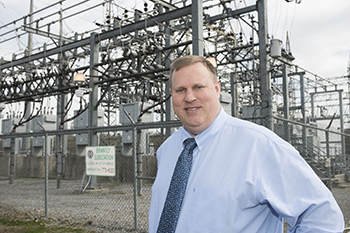
Robert M. Blue, Dominion’s executive vice president and co-chief operating officer, says that the utility can meet its net-zero goal by 2050. Photo courtesy Dominion Energy
At the same time, Gov. Ralph Northam and the Democratic-majority General Assembly have formulated their own plan to rid the state of carbon emissions by 2050, passing the Virginia Clean Economy Act during this year’s legislative session. The sweeping legislationoverhauls how utilities generate power and sets the stage for the state to shift to renewable energy sources, dramatically reducing Virginia’s carbon footprint, as well as mitigating the impacts of climate change and strengthening the state’s clean energy economy.
Last September, Northam issued an executive order establishing statewide goals to power 30% of Virginia’s electric system from carbon-free sources such as wind, solar and nuclear by 2030 and 100% by 2050.
Having already reduced its carbon emissions by more than 50% during the past 10 to 15 years, Dominion raised the bar in October 2019, saying it planned to reduce its remaining carbon emissions by 80% by 2050. However, the utility upped the ante even more in February, saying it aimed to reach net-zero emissions by 2050.
Dominion previously committed to reduce methane emissions, a more potent greenhouse gas than carbon dioxide, from its natural gas operations by 65% by 2030 and 80% by 2040.
Dominion officials are confident they can meet both company and government deadlines for large-scale renewable energy endeavors to depose fossil fuel-generated power’s reign in Virginia.
“We can meet net zero by 2050,” says Robert M. Blue, Dominion’s executive vice president and co-chief operating officer. “Our response to Governor Northam’s directive was, ‘Challenge accepted.’”
Investing in the future
Environmentalists might look askance at Dominion’s commitment to protecting the environment, given factors such as Dominion’s agreement in March to pay $1.4 million to settle alleged environmental violations at two power plants in Chesterfield and Prince William counties. In making the settlement with state and federal authorities, Dominion denied the coal-ash pollution allegations and didn’t assume any liability.
Dominion Energy isn’t charting its course for net-zero emissions in a vacuum, however. Across the nation, corporations are turning to green energy to fight climate change, enhance their business and satisfy customers and investors. This January, Microsoft announced its plans to become carbon negative by 2030. The company also plans to remove from the environment all carbon it has emitted either directly or by electrical consumption since its founding in 1975. Meanwhile, in February, Amazon.com Inc. founder Jeff Bezos pledged $10 billion of his personal fortune to fight climate change, and Delta Air Lines Inc. promised to become the first carbon neutral airline by 2030, committing at least $1 billion to reducing its environmental impact.
Corporate efforts to address climate change picked up steam after the January announcement by BlackRock Inc., the world’s largest money manager, that sustainability will drive its investment strategies. In his annual letter to U.S. CEOs, influential BlackRock Chairman and CEO Jeff Fink said the asset manager will require additional environmental reporting from companies it invests in after BlackRock clients listed climate change as their top concern.
BlackRock owns more than 5% of Dominion’s stock and is one of the utility’s top three investors. (About 3% of BlackRock’s global utility and power portfolio is invested in Dominion, which provides power to large parts of Virginia, North Carolina and South Carolina and has natural gas and power generation operations across the nation.)
Graphic courtesy Dominion Energy
“Dominion Energy has a long tradition of engaging with our shareholders and other stakeholders to obtain their perspectives on a host of issues, including sustainability and the environment. Prior to the publication of Mr. Fink’s letter, we had already begun drafting the core principles of our net zero commitment, which built on our previous efforts calling for a federal carbon policy,” said Dominion Energy spokesperson Ryan Frazier. Dominion is one of 21 companies that make up The CEO Climate Dialogue group, which is working to advance climate action by the federal government. Other member companies include Ford Motor Co., Shell and DuPont.
And with its customers and investors demanding more clean and renewable energy, Dominion has ramped up its longstanding efforts to provide greener energy.“We’re constantly looking at what we think we can achieve with the right technologies and right policies,” Blue says. “We need to do this in a way that maintains the reliability of the electric grid and in a way that’s most cost-effective for our customers.”
Here are some of the ways Virginia’s power utilities are planning to migrate to renewable energy by 2050:
Offshore wind
Offshore wind is a major component of Dominion’s renewable energy initiatives. The utility is preparing to launch the country’s largest offshore wind project with 220 wind turbines installed in 112,800 acres of federal waters 27 miles off the coast of Virginia Beach. Scheduled to be built in three 880-megawatt phases from 2024 to 2026, the $7.8 billion project will be capable of generating 2,650 megawatts of energy. The State Corporation Commission has to approve the project by 2023 in order for Dominion to complete it by 2026.
The wind farm would be adjacent to the two, 6-megawatt test turbines Dominion and Denmark-based power company Ørsted are installing this year on 2,135 acres of federally owned waters as part of Dominion’s $300 million Coastal Virginia Offshore Wind pilot project, the nation’s first offshore wind endeavor owned by an electric utility company. At peak winds, the turbines are expected to provide electricity to 3,000 homes when they go into operation later this year. The U.S. Bureau of Ocean and Energy Management awarded final approval to the test project last fall. It is the only permitted offshore wind project in federal waters.
Aside from providing renewable energy, the wind farm could also establish Hampton Roads as a supply chain hub for offshore wind projects being launched up and down the East Coast, stimulating the region’s efforts to diversify its economy. Turbines, blades and other components currently are manufactured and shipped from Europe, but a U.S. supply chain is expected to emerge as more commercial wind farms come online. In January, Northam announced that Ørsted will lease part of Portsmouth Marine Terminal from the Port of Virginia to stage materials and equipment for its offshore wind projects across six East Coast states. Ørsted will initially lease 1.7 acres at the terminal through 2026, with the option to expand to 40 acres.
“There is the potential for thousands of jobs and for this area to be the epicenter for supplying offshore wind off the East Coast,” says David C. White, executive vice president of the Virginia Maritime Association. The industry, he adds, will attract new businesses to the region, including manufacturing services. “This is a once-in-a-generation opportunity. We really need to take steps to make sure Virginia makes the most of it.”
Despite its potential impacts on Dominion’s grid and Virginia’s economy, wind energy generates power only when the wind is blowing — or an estimated 25% to 30% of the time.
Solar power
While wind power kicks up at night and in the winter, solar power is prevalent on warm, sunny days. Dominion is expanding its solar fleet capacity with projects to power more than 375,000 homes. The nation’s fourth-largest utility operator of solar power facilities, Dominion has more than a dozen projects completed or under construction in Virginia and could add at least 5,200 megawatts of solar in the state over the next 25 years.
Blue says Dominion has applied lessons learned from its initial solar energy activities in the Southwestern U.S. to Virginia. “We’re committed to building substantial solar projects and have them in production by 2022. We’re more than halfway there.”
Those projects include a solar farm the utility is building in Pittsylvania County from which Amazon will purchase nearly 70% of the output to offset power generation at its HQ2 East Coast headquarters in Arlington, while Arlington County will procure the remaining power to offset local government operations after the farm goes online in 2022.
Dominion also is partnering with the Metropolitan Washington Airports Authority on the development of a large-scale, 100-megawatt solar energy project on about 1,200 acres at Washington Dulles International Airport. It would be one of the largest solar facilities in Northern Virginia, powering 25,000 homes at peak output. The facility could go into operation as early as 2023.
In addition, one of the utility’s subsidiaries, Dominion Generation, last year purchased two solar projects that will generate power for telecommunications company T-Mobile USA Inc. The solar facilities near Emporia and in Suffolk are expected to come online later this year.
And Dominion’s 80-megawatt Grasshopper Solar Project in Mecklenburg County was one of four new solar farms issued permits by the Virginia Department of Environmental Quality last fall.
In addition to Dominion’s projects, other solar farms are sprouting up across Southern Virginia, especially in Danville and neighboring Pittsylvania County. Two, 5-megawatt solar plants are slated to go online this summer, providing energy for Danville Utilities’ 42,000 customers. The city already has two other solar power plants in operation, including the 6-megawatt Kentuck Solar Farm, which began operations two years ago. Serving about 1,200 homes, Kentuck is the largest municipal utility solar farm in Virginia.
“Solar farms are a great economic development tool,” says Jason Grey, director of Danville Utilities. Photo by Mark Rhodes
Kentuck provides about 1.5% of Danville’s total energy needs, says Jason Grey, director of Danville Utilities. “That’s not a lot, but it’s still a renewable asset.” The city’s two new solar projects are expected to provide an additional 6.5% in solar energy.
Solar farms also have helped boost Danville’s economy, which had been battered by the shuttering of textile mills and tobacco warehouses. Former tobacco fields are being used for solar farms, increasing property values and attracting new businesses to the area. “Solar farms are a great economic development tool,” Grey adds. “A lot of companies when looking at sites ask what portion of the portfolio is renewable. At least 20% of Danville’s portfolio is renewable.”
Grey says his community has largely supported solar farm development. “If you had to pick a generating asset to have around you, you would pick solar,” he adds. “There’s no noise, and a lot of the developers we’re working with have built-in setback areas so they’re not as noticeable from the road.”
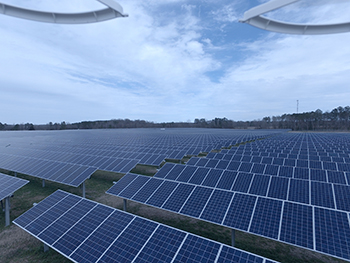
This 20-megawatt Dominion-owned solar farm in Sussex County’s Stony Creek area is one of six Virginia solar farms producing renewable energy purchased by Amazon Web Services to offset its environmental impact. Drone photography by Rick DeBerry
Virginia’s other major electric utility, Appalachian Power, also is pursuing solar power as it strives to meet mandates set under the governor’s executive order and the Virginia Clean Economy Act. When its first appeal for large-scale solar farms did not result in viable projects, the utility issued a second request for proposals for up to 200 megawatts of solar energy resources to power more than 30,000 homes. Developers also can include up to 10 megawatts of a battery energy storage system.
“We think we will get better proposals by lumping in battery storage and get more favorable pricing,” says Chris T. Beam, Appalachian’s president and chief operating officer.
Appalachian also plans to purchase solar power from the 15-megawatt Depot Solar Center in Campbell County, slated to be completed this year. “We’re focusing more on renewable energy,” Beam says, noting that the company plans to close its Clinch River Plant, its last fossil-fuel energy generator in Virginia, in 2026.
Serving about 500,000 customers in Virginia, Appalachian is the only electric company in the state to offer customers the option of obtaining 100% of their power from renewable energy, including wind, hydro and solar. About 200 customers pay a premium rate for the service, which Beam says was implemented due to customer demand. Hydro power, which includes facilities at Smith Mountain, Claytor and Leesville lakes, comprises about 11% of Appalachian’s fuel mix, while about 7% of the utility’s power comes from wind farms in West Virginia, Indiana and Illinois.
Onshore wind
Onshore wind energy has had less success in Virginia, largely due to the state’s topography. “We try to situate wind facilities to where the wind blows the most constant,” Beam says. “There are a couple wind corridors in Virginia that make sense. … If we find a bidder with favorable pricing and landowners willing to lease property, we would certainly consider it.”
Charlottesville-based wind and solar power developer Apex Clean Energy is encountering opposition to its planned 75-megawatt Rocky Forge Wind Farm in Botetourt County, which would be Virginia’s first-ever onshore wind project. Apex obtained approval from the county Board of Supervisors for turbines up to 550 feet tall in 2016, but later asked to install turbines up to 680 feet tall, citing changes in technology that would allow for the construction of fewer but larger turbines.
Steve Neas, a civil engineer who lives near the proposed wind farm, scoffed when he learned about Apex’s plans. “My issue is the amount of energy produced is minimal,” he says. “Wind resources in the Allegheny Mountains are marginal at best, but the impacts created by large turbines would be significant.” Neas asserts that the turbines would disrupt the environment and create both audible noise and low-frequency vibrations.
Botetourt County is holding public hearings about the proposed turbine height change. Apex hopes to begin construction on the wind farm by the end of this year, with the project coming online in late 2021. Last fall, Virginia agreed to purchase the wind farm’s output, creating the largest state contract for renewable energy in the U.S.
Like Appalachian, Dominion does not have onshore wind farms in Virginia. “What we’ve found is onshore wind resources are fairly challenging,” Blue says, noting local pushback. “The best wind resources are on top of ridge lines, but that’s where people see it the most, and you can get community opposition.”
Nuclear power
However, Dominion does not expect any opposition as it renews licenses for its Surry and North Anna nuclear power stations, which together provide electricity for one-third of Dominion’s 2.5 million Virginia customers and are the largest sources of carbon-free energy in Virginia. U.S. nuclear reactors are initially licensed for 40 years, with the Nuclear Regulatory Commission issuing 20-year renewals.
“The continued operation of those two plants is extremely important,” Blue says. “Nuclear power plants are essential. They operate 24 hours a day, whereas solar operates when the sun is shining and wind farms when the wind is blowing.”
Battery storage
As Dominion continues to deploy renewable energy, the company also is investigating new storage technologies to ensure the grid’s effective operation. The State Corporation Commission earlier this year approved the utility’s four battery storage pilot projects in Central Virginia. Totaling 16 megawatts, the projects are the largest of their kind in Virginia and will help Dominion better determine how best to use batteries to integrate renewable energy sources and maintain reliable service. Battery storage technology is in its early stages, Blue notes. “We want to make sure it works before we deploy it on a large scale.”
But, he adds, the utility is committed to achieving a carbon-free electric grid within the next three decades. “There are lots of steps that need to be taken between now and 2050,” Blue acknowledges. “By no means is this something that’s going to be simple, but the basic building blocks are already in place.”
Along with emitting a potent odor, manure produced by the nearly75 million hogs in the U.S. generates methane, a greenhouse gas 25 times more harmful to the atmosphere than carbon dioxide.
However, Virginia’s largest electric utility and the world’s largest pork producer have teamed up to combat the latter problem by transforming these emissions into clean energy. In late 2018, Dominion Energy Inc. and Smithfield Foods Inc. announced the formation of Align Renewable Natural Gas (RNG), a joint venture that will harness methane emissions on clusters of Smithfield-owned and-contracted hog farms across the United States, converting the emissions into clean energy to heat homes and power businesses. On average, methane generated from each group of 15 to 20 hog farms could power 2,800 to 6,000 homes. By 2029, Align RNG is projected to power approximately 70,000 homes.
Dominion and Smithfield’s collaboration is the country’s largest renewable natural gas partnership related to agriculture and one that the companies say will transform the future of sustainable energy and agriculture.
“This is two Virginia companies making a big commitment to sustainability,” says Ryan Childress, Dominion’s director of gas partnership business development. “It’s the perfect partnership.”
Both companies have been pursuing the use of renewable energy in their respective industries, adds Kraig Westerbeek, senior director of Smithfield Renewables, a platform the company formed in 2017 to accelerate its carbon reduction and renewable energy efforts. “Our company goals are similar,” Westerbeek says. “Smithfield is a leader in animal production, and Dominion is a leader in the energy sector. It’s a very natural fit.”
Return on investment
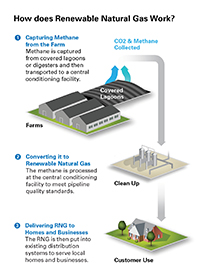
Also known as biomethane, renewable natural gas is a pipeline-quality gas that can be used as fuel. It’s produced by the decomposition of organic material. Covered lagoons called anaerobic digesters capture the waste from hog farms, breaking down the solids and containing methane emissions. A low-pressure biogas transmission line transports the gas to a central conditioning facility where it is converted into RNG. From there, existing underground natural gas distribution lines deliver the gas to homes and businesses.
According to Dominion officials, there is no risk of explosion. In addition to the low-pressure pipes, the untreated methane is about 30% to 40% carbon dioxide, which has an extinguishing property.
“RNG is very unique,” Childress notes. “It’s the cleanest source of energy available in the U.S.”
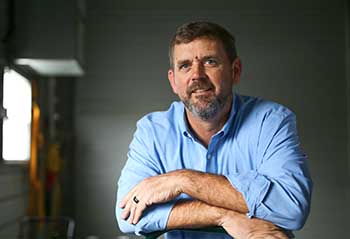
Kraig Westerbeek
Along with heating homes and businesses, renewable natural gas can be used in a variety of other markets, including powering electric vehicles, Westerbeek says. “RNG offers a lot of benefits. It can be sold for any purpose [for which] natural gas is used today.”
Individually, Dominion and Smithfield Foods have long been exploring ways to enhance their use of clean energy. Virginia’s largest electric utility, Dominion uses mainly fossil fuels to power its generation plants. However, the company is increasingly turning to other energy sources. Dominion has the fourth-largest solar farm portfolio in the nation and is one of three utilities in the U.S. to reduce its carbon intensity by more than 40% over the last decade. On the natural gas side, the company reduced methane emissions by 25% between 2010 and 2018, mainly by replacing older infrastructure with more efficient equipment, as well as by capturing and recycling methane previously vented during maintenance back into the system and by expanding leak detection measures. According to Dominion, its methane reductions have the equivalent environmental impact of taking 1.3 million gasoline-fueled cars off the road for a year or planting 103 million new trees.
Graphic courtesy Dominion Energy
Meanwhile, Smithfield Foods, which aims to reduce its greenhouse gas emissions by 25% by 2025, has been studying opportunities for converting manure to energy for several decades. “Forty percent of Smithfield Foods’ carbon footprint is associated with manure management activity,” Westerbeek notes. “These biogas projects are really helping us.”
Dominion and Smithfield each initially invested $250 million in RNG projects in Virginia, where both Dominion and Smithfield are based; North Carolina, one of Smithfield’s largest operating states; and Utah, headquarters for Dominion’s western operations. However, last year, the companies doubled their investment to $500 million. With the additional investment, Align RNG is projected to power more than 70,000 homes and businesses by 2029.
“We determined there were more opportunities and expanded the program,” Childress says. “This is the same as taking 500,000 cars off the road annually from that $500 million investment or planting 40 million new trees. That’s a really good return on our investment.”
Hub-and-spoke model
Align RNG’s first project involves a cluster of more than two dozen Utah hog farms, mostly owned by Smithfield Foods. It is expected to start producing gas this spring, providing power to more than 3,000 customers when it reaches full capacity.
In Virginia, approximately 20 Smithfield Foods-owned hog farms around Waverly and Wakefield are in the design and engineering phase of establishing digesters to capture methane. The project is expected to come online in 2021 and will eventually provide energy to 4,000 homes and businesses. Other farms could be added to the original group or formed into a new cluster.
“When choosing where to establish projects, we look for areas with high density of animals that are close to a natural gas distribution line,” Westerbeek says. “It’s a great opportunity for our contract partners to be part of these and have a return on their investment. It’s better than any investments they could make on their farms.” Farmers participating in the initiative will receive a portion of the proceeds from energy produced on their farms.
Ryan Childress
Childress compares the clusters to a hub-and-spoke model, with a gas-upgrading facility in the center connected to each farm via plastic pipelines. “We’re bringing together small and moderate-size farms and networking them as they join in a hub-and-spoke model to create economy of scale,” he says. “We view these projects as a triple win. It’s a new revenue stream for farms, good for customers wanting more sustainability and lower carbon forms of energy, and it helps the environment by capturing 25 times more emissions.”
Align RNG builds on Smithfield’s Optima KV pilot project in Duplin County, North Carolina, which collects biogas from digesters on a collection of hog farms, processes it to pipeline-grade natural gas and injects it directly into a natural gas pipeline running through eastern North Carolina. Smithfield sells the biogas to Duke Energy. “That project gave Smithfield confidence for Align RNG,” Westerbeek says. “A foundational base of knowledge is precursory.”
Last summer, Dominion and Smithfield launched North Carolina’s largest renewable gas project, locating it in Duplin and Sampson counties, which rank among the top areas in the U.S. in hog and pig sales. The project is patterned after Optima KV. Annually, RNG produced from the hog farms is expected to generate enough energy to power more than 3,500 homes.
A long outlook
Although Align RNG was announced as a 10-year venture, both Dominion and Smithfield expect it to continue indefinitely. “We want a lot of the projects done in 10 years, but there are certainly opportunities for it to go a lot longer,” Westerbeek says. He adds that Smithfield intends to have 90% of the finishing space — farms where hogs are raised to market weight — in Virginia and North Carolina involved in manure-to-energy projects over the next several years.
At the end of a decade, Dominion hopes to yield enough energy from the RNG projects to reliably serve about 70,000 homes and businesses. “For us, this is a sustainable business model,” Childress says. “It provides new revenue for farmers and is environmentally sound. This is an important part of our portfolio. Align will be around for a long time.”
In addition to its RNG project with Smithfield, Dominion late last year joined forces with Vanguard Renewables and Dairy Farmers of America in the first nationwide network of waste-to-energy projects involving dairy farms. Using the same model as Dominion’s venture with Smithfield, cow manure will be stored in covered digesters on a cluster of dairy farms, where bacteria will break it down to produce methane. The methane will then be transported via underground gathering lines to a central conditioning facility where it will be converted to RNG. Combined, the hog and dairy projects are expected to generate enough clean energy to heat almost 100,000 homes while significantly reducing greenhouse gas emissions from farms across the nation.
That, says Childress, is on target with Dominion’s goals to produce new forms of clean energy. “We are committed to growing the amount of RNG produced in the U.S.”
Another quarter, another Amazon.com Inc. buying spree in Northern Virginia.
In January, the company bought 6.2 acres in Arlington County, the location of HQ2, for $154.95 million. According to county records, Acorn Development LLC, an Amazon subsidiary, bought the land from JBG Smith Properties, from which it leases its current HQ2 buildings.
The e-tailer has a policy against sharing its plans for properties, but Buddy Rizer, the executive director of Loudoun County’s economic development department, says he expects Amazon Data Services, also known as Vadata, to use 100 acres it bought last December in Loudoun to build three or four data centers.
H&M Gudelsky Asset Management LLC sold the land to Vadata for $73 million, well over the assessed value of nearly $3.5 million, according to Loudoun County. The land is zoned Mineral Resource/Heavy Industry. Vadata also purchased a 2.4 million-square-foot site just across the border in Fairfax County.
In October, Vadata paid a reported $54 million for 57 acres owned by Perspecta Enterprise Solutions LLC, an affiliate of Perspecta Inc., according to Fairfax County land records. The property is zoned for industrial development and is home to a building constructed in the 1980s for Electronic Data Systems, the company founded by the late H. Ross Perot, and now used by Perspecta, a spinoff company that shares much of EDS’ DNA. Outside sits a gigantic bronze and iron eagle, which will be moved to Perspecta’s headquarters in Chantilly’s Stonegate II office park, says Lorraine Corcoran, the company’s vice president of marketing and corporate communications.
Office workers at the Herndon building, part of Perspecta’s corporate division, will move to a building under construction at the Plaza East II business park at state Route 28 and Westfields Boulevard in Fairfax County, not far from their headquarters. Move-in day is expected to be sometime in late April or May, Corcoran says.
“There’s such nostalgia and legacy in that particular location, so there are a lot of bittersweet feelings about leaving that building,” she adds. “We know what an important role that location has played in the history of the company.”
Nonetheless, time marches on. “There are still several hundred acres in Loudoun where data centers would be appropriate, so we still have a long way to go,” Rizer says.
The city of Roanoke’s real estate values increased by 4.74% last year, the biggest property value increase for the Star City since 2007. Commercial properties’ assessed value jumped by 4.55%.
But with the U.S. stock market plummeting to 1987 record lows in March as the coronavirus pandemic disrupted life across the nation, many in the commercial real estate industry are trying to figure out what’s next.
“In terms of what could happen, anybody could guess. It’s too early to say,” says Frank Martin, senior associate broker with Hall Associates, a commercial firm in Roanoke. “Closings and leasings are still happening. Nobody is stopping them now.”
Brokers are “nurturing their deals they have in the pipeline, staying in touch with people,” Martin adds. “The smart ones I know are trying to get a handle on how it will shake out. In commercial, you can’t just wait to see what happens.”
“It’s too early to know what all of the impacts will be,” says Matt Huff, president at Poe & Cronk Real Estate Group, another commercial real estate agency in Roanoke. “I will say that I think it has been helpful that other countries are coming out of this, like China, so we can see around the curve.” Huff expects to have plenty of work over the next 60 to 90 days because of the industry’s long time between starting and finishing projects.
As of mid-March, he notes, the construction supply chain was holding up, and construction managers were figuring out how to keep their employees working while maintaining social distancing.
In the first quarter of 2020, Roanoke’s commercial real estate outlook was rosy.
New construction in the city increased by more than 1% for fiscal year 2019-2020, the first such increase since 2010, Susan Lower, the city’s director of real estate valuation, told City Council in January. The average annual wage for construction workers in the third quarter of 2019 in the Roanoke metropolitan area was $46,864, according to JobsEQ/Chmura Economics & Analytics. Ten years ago, the average wage was $35,440.
Huff and Martin say the outlook in Roanoke has changed from even a few weeks ago, but they’re hopeful that the industry will not see the cataclysmic disruption happening now at restaurants and small retail businesses.
“The best thing we can do is advise,” Huff says, noting that a lot of his customers are calling him for recommendations. After all, adds Martin, “in the commercial world, we’re used to assessing risk all the time.”
Phase one of what is being touted as the “world’s largest surf park” is a go in Chesterfield County, and developers and the county have emerged with environmental permits despite a gap in the state’s regulatory framework.
The Lake, a 105-acre, mixed-use development between state Route 288 and Genito Road, is set to move forward with a 13-acre pond for water skiers who will be towed by overhead cables. Future phases will include the project’s centerpiece: a 6-acre“artificial standing wave” surfing pool designed by American Wave Machines, located among 750 apartments, a 170-room hotel and 150,000 square feet of retail and entertainment space, including an amphitheater, according to plans submitted to the county.
“As Virginia continues to gain notoriety worldwide for its unique, authentic, outdoor living and quality of life, we think our project builds upon this narrative and will add another reason why people will want to live here,” says Brett Burkhart, principal with the developer, Flatwater Cos. LLC of Richmond. He declined to cite costs or a timeline, but AWM said in a January news release that “surfing is anticipated in fall 2021.”
Developers have revised their submission four times since the county rezoned the land in 2017, in part because manmade ponds don’t fall under the same state and local regulatory framework that covers pools and water parks. By “trial and error,” county officials researched how other states handled such facilities, says Scott B. Smedley, the county’s director of environmental engineering.
The main point of contention was aerating the pond, which county officials said was necessary to prevent stagnation and potentially harmful microorganisms.
Plans for The Lake always included a natural wetlands re-circulation system to treat the stormwater and groundwater that will be used to fill the 18- million-gallon pond, Smedley says. With the addition of aeration, county officials no longer have environmental concerns, he adds.
The developers also submitted 23 subcategorized proffers addressing roads and transportation, utilities, housing, vegetation and protocols for water treatment and testing, including providing current water quality information on-site and via online media.
“The proffers simply show the level of effort, above and beyond other parks, we have taken to make this a world-class venue,” Burkhart says.
Another major surf park project — Virginia Beach’s Atlantic Park, a joint effort between the city of Virginia Beach, Venture Realty Group and Grammy Award-winning musical artist Pharrell Williams — won’t have the same environmental hurdles as The Lake, says Venture Managing Partner Mike Culpepper.
This website uses cookies, web beacons, pixels, tags, software development kits, and related tracking technologies, as described in our Privacy Policy and Cookie Policy, for purposes that may include website operation, analytics, analyzing site usage, enhancing site navigation optimizing a user's experience, and third-party advertising or marketing purposes. Through these technologies, we and certain third parties may automatically collect information about your interactions with our website, such as your browsing behavior and page views. We also may share this information about your activity on our website with our social media, advertising, analytics, and other business partners. By clicking “Accept All”, you consent to the use of these technologies and that we can share information about your activity on our website with third parties in accordance with our Privacy Policy and Cookie Policy. If you do not agree with our use of non-essential tracking technologies, please click “Reject All.” You may opt out of certain non-essential technologies by clicking “Cookie Settings.”
Functional
Always active
The technical storage or access is strictly necessary for the legitimate purpose of enabling the use of a specific service explicitly requested by the subscriber or user, or for the sole purpose of carrying out the transmission of a communication over an electronic communications network.
Preferences
The technical storage or access is necessary for the legitimate purpose of storing preferences that are not requested by the subscriber or user.
Statistics
The technical storage or access that is used exclusively for statistical purposes.The technical storage or access that is used exclusively for anonymous statistical purposes. Without a subpoena, voluntary compliance on the part of your Internet Service Provider, or additional records from a third party, information stored or retrieved for this purpose alone cannot usually be used to identify you.
Advertisement
The technical storage or access is required to create user profiles to send advertising, or to track the user on a website or across several websites for similar marketing purposes.

 Sign In
 Free Newsletter