Sign In
Upcoming Event
 Free Newsletter

US single-family housing starts rebound in January, building permits decline
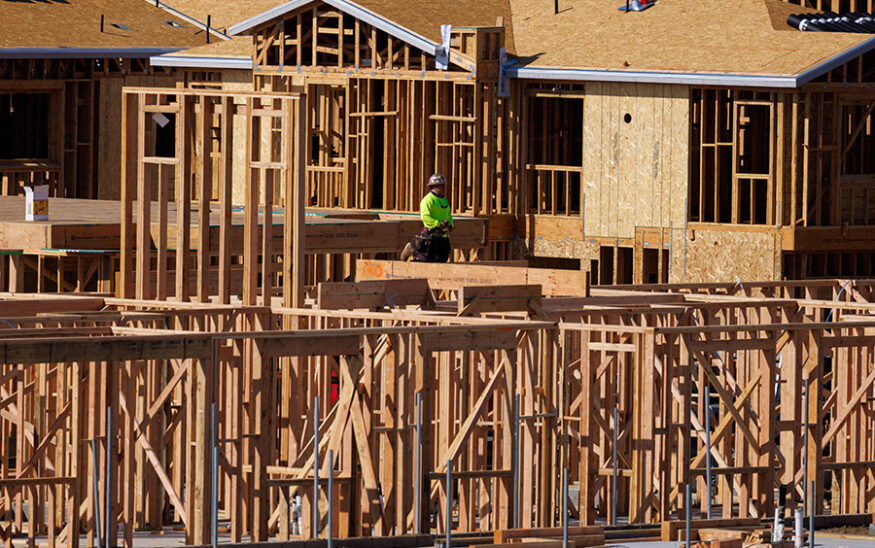
Single-family residential homes are shown under construction in Menifee, California, U.S., March 28, 2024. REUTERS/Mike Blake/File Photo
Single-family residential homes are shown under construction in Menifee, California, U.S., March 28, 2024. REUTERS/Mike Blake/File Photo
US single-family housing starts rebound in January, building permits decline



WASHINGTON, Feb 18 (Reuters) – U.S. single-family homebuilding rebounded in December, but a decline in permits for future construction pointed to underlying weakness amid higher mortgage rates and material costs.
Single-family housing starts, which account for the bulk of homebuilding, rose 4.1% to a seasonally adjusted annual rate of 981,000 units in December, the Commerce Department’s Census Bureau said on Wednesday. Starts increased to a pace of 942,000 units in November from a 894,000-unit pace in October.
The reports were delayed by last year’s shutdown of the federal government. Tariffs on imported goods, including lumber and vanity cabinets, have raised the prices of materials, while worker shortages amid an immigration crackdown are contributing to higher building costs, constraining activity.
Permits for future single-family homebuilding slipped 1.7% to a rate of 881,000 units in December. They rose to a pace of 896,000 units in November from a 878,000-unit rate in October.
Homebuilder sentiment deteriorated further in February, a survey from the National Association of Home Builders showed on Tuesday, with builders citing persistently high land and construction costs as well as still-elevated house prices relative to incomes among constraints.
The Trump administration has implemented a raft of measures, including purchases of mortgage-backed securities and banning institutional investors from buying single-family homes, to improve housing affordability. Though mortgage rates have eased, progress has stalled as worries over federal government debt have kept U.S. Treasury yields elevated.
Mortgage rates track the 10-year Treasury yield. Economists and realtors say more supply is needed to make housing more affordable. The government’s delayed advance estimate of fourth-quarter gross domestic product on Friday is expected to show residential investment contracted for a fourth straight quarter.
The economy is forecast to have grown at a 3.0% annualized rate last quarter after expanding at a 4.4% pace in the July-September quarter.
(Reporting by Lucia Mutikani; Editing by Chizu Nomiyama)
(Corrects to show starts increased in November instead of fell)
s