Sign In
Upcoming Event
 Free Newsletter

US private payrolls increase modestly in January amid manufacturing job losses
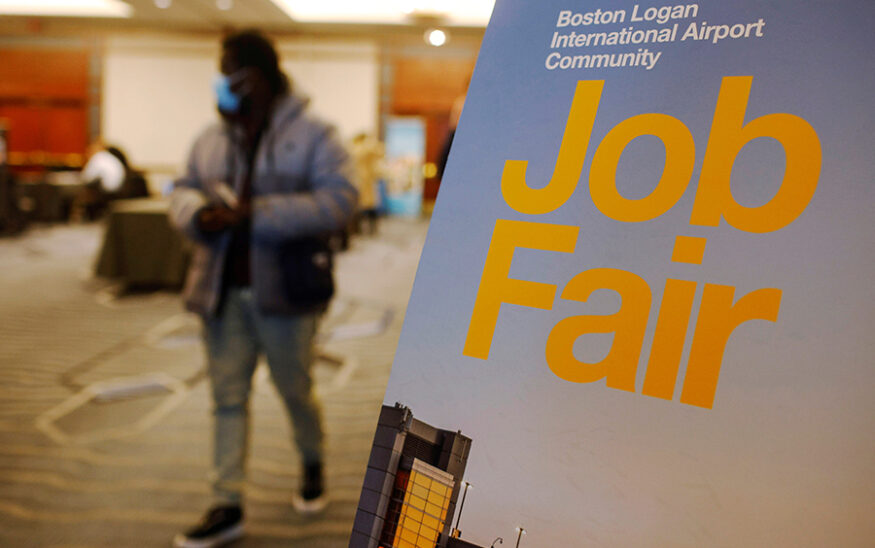
A job seeker leaves the job fair for airport related employment at Logan International Airport in Boston, Massachusetts, U.S., December 7, 2021. REUTERS/Brian Snyder
A job seeker leaves the job fair for airport related employment at Logan International Airport in Boston, Massachusetts, U.S., December 7, 2021. REUTERS/Brian Snyder
US private payrolls increase modestly in January amid manufacturing job losses



WASHINGTON, Feb 4 (Reuters) – U.S. private payrolls increased less than expected in January amid job losses in the professional and business services as well as manufacturing sectors, the ADP’s national employment report showed on Wednesday.
Private employment rose by 22,000 jobs last month after a downwardly revised 37,000 increase in December. Economists polled by Reuters had forecast private employment advancing by 48,000 jobs after a previously reported 41,000 gain in December.
Employment gains last month were concentrated in the education and health services sector, which added 74,000 positions. Construction payrolls increased by 9,000 positions.
There were also job gains in financial activities, leisure and hospitality as well as trade, transportation and utilities sectors. But the professional and business services sector lost 57,000 jobs while manufacturing shed 8,000 positions.
Wage growth for employees changing jobs slowed to 6.4% year-on-year from 6.6% in December. It was little changed at 4.5% for those remaining in their jobs.
U.S. financial markets were little moved by the data.
The ADP report is jointly developed with the Stanford Digital Economy Lab. It has been a poor predictor of the Bureau of Labor Statistics’ private payrolls estimate. The BLS’ more comprehensive and closely watched employment report for January, which was due for release on Friday, has been delayed by the partial shutdown of the federal government.
The three-day shutdown ended on Tuesday. The labor market has largely been in what economists call a “low-hire, low-fire” state, blamed on import tariffs and the rise of artificial intelligence.
Federal Reserve Chair Jerome Powell said last week “labor market indicators suggest that conditions may be stabilizing after a period of gradual softening.” The U.S. central bank left its benchmark overnight interest rate in the 3.50%-3.75% range.
(Reporting by Lucia Mutikani; Editing by Chizu Nomiyama)
s