Sign In
Upcoming Event
 Free Newsletter
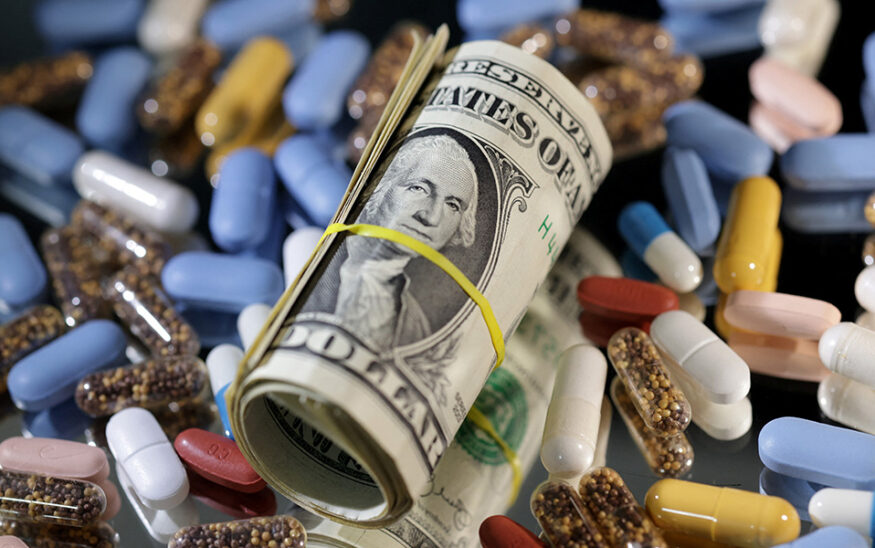
U.S. dollar banknotes and medicines are seen in this illustration taken, June 27, 2024. REUTERS/Dado Ruvic/Illustration
U.S. dollar banknotes and medicines are seen in this illustration taken, June 27, 2024. REUTERS/Dado Ruvic/Illustration
Drugmakers face 100% tariff unless they cut prices or produce drugs in US



WASHINGTON, April 2 (Reuters) – The Trump administration said on Thursday it will impose 100% tariffs on branded pharmaceuticals imported into the United States unless manufacturers agree to government drug pricing deals or commit to making their products domestically.
The move is intended to push drugmakers to onshore production and cut U.S. prescription drug prices. It offers exemptions and reduced rates through trade agreements, manufacturing commitments and most‑favored‑nation pricing pacts.
Here are some details:
* The United States will impose a 100% tariff on patenteddrugs not made in the country and not covered by drug pricingagreements. * Large pharmaceutical companies have 120 days to announceplans to avoid the 100% tariff; smaller companies have 180 days. * Companies can move manufacturing to the U.S. in exchangefor a reduced 20% tariff. * Drugmakers that onshore and sign most‑favored‑nationpricing agreements with the U.S. Department of Health and HumanServices are exempt from tariffs. * The U.S. has already agreed to such deals with 17drugmakers, of which 13 have been finalized and four are beingnegotiated. * Tariffs are reduced to 15% for drugs produced in theEuropean Union, Japan, South Korea and Switzerland due toexisting trade agreements. The U.K. has a separate tariff deal. * U.S. patients by far pay the most for prescriptionmedicines, often nearly three times more than in other developednations. * Trump has been pressuring drugmakers to lower their pricesto what people pay in high-income countries under hismost-favored-nation drug pricing policy. * Major drugmakers that have signed deals, which exempt themfrom tariffs for three years, include Pfizer and Eli Lilly amongothers. * Many companies, including about half of those representedby industry lobby group PhRMA, have not yet signed deals. * Industry sources say small and mid‑sized drugmakers areseeking individual arrangements to avoid tariffs and new pricingrules. * The Trump administration has previously said generic drugswill be exempt from tariffs. * More than 90% of medicines sold in the U.S. are generics,according to the U.S. Food and Drug Administration.
(Reporting by Ahmed Aboulenein; Additional reporting by Ryan Jones; Editing by Caroline Humer and Daniel Wallis)