Sign In
Upcoming Event
 Free Newsletter

Trump signs order to ease US marijuana regulations, sparking industry hopes
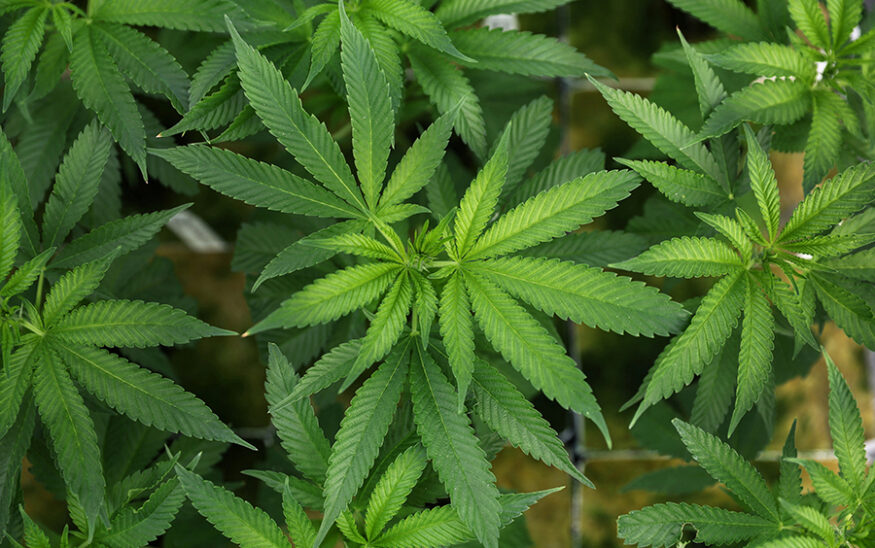
FILE PHOTO: Marijuana plants are seen inside the Glass House Farms flowering greenhouse in Camarillo, California, U.S., April 13, 2022. Picture taken April 13, 2022. REUTERS/Shannon Stapleton/File Photo
FILE PHOTO: Marijuana plants are seen inside the Glass House Farms flowering greenhouse in Camarillo, California, U.S., April 13, 2022. Picture taken April 13, 2022. REUTERS/Shannon Stapleton/File Photo
Trump signs order to ease US marijuana regulations, sparking industry hopes



Summary
- Trump ordered the attorney general to move toward reclassifying marijuana
- Shift could reshape the cannabis industry and expand medical research
- Marijuana would remain illegal federally under a patchwork of state laws
- Cannabis stocks jumped as investors welcomed the policy change
WASHINGTON, Dec 18 (Reuters) – U.S. President Donald Trump on Thursday signed an order directing the loosening of federal regulations on marijuana, a move that could further reverse decades of tough-on-weed policy.
Trump’s order instructs the attorney general to quickly move ahead with reclassifying marijuana. If that happens, the psychoactive plant would be listed alongside common painkillers, ketamine and testosterone as a less dangerous drug.
Such a decision would represent one of the most significant federal changes to marijuana policy in decades. It could reshape the cannabis industry, unlock billions in research funding and open doors long closed to banks and investors. The Senate’s Democratic leader, Chuck Schumer, welcomed the move, while dozens of lawmakers in Trump’s own Republican Party blasted the decision.
TRUMP SAYS SOME PATIENTS NEED ACCESS TO THE DRUG
Marijuana will still remain illegal federally and subject to a patchwork of local laws across the country, Trump said. Some industry experts said congressional action was still needed to create more stable regulation.
“We have people begging for me to do this, people that are in great pain for decades,” Trump told reporters at the White House. But the teetotaling president also said that controlled substances are risky and that experimentation was of no interest to him.
“I don’t want it, okay,” he said. “I’m not gonna be taking it. But a lot of people do want it. A lot of people need it.”
Senior administration officials said the primary purpose of the order was to increase medical research of marijuana and related products to understand their risks and potential for treatment. The Centers for Medicare and Medicaid Services plans to allow some beneficiaries to use hemp-derived CBD products as soon as April.
Dozens of Republicans in the U.S. House of Representatives and Senate wrote to Trump on Thursday, pleading with him not to sign the order.
“Reclassifying marijuana as a Schedule III drug will send the wrong message to America’s children, enable drug cartels, and make our roads more dangerous,” they said.
Marijuana is the most widely used illicit drug in the world and the United States. Nearly one in five U.S. residents use it a year, according to the U.S. Centers for Disease Control and Prevention. Millions of Americans have been arrested for possession of the drug, even while growing businesses listed on stock exchanges sell cannabis-related products.
Prosecutors, police and judges could take a lighter touch toward criminal prosecutions in response to growing acceptance.
EASING DRUG REGULATIONS
The Drug Enforcement Administration has to review the recommendation to list marijuana as a Schedule III drug under the U.S. Controlled Substances Act and will decide on the reclassification. The issue has been bogged down in bureaucratic process at the agency.
Under the act, marijuana is listed as a Schedule I substance like heroin, ecstasy and peyote. That classification indicates it has a high potential for abuse and no currently accepted medical use. Schedule III drugs are seen as less addictive and as carrying legitimate medical uses.
Even under a reclassification, marijuana would still be treated as a controlled substance on a federal level and its use subject to tight restrictions and criminal penalties.
A patchwork of laws exists at the local level, from states where use and possession are fully legal to states where they are fully illegal. Since California first allowed medicinal use of marijuana in 1996, a 30-year trend has moved toward loosening regulation.
CANNABIS STOCKS HAVE GAINED VALUE
Stocks of cannabis-related companies gained on the news from Washington. U.S.-listed shares of Tilray, Aurora Cannabis, SNDL and Canopy Growth gained between 6% and 12% in afternoon trading.
Funding remains one of the biggest challenges for cannabis producers, as federal restrictions keep most banks and institutional investors out of the sector, forcing pot producers to turn to costly loans or alternative lenders. A black market also thrives because of the high costs of doing business.
“This shift marks an important step toward greater regulatory clarity and institutional acceptance of cannabis worldwide,” said a spokesperson for Organigram Global, a cannabis company
Most Americans tell pollsters they favor full legalization. During his 2021-2025 term in office, Democratic former President Joe Biden issued a blanket pardon for most federal marijuana possession charges and kickstarted the review of marijuana’s status. After that review, the Department of Health and Human Services recommended moving marijuana to Schedule III classification.
Trump has honed a reputation as a law-and-order Republican, bombing alleged drug traffickers in international waters and deploying military into cities to combat crime, efforts that have drawn legal scrutiny. But he has also bucked tradition to reward favored groups and individuals, including pardoning several who were convicted of federal violations related to drugs.
(Reporting by Trevor Hunnicutt and Steve Holland; Additional reporting by Mariam E Sunny, Diana Jones, Nivedita Balu and Nolan McCaskill; Editing by Colleen Jenkins, Lisa Shumaker and Nick Zieminski)
t