Sign In
Upcoming Event
 Free Newsletter

Trump administration proposes 25% tariff to punish Brazil over trade practices
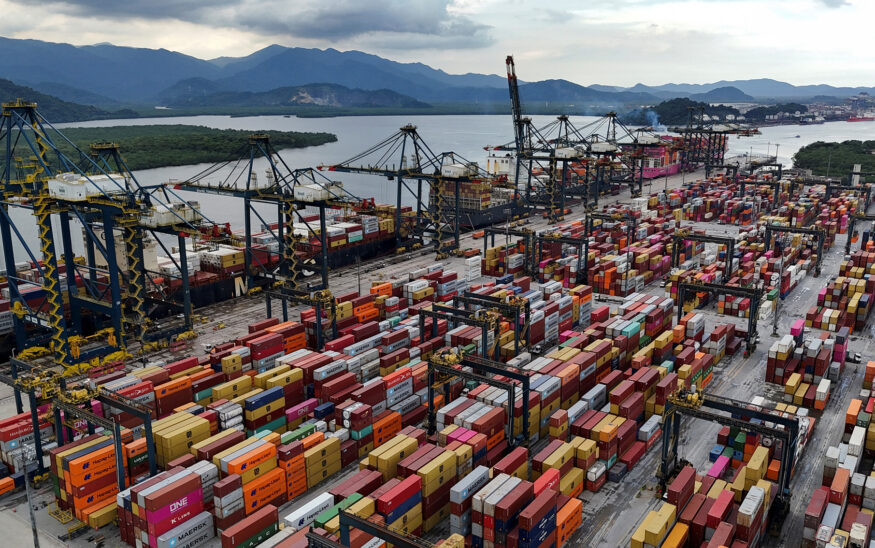
A drone view shows ships and containers at the Port of Santos, in Santos, Brazil April 3, 2025. REUTERS/Amanda Perobelli
A drone view shows ships and containers at the Port of Santos, in Santos, Brazil April 3, 2025. REUTERS/Amanda Perobelli
Trump administration proposes 25% tariff to punish Brazil over trade practices



Summary:
- Trump administration proposes 25% tariff on Brazilian imports
- Tariff excludes beef, coffee, rare earths, and aircraft parts
- Public hearing scheduled for July 6 on proposed tariffs
WASHINGTON/BRASILIA, June 2 (Reuters) – The Trump administration has proposed a new punitive tariff of 25% on many imports from Brazil, after deciding its practices were unfair on a range of issues from digital trade to illegal deforestation, top trade official Jamieson Greer said late on Monday.
The measures, under the Section 301 trade statute, cover areas such as electronic payment services, preferential tariffs, intellectual property protection and ethanol market access as well, the Office of the United States Trade Representative said.
The proposed new tariff, subject to public consultation ahead of a July 15 deadline, would exclude some items, such as beef, coffee, rare earths, other metals, energy and aircraft parts.
The USTR said its unfair trade practices investigation into Brazil, started last year under Section 301 of the Trade Act of 1974, had found practices that “are unreasonable and burden or restrict U.S. commerce,” opening the door for a punitive tariff.
Greer, speaking on CNBC, called the Brazil action “quite nuanced” because of the broad exemptions. He said that the trade agency will release the findings of several more Section 301 unfair trade practices investigations in coming weeks, adding that substantial tariffs were needed to correct a “giant” U.S. trade deficit.
Brazil’s Foreign Ministry did not immediately respond to a request for comment.
Two Brazilian officials familiar with the matter said the justifications for a new U.S. tariff ignored many of the arguments presented by Brasilia in recent months, suggesting the motives were political rather than technical.
Despite a White House visit last month by President Luiz Inacio Lula da Silva, bilateral relations have turned chilly.
U.S. Secretary of State Marco Rubio designated Brazil’s two biggest criminal gangs as terrorist organizations over objections from Brasilia, opening the door for more aggressive interventions in the country.
Days earlier, Lula’s main rival in the October election, Senator Flavio Bolsonaro, had argued in favor of the terrorist label during a tour of Washington that included meetings with Rubio, Vice President JD Vance and President Donald Trump.
“I expressly asked President Trump not to tariff our companies,” Bolsonaro wrote on X on Tuesday. “Tariffs are not the solution.”
TARIFF REPLACEMENTS
The USTR’s proposed new tariff would partially replace a tariff of 50% on many Brazilian goods imposed last year by Trump, with 40% as a punishment for Brazil’s prosecution of the Brazilian senator’s father, former President Jair Bolsonaro.
The U.S. Supreme Court struck down those duties in February.
In a statement, Greer said he launched the Section 301 investigation to tackle “longstanding and pervasive U.S. concerns with certain of Brazil’s trade policies and practices.”
Despite recent engagement with Brazilian President Inacio Lula da Silva and his cabinet, Greer said the United States and Brazil “continue to have substantial differences in resolving issues identified in this investigation.”
JULY 6 PUBLIC HEARING
The trade agency invited comment on the proposed tariffs through July 1, with a public hearing set for July 6. It faces a July 15 deadline for taking “responsive action” in the Section 301 investigation.
Trump used the same statute to impose sweeping tariffs on Chinese goods during his first term.
The USTR has several other open Section 301 investigations that are expected to lead to new duties.
Among these are one covering excess industrial capacity in China and 15 other trading partners, as well as one into enforcement of forced labor bans in 60 countries.
The agency opened a new investigation on Friday into Vietnam’s intellectual property practices.
Regarding its Brazil findings, the USTR said the proposed new 25% tariff would not apply to Brazilian imports subject to national security-related tariffs under Section 232 of the Trade Expansion Act of 1962.
These include 50% duties on steel, aluminum and copper and 25% duties on finished products made from those metals, as well as a 25% duty on motor vehicles and auto parts.
The USTR said products exempted from the proposed 25% tariffs included many fruits and nuts, crude oil and petroleum products, pharmaceutical compounds, organic chemicals and fertilizers.
These are in addition to beef, coffee, rare earths, certain other metals and ores and Brazilian aircraft and aircraft parts.
(Reporting by David Lawder in Washington and Lisandra Paraguassu in Brasilia; Editing by Brad Haynes, Thomas Derpinghaus, Clarence Fernandez and Nick Zieminski)
r