Please ensure Javascript is enabled for purposes of website accessibility

Xcelerate Solutions expands in Tysons

Defense and national security contractor is expanding its headquarters and in .

The company has expanded its headquarters space from 7,759 square feet to 23,073 square feet, according to a Wednesday news release from the Authority. Xcelerate moved from a small office in the building at 8405 Greensboro Drive to an office occupying an entire floor, said Marta Czarnecki, Xcelerate’s director of integration communications.

Xcelerate has more than 1,400 employees, about 350 of whom work in Fairfax County. The contractor expects to double its workforce in 2026, according to Czarnecki.

“As someone who grew up in Fairfax County, I’m especially proud to see Xcelerate continue to grow and invest in this community,” Xcelerate CEO Mark Drever said in a statement. “Fairfax has long been a hub for innovation and national security talent, and expanding our headquarters in Tysons allows us to deepen our roots, create more high-quality jobs and strengthen our mission to protect and serve our nation.”

Xcelerate has acquired three companies since early 2024, and the company needed the new to accommodate its growing workforce, Czarnecki said. It merged with Virginia cybersecurity firm VMD in February 2024 and acquired General Dynamics Information Technology’s background investigation assets in September 2024. In October, Xcelerate acquired software development company clearAvenue.

“Congratulations to Xcelerate Solutions on this major expansion and continued success in Fairfax County,” Victor Hoskins, president and CEO of the Fairfax County Economic Development Authority, said in a statement. “As you advance national security, you are also fueling economic growth and opportunity across our region.”

Xcelerate was founded in 2009 and became a McNally Capital platform company in January 2023. Its major clients include federal law enforcement, the Department of Defense (also known as the Department of War), intelligence community agencies and the Transportation Security Administration. The company provides solutions in enterprise vetting and analysis, critical infrastructure protection, cybersecurity and digital solutions.

Tylenol, Kleenex, Band-Aid and more put under one roof in $48.7 billion consumer brands deal

Summary

  • to acquire in a $40.3 billion cash-and-stock deal.
  • Merger creates a $32 billion powerhouse.
  • Kenvue faces lawsuits tied to and baby powder claims.
  • Deal expected to close in late 2026 with $2.1B in annual savings.

Kimberly-Clark is buying Tylenol maker Kenvue in a cash and stock deal worth about $48.7 billion, creating a massive consumer health goods company.

Shareholders of Kimberly-Clark will own about 54% of the combined company. Kenvue shareholders will own about 46% in what is one of the largest corporate takeovers this year.

The combined company will have a huge stable of household brands under one roof, putting Kenvue’s Listerine mouthwash and Band-Aid side-by-side with Kimberly-Clark’s Cottonelle toilet paper, Huggies and Kleenex tissues. It will also generate about $32 billion in annual revenue.

Kenvue has spent a relatively brief period as an independent company, having been spun off by  two years ago. J&J first announced in late 2021 that it was splitting its slow-growth consumer health division from the pharmaceutical and medical device divisions.

Kenvue has since been targeted by activist investors unhappy about the trajectory of the company and Wall Street appeared to anticipate some heavy lifting ahead for Kimberly-Clark.

Shares of Kimberly-Clark, based in just outside of Dallas, slumped 13% Monday. Kenvue’s stock jumped more than 15%.

Kenvue and Tylenol have been thrust into the national spotlight this year as President Donald Trump and Health Secretary Robert F. Kennedy Jr. promoted unproven and in some cases discredited ties between Tylenol, vaccines and the complex brain disorder autism.

Trump then urged pregnant women against using the medicine. That went beyond Food and Drug Administration advice that doctors “should consider minimizing” the painkiller acetaminophen’s use in pregnancy — amid inconclusive evidence about whether too much could be linked to autism.

Kennedy reiterated the FDA guidance during a press conference last week. He said that there isn’t sufficient evidence to link the drug to autism.

“We have asked physicians to minimize the use to when its absolutely necessary,” he said.

Kenvue has continued to push back on the Trump administration’s dialogue.

“Nothing is more important to us than the health and safety of the people who use our products,” Kenvue said in a statement on its website. “We believe independent, sound science clearly shows that taking acetaminophen does not cause autism. We strongly disagree with allegations that it does and are deeply concerned about the health risks and confusion this poses for expecting mothers and parents.”

In July Kenvue, announced that CEO Thibaut Mongon was leaving in the midst of a strategic review with the company under mounting pressure from activist investors.

Kimberly-Clark Chairman and CEO Mike Hsu will be chairman and CEO of the combined company. Three members of the Kenvue’s board will join Kimberly-Clark’s board at closing. The combined company will keep Kimberly-Clark’s headquarters in Irving, Texas, but there will be significant operations around Kenvue facilities and locations as well.

The deal is expected to close in the second half of next year. It still needs approval from shareholders of both both companies.

Kenvue shareholders will receive $3.50 per share in cash and 0.14625 Kimberly-Clark shares for each Kenvue share held at closing. That amounts to $21.01 per share, based on the closing price of Kimberly-Clark shares on Friday.

Kimberly-Clark and Kenvue said that they identified about $1.9 billion in cost savings that are expected in the first three years after the transaction’s closing.

The 2025 Virginia Icon Honors Awards

The 2025 Virginia Icon Honors Awards

The 2025 Virginia Icon Honors Awards

Enduring leadership shapes institutions, communities and workforces. Across Virginia, trailblazing executives, public servants, educators and philanthropists have spent decades building organizations, creating opportunities and mentoring

Read More »

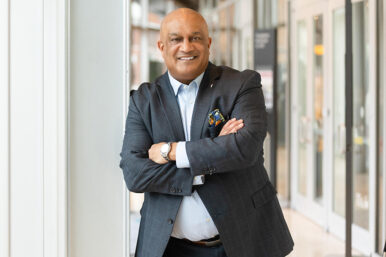
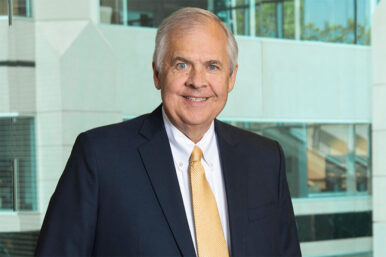
ALAN S. WITT

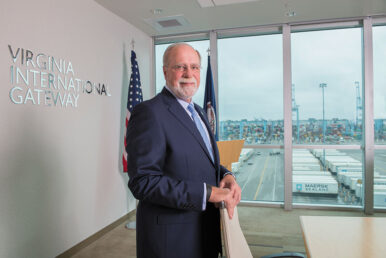
In 1979, Alan S. Witt co-founded the firm known today as , and under his leadership, it became one of the nation’s top 100 accounting companies. Today it has 13 offices in Virginia, Maryland and North Carolina.

A longtime force in and the region, Witt has sat on numerous boards, including spending more than two decades, many as chair, on the Riverside Health board. He also served on the board of visitors and as rector of Christopher Newport University, his alma mater. Witt is also a former chair of the Virginia Chamber of Commerce.

A former member of the Newport News City Council and the Industrial Development Authority, Witt was appointed by separate Virginia governors to serve on the Commonwealth Transportation Board and the Chesapeake Bay Bridge-Tunnel Commission. Witt was also a member of the development group that built City Center at Oyster Point, a Newport News commercial and residential hub that opened in the 2000s.

In 2020, Witt retired from PBMares. Not one to spend his afternoons with “Judge Judy,” he went to work in 2021 as executive in residence at CNU. The following summer, he was named dean of the university’s Luter Business School, a post he held until July.

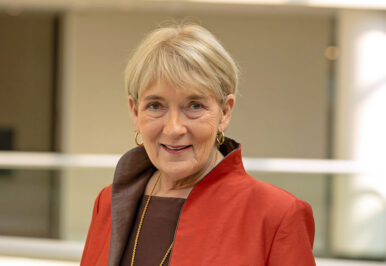
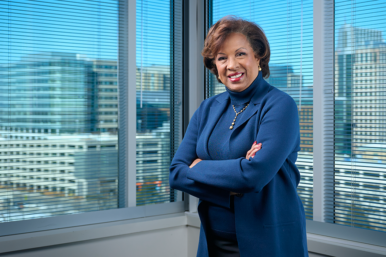
TONI TOWNES-WHITLEY

On Oct. 23, announced it had parted ways with . She joined the government contractor in 2023 as its chief executive and, at that time, was one of only two CEOs who are Black women.

Jim Reagan, former Leidos executive vice president and chief financial officer, was installed as interim CEO. SAIC, which has about 24,000 employees, reported fiscal 2025 revenue of $7.48 billion, an increase from $7.44 billion in fiscal 2023.

Townes-Whitley ranked No. 82 on Fortune’s 100 Most Powerful Women in Business list for 2025.

With a bachelor’s degree in public policy and economics from Princeton University’s School of Public and International Affairs, Townes-Whitley volunteered for the Peace Corps after college, serving as a village teacher in Gabon for three years. Before joining SAIC, she served as president of Microsoft’s U.S.-regulated industries and president of CGI Federal, and she held management roles at Unisys.

Townes-Whitley serves on the boards of Nasdaq and Catalyst, a nonprofit supporting women’s advancement and inclusion. She also sits on the advisory board for the Princeton University Faith & Work Initiative.

USA Today named Townes-Whitley one of its 2024 Women of the Year, adding to her list of . In 2024, she also received Women in Technology’s inaugural Lifetime Achievement Award; Townes-Whitley is also a past president and past board chair of Women in Technology, which serves the Washington, D.C. area.

BARBARA M. WOLCOTT

Starting out her career in the early 1970s, Barbara Wolcott found out a woman couldn’t realistically advance beyond bank teller. So, recruited by one of her clients, Pembroke Realty co-founder Richard Olivieri, she switched industries.

Today, the five-decade veteran leads a and property management company with about 600 agents across southeastern Virginia and northeastern North Carolina and a 2024 sold volume of $3 billion.

Created by the 2023 merger of Rose & Womble Realty and Berkshire Hathaway HomeServices Towne Realty, the firm has the backing of and is a licensee of Warren Buffett’s Berkshire Hathaway luxury real estate franchise. The company now claims 15% of the regional market covered by the Real Estate Information Network Multiple Listing Service ().

President of REIN’s board, Wolcott also serves on TowneBank’s regional advisory board. A past Virginia Realtors president, she earned the Virginia Realtor of the Year recognition in 1988 and received a 2019 lifetime achievement award from the Hampton Roads Realtors Association. She also served on the National Association of Realtors’ board.

Outside of the real estate industry, Wolcott served on the state Board for Rights of the Disabled and the Spina Bifida Association of Tidewater’s board. The cause is near to her; her late granddaughter whom she raised as her daughter, Ashley Wolcott Curley, had spina bifida.

Wolcott continues to be a mentor to her real estate agents. When agents join the company, they receive her personal cell number during orientation.

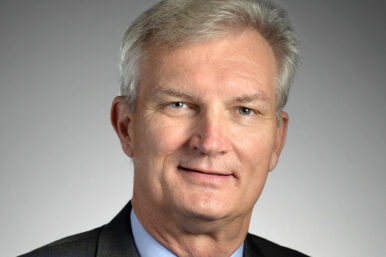
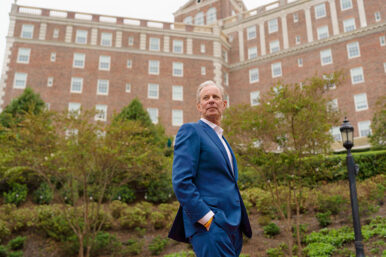
BRUCE L. THOMPSON

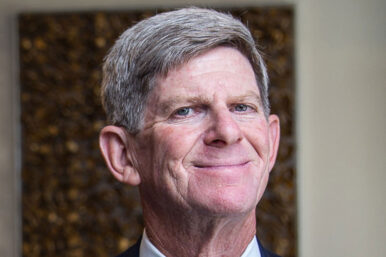
One of ‘ most prominent developers and hoteliers, Norfolk native Bruce Thompson is best known for developing the $435 million Cavalier Resort, which includes the restored historic Cavalier Hotel as well as two new , restaurants and residences on 21 acres at the Oceanfront.

Thompson opened his first hotel in the early 1980s. His hotel empire grew under the name Professional Resources (PHR). He founded Gold Key as a timeshare company, along with marketing and companies to assist with timeshare sales. After selling some companies, Thompson consolidated his remaining businesses in 1999 to form the privately owned , which has annual revenues exceeding $140 million and employs more than 2,400 people.

Virginia Business’ 2021 Business Person of the Year, Thompson has had a long and colorful career, working as a concert promoter and ski trip organizer before entering the hospitality industry. He also has raised money for ALS research in honor of his son, Josh, who died from the disease. A former King Neptune for the Virginia Beach Neptune Festival, Thompson received Volunteer Hampton Roads’ Lenora Matthews Lifetime Achievement Award in 2012.

He is a member of the Board of Visitors and has served on numerous local committees, including Virginia Beach’s inaugural Resort Area Advisory Commission. Thompson served as state finance chair for friend Gov. Glenn Youngkin’s 2021 campaign. He also served on former Gov. Bob McDonnell’s and Commission. Within the industry, Thompson sits on the American Resort Development Association’s board.

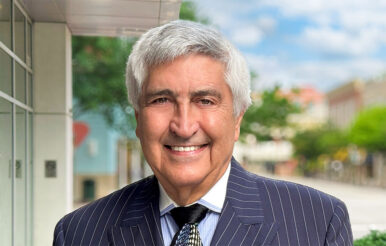
J. KNOX SINGLETON

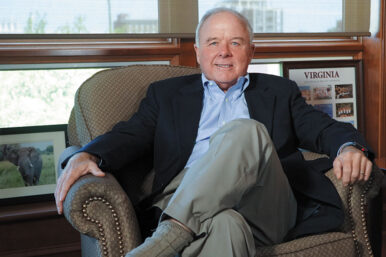
J. Knox Singleton accepted a job as executive vice president for operations at Fairfax Hospital Association in 1983. A year later, he became president of the three-hospital, $500 million system with 1,000 employees, which he transformed into Inova . By the time he retired in July 2018, Inova was a $3.5 billion regional health system with five hospitals, over 100 ambulatory locations, a health company and 17,000 employees. Virginia Business’ 2015 Person of the Year, Singleton also was the catalyst for the Inova Center for Personalized Health.

Inova has continued the growth begun under Singleton; it now has 26,000 employees and had a 2024 net operating revenue of $6.5 billion.

Formerly CEO of Opportunity Scholars, Singleton is now board vice chair for the Winchester nonprofit he co-founded to help area low-income college students pursue postsecondary education and employment. The husband of Shenandoah University President Tracy Fitzsimmons, he serves as executive-in-residence for the university’s business school.

Additionally, Singleton is board president for Winchester Rescue Mission, a nonprofit serving people affected by poverty and homelessness, and he serves on the board of the Virginia Foundation for Independent Colleges. He is also co-founder and investment committee chair of The Global Good Fund, which supports entrepreneurs and organizations focused on social issues.

A past chair of publicly traded medical firm Realty Trust, Singleton holds a business administration degree from the University of North Carolina and a master’s degree in health and hospital administration from Duke University.

Demand rises for unique meeting locations

Summary

  • Nearly half of North American planners now book unique venues.
  • Virginia sites like and draw events.
  • Venues increase marketing to meet rising demand.

As the owner of BizConnect , Laura Henderson is always looking for unique sites to hold workshops and networking coffees.

“I try to do events at interesting, fun places,” Henderson says. “That helps my organization and the [host] business. You get over 100 people in there, and probably 50% to 70% have never been there before.”

Interesting and fun could aptly describe BizConnect’s recent event at the Chrysler Museum of Art’s Perry Glass Studio, where a glass blowing demonstration enthralled guests. Several attendees signed up for future glass-blowing workshops at the newly renovated Norfolk gallery, and one business owner booked the studio for a team-building event.

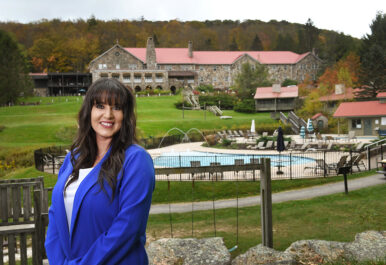
Businesses choose Mountain Lake Lodge for to help participants think outside the box, says Vice President Lyndsi Hale. Photo by Natalee Waters

“I wanted to try something different, and I’m glad I did,” Henderson says.

She is one of a growing number of meeting planners who are bypassing large hotel chains, conference centers and other traditional venues for more distinctive locales like art galleries, music halls, restaurants, sports stadiums and arenas, historical sites and wineries. According to Cvent’s 2025 Planner Sourcing Report, 49% of North American event professionals are booking unique sites for their events, compared to 17% in 2023. Seeking to create memorable yet cost-efficient experiences that will impress guests, they are discovering that many non-traditional sites offer package deals, built-in activities and other amenities.

It’s all about creating “wow moments,” says Yvonne Butters, Cvent’s director of meetings and events. “They don’t want just ballrooms. They want experiences. There’s a strong desire to create something that people will take away with them.”

Live glass-blowing demonstrations fit that criteria, adds Colleen Higginbotham, the Chrysler’s deputy director for visitor experience. “People see art being made. That makes it a memorable event and provides a program that an event planner doesn’t have to come up with.”

Butters believes the trend toward unique meeting venues will continue: “As planners build out their annual event programs, they see a need to elevate the design and attendees’ experience,” she explains.

In response, many unique venues are increasing their advertising budgets to reach planners striving to elevate their meetings beyond PowerPoint presentations. Cvent notes a 24% increase in advertising spending for unique sites in North America from January to August compared with the same period in 2024. Venues such as wineries and restaurants have increased their advertising by 74%, while entertainment sites, like music halls, are spending 73% more on advertising.

Celeste BrShawn Garrison, the Chrysler’s special events manager, says the museum, which hosts about 30 corporate events annually, has increased marketing on social media and other digital sites. The Chrysler also holds after-hours tours for meeting planners.

“Folks can come in and form their image of what they’re looking to have at an event,” Garrison says.

Making memories

Surrounded by the Appalachian Mountains, Mountain Lake Lodge in Pembroke specializes in wow moments. Instead of morning mixers around a coffee urn, corporate retreat participants take walks along 22 miles of trails or do yoga and stretching exercises.

“It’s all about value and wellness,” says Lyndsi Hale, the lodge’s vice president of sales and operations. “They want to push their folks to think outside the box.”

A group of female corporate executives from around the country chose the lodge over sites in Cancun, Denver, New York City, San Francisco and Maine for their annual retreat in September. They stayed in cabins and cottages, dined from a farm-to-table menu, canoed and kayaked on the New River, unleashed their creativity during “paint and sip” sessions and assembled in meeting rooms bathed in natural light. “They said it was a more fruitful retreat because they were able to relax in a comfortable environment at a slower pace,” Hale says.

After several days breathing the fresh mountain air, she says there is a noticeable change in meeting participants: “When they leave, they look like a completely different person. Their shoulders are so much lower, and the tone of their voice is different.”

Large still benefit from convention business, but planners are increasingly using unique spaces in tandem with those facilities, says Chuck Salem, CEO of Unique Venues, a website showcasing non-traditional sites in the U.S. and Canada for corporate meetings and events.

“Some planners need a convention center for their meetings but use off-site unique facilities for events away from the convention center,” he says. “That can build up a lot of excitement.”

The COVID-19 pandemic and the ensuing economic downturn led more planners to consider distinctive locations because of their affordability, he adds. “Universities with their large arenas and stadiums were the big winners because they had huge spaces where people could social distance,” Salem explains.

Unique Venues’ website includes colleges and universities, historical and cultural sites and sports arenas.

“A lot of these venues have a core mission other than events that generates revenues, or they’re nonprofits, so they’re not charging exorbitant rates,” Smith notes. “If a university opens its doors to events, what it’s really doing is helping to keep costs down for students. The core mission of museums is to cater to patrons, so the extra money helps keep museums fresh.”

While NASCAR is the main driver at the , corporate events — ranging from strategy sessions with less than two dozen attendees to gatherings in the thousands — are on the rise, says Lori Collier Waran, the raceway’s president.

That’s largely propelled by the post-pandemic push for companies to reunite their teams in meaningful activities, she adds.

“Businesses are eager to create shared experiences that inspire collaboration, innovation and culture building,” Waran says.

People attending meetings at the raceway can take behind-the-scenes NASCAR tours, ride in a pace car and stand on the finish line.

“These moments turn a standard corporate gathering into an immersive, one-of-a-kind experience that sparks creativity, camaraderie and lasting memories,” Waran says.

She adds that distinctive experiences combined with the raceway’s 80-year history keep the facility top of mind for meeting organizers. “We’re fortunate that word of mouth is one of our strongest drivers,” Waran says.

As Unique Venues’ Salem puts it, “That which is unique is inherently memorable.”

Future accountants have new path to certification

Summary

  • Starting in 2026, Virginia will no longer require 150 college hours for .
  • Candidates with bachelor’s degrees can become CPAs after two years of work and passing the exam.
  • The Virginia Society of CPAs pushed for the change to address staffing shortages.

Virginia will soon offer a new path to becoming a certified public accountant.

Beginning in 2026, prospective accountants will no longer be required to earn 150 hours of college credit to become licensed CPAs. People with bachelor’s degrees — having completed 120 hours, including required coursework — will be able to become CPAs after working in the field for two years and passing the certification exam.

The change was a big topic of conversation this summer, says Jasmine Tillery, a Hampton University junior who interned at the office of EY, the Big Four accounting firm also known as Ernst & Young.

“It makes it much easier on us to be recruited,” she says.

For now, Tillery’s plan is to work at an accounting firm after graduating and study for the certification exam. Some firms, Tillery notes, hand out a bonus for passing.

“I’d be able to be eligible for that sooner as well,” she says.

Contending with staffing shortages throughout the accounting industry, the Virginia Society of Certified Public Accountants (VSCPA) pushed mightily for Virginia to develop a route to licensure that didn’t require 150 hours.

“We basically drafted language, took it to the [Virginia] Board of Accountancy, gave them the opportunity to provide input into it and then found patrons and moved forward on it,” explains Emily Walker, the association’s vice president of advocacy and pipeline.

Gov. Glenn Youngkin signed the legislation in March, and it takes effect at the start of 2026.

Creating the new pathway, advocates hope, will lead to an increase in the number of college students going into accounting. That’s key since more than 300,000 accountants nationwide left the field between 2019 and 2022, according to The Wall Street Journal.

The U.S. Bureau of Labor Statistics projects employment of accountants and auditors will grow 5% from 2024 to 2034. About 124,200 job openings are projected each year over the decade.

In Virginia, the number of new licenses issued has fallen about 34% since fiscal 2008, when 1,434 licenses were issued, to 940 in fiscal 2024, according to the .

Mandy Nevius, human resources director at Glen Allen firm Keiter, calls the new pathway “a wonderful thing. I’ve been wanting it to happen for years.”

Getting young people interested in accounting is a tall order for several reasons. For one thing, many high schools no longer offer accounting classes, Nevius says. “People don’t even know about this career.”

And then there’s the no-fun image, she adds. Young people may picture accountants as humorless drones in windowless offices staring at spreadsheets. “The pocket protector, all those horrible stereotypes,” Nevius says.

In reality, though, accountants are professionals who can understand complex information and are skilled at explaining that data to clients. “They’re helping people,” she notes.

Even students who are open to the multitude of opportunities available in accounting still face financial hurdles, including the $1,200 cost of the CPA exam and prep courses that range from $2,000 to $5,000. Adding 30 extra credits on top of a bachelor’s degree was a bridge too far for some financially strapped students.

“There’s definitely a shortage of people coming into the profession,” confirms Melissa Sikes, a partner at the Glen Allen office of Brown Edwards, a -based accounting firm that’s among the nation’s top 100 by net revenue.

With everyone desperate to prime the pipeline, VSCPA received little pushback to the idea of dropping the 150-credit requirement, Walker says.

Having a choice

When God created heaven and earth, accountants weren’t required to earn 150 credit hours.

In 1929, New York became the first state in the nation to require certified public accountants to earn a college degree. Other states followed.

Requirements changed again in the late 1980s after 84% of the voting members of the American Institute of Certified Public Accountants supported a plan to require new members to have 150 credit hours. States, including Virginia, began requiring the additional coursework. In 1999, the General Assembly passed a bill requiring that, starting in 2006, all CPAs would have to have 150 hours of college credits.

In 2008, the National Association of State Boards of Accountancy explained the rationale for requiring 150 credit hours, citing factors for the change that included “the recognition of accounting as a profession at least as demanding as , engineering and architecture.”

The idea, says Dawn Schwartz, assistant professor of accounting at Longwood University, was to make accountants more professional.

“They thought if they raised the credit hours that maybe people would get graduate degrees, and that means we would have more mature decision-makers,” she says.

Initially, Marc Lebow, assistant professor at Hampton University, supported Virginia’s addition of 30 hours. He thought getting additional coursework that examined “higher-level” accounting concepts would be good for students.

When he saw Virginia’s actual requirements, however, Lebow realized the extra credits didn’t have to be in accounting.

“It was just you had to have 150 hours,” says Gary Wallace, managing partner at Keiter. “The joke was always you could do basket weaving and still qualify.”

Today, Lebow supports the creation of a new pathway to becoming a CPA, but he notes that there may be a downside he hasn’t considered yet.

“When it was 120 going to 150, I only saw the good parts,” he says. “Coming from 150 back down to 120, I’m looking at the good parts.”

Would-be accountants still have choices. Those who earn a master’s degree or take 30 additional college credit hours are required to work only one year in accounting.

Everyone must still pass the CPA exam, though.

Carter Regitz earned his master’s degree in accounting from James Madison University two years ago. He then went to work as a senior accountant at Hantzmon Wiebel, a accounting firm.

He isn’t mad that Virginia accountants will soon be able to become CPAs with only a bachelor’s degree. For him, graduate school provided a deeper understanding of the profession; it was worth it.

A bonus: Regitz was able to take one of the four sections of the CPA exam while he was at JMU.

“That’s where doing the master’s was kind of nice, because you can start sitting and taking the exams,” he says.

As for Wallace, he believes earning a master’s degree from the served him well. “I got a master’s because I wanted to specialize in tax. For specialty-type services, I can see the benefits.”

Still, different paths suit others, Wallace notes. Accountants could learn the same things by working with a sharp professional.

When Sikes earned her certification in 2003, she wasn’t required to do the additional 30 credit hours.

She’s confident that those extra classes wouldn’t have made her a better accountant, because courses often focus on theory as opposed to practice, especially in auditing, Sikes says. “That’s done when you go out in the field,” she notes.

Another thing to consider: Just because an accountant opts to get their CPA after earning their bachelor’s degree doesn’t mean they’ll skip graduate school. Tillery plans to pursue a master’s in data analytics with a focus on artificial intelligence to further her career.

At the end of the day, no matter what route professionals take to become CPAs, they have to have a solid understanding of the job, from auditing to taxation.

“People are still going to have to take that exam and pass it,” Sikes says.

Graduate programs in question

Roger Martin, senior associate dean for academic programs at the University of Virginia’s McIntire School of Commerce, thinks that the new pathway to becoming a CPA is a win for students overall and could be for universities as well.

More undergrads may sign up for U.Va.’s accounting program in the commerce school, Martin says, but the question is how the new standard would affect the master’s program. “I think every school I know is trying to figure out what the impact on their master’s program [will be].”

Longwood’s MBA program with an accounting focus, which launched last year, could be undersubscribed, Schwartz says: “It’s possible that that’s not going to be as successful as we thought it would be.”

Martin says the challenge for universities is showing students how they can benefit from accounting master’s degrees in addition to developing skills at work. U.Va., he adds, can make the case that master’s students develop professional skills before entering the industry.

“We have a leadership course,” Martin says. “We have a policy course that really is intended to get that technical accounting student out of the weeds of accounting, to get them to think about the role of accounting and their role as a professional and how they’re going to develop and excel quickly in their careers.”

As of now, the jury is still out on how Virginia’s new path to becoming a CPA will impact accounting master’s programs, but some Virginia professionals already see evidence that the change is drawing more students to the profession.

Keiter typically has between 30 and 35 interns a year, according to Nevius. Additionally, it hires between eight and 16 new graduates.

To make sure the firm can fill those slots, its employees attend events at about a dozen Virginia universities each year. From the visits Keiter employees have made already this fall, they’re confident the new path to becoming a CPA will help ease the staffing shortage.

“We have seen more entry-level students looking for jobs than we have in the past several years,” Nevius says.

Last year, Keiter recruiters saw between three and five students actively looking for jobs at the firm, and this year as of October, the firm has talked with about 30 students.

“I’m not going to say it’s huge, but it’s significant,” Nevius says.