Sign In
Upcoming Event
 Free Newsletter

Oil prices settle lower as traders assess impact of winter storm on production
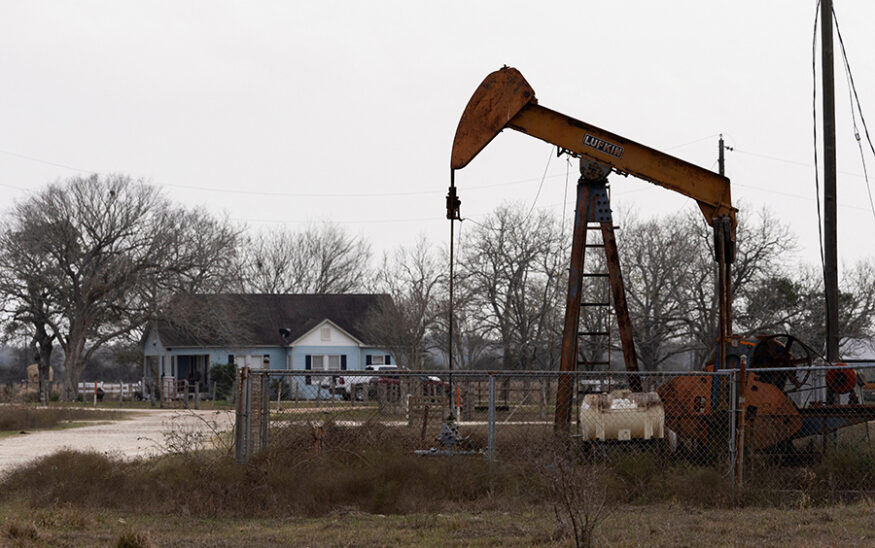
An oil pumpjack in front of a house in Ganado, Texas, U.S., January 8, 2026. REUTERS/Antranik Tavitian
An oil pumpjack in front of a house in Ganado, Texas, U.S., January 8, 2026. REUTERS/Antranik Tavitian
Oil prices settle lower as traders assess impact of winter storm on production



Summary
- Brent crude fell 0.4% to $65.59; WTI dropped 0.7% to $60.63
- Winter storms cut up to 2 million bpd of U.S. oil output over the weekend
- Permian Basin saw the largest outages, expected to be restored by Jan. 30
- U.S.-Iran tensions and OPEC+ production policy continue to pressure prices
HOUSTON, Jan 26 (Reuters) – Oil prices settled slightly lower on Monday after climbing more than 2% in the previous session as investors assessed the impact on output in U.S. crude-producing regions from winter storms and the impact of any tensions between the U.S. and Iran.
Brent crude futures closed down 29 cents, or 0.4%, at $65.59 a barrel, while U.S. West Texas Intermediate crude was down 44 cents, or 0.7%, at $60.63.
Both benchmarks notched weekly gains of 2.7% to close on Friday at their highest since January 14.
U.S. oil producers lost up to 2 million barrels per day or roughly 15% of national production over the weekend, analysts and traders estimated, as a winter storm swept across the country, straining energy infrastructure and power grids.
Oil production outages peaked on Saturday, consultancy Energy Aspects estimated, with the Permian Basin likely to have experienced the largest share of that decline at around 1.5 million bpd. Production losses eased on Monday, with Permian shut-ins estimated at about 700,000 bpd and production set to be fully restored by January 30.
There were around two dozen reports of upsets at natural gas processing plants and compressor stations in Texas, according to regulatory filings over the weekend, but that paled in comparison to the more than 200 reported upsets during the first five days of a severe winter storm in 2021, TACenergy analysts said in a note on Monday.
Kazakhstan, meanwhile, was poised to resume production at its biggest oilfield, the energy ministry said on Monday, but industry sources said volumes were still low and a force majeure on CPC Blend exports was still in place.
The Caspian Pipeline Consortium, which operates Kazakhstan’s main exporting pipeline, said on Sunday that its Black Sea terminal had returned to full loading capacity after maintenance was completed at one of its three mooring points.
Traders were also wary of geopolitical risks, analysts said, as tensions between the U.S. and Iran kept investors on edge.
U.S. President Donald Trump said last week that the U.S. has an “armada” heading toward Iran but hoped he would not have to use it, renewing warnings to Tehran against killing protesters or restarting its nuclear programme.
On Friday, a senior Iranian official said Iran would treat any attack “as an all-out war against us”.
“All in all, crude remains in a holding type trade pattern until more is known about how the Trump Administration will handle Iran,” said Dennis Kissler, senior vice president of trading at BOK Financial.
“Ukraine/Russian/U.S. peace talks continuing, and OPEC stating they will likely stay the current course of production at their next meetings, remain the pressure points for prices,” Kissler added.
OPEC+ is expected to keep its pause on oil output increases for March at a meeting on Sunday, three OPEC+ delegates told Reuters.
U.S. shale production could fall by as much as 400,000 barrels of oil per day in 2026 if OPEC countries try to increase market share and oil prices fall to as low as $40 a barrel, according to Rystad Energy CEO Jarand Rystad.
(Reporting by Arathy Somasekhar in Houston, Stephanie Kelly, Florence Tan and Sudarshan VaradhanEditing by Sharon Singleton, David Goodman and Nia Williams)
P