Sign In
Upcoming Event
 Free Newsletter

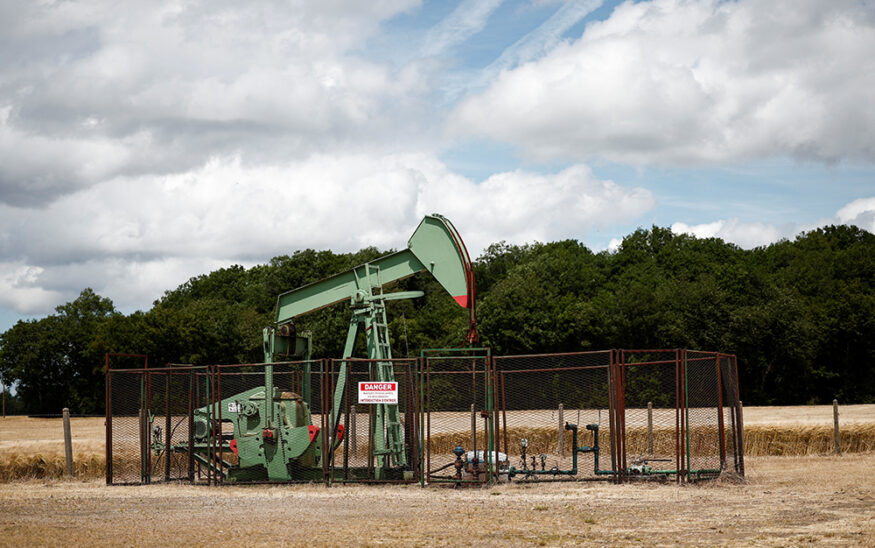
A pumpjack operates at the Vermilion Energy site in Trigueres, France, June 14, 2024. REUTERS/Benoit Tessier
A pumpjack operates at the Vermilion Energy site in Trigueres, France, June 14, 2024. REUTERS/Benoit Tessier
Oil prices rise 5% on fears of US-Iran ceasefire collapse



Summary:
- Brent crude rises 4.8% to $94.75 a barrel
- U.S. seizes Iranian cargo ship near Strait of Hormuz
- Shipping traffic through Strait of Hormuz remains mostly halted
LONDON, April 20 (Reuters) – Oil prices jumped about 5% in Monday trading on fears that the ceasefire between the United States and Iran could collapse after the U.S. seized an Iranian cargo ship and traffic through the Strait of Hormuz remained largely halted.
Brent crude futures advanced $4.37, or 4.8%, to $94.75 a barrel by 1148 GMT and U.S. West Texas Intermediate was up $4.76, or 5.7%, at $88.61.
Both contracts tumbled by 9% on Friday for their largest daily declines since April 18 after Iran said that passage for all commercial vessels through the Strait of Hormuz was open for the remainder of the ceasefire.
U.S. President Donald Trump, meanwhile, said that Iran had agreed never again to close the strait through which about a fifth of the world’s oil supply passed before the war began almost two months ago.
“Within 24 hours of Friday’s ‘completely open’ announcement, there were already tankers that were fired upon by the Islamic Revolutionary Guard Corps (IRGC),” said Sparta Commodities analyst June Goh.
“Market fundamentals are getting worse, as 10-11 million barrels per day of crude oil remains shut in,” Goh added, referring to losses in oil production.
The United States said on Sunday that it had seized an Iranian cargo ship that tried to break through its blockade while Iran said it would retaliate, heightening fears of a resumption in hostilities.
Tehran also said it would not participate in a second round of negotiations that the U.S. had hoped to start before the two-week ceasefire expires this week.
“The financial market is trading negotiations, improvements and resolution while at the same time the physical market is deteriorating day by day,” said SEB Research analyst Bjarne Schieldrop. “Physical oil flows remain constrained by disrupted flows, longer voyage times and elevated freight and insurance costs.”
Shipping traffic through the Strait of Hormuz remained at a virtual standstill on Monday, with only three crossings in the past 12 hours, shipping data showed.
More than 20 ships passed through the strait on Saturday, carrying oil, liquefied petroleum gas, metals and fertilisers, Kpler data showed. That was the highest number of vessels crossing the waterway since March 1.
Elsewhere, China is curtailing refined fuel exports rather than banning them, with countries including Malaysia and Australia receiving supplies even after Beijing extended last month’s restriction into April, according to shipping data and traders.
(Reporting by Stephanie Kelly in London and Florence Tan and Siyi Liu in SingaporeEditing by David Goodman)
l